Michael K. Bess – författare
Visar alla böcker från författaren Michael K. Bess. Handla med fri frakt och snabb leverans.
4 produkter
4 produkter
Inbunden, Engelska, 2017
689 kr
Skickas inom 10-15 vardagar
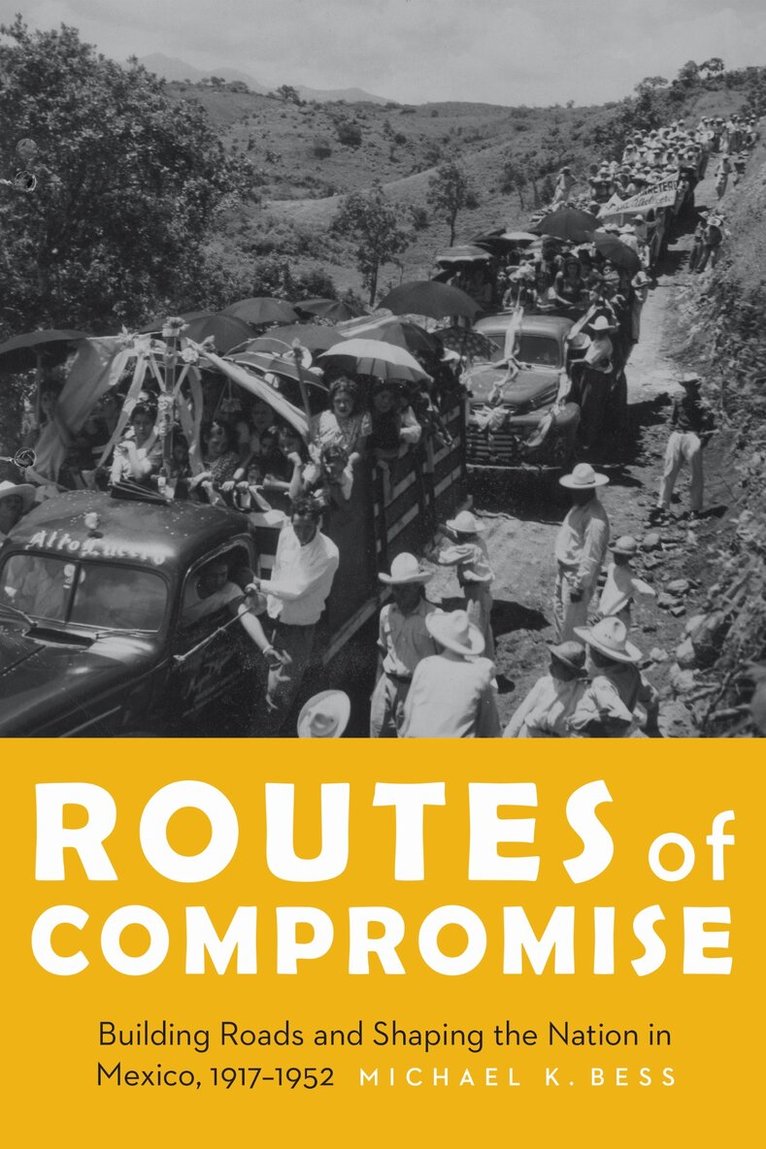
In Routes of Compromise Michael K. Bess studies the social, economic, and political implications of road building and state formation in Mexico through a comparative analysis of Nuevo LeÓn and Veracruz from the 1920s to the 1950s. He examines how both foreign and domestic actors, working at local, national, and transnational levels, helped determine how Mexico would build and finance its roadways.While Veracruz offered a radical model for regional construction that empowered agrarian communities, national consensus would solidify around policies championed by Nuevo LeÓn’s political and commercial elites. Bess shows that no single political figure or central agency dominated the process of determining Mexico's road-building policies. Instead, provincial road-building efforts highlight the contingent nature of power and state formation in midcentury Mexico.
Inbunden, Engelska, 2027
1 053 kr
Kommande
An essential resource for students and scholars of Latin American history, urban studies, and the history of mobility and transport. Mexico City Mobilities is the first comprehensive study to place regional mobility and transportation infrastructure at the center of the Mexican capital’s two-hundred-year history. Beginning in 1824, when a fledgling national capital began to define its political and territorial identity, historian Michael K. Bess traces the evolution of “mobility politics”—the deeply contested negotiations between state authorities, technical experts, and everyday citizens over the right-of-way and built and natural environments. Moving beyond traditional urban histories, he explores how the Federal District functioned as a showcase for technocratic visions of progress through its transportation-infrastructure systems and policies. Bess examines the shift from nineteenth-century animal-drawn trams to the massive twentieth-century megaprojects that sought to “tame” the city through asphalt and steel. He rigorously analyzes three key dynamics: first, the rise of technocracy in Mexico, wherein generations of architects, engineers, and planners implemented infrastructures designed to influence human behavior and signal modernity to local, national, and international audiences; second, the expansion of motor mobility and urban highways, which reflected capitalist supply and demand, often at the expense of low-income neighborhoods, and reinforced social markers within the metropolis; and third, the emergence of “hybrid” transportation, such as the pesero, which operated as a decentralized network that became the backbone of the capital’s transit network at crucial times in the latter twentieth century. By analyzing the “wicked problems” of congestion, public safety, and environmental impact, Mexico City Mobilities uncovers the fractured social reality of a region that grew from a collection of local communities into a global megacity of more than twenty-one million.
Häftad, Engelska, 2027
301 kr
Kommande
An essential resource for students and scholars of Latin American history, urban studies, and the history of mobility and transport. Mexico City Mobilities is the first comprehensive study to place regional mobility and transportation infrastructure at the center of the Mexican capital’s two-hundred-year history. Beginning in 1824, when a fledgling national capital began to define its political and territorial identity, historian Michael K. Bess traces the evolution of “mobility politics”—the deeply contested negotiations between state authorities, technical experts, and everyday citizens over the right-of-way and built and natural environments. Moving beyond traditional urban histories, he explores how the Federal District functioned as a showcase for technocratic visions of progress through its transportation-infrastructure systems and policies. Bess examines the shift from nineteenth-century animal-drawn trams to the massive twentieth-century megaprojects that sought to “tame” the city through asphalt and steel. He rigorously analyzes three key dynamics: first, the rise of technocracy in Mexico, wherein generations of architects, engineers, and planners implemented infrastructures designed to influence human behavior and signal modernity to local, national, and international audiences; second, the expansion of motor mobility and urban highways, which reflected capitalist supply and demand, often at the expense of low-income neighborhoods, and reinforced social markers within the metropolis; and third, the emergence of “hybrid” transportation, such as the pesero, which operated as a decentralized network that became the backbone of the capital’s transit network at crucial times in the latter twentieth century. By analyzing the “wicked problems” of congestion, public safety, and environmental impact, Mexico City Mobilities uncovers the fractured social reality of a region that grew from a collection of local communities into a global megacity of more than twenty-one million.
Häftad, Engelska, 2017
334 kr
Skickas inom 10-15 vardagar
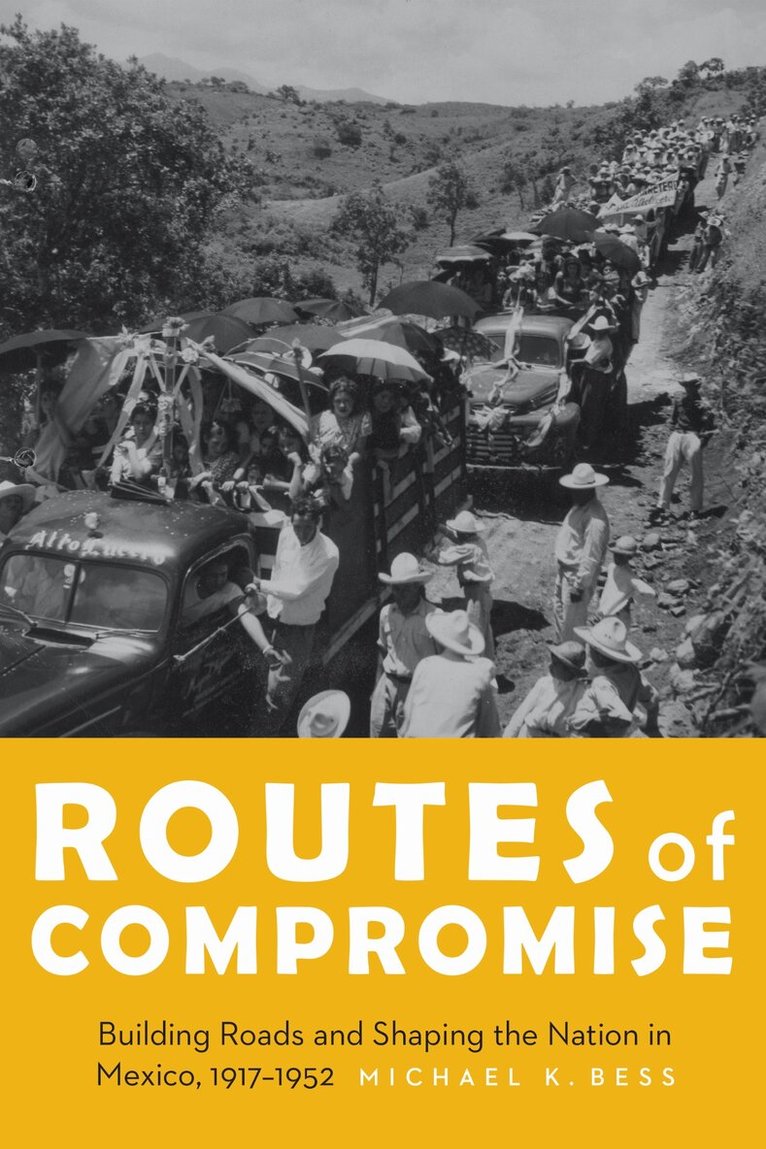
In Routes of Compromise Michael K. Bess studies the social, economic, and political implications of road building and state formation in Mexico through a comparative analysis of Nuevo LeÓn and Veracruz from the 1920s to the 1950s. He examines how both foreign and domestic actors, working at local, national, and transnational levels, helped determine how Mexico would build and finance its roadways.While Veracruz offered a radical model for regional construction that empowered agrarian communities, national consensus would solidify around policies championed by Nuevo LeÓn’s political and commercial elites. Bess shows that no single political figure or central agency dominated the process of determining Mexico's road-building policies. Instead, provincial road-building efforts highlight the contingent nature of power and state formation in midcentury Mexico.