Michael K. Ulan – författare
Visar alla böcker från författaren Michael K. Ulan. Handla med fri frakt och snabb leverans.
3 produkter
3 produkter
Inbunden, Engelska, 1998
1 681 kr
Skickas inom 10-15 vardagar
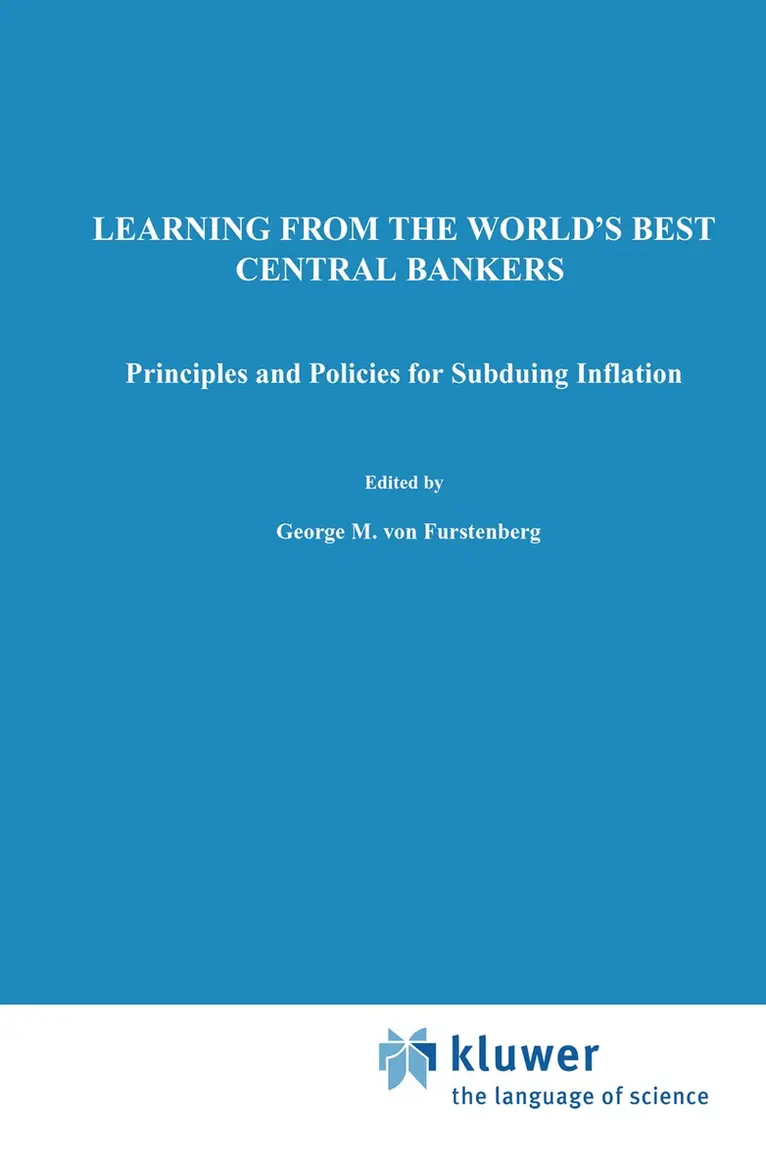
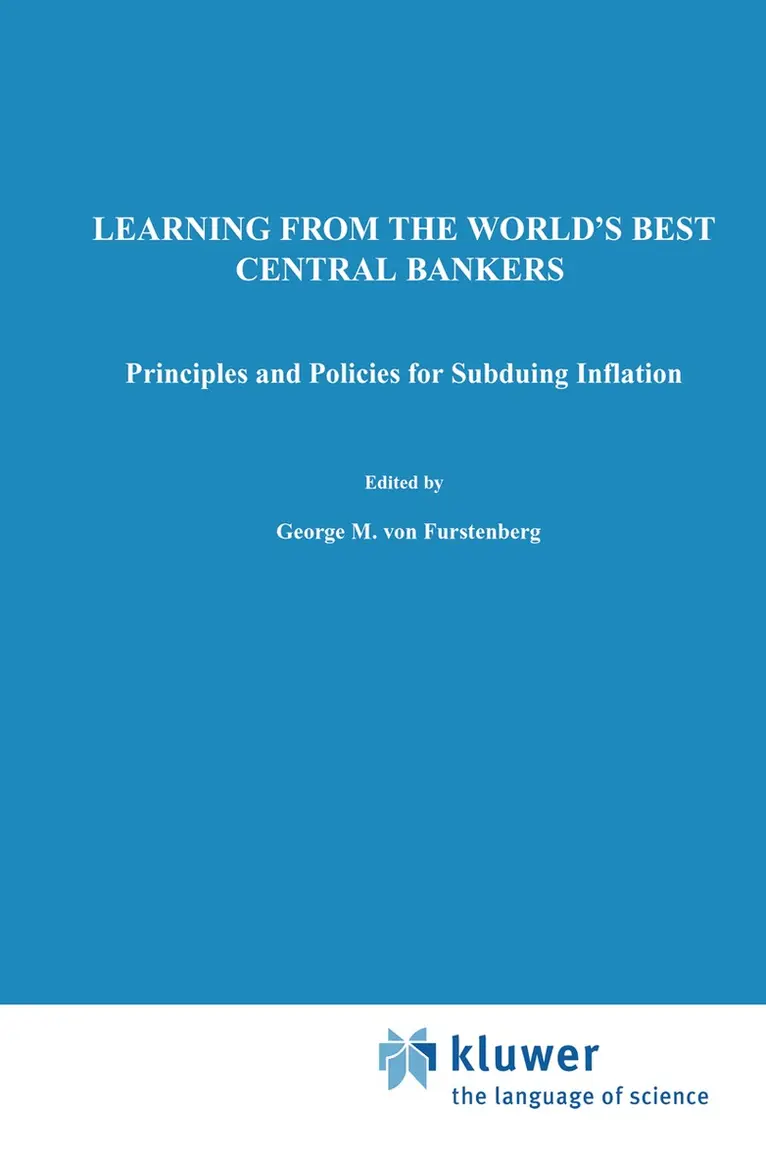
Central bankers play a prominent role in many societies; a few of them even become oracles or celebrities. Yet they are not paid much heed - commonly accorded little respect - as educators and intellectual leaders. This volume hopes to change that. For the world's best central bankers, portrayed here, teach and lead impressively, doing so with insight, courage, quality, and conviction. They are commendable role models for those with high aspirations. The growing reputation of central bankers suggests that there is much to be learned from examining the ways in which they practice their profession. So the author proceededs to ask what are arguably the world's seven best central bankers, from various countries throughout the world, for documentation on what they considered to be their finest achievements and how they went about gaining support for policies designed to maintain price stability. They obtained excellent cooperation from John Crow of Canada, Roberto Zahler of Chile, Alan Greenspan of the United States, Helmut Schlesinger of Germany, Markus Lusser of Switzerland, Donald Brash of New Zealand and Yasushi Mieno of Japan.They offer here a series of essays in which they present what central bankers have to say for themselves and the lessons they believe they can teach about monetary policy - not what economists, politicians, or journalists like to say about them. Learning from gifted practitioners is common in many fields where personal skills and the quality of judgment and execution matter so critically. It is particularly important in fields such as central banking where gaining political support, maintaining independence, and establishing credibility often make the difference between success and failure. In this volume, we find a treatment of how the governors have tackled the hardest dilemmas of policy-making in their own specific political settings. How the bankers themselves believe they have earned and preserved credibility and how they have maintained and expanded their base of support is discussed. How they have attempted to inspire trust and have secured and defended the independence of their institutions is also covered.As Professor Malkiel concludes in his foreword, the essays in this volume can be of value to academic economists, students, and especially future leaders in banking, finance, and government service.
Häftad, Engelska, 1998
1 681 kr
Skickas inom 10-15 vardagar
Central bankers play a prominent role in many societies; a few of them even become oracles or celebrities. Yet they are not paid much heed - commonly accorded little respect - as educators and intellectual leaders. This volume hopes to change that. For the world's best central bankers, portrayed here, teach and lead impressively, doing so with insight, courage, quality, and conviction. They are commendable role models for those with high aspirations. The growing reputation of central bankers suggests that there is much to be learned from examining the ways in which they practice their profession. So the author proceeds to ask what are arguably the world's seven best central bankers, from various countries throughout the world, for documentation on what they considered to be their finest achievements and how they went about gaining support for policies designed to maintain price stability. They obtained excellent cooperation from John Crow of Canada, Roberto Zahler of Chile, Alan Greenspan of the United States, Helmut Schlesinger of Germany, Markus Lusser of Switzerland, Donald Brash of New Zealand and Yasushi Mieno of Japan.They offer here a series of essays in which they present what central bankers have to say for themselves and the lessons they believe they can teach about monetary policy - not what economists, politicians, or journalists like to say about them. Learning from gifted practitioners is common in many fields where personal skills and the quality of judgment and execution matter so critically. It is particularly important in fields such as central banking where gaining political support, maintaining independence, and establishing credibility often make the difference between success and failure. In this volume, we find a treatment of how the governors have tackled the hardest dilemmas of policy-making in their own specific political settings. How the bankers themselves believe they have earned and preserved credibility and how they have maintained and expanded their base of support is discussed. How they have attempted to inspire trust and have secured and defended the independence of their institutions is also covered.As Professor Malkiel concludes in his foreword, the essays in this volume can be of value to academic economists, students, and especially future leaders in banking, finance, and government service.
E-bok
PDF, Engelska, 20132 036 kr
Läs direkt efter köp
BURTON G. MALKIEL Chemical Bank Chairman''s Professor of Economics Princeton University Central bankers have often believed that they are the Rodney Dangerfields of public officials-they seldom receive respect from the public or from elected officials. Particularly in the days of high infla tion and substantial unemployment, they were held responsible for everything that ailed the world''s economies. And monetarists often suggested that nations would be far better off if central bankers were replaced by robots who would do nothing more than ensure that the money supply was increased at a fixed percent each year. Our views have changed considerably over the past two decades. The main reason is that, thanks in substantial part to the efforts of central bankers, inflation has generally been contained. With the re duction in inflation and the recent relative stability of price levels in most developed nations, risk premiums have tended to decline sharply. Moreover, unemployment rates, at least in the Western Hemisphere, have decreased substantially. Finally, even many economists who con sider themselves monetarists now tend to be less certain of the stabil ity of the link between the money supply and economic activity. Thus, there is greater appreciation of the critical role of judgment in the conduct of monetary policy and a general belief that the judgments central bankers have made have generally been sound.