Michael Lusztig – författare
Visar alla böcker från författaren Michael Lusztig. Handla med fri frakt och snabb leverans.
6 produkter
6 produkter
E-bok
PDF, Engelska, 2017374 kr
Läs direkt efter köp
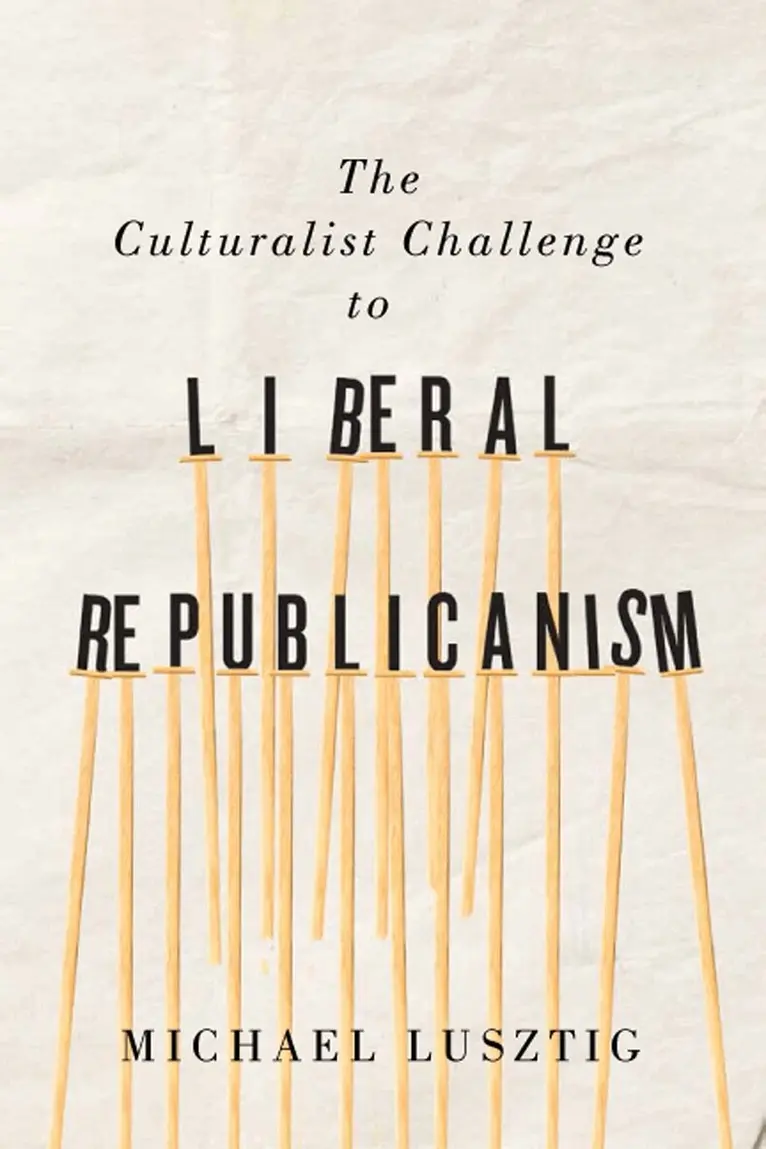
It is tempting to think of liberal democracy in terms of immortality. Democracies have survived wars and depressions, Nazis and communists – so much so that at the end of the Cold War Francis Fukuyama famously declared the “end of history.” In The Culturalist Challenge to Liberal Republicanism, Michael Lusztig assesses the risks that multiculturalism and other forms of culturalism pose to liberal democracy. Establishing the nature of the current regime and exploring the emergence of a cogent theory of justice grounded in both liberal and republican theory, Lusztig demonstrates the inconsistencies between liberal republicanism and culturalist theories of justice. Exploring both the institutional and cultural effects of the tension between culturalism and liberal republicanism, he seeks a balanced view that falls somewhere between Fukuyama’s optimism for regime mortality and the pessimism inherent in the work of more conservative theorists like Samuel Huntington. Lusztig concludes that the narrowness of liberal republican justice is ameliorated by multiculturalism, but the hidden danger is that multiculturalism can serve as a stalking horse for more pernicious agendas. Given the increasing cultural diversity faced by North American and European nations, The Culturalist Challenge to Liberal Republicanism has important implications for political stability in the twenty-first century.
E-bok
Engelska, 2017374 kr
Läs direkt efter köp
It is tempting to think of liberal democracy in terms of immortality. Democracies have survived wars and depressions, Nazis and communists – so much so that at the end of the Cold War Francis Fukuyama famously declared the “end of history.” In The Culturalist Challenge to Liberal Republicanism, Michael Lusztig assesses the risks that multiculturalism and other forms of culturalism pose to liberal democracy. Establishing the nature of the current regime and exploring the emergence of a cogent theory of justice grounded in both liberal and republican theory, Lusztig demonstrates the inconsistencies between liberal republicanism and culturalist theories of justice. Exploring both the institutional and cultural effects of the tension between culturalism and liberal republicanism, he seeks a balanced view that falls somewhere between Fukuyama’s optimism for regime mortality and the pessimism inherent in the work of more conservative theorists like Samuel Huntington. Lusztig concludes that the narrowness of liberal republican justice is ameliorated by multiculturalism, but the hidden danger is that multiculturalism can serve as a stalking horse for more pernicious agendas. Given the increasing cultural diversity faced by North American and European nations, The Culturalist Challenge to Liberal Republicanism has important implications for political stability in the twenty-first century.
E-bok
PDF, Engelska, 20021 005 kr
Läs direkt efter köp
At its core this myth embodies the Trudeauian ideal of Canadian society - one that features a constitution that empowers impartial judges at the expense of politically motivated legislators; one that allows each individual to enjoy a uniform range of rights, freedoms, and means of belonging to the larger Canadian society; and one that seeks to ensure the primacy of the national government rather than the provincial. Trudeau called his vision the Just Society. But justice is an illusive and amorphous concept. Defining it, much less institutionalizing it, is fraught with risk. In modern liberal democracies, justice is typically understood as the product of some mix of liberty and equality, process and substance, with the amount of each component varying according to taste. It is not unusual for political actors to seek to institutionalize their own formulas for justice, but it is also not reasonable to expect these formulas to go unchallenged. Such a challenge represents the dominant theme of this volume. Contributors include Donald E. Abelson, Tom Flanagan (University of Calgary), Patrick James, James B. Kelly (Brock University), Michael Lusztig, Christopher P. Manfredi (McGill University), Hudson Meadwell (McGill University), Anthony A. Peacock (Utah State University), Mark Rush (Washington and Lee University), and Shannon I. Smithey (Kent State University).
Häftad, Engelska, 2004
685 kr
Skickas inom 5-8 vardagar
Conventional wisdom holds that free trade is economically beneficial to nations. But this does not prevent industries and interest groups from lobbying their governments for protection, which creates a fear of electoral backlash among politicians hoping to promote free trade. The Limits of Protectionism demonstrates how governments can attain those economic benefits while avoiding the political costs.Michael Lusztig\u2019s theoretical model focuses on a process by which protectionists can be pushed to restructure and compete in a global economy. In this process, a small cutback in domestic protection leads to lost market shares at home; producers must then turn to overseas exports, and, as the size of foreign profits grow, former protectionists become active advocates for more and greater free trade opportunities.In a wide-ranging array of case studies—from nineteenth-century Britain to Depression-era United States to contemporary New Zealand, Australia, Brazil, Canada, Chile, and Mexico—Lusztig reveals that, if skillfully handled, governments can eliminate the obstacles to free trade and enjoy continued economic growth without fear of protectionist groups seeking revenge at the ballot box.
Häftad, Engelska, 2024
435 kr
Skickas inom 5-8 vardagar
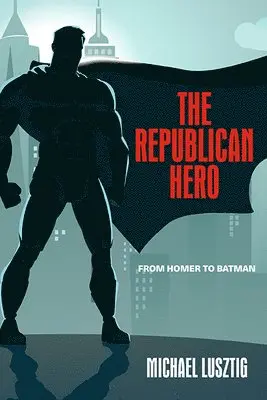
Explores the question of whether heroes matter in the modern republic.Politically speaking, do heroes matter? Are we living in a post-heroic age? The Republican Hero addresses both these questions. The general tenor of modern thinking is that heroes do matter but that the modern age is characterized by a narrowing of moral horizons once illuminated by heroes, secular and spiritual. Michael Lusztig argues that the modern world is not post-heroic. He makes the case that the modern age is the most heroic age, if measured in terms of the Aristotelian currency of balance and completeness. To this end, he identifies four main hero-types-the epic, magnanimous, Romantic, and common. Each can rightfully be called a republican hero: each contributes to the promotion or protection or provision of republican values. Each exemplifies the heroic virtues of their age. However, taken conjunctively, each contributes to what Lusztig conceives as the complete republican hero of the modern age.
Inbunden, Engelska, 2023
1 206 kr
Skickas inom 5-8 vardagar
Explores the question of whether heroes matter in the modern republic.Politically speaking, do heroes matter? Are we living in a post-heroic age? The Republican Hero addresses both these questions. The general tenor of modern thinking is that heroes do matter but that the modern age is characterized by a narrowing of moral horizons once illuminated by heroes, secular and spiritual. Michael Lusztig argues that the modern world is not post-heroic. He makes the case that the modern age is the most heroic age, if measured in terms of the Aristotelian currency of balance and completeness. To this end, he identifies four main hero-types-the epic, magnanimous, Romantic, and common. Each can rightfully be called a republican hero: each contributes to the promotion or protection or provision of republican values. Each exemplifies the heroic virtues of their age. However, taken conjunctively, each contributes to what Lusztig conceives as the complete republican hero of the modern age.