
Michael Moffatt – författare
Visar alla böcker från författaren . Handla med fri frakt och snabb leverans.
4 produkter
4 produkter
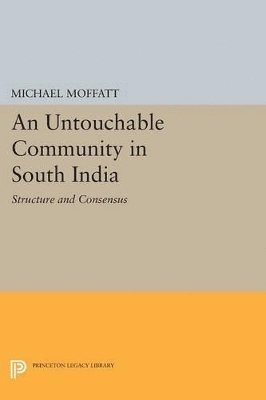
Häftad, Engelska, 2015
606 kr
Skickas inom 5-8 vardagar
While many studies suggest that Indian Untouchables do not entirely share the hierarchical values characteristic of the caste system, Michael Moffatt argues that the most striking feature of the lowest castes is their pervasive cultural consensus with those higher in the system. Though rural Untouchables question their particular position in the system, they seldom question the system as a whole, and they maintain among themselves a set of hierarchical conceptions and institutions virtually identical to those of the dominant social order. Based on fourteen months of fieldwork with Untouchable castes in two villages in Tamil Nadu, south India, Professor Moffatt's analysis specifies ways in which the Untouchables are both excluded and included by the higher castes. Ethnographically, he pursues his structural analysis in two related domains: Untouchable social structure, and Untouchable religious belief and practice. The author finds that in those aspects of their lives where Untouchables are excluded from larger village life, they replicate in their own community nearly every institution, role, and ranked relation from which they have been excluded.Where the Untouchables are included by the higher castes, they complete the hierarchical whole by accepting their low position and playing their assigned roles. Thus the most oppressed members of Indian society are often among the truest believers in the system. Originally published in 1979. The Princeton Legacy Library uses the latest print-on-demand technology to again make available previously out-of-print books from the distinguished backlist of Princeton University Press. These editions preserve the original texts of these important books while presenting them in durable paperback and hardcover editions. The goal of the Princeton Legacy Library is to vastly increase access to the rich scholarly heritage found in the thousands of books published by Princeton University Press since its founding in 1905.
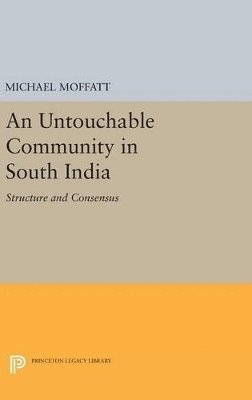
Inbunden, Engelska, 2016
2 624 kr
Skickas inom 3-6 vardagar
While many studies suggest that Indian Untouchables do not entirely share the hierarchical values characteristic of the caste system, Michael Moffatt argues that the most striking feature of the lowest castes is their pervasive cultural consensus with those higher in the system. Though rural Untouchables question their particular position in the system, they seldom question the system as a whole, and they maintain among themselves a set of hierarchical conceptions and institutions virtually identical to those of the dominant social order. Based on fourteen months of fieldwork with Untouchable castes in two villages in Tamil Nadu, south India, Professor Moffatt's analysis specifies ways in which the Untouchables are both excluded and included by the higher castes. Ethnographically, he pursues his structural analysis in two related domains: Untouchable social structure, and Untouchable religious belief and practice. The author finds that in those aspects of their lives where Untouchables are excluded from larger village life, they replicate in their own community nearly every institution, role, and ranked relation from which they have been excluded.Where the Untouchables are included by the higher castes, they complete the hierarchical whole by accepting their low position and playing their assigned roles. Thus the most oppressed members of Indian society are often among the truest believers in the system. Originally published in 1979. The Princeton Legacy Library uses the latest print-on-demand technology to again make available previously out-of-print books from the distinguished backlist of Princeton University Press. These editions preserve the original texts of these important books while presenting them in durable paperback and hardcover editions. The goal of the Princeton Legacy Library is to vastly increase access to the rich scholarly heritage found in the thousands of books published by Princeton University Press since its founding in 1905.

Häftad, Engelska, 1989
378 kr
Skickas inom 5-8 vardagar
Coming of Age is about college as students really know it and--often--love it. To write this remarkable account, Michael Moffatt did what anthropologists usually do in more distant cultures: he lived among the natives. His findings are sometimes disturbing, potentially controversial, but somehow very believable. Coming of Age is a vivid slice of life of what Moffatt saw and heard in the dorms of a typical state university, Rutgers, in the 1980s. It is full of student voices: naive and worldy-wise, vulgar and polite, cynical, humorous, and sometimes even idealistic. But it is also about American culture more generally: individualism, friendship, community, bureaucracy, diversity, race, sex, gender, intellect, work, and play. As an example of an ethnography written about an anthropologist's own culture, this book is an uncommon one. As a new and revealing perspective on the much-studied American college student, it is unique.
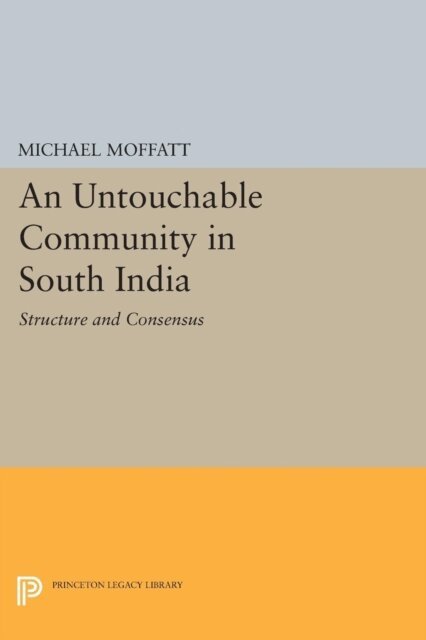
E-bok
PDF, Engelska, 2015831 kr
Läs direkt efter köp
While many studies suggest that Indian Untouchables do not entirely share the hierarchical values characteristic of the caste system, Michael Moffatt argues that the most striking feature of the lowest castes is their pervasive cultural consensus with those higher in the system. Though rural Untouchables question their particular position in the system, they seldom question the system as a whole, and they maintain among themselves a set of hierarchical conceptions and institutions virtually identical to those of the dominant social order.Based on fourteen months of fieldwork with Untouchable castes in two villages in Tamil Nadu, south India, Professor Moffatt's analysis specifies ways in which the Untouchables are both excluded and included by the higher castes. Ethnographically, he pursues his structural analysis in two related domains: Untouchable social structure, and Untouchable religious belief and practice.The author finds that in those aspects of their lives where Untouchables are excluded from larger village life, they replicate in their own community nearly every institution, role, and ranked relation from which they have been excluded. Where the Untouchables are included by the higher castes, they complete the hierarchical whole by accepting their low position and playing their assigned roles. Thus the most oppressed members of Indian society are often among the truest believers in the system.Originally published in 1979.The Princeton Legacy Library uses the latest print-on-demand technology to again make available previously out-of-print books from the distinguished backlist of Princeton University Press. These editions preserve the original texts of these important books while presenting them in durable paperback and hardcover editions. The goal of the Princeton Legacy Library is to vastly increase access to the rich scholarly heritage found in the thousands of books published by Princeton University Press since its founding in 1905.