Michael O. Logusz – författare
Visar alla böcker från författaren Michael O. Logusz. Handla med fri frakt och snabb leverans.
3 produkter
3 produkter
E-bok
Engelska, 202177 kr
Läs direkt efter köp
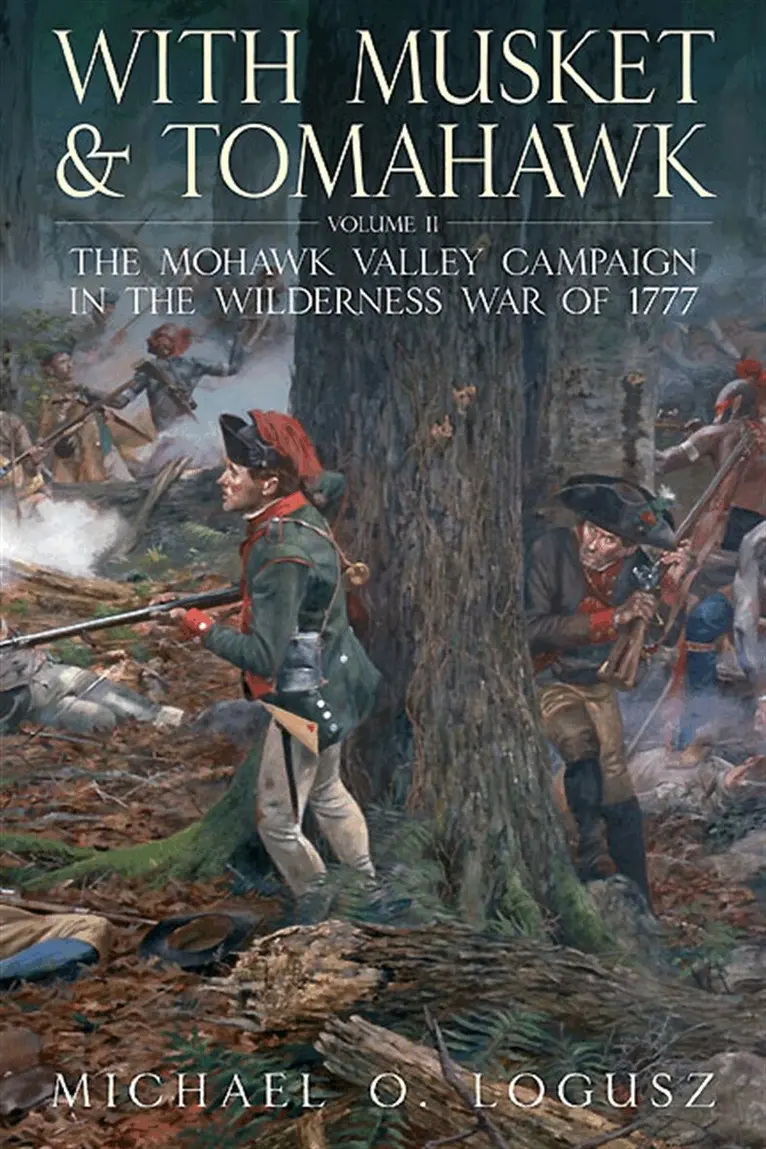
This is the second volume of Michael Logusz’s epic work on the Wilderness War of 1777, in which the British Army, with its German, Loyalist, and Indian auxiliaries, attempted to descend from Canada to sever the nascent American colonies, only to be met by Patriot formations contesting the invasion of their newly declared nation.In his first volume, on the Saratoga campaign, the author described how Burgoyne’s main thrust was first stalled and then obliterated during its advance down the Hudson River. Burgoyne had hoped to be met by a corresponding British thrust from New York City, but this never materialized, Lord Howe opting to attack Philadelphia instead. But the British had indeed launched a third thrust from the west, embarking from Lake Ontario at Oswego and thence forging its way down the Mohawk Valley.This third British thrust, under General Barry St. Leger, was perhaps the most terrifying of all, as it overran a sparsely populated wilderness where every man and boy had long needed to bear arms to protect against the ravages of the Iroquois Federation. Yet now the British—imitating the French before them—had made common cause with those same Indians, who now roamed across the frontier as the warpainted spearhead of the Empire’s new attack.At Fort Stanwix in upstate New York a Patriot (former British) fort held fast, though surrounded by St. Leger’s forces and his Mohawk and Loyalist auxiliaries. A relief column some 800 strong under Nicholas Herkimer attempted to relieve the fort, but it was ambushed en route with most of its men—including the entire male population of several nearby communities—killed or wounded. At this Battle of Oriskany, the basis for the movie “Drums Along the Mohawk,” Herkimer himself was mortally wounded. Fortunately a sally from Fort Stanwix raided the Indian camp during the battle, compelling many of the warriors to desist from annihilating the entire column.In the end, Fort Stanwix was relieved only when Benedict Arnold—soon to excel at Saratoga, just as he had done at Valcour Island and elsewhere throughout the Revolution—marched his troops through and forced the British to give up their western onslaught.In this book, as in his highly acclaimed first volume, the author captures the terrain, tactics and terror of this brutal, multifaceted wilderness war as few writers have done before. It was neighbor against neighbor, native Americans on both sides, and European professionals against Colonial Patriots, in a desperate campaign that helped determine America’s fate.
E-bok
Engelska, 20161 206 kr
Läs direkt efter köp
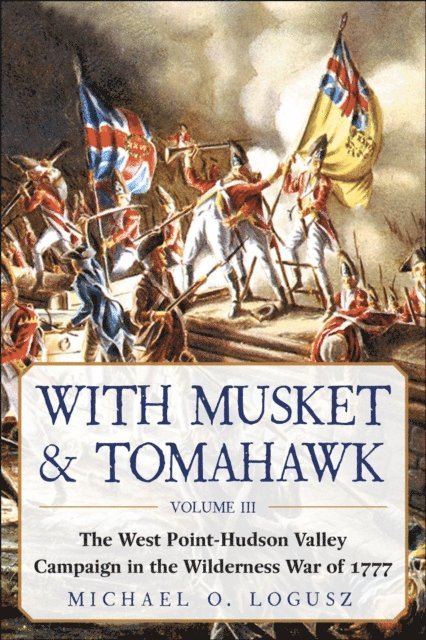
In this third volume of Michael Logusz’s epic study of the Wilderness War of 1777, a sizable British military force, augmented with German and loyalist soldiers, attacks the Northern Army’s southern front in the fall of 1777 in hopes of assisting a much larger British Army that is threatened to the north of New York City in the wilderness region of Saratoga.In previous works on the Wilderness War, Logusz deftly described General John Burgoyne’s efforts in the Saratoga campaign. He covered the exploits of British general Barry St. Leger and the convergence of British, German, Canadian mercenary, loyalist, and Indian forces toward Albany. In this third installment, Logusz presents how British general Sir William Howe was to advance northward from New York City with a force of almost twenty thousand regulars accompanied with a strong river naval force to link up with the two other commanders in Albany. Capturing Albany would not only deny the provincials a vital town on the edge of a wilderness, but also cut off the entire region of New England from the rest of the newly established nation. Instead, Howe decided to pursue Washington in Pennsylvania, leaving behind British general Sir Henry Clinton in New York City to deal with the city''s lingering troubles and the events to the north.The book vividly describes the hardships encountered by the patriots fighting for independence and their opponents, along with Clinton’s experiences in and around New York City, West Point, and the Hudson Valley region. Logusz illustrates in depth the terrain, tactics, and terror of the multifaceted Wilderness War of 1777.Skyhorse Publishing, as well as our Arcade imprint, are proud to publish a broad range of books for readers interested in history--books about World War II, the Third Reich, Hitler and his henchmen, the JFK assassination, conspiracies, the American Civil War, the American Revolution, gladiators, Vikings, ancient Rome, medieval times, the old West, and much more. While not every title we publish becomes a New York Times bestseller or a national bestseller, we are committed to books on subjects that are sometimes overlooked and to authors whose work might not otherwise find a home.
E-bok
Engelska, 202177 kr
Läs direkt efter köp
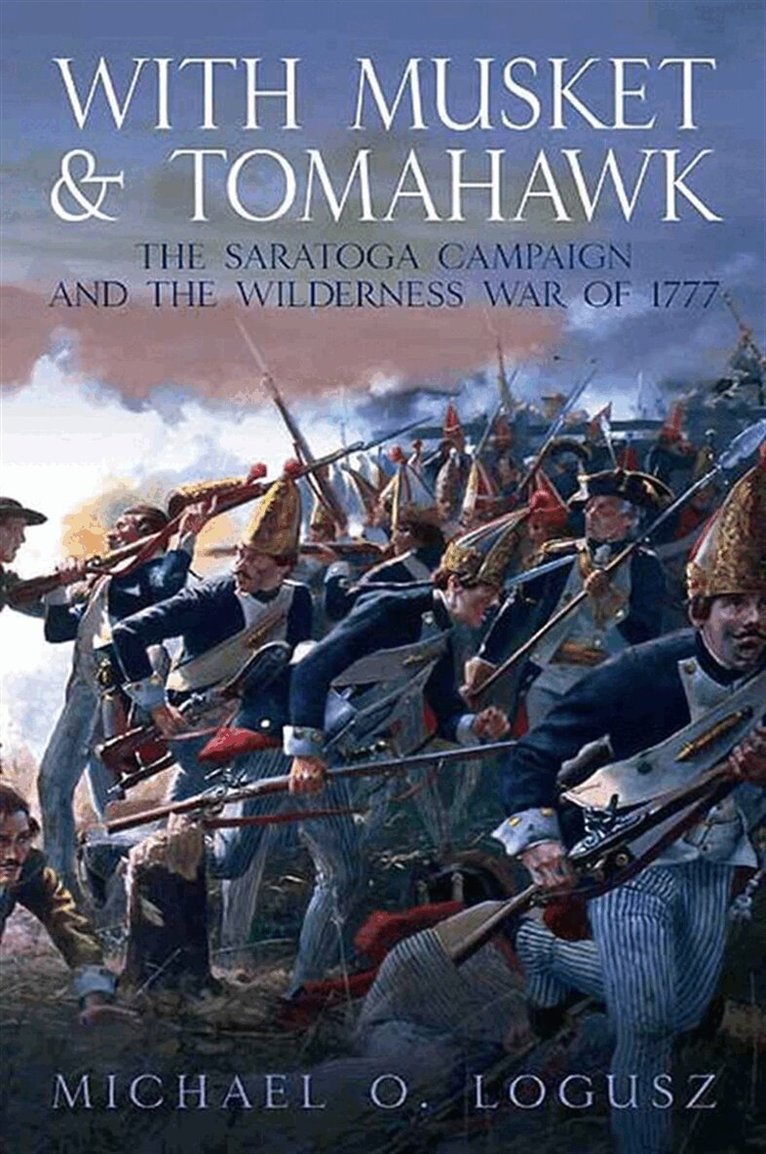
A comprehensive look at the brutal wilderness war that secured America's independence . . . With Musket and Tomahawk is a vivid account of the American and British struggles in the sprawling wilderness region of the northeast during the Revolutionary War. Combining strategic, tactical, and personal detail, this book describes how the patriots of the recently organized Northern Army defeated England's massive onslaught of 1777, thereby all but ensuring America’s independence.Conceived and launched by top-ranking British military leaders to shatter and suppress the revolting colonies, Britain’s three-pronged thrust was meant to separate New England from the rest of the nascent nation along the line of the Hudson River. Thus divided, both the northern and southern colonies could have been defeated in detail, unable to provide mutual assistance against further attacks.Yet, despite intense planning and vast efforts, Britain's campaign resulted in disaster when General John Burgoyne, with 6,000 soldiers, emerged from a woodline and surrendered his army to the Patriots at Saratoga in October 1777.Underneath the umbrella of Saratoga, countless battles and skirmishes were waged from the borders of Canada southward to Ticonderoga, Bennington, and West Point. Heroes on both sides were created by the score, though only one side proved victorious, amid a tapestry of madness, cruelty, and hardship in what can rightfully be called "the terrible Wilderness War of 1777."MICHAEL O. LOGUSZ has served in both the Regular and Reserve branches of the U.S. Army, most recently during Operation Iraqi Freedom in 2007–08. He holds a B.A. from Oswego State College and an M.A. in Russian Studies from Hunter College in New York. The author of numerous articles and a previous book on WWII, Lt. Colonel Logusz has personally examined the ground of each battle he describes. He currently lives in Florida.