Michael Oppenheimer – författare
Visar alla böcker från författaren Michael Oppenheimer. Handla med fri frakt och snabb leverans.
5 produkter
5 produkter
Häftad, Engelska, 2019
322 kr
Skickas inom 5-8 vardagar
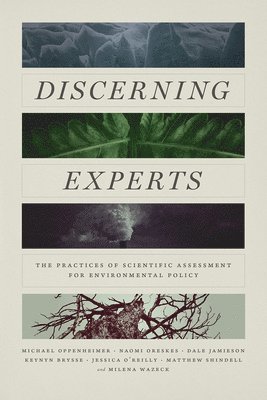
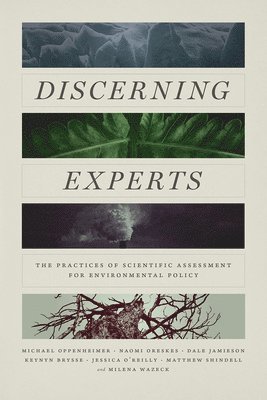
How do scientists evaluate environmental knowledge for public policy? Discerning Experts examines three sets of landmark environmental assessments involving acid rain, ozone depletion, and sea level rise, exploring how experts judge scientific evidence and determine what the scientific facts are. The three case studies also explore how scientists come to agreement on contested issues, why consensus is considered important, and what factors contribute to confusion, bias, and error, and how scientists understand and navigate the boundaries between science and policy. The authors also suggest strategies for improving the assessment process.As the first study of the internal workings of large environmental assessments, this book explores the strengths and weaknesses of the assessment process and explains what it can—and cannot—be expected to contribute to public policy and the common good.
Inbunden, Engelska, 2016
1 706 kr
Skickas inom 5-8 vardagar
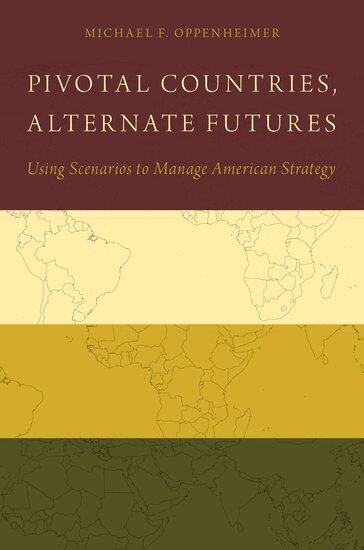
Michael Oppenheimer's Pivotal Countries, Alternate Futures is both a synthesis of our knowledge on scenario planning and a practical guide for policymakers. One of America's leading scenario planners, Oppenheimer has advised the Department of State, the Defense Intelligence Agency, the Joint Chiefs of Staff, the President's Science Advisor, the Council on Foreign Relations, and the Brookings Institution. In this book, he develops a sophisticated and coherent method for foreign policy specialists who necessarily deal with rapidly changing situations involving high levels of uncertainty. As he explains, figuring out possible outcomes and designing and appropriate policy requires an ability to identify the drivers of change, the potential wild card events, and the central policy questions in any given situation. Once policymakers determine these, they must plan a scenario. To do that, planners need to know how to build the best team of experts possible, run a session, and create credible narratives for different scenario alternatives. To illustrate how it all works, Oppenheimer draws from a range of real-life planning scenarios, including China, Syria, and the Iran nuclear crisis. To be sure, new crises will arise that supplant these current ones, but his basic method will aid policymakers in almost every future situation. While nothing ever goes completely to plan-least of all international conflict-preparing with multiple scenarios in mind will always be the least worst approach to global and regional crises. Methodologically rigorous and comprehensive, Pivotal Countries, Alternate Futures will be essential reading for policymakers and policy students trying to determine the best path forward in any given crisis.
Häftad, Engelska, 2016
805 kr
Skickas inom 3-6 vardagar
Michael Oppenheimer's Pivotal Countries, Alternate Futures is both a synthesis of our knowledge on scenario planning and a practical guide for policymakers. One of America's leading scenario planners, Oppenheimer has advised the Department of State, the Defense Intelligence Agency, the Joint Chiefs of Staff, the President's Science Advisor, the Council on Foreign Relations, and the Brookings Institution. In this book, he develops a sophisticated and coherent method for foreign policy specialists who necessarily deal with rapidly changing situations involving high levels of uncertainty. As he explains, figuring out possible outcomes and designing and appropriate policy requires an ability to identify the drivers of change, the potential wild card events, and the central policy questions in any given situation. Once policymakers determine these, they must plan a scenario. To do that, planners need to know how to build the best team of experts possible, run a session, and create credible narratives for different scenario alternatives. To illustrate how it all works, Oppenheimer draws from a range of real-life planning scenarios, including China, Syria, and the Iran nuclear crisis. To be sure, new crises will arise that supplant these current ones, but his basic method will aid policymakers in almost every future situation. While nothing ever goes completely to plan-least of all international conflict-preparing with multiple scenarios in mind will always be the least worst approach to global and regional crises. Methodologically rigorous and comprehensive, Pivotal Countries, Alternate Futures will be essential reading for policymakers and policy students trying to determine the best path forward in any given crisis.
E-bok
Engelska, 2019526 kr
Läs direkt efter köp
Discerning Experts assesses the assessments that many governments rely on to help guide environmental policy and action. Through their close look at environmental assessments involving acid rain, ozone depletion, and sea level rise, the authors explore how experts deliberate and decide on the scientific facts about problems like climate change. They also seek to understand how the scientists involved make the judgments they do, how the organization and management of assessment activities affects those judgments, and how expertise is identified and constructed. Discerning Experts uncovers factors that can generate systematic bias and error, and recommends how the process can be improved. As the first study of the internal workings of large environmental assessments, this book reveals their strengths and weaknesses, and explains what assessments can—and cannot—be expected to contribute to public policy and the common good.
Inbunden, Engelska, 2019
1 056 kr
Tillfälligt slut
How do scientists evaluate environmental knowledge for public policy? Discerning Experts examines three sets of landmark environmental assessments involving acid rain, ozone depletion, and sea level rise, exploring how experts judge scientific evidence and determine what the scientific facts are. The three case studies also explore how scientists come to agreement on contested issues, why consensus is considered important, and what factors contribute to confusion, bias, and error, and how scientists understand and navigate the boundaries between science and policy. The authors also suggest strategies for improving the assessment process.As the first study of the internal workings of large environmental assessments, this book explores the strengths and weaknesses of the assessment process and explains what it can--and cannot--be expected to contribute to public policy and the common good.