Michael S. Pritchard - Böcker
Visar alla böcker från författaren Michael S. Pritchard. Handla med fri frakt och snabb leverans.
15 produkter
15 produkter
593 kr
Skickas inom 10-15 vardagar
Michael Pritchard's study of individual morality is set in the trenches - in life as it is actually lived. The view of morality Pritchard presents is pluralistic, complex, and down-to-earth. Pritchard rejects the premise that moral development begins in self-interest, citing evidence of empathy and moral connectedness in very young children. Drawing essential elements from the work of Reid, Strawson, Rawls, Kohiberg, and Gilligan, he builds a comprehensive framework for tracing moral development from childhood - one that allows human morality to be grounded in both reason and emotion and that recognises the importance to morality of justice and rights as well as caring and responsibility. Pritchard's work is both a product of and a contribution to the field of moral psychology that began in the 1960s as a blending of philosophical theories on morality and ethics with insights from psychological theory on human development and moralbehaviour. Through his essays run the common threads of moral education, the complexity of ingredients and influences in moral life, and the concept of personal integrity.
304 kr
Skickas inom 10-15 vardagar
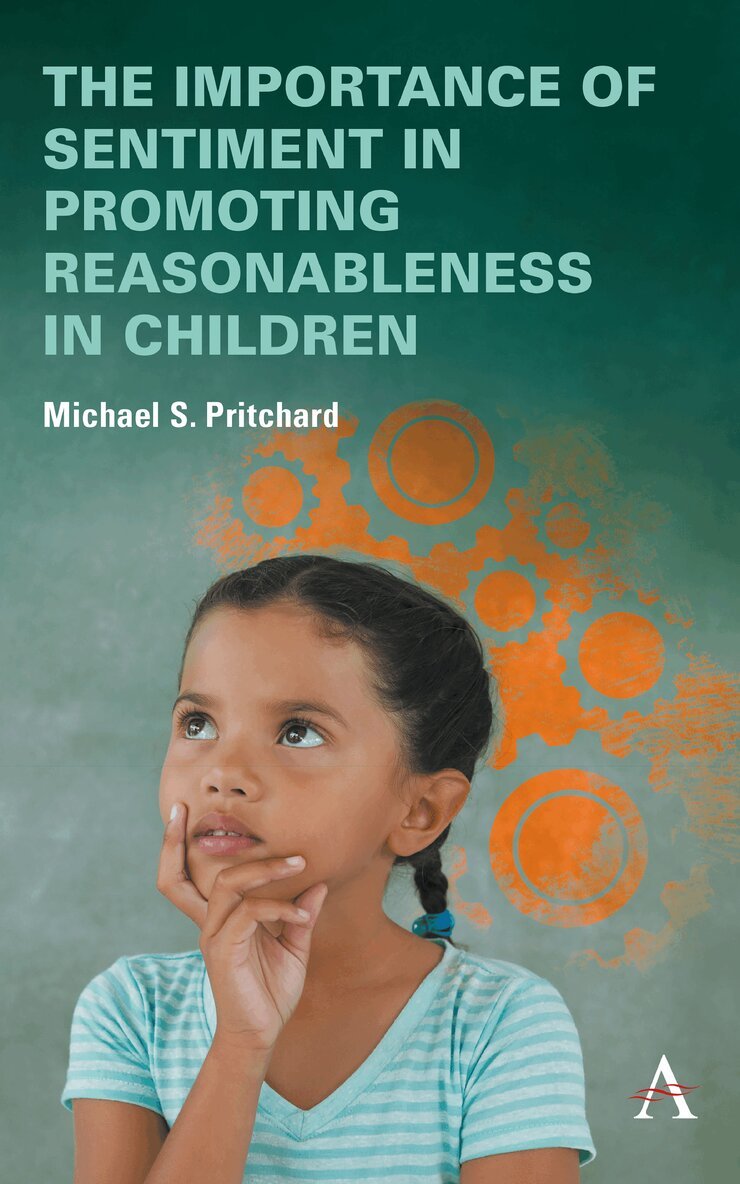
Building upon his provocative ideas in ""On Becoming Responsible"", Michael Pritchard presents a sensible plan for promoting children's moral education through the teaching of reasonableness. He considers moral concepts involving fairness, cheating, loyalty, truthtelling and lying.
1 064 kr
Skickas inom 10-15 vardagar
Suppose an accountant discovers evidence of shady practices while ex amining the books of a client. What should he or she do? Accountants have a professional obligation to respect the confidentiality of their cli ents' accounts. But, as an ordinary citizen, our accountant may feel that the authorities ought to be informed. Suppose a physician discov ers that a patient, a bus driver, has a weak heart. If the patient contin ues bus driving even after being informed of the heart condition, should the physician inform the driver's company? Respect for patient confidentiality would say, no. But what if the driver should suffer a heart attack while on duty, causing an accident in which people are killed or seriously injured? Would the doctor bear some responsibility for these consequences? Special obligations, such as those of confidentiality, apply to any one in business or the professions. These obligations articulate, at least in part, what it is for someone to be, say, an accountant or a physician. Since these obligations are special, they raise a real possibility of con flict with the moral principles we usually accept outside of these spe cial relationships in business and the professions. These conflicts may become more accentuated for a professional who is also a corporate employee-a corporate attorney, an engineer working for a construction company, a nurse working as an employee of a hospital.
Obstacles to Ethical Decision-Making
Mental Models, Milgram and the Problem of Obedience
Inbunden, Engelska, 2013
1 338 kr
Skickas inom 7-10 vardagar
In commerce, many moral failures are due to narrow mindsets that preclude taking into account the moral dimensions of a decision or action. In turn, sometimes these mindsets are caused by failing to question managerial decisions from a moral point of view, because of a perceived authority of management. In the 1960s, Stanley Milgram conducted controversial experiments to investigate just how far obedience to an authority figure could subvert his subjects' moral beliefs. In this thought-provoking work, the authors examine the prevalence of narrow mental models and the phenomenon of obedience to an authority to analyse and understand the challenges which business professionals encounter in making ethical decisions. Obstacles to Ethical Decision-Making proposes processes - including collaborative input and critique - by which individuals may reduce or overcome these challenges. It provides decision-makers at all levels in an organisation with the means to place ethical considerations at the heart of managerial decision-making.
Obstacles to Ethical Decision-Making
Mental Models, Milgram and the Problem of Obedience
Häftad, Engelska, 2014
532 kr
Skickas inom 7-10 vardagar
In commerce, many moral failures are due to narrow mindsets that preclude taking into account the moral dimensions of a decision or action. In turn, sometimes these mindsets are caused by failing to question managerial decisions from a moral point of view, because of a perceived authority of management. In the 1960s, Stanley Milgram conducted controversial experiments to investigate just how far obedience to an authority figure could subvert his subjects' moral beliefs. In this thought-provoking work, the authors examine the prevalence of narrow mental models and the phenomenon of obedience to an authority to analyse and understand the challenges which business professionals encounter in making ethical decisions. Obstacles to Ethical Decision-Making proposes processes - including collaborative input and critique - by which individuals may reduce or overcome these challenges. It provides decision-makers at all levels in an organisation with the means to place ethical considerations at the heart of managerial decision-making.
536 kr
Skickas inom 10-15 vardagar
Suppose an accountant discovers evidence of shady practices while ex amining the books of a client. What should he or she do? Accountants have a professional obligation to respect the confidentiality of their cli ents' accounts. But, as an ordinary citizen, our accountant may feel that the authorities ought to be informed. Suppose a physician discov ers that a patient, a bus driver, has a weak heart. If the patient contin ues bus driving even after being informed of the heart condition, should the physician inform the driver's company? Respect for patient confidentiality would say, no. But what if the driver should suffer a heart attack while on duty, causing an accident in which people are killed or seriously injured? Would the doctor bear some responsibility for these consequences? Special obligations, such as those of confidentiality, apply to any one in business or the professions. These obligations articulate, at least in part, what it is for someone to be, say, an accountant or a physician. Since these obligations are special, they raise a real possibility of con flict with the moral principles we usually accept outside of these spe cial relationships in business and the professions. These conflicts may become more accentuated for a professional who is also a corporate employee-a corporate attorney, an engineer working for a construction company, a nurse working as an employee of a hospital.
330 kr
Skickas inom 5-8 vardagar
On Becoming Reasonable explores the contributions that 18th Century Scottish philosophers Thomas Reid, Adam Smith, and David Hume make to our understanding of important factors in the development of children as they gradually acquire central features of reasonableness. Smith and Reid explicitly discuss the importance of sentiment and reason in the development of children. Their views are favorably influenced by the writings of their English predecessor Joseph Butler. Hume, too, valued much of Butler’s thinking. But, unlike Smith and Reid, he said little about Butler’s specific reflections on sentiment and reason. Despite this, one of the aims of this little book is to show that each contributes to our understanding today of what the encouragement of the philosophical thinking of children can play in helping them to come to an appreciation of reasonableness. Although his earlier book, Reasonable Children (University Press of Kansas, 1996), made some use of Thomas Reid’s writings on practical ethics, He had yet to become acquainted with Adam Smith’s Theory of Moral Sentiments (TMS), whose several editions were composed at the same time he was writing his more celebrated Wealth of Nations. Reading TMS has led him in this book to compare and contrast Smith’s views with those of his good friend David Hume and Hume’s notable critic, Reid. These further reflections have resulted in a revisiting of several major concerns of Reasonable Children.His special focus is on their views about the moral development of children. He regards each of the three, in their differing but sometimes complementary ways, as welcoming the sorts of refinements of reason and sentiments that play a fundamental role in the moral development of children. He concludes that each can be regarded as supporting the general view that the moral development of children can fairly be characterized in terms of the degree to which they are becoming reasonable persons. This, he argues, fits in well with the more recent work of philosophers such as Matthew Lipman, Ann Margaret Sharp, and Gareth Matthews who began urging in the late 20th Century that the philosophical thinking of children should be encouraged.
349 kr
Tillfälligt slut
349 kr
Tillfälligt slut
1 804 kr
Skickas inom 10-15 vardagar
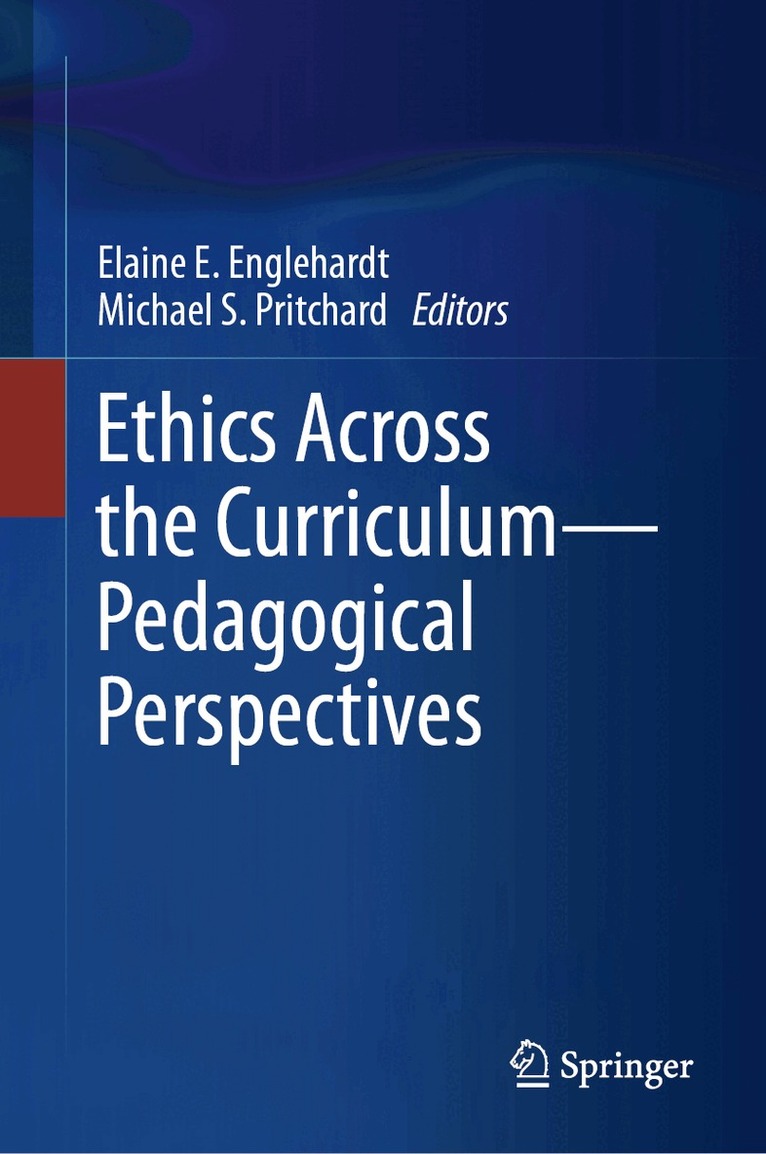
This book features articles by more than twenty experienced teachers of ethics who are committed to the idea that ethics can and should be taught virtually anywhere in the education curriculum. They explore a variety of ways in which this might best be done.Traditionally confined largely to programs in philosophy and religion, the teaching of ethics has in recent decades spread across the curriculum education. The contributors to this book discuss the rationale for supporting such efforts, the variety of challenges these efforts face, and the sorts of benefits faculty and students who participate in ethics across the curriculum endeavors can expect.An overriding theme of this book is that the teaching of ethics should not be restricted to one or two courses in philosophy or religion programs, but rather be addressed wherever relevant anywhere in the curriculum. For example, accredited engineering programs are expected to ensure that their students are introduced to the ethical dimensions of engineering. This can involve consideration of ethical issues within particular areas of engineering (e.g., civil, mechanical, electrical, chemical) as distinctive segments of certain courses (e.g., those that focus on design problems), or as a full semester course in ethics in engineering. Similar approaches can be taken in nursing, medicine, law, social work, psychology, accountancy, management, and so on. That is, some emphasis on ethics can be expected to be found in broad range of academic disciplines. However, many ethical issues require careful attention from the perspectives of several disciplines at once, and in ways that require their joining hands. Recognizing that adequately addressing many ethical issues may require the inclusion of perspectives from a variety of disciplines makes apparent the need for effective communication and reflection across disciplines, not simply within them. This, in turn, suggests that faculty and their students can benefit from special programs that are designed to include participants from a variety of disciplines. Such programs will be a central feature of this book. Although some differences might arise in how such issues might best be discussed across different parts of the curriculum, these discussions might be joined in ways that help students, faculty, administrators, and the wider public better appreciate their shared ethical ground.
1 593 kr
Skickas inom 10-15 vardagar
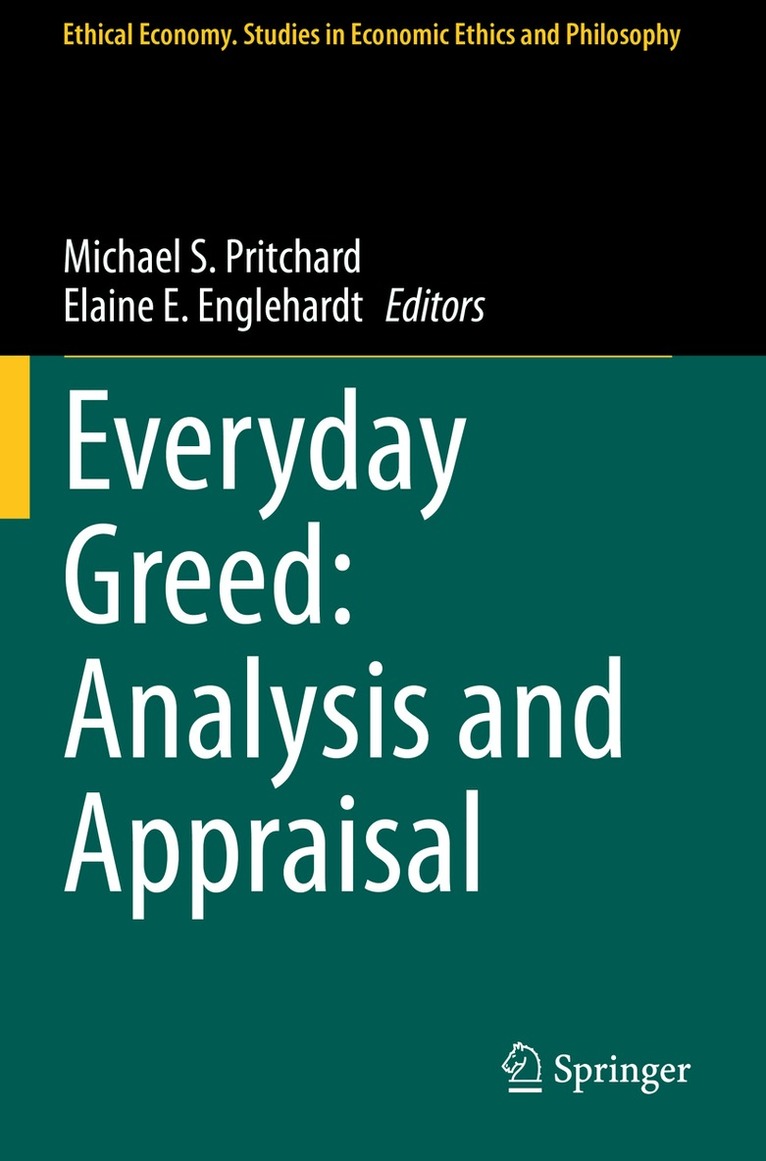
However, in adulthood, greed is commended by some as essential to profit-seeking in business and for offering the greatest promise in promoting economic prosperity for everyone. Those who advocate a more permissive position on greed in the adult world typically concede that some constraints on greed are needed.
1 593 kr
Skickas inom 10-15 vardagar
However, in adulthood, greed is commended by some as essential to profit-seeking in business and for offering the greatest promise in promoting economic prosperity for everyone. Those who advocate a more permissive position on greed in the adult world typically concede that some constraints on greed are needed.
1 804 kr
Skickas inom 10-15 vardagar
This book features articles by more than twenty experienced teachers of ethics who are committed to the idea that ethics can and should be taught virtually anywhere in the education curriculum.
1 064 kr
Skickas inom 10-15 vardagar
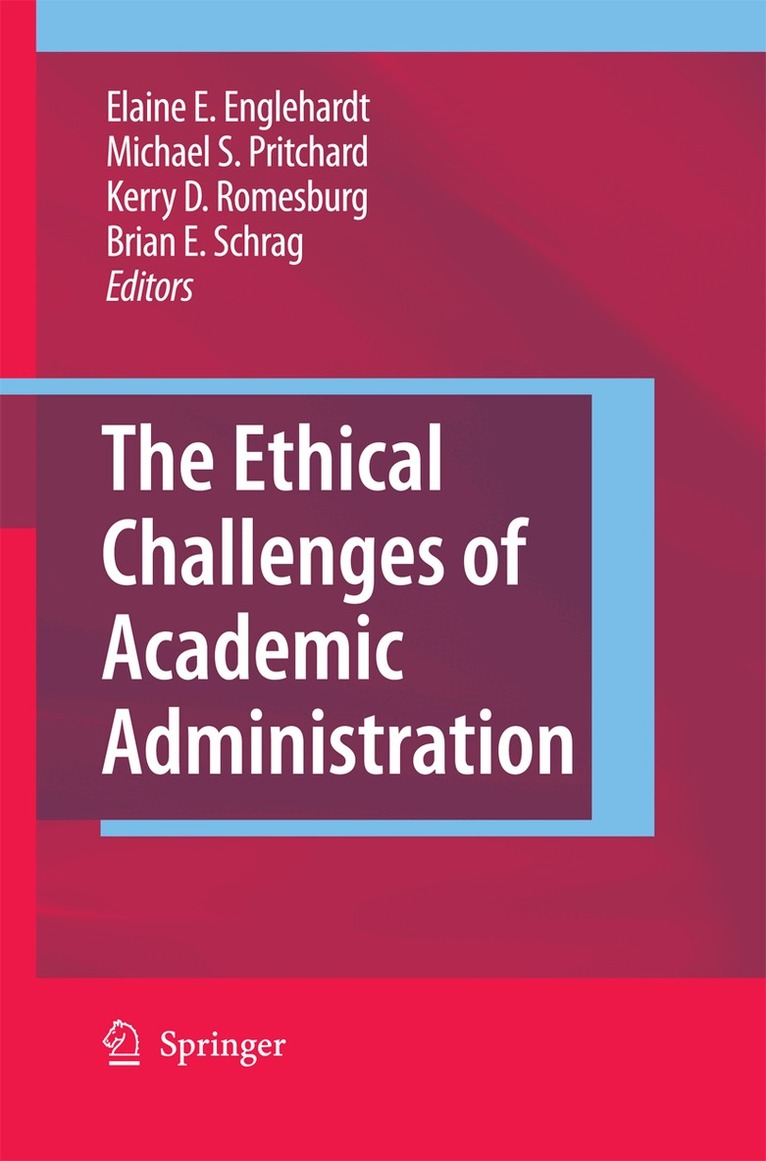
This book is an invitation to academic administrators, at every level, to engage in reflection on the ethical dimensions of their working lives. Academics are very good at reflecting on the ethical issues in other professions but not so interested in reflecting on those in their own, including those faced by faculty and administrators. Yet it is a topic of great importance. Academic institutions are value-driven; hence virtually every decision made by an academic administrator has an ethical component with implications for students, faculty, the institution, and the broader community. Despite this, they receive little systematic preparation for this aspect of their professional lives when they take up administrative posts, especially when compared to, say, medical or legal training.Surprisingly little has been written about the ethical challenges that academic administrators are likely to face. Most of the literature relating to academic administration focuses on “leadership” and draws heavily on management and social science theory. The importance of focusing on ethical deliberation and decision-making often goes unrecognized.
1 276 kr
Skickas inom 10-15 vardagar
This book is an invitation to academic administrators, at every level, to engage in reflection on the ethical dimensions of their working lives. Academics are very good at reflecting on the ethical issues in other professions but not so interested in reflecting on those in their own, including those faced by faculty and administrators. Yet it is a topic of great importance. Academic institutions are value-driven; hence virtually every decision made by an academic administrator has an ethical component with implications for students, faculty, the institution, and the broader community. Despite this, they receive little systematic preparation for this aspect of their professional lives when they take up administrative posts, especially when compared to, say, medical or legal training.Surprisingly little has been written about the ethical challenges that academic administrators are likely to face. Most of the literature relating to academic administration focuses on “leadership” and draws heavily on management and social science theory. The importance of focusing on ethical deliberation and decision-making often goes unrecognized.