
Michael Thomas Carroll – författare
Visar alla böcker från författaren Michael Thomas Carroll. Handla med fri frakt och snabb leverans.
3 produkter
3 produkter
E-bok
PDF, Engelska, 2010292 kr
Läs direkt efter köp
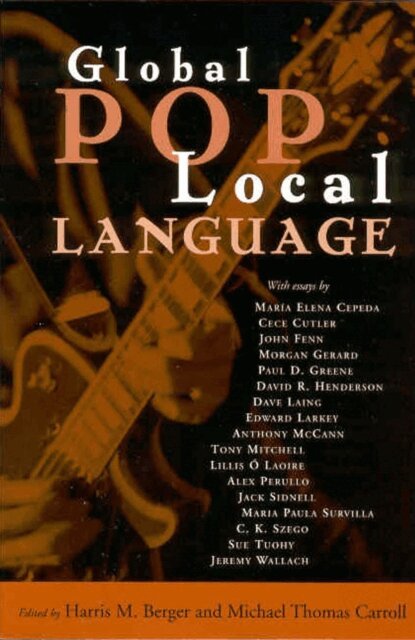
With contributions by Maria Elena Cepeda, Cece Cutler, John Fenn, Morgan Gerard, Paul D. Greene, David R. Henderson, Dave Laing, Edward Larkey, Anthony McCann, Tony Mitchell, Lillis O Laoire, Alex Perullo, Jack Sidnell, Maria Paula Survilla, C. K. Szego, Sue Tuohy, and Jeremy WallachWhy would a punk band popular only in Indonesia cut songs in no other language than English? If you're rapping in Tanzania and Malawi, where hip hop has a growing audience, what do you rhyme in? Swahili? Chichewa? English? Some combination of these? Global Pop, Local Language examines how performers and audiences from a wide range of cultures deal with the issue of language choice and dialect in popular music. Related issues confront performers of Latin music in the US; drum and bass MCs in Toronto; and rappers, rockers, and traditional folk singers from England and Ireland to France, Germany, Belarus, Nepal, China, New Zealand, Hawaii, and beyond. For pop musicians, this issue brings up a number of complex questions. Which languages or dialects will best express my ideas? Which will get me a record contract or a bigger audience? What does it mean to sing or listen to music in a colonial language? A foreign language? A regional dialect? A "e;native"e; language? Examining popular music from a range of world cultures, the authors explore these questions and use them to address a number of broader issues, including the globalization of the music industry, the problem of authenticity in popular culture, the politics of identity, multiculturalism, and the emergence of English as a dominant world language. The chapters are written in a highly accessible style by scholars from a variety of fields, including ethnomusicology, popular music studies, anthropology, culture studies, literary studies, folklore, and linguistics.
E-bok
Engelska, 2010292 kr
Läs direkt efter köp
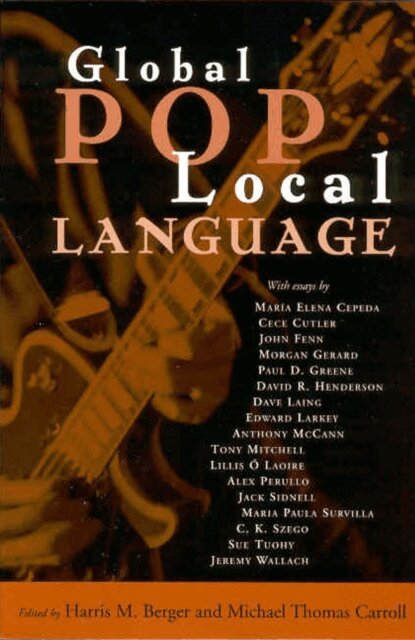
With contributions by Maria Elena Cepeda, Cece Cutler, John Fenn, Morgan Gerard, Paul D. Greene, David R. Henderson, Dave Laing, Edward Larkey, Anthony McCann, Tony Mitchell, Lillis O Laoire, Alex Perullo, Jack Sidnell, Maria Paula Survilla, C. K. Szego, Sue Tuohy, and Jeremy WallachWhy would a punk band popular only in Indonesia cut songs in no other language than English? If you're rapping in Tanzania and Malawi, where hip hop has a growing audience, what do you rhyme in? Swahili? Chichewa? English? Some combination of these? Global Pop, Local Language examines how performers and audiences from a wide range of cultures deal with the issue of language choice and dialect in popular music. Related issues confront performers of Latin music in the US; drum and bass MCs in Toronto; and rappers, rockers, and traditional folk singers from England and Ireland to France, Germany, Belarus, Nepal, China, New Zealand, Hawaii, and beyond. For pop musicians, this issue brings up a number of complex questions. Which languages or dialects will best express my ideas? Which will get me a record contract or a bigger audience? What does it mean to sing or listen to music in a colonial language? A foreign language? A regional dialect? A "e;native"e; language? Examining popular music from a range of world cultures, the authors explore these questions and use them to address a number of broader issues, including the globalization of the music industry, the problem of authenticity in popular culture, the politics of identity, multiculturalism, and the emergence of English as a dominant world language. The chapters are written in a highly accessible style by scholars from a variety of fields, including ethnomusicology, popular music studies, anthropology, culture studies, literary studies, folklore, and linguistics.
Häftad, Engelska, 2000
390 kr
Tillfälligt slut
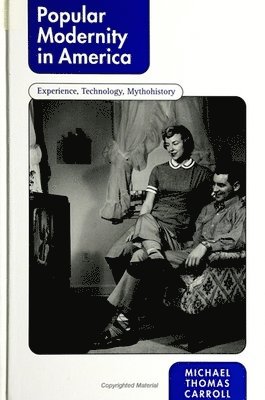
Examines a wide variety of cultural and technological phenomena that have helped shape American popular culture over the last 150 years.Does technology alter our ways of being in and perceiving the world, or does it merely serve as a conduit for predetermined patterns of culture? In addressing this question, Popular Modernity in America examines a broad range of related cultural and technological phenomena-from Bing Crosby to Ice Cube, from the invention of the telegraph to the celebratory heralding of the internet in the 1990s-that have helped shape American popular culture over the past 150 years. Throughout, it avoids the binaries that label popular culture as inherently liberatory or subtly oppressive, arguing instead for the triadic relationship of experience, technology, and myth, each of which has an active role to play in how we interact with popular culture.