Michah Gottlieb – författare
Visar alla böcker från författaren Michah Gottlieb. Handla med fri frakt och snabb leverans.
9 produkter
9 produkter
E-bok
Engelska, 2011893 kr
Läs direkt efter köp
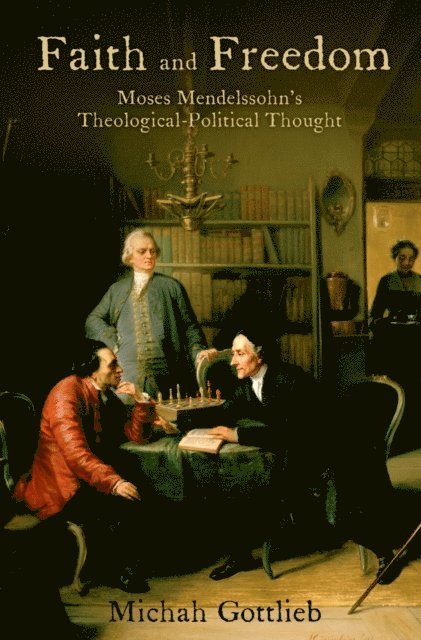
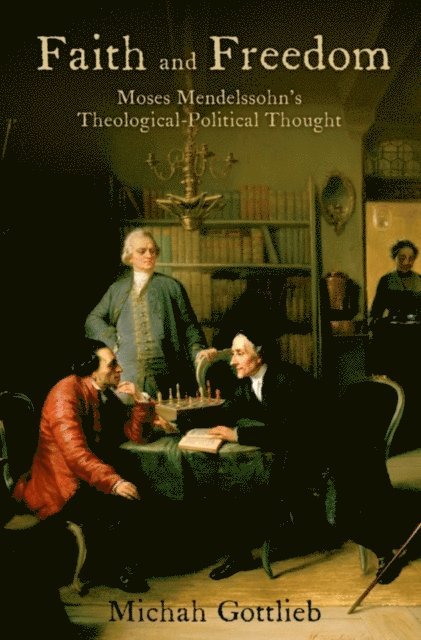
The recent renewal of the faith-reason debate has focused attention on earlier episodes in its history. One of its memorable highlights occurred during the Enlightenment, with the outbreak of the "Pantheism Controversy" between the eighteenth century Jewish philosopher Moses Mendelssohn and the Christian Counter-Enlightenment thinker Friedrich Heinrich Jacobi. While Mendelssohn argued that reason confirmed belief in a providential God and in an immortal soul, Jacobi claimed that its consistent application led ineluctably to atheism and fatalism. At present, there are two leading interpretations of Moses Mendelssohn''s thought. One casts him as a Jewish traditionalist who draws on German philosophy to support his premodern Jewish beliefs, while the other portrays him as a secret Deist who seeks to encourage his fellow Jews to integrate into German society and so disingenuously defends Judaism to avoid arousing their opposition. By exploring the Pantheism Controversy and Mendelssohn''s relation to his two greatest Jewish philosophical predecessors, the medieval Rabbi Moses Maimonides and the seventeenth century heretic Baruch Spinoza, Michah Gottlieb presents a new reading of Mendelssohn arguing that he defends Jewish religious concepts sincerely, but gives them a humanistic interpretation appropriate to life in a free, diverse modern society. Gottlieb argues that the faith-reason debate is best understood not primarily as an argument about metaphysical questions, such as whether or not God exists, but rather as a contest between two competing conceptions of human dignity and freedom. Mendelssohn, Gottlieb contends, gives expression to a humanistic religious perspective worthy of renewed consideration today.
Inbunden, Engelska, 2011
977 kr
Skickas inom 5-8 vardagar
Two major interpretations of Mendelssohn's achievements have attained prominence in recent works. One interpretation, defended most recently by David Sorkin and Edward Breuer, casts Mendelssohn as a Jewish traditionalist who uses the language of enlightened German philosophy to bolster his pre-modern religious beliefs. The other interpretation, defended by Allan Arkush, casts Mendelssohn as a radical Deist who defends Judaism exoterically in order to avoid arousing opposition from his co-religionists while facilitating their social integration into enlightened European society. In Faith and Freedom, Michah Gottlieb stakes out a middle position. He argues that Mendelssohn defends pre-modern Jewish religious concepts sincerely, but in so doing, unconsciously gives them a humanistic valence appropriate to life in a diverse, enlightened society. Gottlieb sees the Pantheism Controversy as part of a broader assessment of Mendelssohn's theological-political philosophy, framed in terms of Mendelssohn's relation to his two greatest Jewish philosophical predecessors, Moses Maimonides (1138-1204) and Baruch Spinoza (1632-1677). While Mendelssohn's relation to Maimonides and Spinoza has been discussed sporadically, Faith and Freedom is the first book-length treatment of this subject. The connection is particularly instructive as both Maimonides and Spinoza wrote major theological-political treatises and exercised profound influences on Mendelssohn. Not surprisingly, Mendelssohn is deeply ambivalent about both of these figures. He reveres Maimonides for what he sees as his synthesis of Judaism with secular knowledge, while seeming deeply disturbed by Maimonides's elitism, his equivocation regarding many of the tenets of theism, his espousing religious coercion, and his intolerant view of Gentiles. As for Spinoza, Mendelssohn respects him as a model for how a Jew can fruitfully contribute to science and philosophy and be a model of ethical rectitude. But Mendelssohn objects to Spinoza's atheism, advocacy of state religion, debunking of Jewish chosenness, and rejection of Jewish law. For Mendelssohn, reason best preserves human dignity and freedom by upholding the individual's right to arrive at truth on their own and determine their own beliefs independently of all authority. As such, reason demands that the state respect diversity of thought and religious expression. Mendelssohn interprets faith in the Jewish sense as trust in God's providential goodness, arguing that reason affirms this as well. But he recognizes the difficulty of establishing metaphysical truth rationally and so in his final works adumbrates a form of religious pragmatism. The faith-reason debate rages again today. Gottlieb explores Mendelssohn's theological-political thought with an eye to axiological and political dimensions of the debate.
Häftad, Engelska, 2023
394 kr
Skickas inom 5-8 vardagar
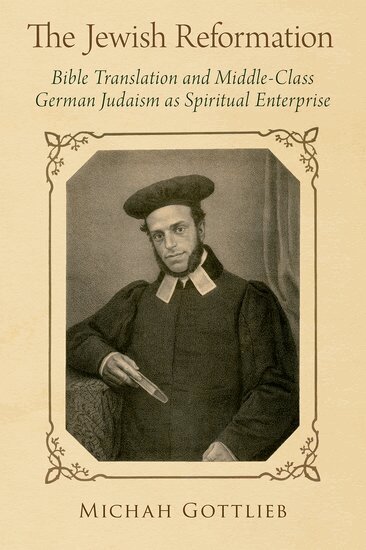
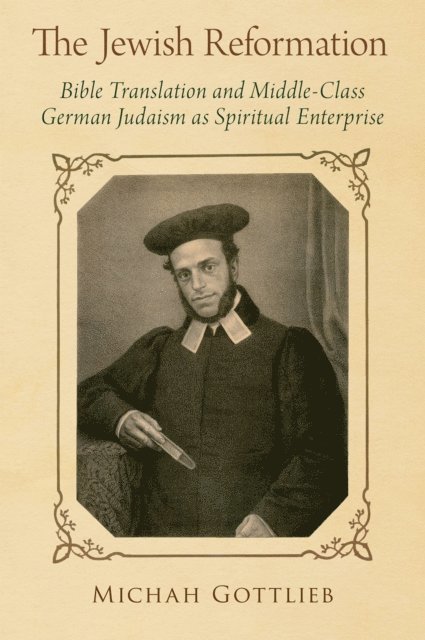
In the late eighteenth century, German Jews began entering the middle class with remarkable speed. That upward mobility, it has often been said, coincided with Jews' increasing alienation from religion and Jewish nationhood. In fact, Michah Gottlieb argues, this period was one of intense engagement with Jewish texts and traditions. One expression of this was the remarkable turn to Bible translation. In the century and a half beginning with Moses Mendelssohn's pioneering translation and the final one by Martin Buber and Franz Rosenzweig, German Jews produced sixteen different translations of at least the Pentateuch. Exploring Bible translations by Mendelssohn, Leopold Zunz, and Samson Raphael Hirsch, Michah Gottlieb argues that each translator sought a "reformation" of Judaism along bourgeois lines, which involved aligning Judaism with a Protestant concept of religion. Buber and Rosenzweig famously critiqued bourgeois German Judaism as a craven attempt to establish social respectability to facilitate Jews' entry into the middle class through a vapid, domesticated Judaism. But Mendelssohn, Zunz, and Hirsch saw in bourgeois values the best means to serve God and the authentic actualization of Jewish tradition. Through their learned, creative Bible translations, these scholars presented competing visions of middle-class Judaism that affirmed Jewish nationhood while lighting the path to a purposeful, emotionally-rich spiritual life grounded in ethical responsibility.
Inbunden, Engelska, 2021
1 114 kr
Skickas inom 5-8 vardagar
In the late eighteenth century, German Jews began entering the middle class with remarkable speed. That upward mobility, it has often been said, coincided with Jews' increasing alienation from religion and Jewish nationhood. In fact, Michah Gottlieb argues, this period was one of intense engagement with Jewish texts and traditions. One expression of this was the remarkable turn to Bible translation. In the century and a half beginning with Moses Mendelssohn's pioneering translation and the final one by Martin Buber and Franz Rosenzweig, German Jews produced sixteen different translations of at least the Pentateuch. Exploring Bible translations by Mendelssohn, Leopold Zunz, and Samson Raphael Hirsch, Michah Gottlieb argues that each translator sought a "reformation" of Judaism along bourgeois lines, which involved aligning Judaism with a Protestant concept of religion. Buber and Rosenzweig famously critiqued bourgeois German Judaism as a craven attempt to establish social respectability to facilitate Jews' entry into the middle class through a vapid, domesticated Judaism. But Mendelssohn, Zunz, and Hirsch saw in bourgeois values the best means to serve God and the authentic actualization of Jewish tradition. Through their learned, creative Bible translations, these scholars presented competing visions of middle-class Judaism that affirmed Jewish nationhood while lighting the path to a purposeful, emotionally-rich spiritual life grounded in ethical responsibility.
E-bok
PDF, Engelska, 2020344 kr
Läs direkt efter köp
In the late eighteenth century, German Jews began entering the middle class with remarkable speed. That upward mobility, it has often been said, coincided with Jews'' increasing alienation from religion and Jewish nationhood. In fact, Michah Gottlieb argues, this period was one of intense engagement with Jewish texts and traditions. One expression of this was the remarkable turn to Bible translation. In the century and a half beginning with Moses Mendelssohn''s pioneering translation and the final one by Martin Buber and Franz Rosenzweig, German Jews produced sixteen different translations of at least the Pentateuch.Exploring Bible translations by Mendelssohn, Leopold Zunz, and Samson Raphael Hirsch, Michah Gottlieb argues that each translator sought a "reformation" of Judaism along bourgeois lines, which involved aligning Judaism with a Protestant concept of religion. Buber and Rosenzweig famously critiqued bourgeois German Judaism as a craven attempt to establish social respectability to facilitate Jews'' entry into the middle class through a vapid, domesticated Judaism. But Mendelssohn, Zunz, and Hirsch saw in bourgeois values the best means to serve God and the authentic actualization of Jewish tradition. Through their learned, creative Bible translations, these scholars presented competing visions of middle-class Judaism that affirmed Jewish nationhood while lighting the path to a purposeful, emotionally-rich spiritual life grounded in ethical responsibility.
E-bok
Engelska, 2020344 kr
Läs direkt efter köp
In the late eighteenth century, German Jews began entering the middle class with remarkable speed. That upward mobility, it has often been said, coincided with Jews'' increasing alienation from religion and Jewish nationhood. In fact, Michah Gottlieb argues, this period was one of intense engagement with Jewish texts and traditions. One expression of this was the remarkable turn to Bible translation. In the century and a half beginning with Moses Mendelssohn''s pioneering translation and the final one by Martin Buber and Franz Rosenzweig, German Jews produced sixteen different translations of at least the Pentateuch.Exploring Bible translations by Mendelssohn, Leopold Zunz, and Samson Raphael Hirsch, Michah Gottlieb argues that each translator sought a "reformation" of Judaism along bourgeois lines, which involved aligning Judaism with a Protestant concept of religion. Buber and Rosenzweig famously critiqued bourgeois German Judaism as a craven attempt to establish social respectability to facilitate Jews'' entry into the middle class through a vapid, domesticated Judaism. But Mendelssohn, Zunz, and Hirsch saw in bourgeois values the best means to serve God and the authentic actualization of Jewish tradition. Through their learned, creative Bible translations, these scholars presented competing visions of middle-class Judaism that affirmed Jewish nationhood while lighting the path to a purposeful, emotionally-rich spiritual life grounded in ethical responsibility.
E-bok
PDF, Engelska, 2011893 kr
Läs direkt efter köp
The recent renewal of the faith-reason debate has focused attention on earlier episodes in its history. One of its memorable highlights occurred during the Enlightenment, with the outbreak of the "Pantheism Controversy" between the eighteenth century Jewish philosopher Moses Mendelssohn and the Christian Counter-Enlightenment thinker Friedrich Heinrich Jacobi. While Mendelssohn argued that reason confirmed belief in a providential God and in an immortal soul, Jacobi claimed that its consistent application led ineluctably to atheism and fatalism. At present, there are two leading interpretations of Moses Mendelssohn''s thought. One casts him as a Jewish traditionalist who draws on German philosophy to support his premodern Jewish beliefs, while the other portrays him as a secret Deist who seeks to encourage his fellow Jews to integrate into German society and so disingenuously defends Judaism to avoid arousing their opposition. By exploring the Pantheism Controversy and Mendelssohn''s relation to his two greatest Jewish philosophical predecessors, the medieval Rabbi Moses Maimonides and the seventeenth century heretic Baruch Spinoza, Michah Gottlieb presents a new reading of Mendelssohn arguing that he defends Jewish religious concepts sincerely, but gives them a humanistic interpretation appropriate to life in a free, diverse modern society. Gottlieb argues that the faith-reason debate is best understood not primarily as an argument about metaphysical questions, such as whether or not God exists, but rather as a contest between two competing conceptions of human dignity and freedom. Mendelssohn, Gottlieb contends, gives expression to a humanistic religious perspective worthy of renewed consideration today.
E-bok
PDF, Engelska, 20132 433 kr
Läs direkt efter köp
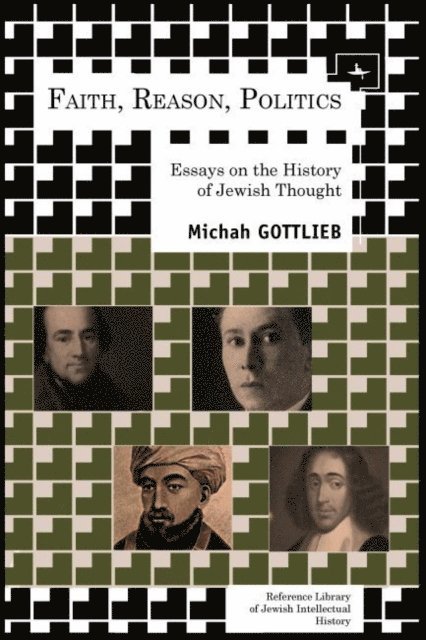
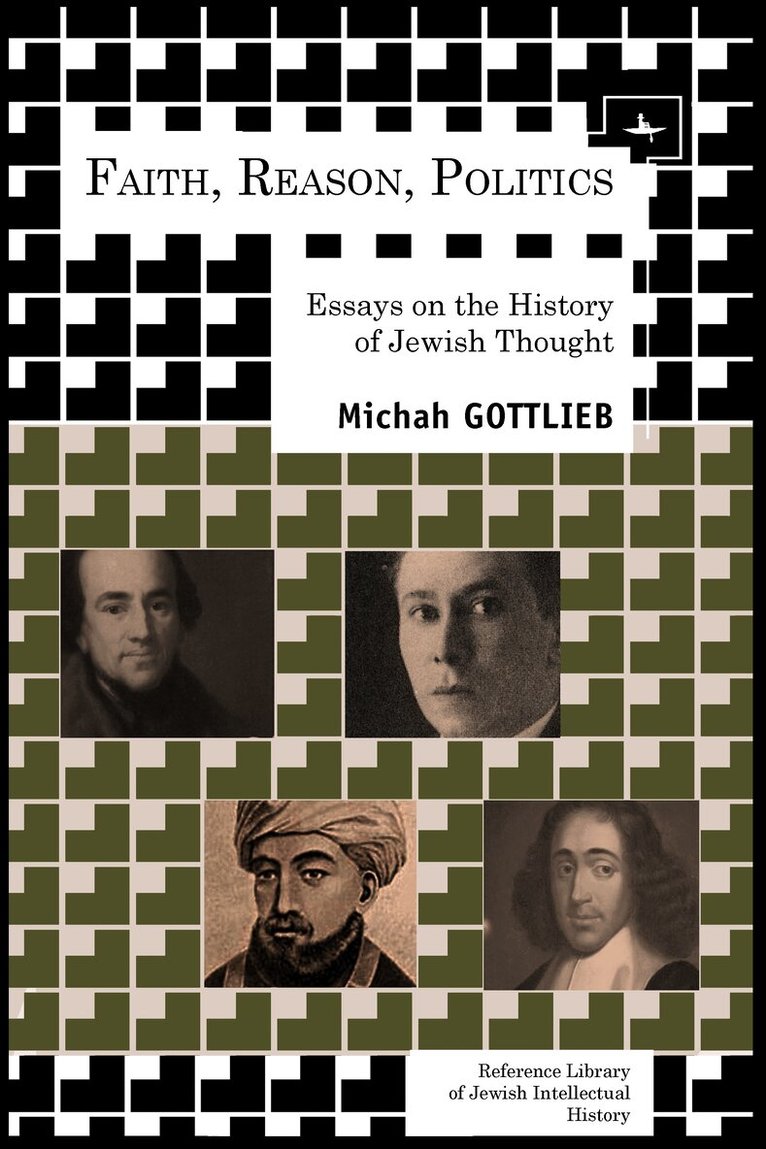
The past decade has witnessed renewed interest in the faith-reason debate. But all too often the debate is treated in generic terms, without paying attention either to differences between religious traditions or to the historical development of these traditions. Judaism, with its emphasis on religious law, yields insights into the political ramifications of the problem that differ greatly from Christian approaches. In Faith, Reason, Politics, Michah Gottlieb explores Jewish approaches to the faith-reason debate through detailed analyses of Jewish thinkers from the twelfth to the twentieth centuries, including Judah Halevi, Maimonides, Spinoza, Moses Mendelssohn, Samson Raphael Hirsch, and Leo Strauss. This book will appeal to scholars and students interested in the problem of faith versus reason and in the relationship between religion and politics.
Inbunden, Engelska, 2013
1 312 kr
Skickas inom 5-8 vardagar
The past decade has witnessed renewed interest in the faith-reason debate. But all too often the debate is treated in generic terms, without paying attention either to differences between religious traditions or to the historical development of these traditions. Judaism, with its emphasis on religious law, yields insights into the political ramifications of the problem that differ greatly from Christian approaches. In Faith, Reason, Politics, Michah Gottlieb explores Jewish approaches to the faith-reason debate through detailed analyses of Jewish thinkers from the twelfth to the twentieth centuries, including Judah Halevi, Maimonides, Spinoza, Moses Mendelssohn, Samson Raphael Hirsch, and Leo Strauss. This book will appeal to scholars and students interested in the problem of faith versus reason and in the relationship between religion and politics.