Michal Bar - Böcker
Visar alla böcker från författaren Michal Bar. Handla med fri frakt och snabb leverans.
4 produkter
4 produkter
1 064 kr
Skickas inom 10-15 vardagar
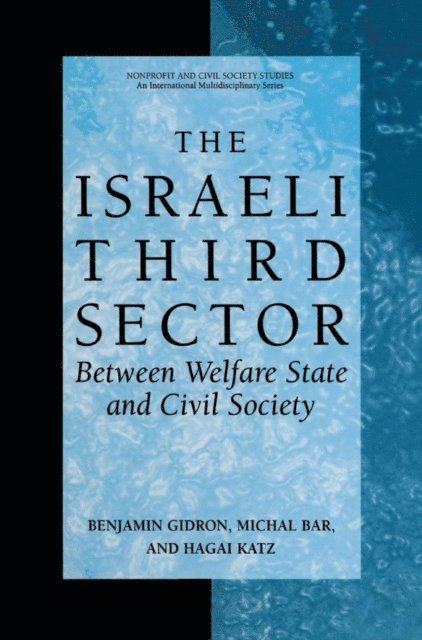
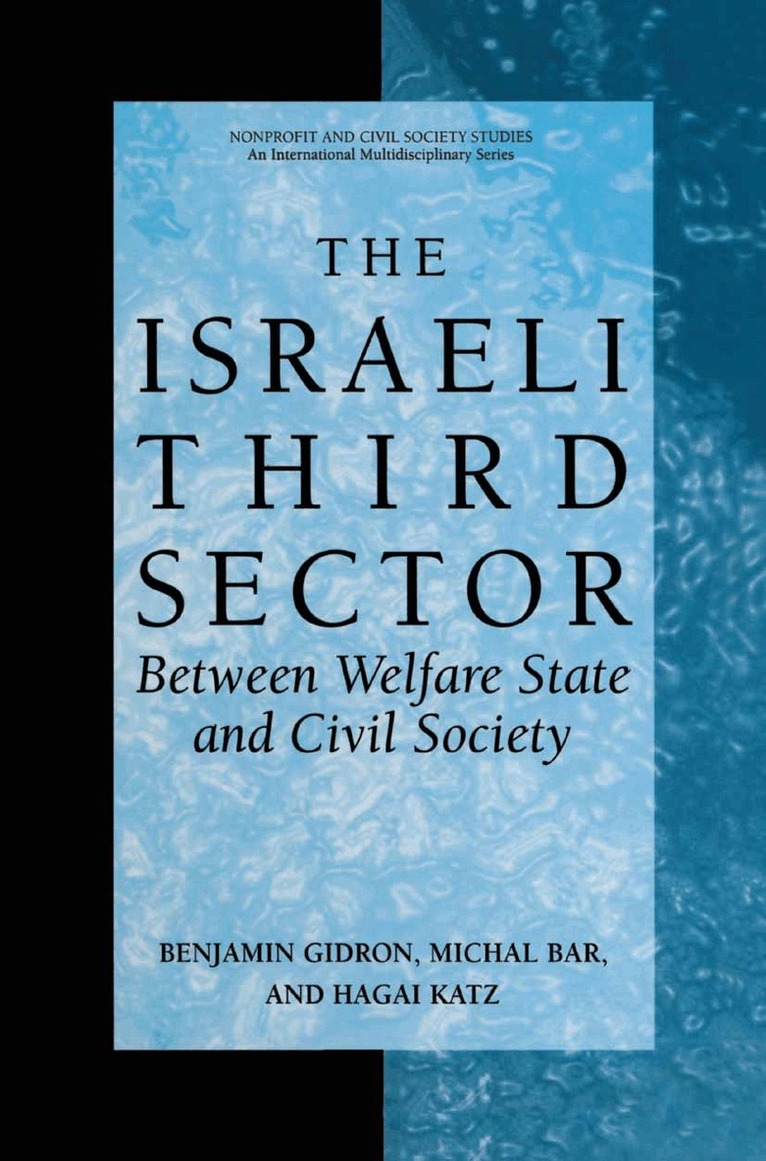
The Nonprofit Sector in Israel has recently come into prominence because of its multiple societal functions, which include its central role in the development and maintenance of Israel's Welfare State and its contribution to the building of its civil society. Both of these have major social, economic and political implications, and impact the building of the Israeli democracy. Voluntary, nonprofit organizations have a strong base in Jewish history and deep roots within Israeli society, yet knowledge about them is sparse. This situation can be explained by the lack of appropriate conceptual tools to analyze the Third Sector and its components. However, this issue has begun to change over the past decade as interest in the Third Sector worldwide grows and a developing literature on the subject emerges. In Israel, as in most countries, the development of the Third Sector coincided with a trend to cut public funding and the provision of social services within the welfare state system, as well as other developments pertaining to the changes within the Israeli society and polity.The book presents the economic, historical, legal and policy dimensions of the Sector with a focus on its contribution to the Welfare State and civil society. It then analyzes those findings in the context of major theoretical frameworks of the sector. While Israel shares certain similarities with other countries, its history, demography, and politics have created unique features that make it impossible to fit the country into existing Third Sector theories, which are presented in this seminal reading for the global discussion on nonprofit theory. Furthermore, that analysis, with the focus on the Third Sector in the context of society is also providing a new lens through which to analyze contemporary Israeli society.
1 064 kr
Skickas inom 10-15 vardagar
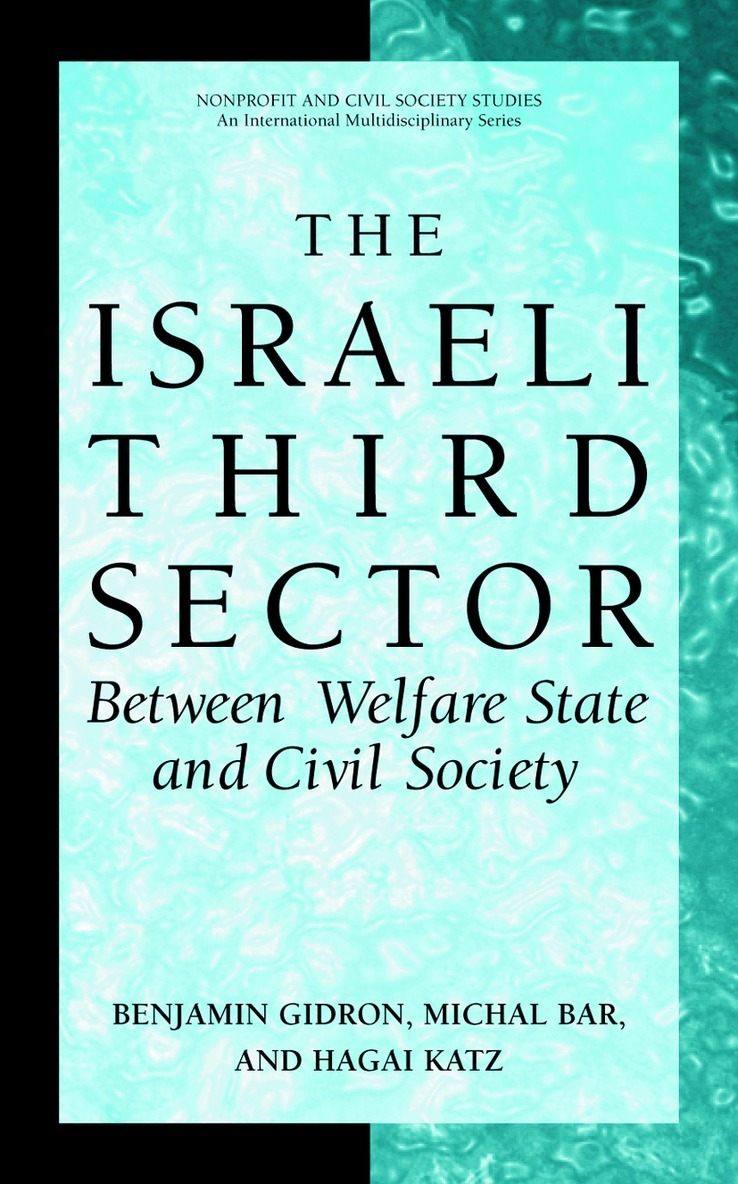
The Nonprofit Sector in Israel has recently come into prominence because of its multiple societal functions, which include its central role in the development and maintenance of Israel's Welfare State and its contribution to the building of its civil society. Both of these have major social, economic and political implications, and impact the building of the Israeli democracy. Voluntary, nonprofit organizations have a strong base in Jewish history and deep roots within Israeli society, yet knowledge about them is sparse. This situation can be explained by the lack of appropriate conceptual tools to analyze the Third Sector and its components. However, this issue has begun to change over the past decade as interest in the Third Sector worldwide grows and a developing literature on the subject emerges. In Israel, as in most countries, the development of the Third Sector coincided with a trend to cut public funding and the provision of social services within the welfare state system, as well as other developments pertaining to the changes within the Israeli society and polity.The book presents the economic, historical, legal and policy dimensions of the Sector with a focus on its contribution to the Welfare State and civil society. It then analyzes those findings in the context of major theoretical frameworks of the sector. While Israel shares certain similarities with other countries, its history, demography, and politics have created unique features that make it impossible to fit the country into existing Third Sector theories, which are presented in this seminal reading for the global discussion on nonprofit theory. Furthermore, that analysis, with the focus on the Third Sector in the context of society is also providing a new lens through which to analyze contemporary Israeli society.
1 095 kr
Skickas inom 10-15 vardagar
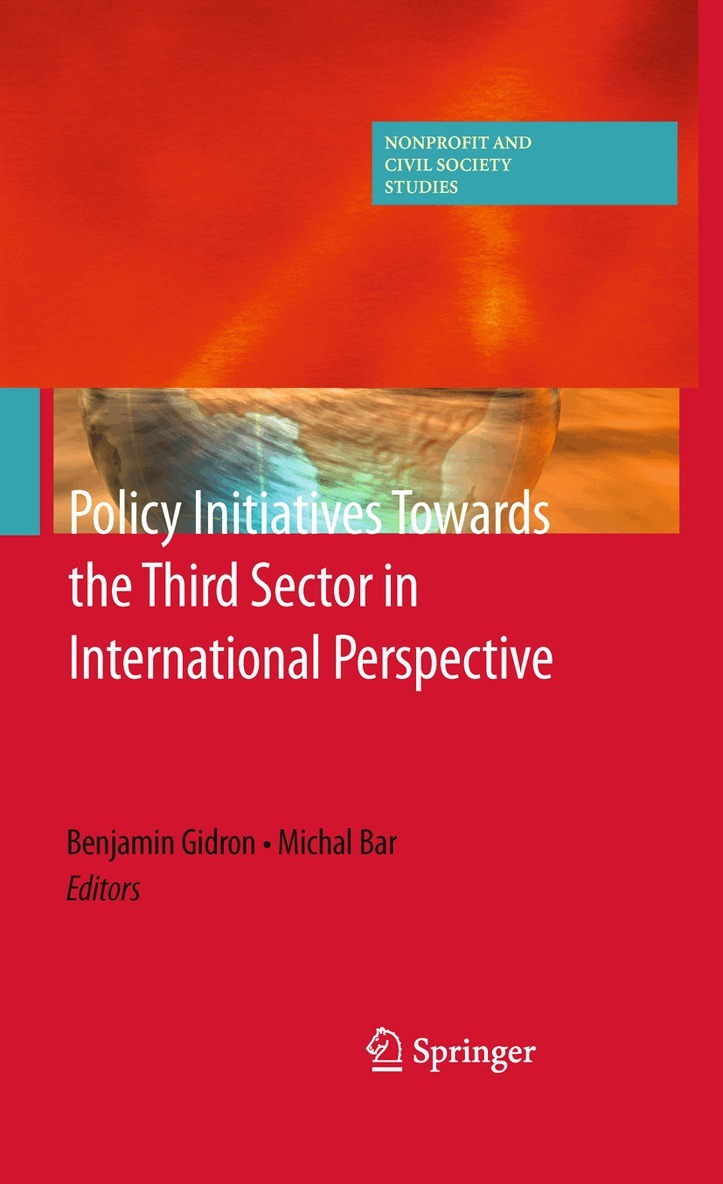
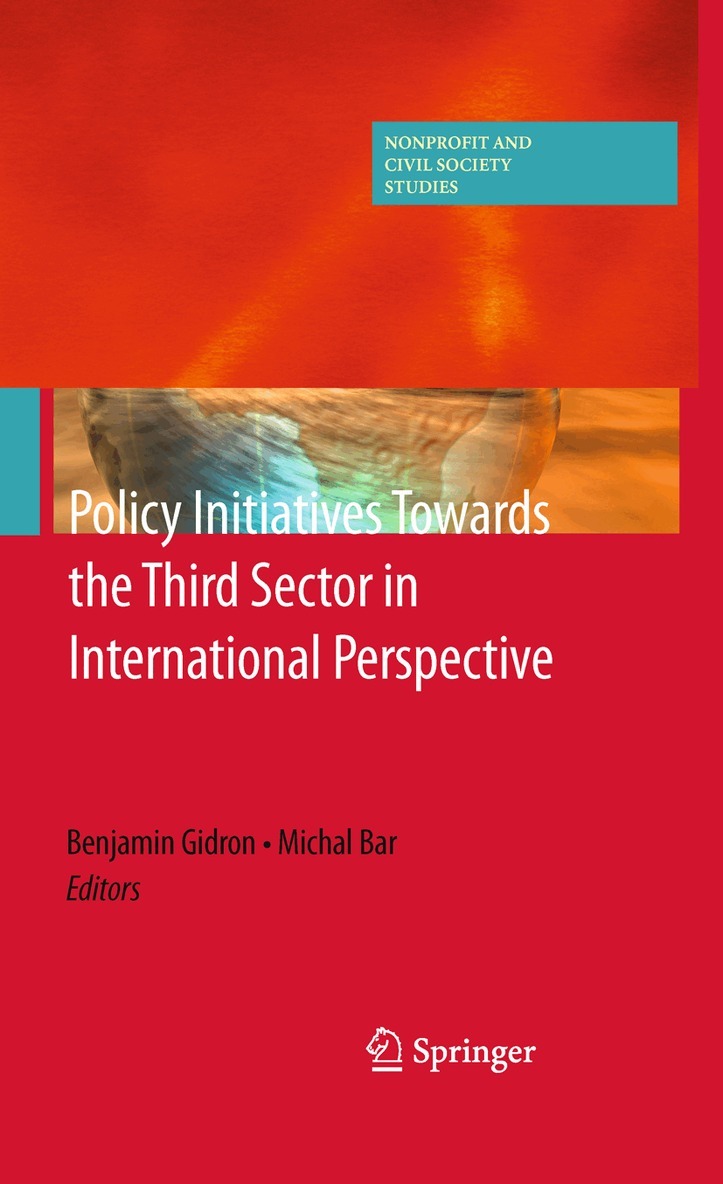
Over the past decade, the third sector has had tremendous growth worldwide in both size and importance. As many countries struggle to address this changing reality, many have adopted policy initiatives aimed at changing the ways the third sector is addressed. It is a complex process, involving different fields of practice, different levels of government, and different types of third sector organizations.The contributions to this timely volume detail the process as carried out in eight diverse countries: USUK,Canada,Hungary,Germany,Ireland,Israel,Japan,all of whom have recently enacted policy initiatives towards the third sector. The studies are comprehensive: from reviewing the current policy, enacting new laws, supervisory mechanisms, and modes of funding.Featuring a postscript from Helmut Anheier (UCLA School of Public Policy, Los Angeles, CA, USA and Hertie School of Governance, Berlin, Germany), the thorough analysis in this volume will provide a new understanding of the policy initiatives in the eight countries studied, as well as guiding principles for other countries that may implement such initiatives in the future. The resulting work will give researchers in sociology, social work, third sector research, and international economics a new framework for understanding the Third Sector: its role in society, and its relationships with government, the market, and the citizens of the country.
1 095 kr
Skickas inom 10-15 vardagar
Over the past decade, the third sector has had tremendous growth worldwide in both size and importance. As many countries struggle to address this changing reality, many have adopted policy initiatives aimed at changing the ways the third sector is addressed. It is a complex process, involving different fields of practice, different levels of government, and different types of third sector organizations.The contributions to this timely volume detail the process as carried out in eight diverse countries: USUK,Canada,Hungary,Germany,Ireland,Israel,Japan,all of whom have recently enacted policy initiatives towards the third sector. The studies are comprehensive: from reviewing the current policy, enacting new laws, supervisory mechanisms, and modes of funding.Featuring a postscript from Helmut Anheier (UCLA School of Public Policy, Los Angeles, CA, USA and Hertie School of Governance, Berlin, Germany), the thorough analysis in this volume will provide a new understanding of the policy initiatives in the eight countries studied, as well as guiding principles for other countries that may implement such initiatives in the future. The resulting work will give researchers in sociology, social work, third sector research, and international economics a new framework for understanding the Third Sector: its role in society, and its relationships with government, the market, and the citizens of the country.