Michelle Stewart – författare
706 kr
Skickas inom 10-15 vardagar
312 kr
Skickas inom 10-15 vardagar
176 kr
Skickas inom 3-6 vardagar
232 kr
Skickas inom 3-6 vardagar
423 kr
Skickas inom 5-8 vardagar
610 kr
Läs direkt efter köp
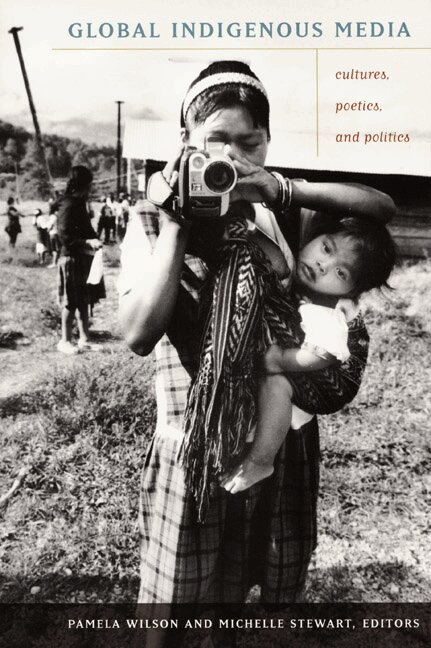
Global Indigenous Media addresses Indigenous self-representation across many media forms, including feature film, documentary, animation, video art, television and radio, the Internet, digital archiving, and journalism. The volume’s sixteen essays reflect the dynamism of Indigenous media-making around the world. One contributor examines animated films for children produced by Indigenous-owned companies in the United States and Canada. Another explains how Indigenous media producers in Burma (Myanmar) work with NGOs and outsiders against the country’s brutal regime. Still another considers how the Ticuna Indians of Brazil are positioning themselves in relation to the international community as they collaborate in creating a CD-ROM about Ticuna knowledge and rituals. In the volume’s closing essay, Faye Ginsburg points out some of the problematic assumptions about globalization, media, and culture underlying the term “digital age” and claims that the age has arrived. Together the essays reveal the crucial role of Indigenous media in contemporary media at every level: local, regional, national, and international.
Contributors: Lisa Brooten, Kathleen Buddle, Cache Collective, Michael Christie, Amalia Córdova,Galina Diatchkova, Priscila Faulhaber, Louis Forline, Jennifer Gauthier, Faye Ginsburg, Alexandra Halkin, Joanna Hearne, Ruth McElroy, Mario A. Murillo, Sari Pietikäinen, Juan Francisco Salazar,Laurel Smith, Michelle Stewart, Pamela Wilson
390 kr
Läs direkt efter köp
This book reflects multidisciplinary and cross-jurisdictional analysis of issues surrounding Fetal Alcohol Spectrum Disorders (FASD) and the criminal justice system, and the impact on Aboriginal children, young people, and their families.This book provides the first comprehensive and multidisciplinary account of FASD and its implications for the criminal justice system – from prevalence and diagnosis to sentencing and culturally secure training for custodial officers. Situated within a ‘decolonising’ approach, the authors explore the potential for increased diversion into Aboriginal community-managed, on-country programmes, enabled through innovation at the point of first contact with the police, and non-adversarial, needs-focussed courts. Bringing together advanced thinking in criminology, Aboriginal justice issues, law, paediatrics, social work, and Indigenous mental health and well-being, the book is grounded in research undertaken in Australia, Canada, and New Zealand. The authors argue for the radical recalibration of both theory and practice around diversion, intervention, and the role of courts to significantly lower rates of incarceration; that Aboriginal communities and families are best placed to construct the social and cultural scaffolding around vulnerable youth that could prevent damaging contact with the mainstream justice system; and that early diagnosis and assessment of FASD may make a crucial difference to the life chances of Aboriginal youth and their families.Exploring how, far from providing solutions to FASD, the mainstream criminal justice system increases the likelihood of adverse outcomes for children with FASD and their families, this innovative book will be of great value to researchers and students worldwide interested in criminal and social justice, criminology, youth justice, social work, and education.
390 kr
Läs direkt efter köp
This book reflects multidisciplinary and cross-jurisdictional analysis of issues surrounding Fetal Alcohol Spectrum Disorders (FASD) and the criminal justice system, and the impact on Aboriginal children, young people, and their families.This book provides the first comprehensive and multidisciplinary account of FASD and its implications for the criminal justice system – from prevalence and diagnosis to sentencing and culturally secure training for custodial officers. Situated within a ‘decolonising’ approach, the authors explore the potential for increased diversion into Aboriginal community-managed, on-country programmes, enabled through innovation at the point of first contact with the police, and non-adversarial, needs-focussed courts. Bringing together advanced thinking in criminology, Aboriginal justice issues, law, paediatrics, social work, and Indigenous mental health and well-being, the book is grounded in research undertaken in Australia, Canada, and New Zealand. The authors argue for the radical recalibration of both theory and practice around diversion, intervention, and the role of courts to significantly lower rates of incarceration; that Aboriginal communities and families are best placed to construct the social and cultural scaffolding around vulnerable youth that could prevent damaging contact with the mainstream justice system; and that early diagnosis and assessment of FASD may make a crucial difference to the life chances of Aboriginal youth and their families.Exploring how, far from providing solutions to FASD, the mainstream criminal justice system increases the likelihood of adverse outcomes for children with FASD and their families, this innovative book will be of great value to researchers and students worldwide interested in criminal and social justice, criminology, youth justice, social work, and education.
1 290 kr
Kommande
264 kr
Skickas inom 5-8 vardagar
71 kr
Läs direkt efter köp
195 kr
Läs direkt efter köp
276 kr
Skickas inom 5-8 vardagar