
Micki McElya – författare
Visar alla böcker från författaren . Handla med fri frakt och snabb leverans.
4 produkter
4 produkter
Inbunden, Engelska, 2007
425 kr
Skickas inom 10-15 vardagar
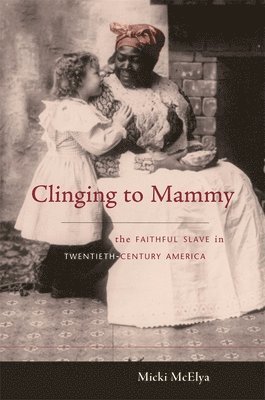
When Aunt Jemima beamed at Americans from the pancake mix box on grocery shelves, many felt reassured by her broad smile that she and her product were dependable. She was everyone's mammy, the faithful slave who was content to cook and care for whites, no matter how grueling the labor, because she loved them. This far-reaching image of the nurturing black mother exercises a tenacious hold on the American imagination.Micki McElya examines why we cling to mammy. She argues that the figure of the loyal slave has played a powerful role in modern American politics and culture. Loving, hating, pitying, or pining for mammy became a way for Americans to make sense of shifting economic, social, and racial realities. Assertions of black people's contentment with servitude alleviated white fears while reinforcing racial hierarchy. African American resistance to this notion was varied but often placed new constraints on black women.McElya's stories of faithful slaves expose the power and reach of the myth, not only in popular advertising, films, and literature about the South, but also in national monument proposals, child custody cases, white women's minstrelsy, New Negro activism, anti-lynching campaigns, and the civil rights movement. The color line and the vision of interracial motherly affection that helped maintain it have persisted into the twenty-first century. If we are to reckon with the continuing legacy of slavery in the United States, McElya argues, we must confront the depths of our desire for mammy and recognize its full racial implications.
Häftad, Engelska, 2019
227 kr
Skickas inom 10-15 vardagar
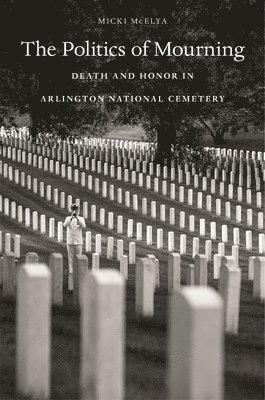
Pulitzer Prize FinalistWinner of the John Brinckerhoff Jackson Book PrizeWinner of the Sharon Harris Book AwardFinalist, Jefferson Davis Award of the American Civil War MuseumArlington National Cemetery is one of America’s most sacred shrines, a destination for millions who tour its grounds to honor the men and women of the armed forces who serve and sacrifice. It commemorates their heroism, yet it has always been a place of struggle over the meaning of honor and love of country. Once a showcase plantation, Arlington was transformed by the Civil War, first into a settlement for the once enslaved, and then into a memorial for Union dead. Later wars broadened its significance, as did the creation of its iconic monument to universal military sacrifice: the Tomb of the Unknown Soldier.As Arlington took its place at the center of the American story, inclusion within its gates became a prerequisite for claims to national belonging. This deeply moving book reminds us that many brave patriots who fought for America abroad struggled to be recognized at home, and that remembering the past and reckoning with it do not always go hand in hand.“Perhaps it is cliché to observe that in the cities of the dead we find meaning for the living. But, as McElya has so gracefully shown, such a cliché is certainly fitting of Arlington.”—American Historical Review“A wonderful history of Arlington National Cemetery, detailing the political and emotional background to this high-profile burial ground.”—Choice
Inbunden, Engelska, 2026
219 kr
Kommande
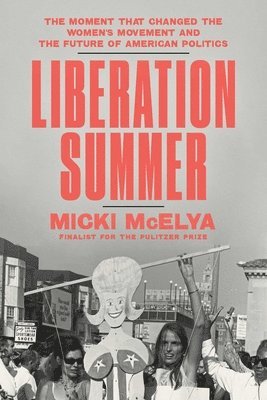
A sweeping, definitive work of history exploring the road to the September 1968 protests of the Miss American Pageant—one led by women’s liberationists and the other organized by the emergent Miss Black America Pageant—and the birth of a new politics of beauty. A revolution was brewing. In the dying days of the summer of 1968, during one unprecedented Pageant weekend, Atlantic City played host not only to the fifty young contestants and thousands of eager visitors who had arrived in town for the Miss America crowning, but also to the first Miss Black America Pageant, mounted to protest its “lily-white” sister competition, as well as raucous actions from women’s liberationists. For just a few hours, the boardwalk became a site of vigorously contested ideas—ideas that would redefine the women’s movement and reverberate across American culture. Now, Pulitzer Prize finalist Micki McElya unfolds the full scope of this history, detailing the shocking injustices and passionate debates that led to the demonstrations, as well as the broader social and political landscape that gave rise to some of the most iconic women on both sides of the ideological spectrum. Here, we find complex portraits of Betty Friedan, Gloria Steinem, Florynce Kennedy, Phyllis Schlafly, and Anita Bryant as well as glimpses of Hillary Rodham Clinton, John Lewis, Vanessa Williams, and Donald Trump years before they became the public figures we know them as today. Immersive, galvanizing, and endlessly edifying, Liberation Summer is also a kaleidoscopic panorama of the year that saw the assassinations of Martin Luther King Jr. and Robert Kennedy, the Tet Offensive and the escalation of the Vietnam War, violence at the Republican and Democratic National Conventions, and the election of Richard Nixon. Within this ever-shifting terrain, lesser-known characters like reporter Charlotte Curtis, radical feminist organizers Robin Morgan and Carol Hanisch, Miss America 1968 Debra Barnes, and the first Miss Black America Saundra Williams fought to not only define their conception of ideal womanhood, but to live it. Engagingly told and meticulously researched, Liberation Summer proves how the battle for beauty’s meaning has always been inextricably political—and how its enduring impact continues to shape our politics today.
Inbunden, Engelska, 2016
299 kr
Tillfälligt slut
Arlington National Cemetery is America’s most sacred shrine, a destination for four million visitors who each year tour its grounds and honor those buried there. For many, Arlington’s symbolic importance places it beyond politics. Yet as Micki McElya shows, no site in the United States plays a more political role in shaping national identity.Arlington commemorates sacrifices made in the nation’s wars and armed conflicts. Yet it has always been a place of struggle over the boundaries of citizenship and the meaning of honor and love of country. A plantation built by slave labor overlooking Washington, D.C., Arlington was occupied by Union forces early in the Civil War. A portion was designated a federal cemetery in 1864. A camp for the formerly enslaved, Freedman’s Village, had already been established there in 1863, and remained for three decades.The cemetery was seen primarily as a memorial to the white Civil War dead until its most famous monument was erected in 1921: the Tomb of the Unknown Soldier, symbolizing universal military sacrifice through the interment of a single World War I Unknown. As a century of wars abroad secured Arlington’s centrality in the American imagination and more Unknowns joined the first at the tomb, inclusion within its gates became a prerequisite for broader claims to national belonging. In revealing how Arlington encompasses the most inspiring and the most shameful aspects of American history, McElya enriches the story of this landscape, demonstrating that remembering the past and reckoning with it must go hand in hand.