Miguel A. Granada – författare
Visar alla böcker från författaren Miguel A. Granada. Handla med fri frakt och snabb leverans.
2 produkter
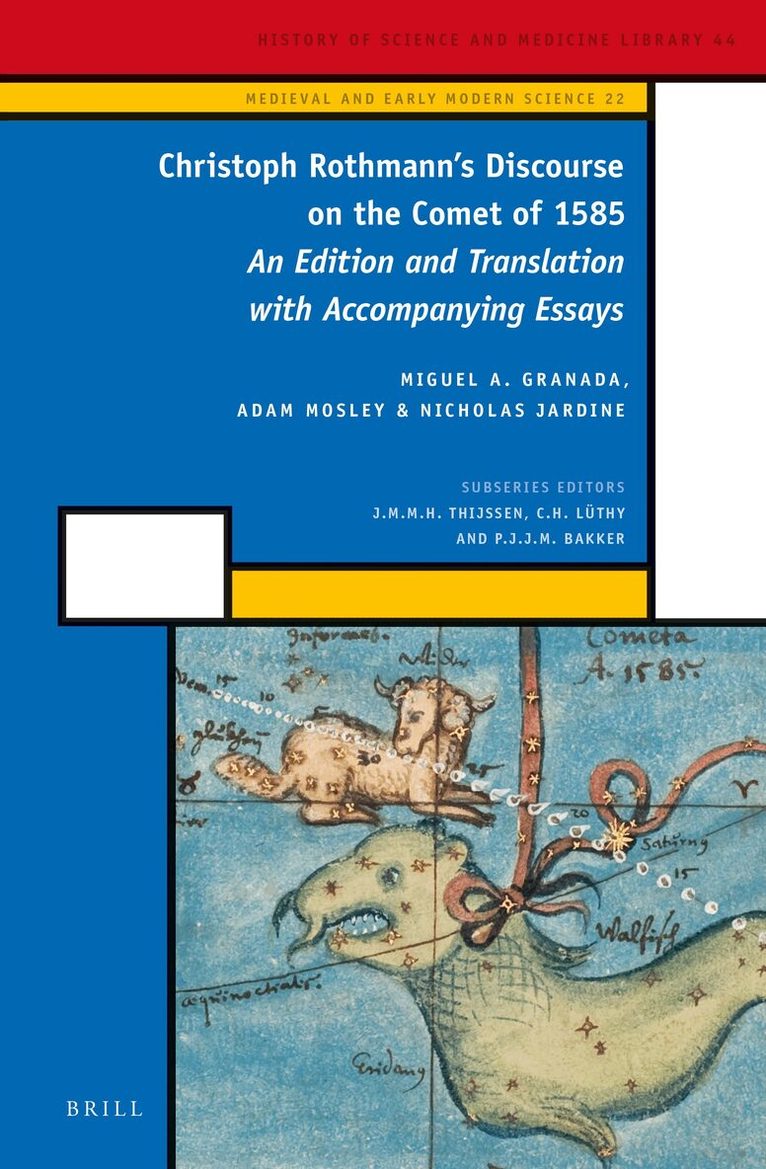
Christoph Rothmann's Discourse on the Comet of 1585
An Edition and Translation with Accompanying Essays
Av Miguel A. Granada, Adam Mosley m. fl.
Inbunden, 2014
3273 kr
Lägg i varukorg
Christoph Rothmann wrote a treatise on the comet of 1585 shortly after it disappeared. Though it was not printed until 1619, Rothman sent a copy of his treatise in 1586 to Tycho Brahe, decisively influencing the latter's rejection of solid celestial spheres two years later. In his treatise, …
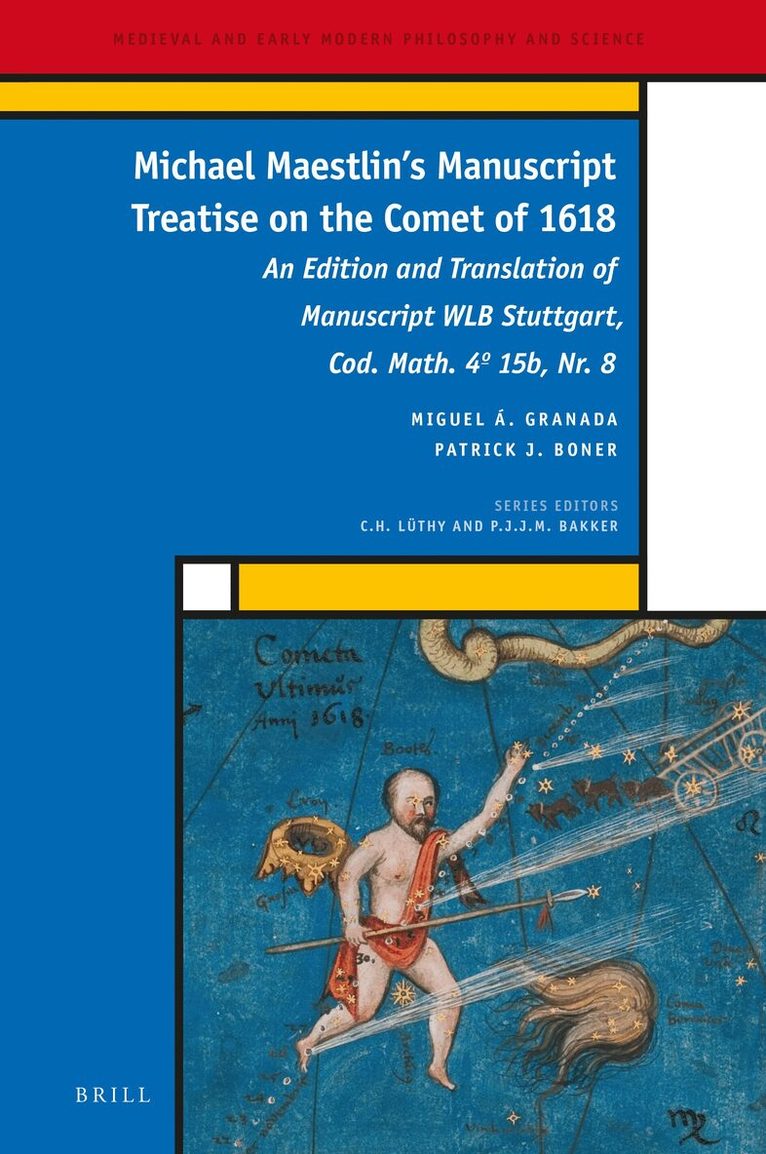
Michael Maestlin’s Manuscript Treatise on the Comet of 1618
An Edition and Translation of Manuscript WLB Stuttgart, Cod. Math. 4 15b, Nr. 8
Av Miguel A. Granada, Patrick J. Boner
Inbunden, 2022
2009 kr
Lägg i varukorg
Michael Maestlin (1550–1631), professor of mathematics at the University of Tübingen, was a leading protagonist of the astronomical and cosmological revolution that began with Copernicus. Famous for first introducing Copernicanism to Kepler, Maestlin also wrote important treatises on the supernova …