Mikael Wigell - Böcker
Visar alla böcker från författaren Mikael Wigell. Handla med fri frakt och snabb leverans.
6 produkter
6 produkter
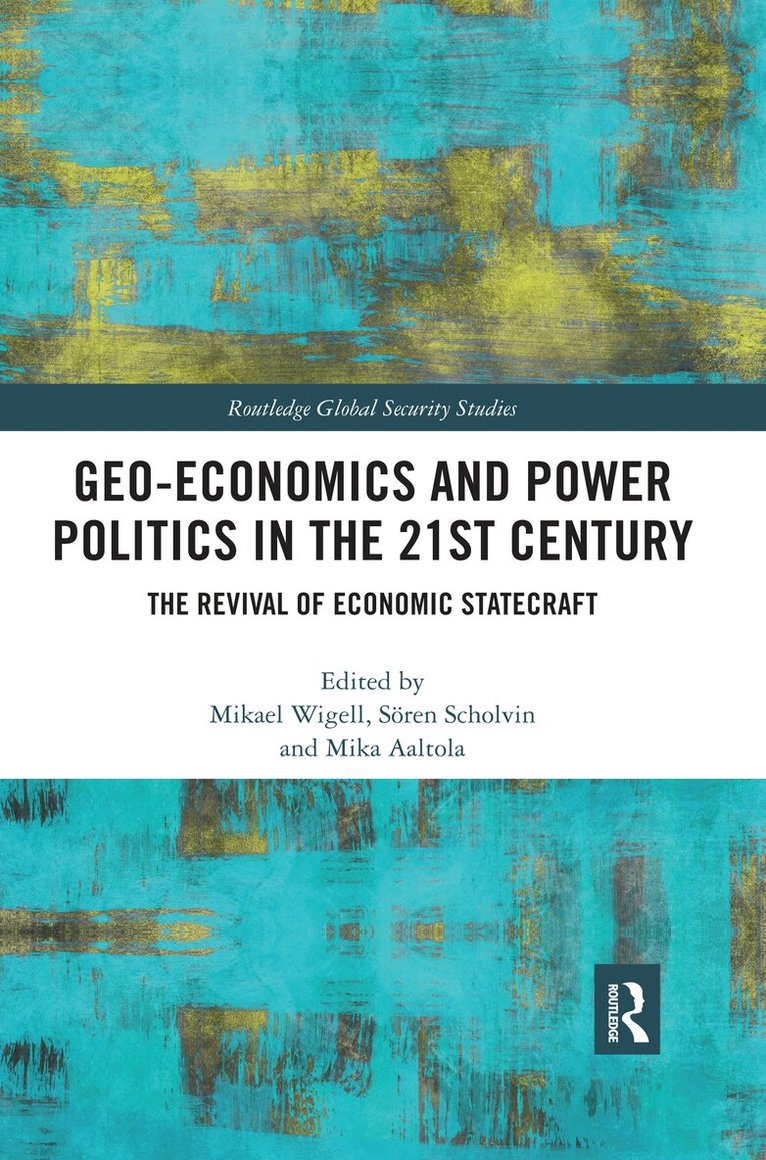
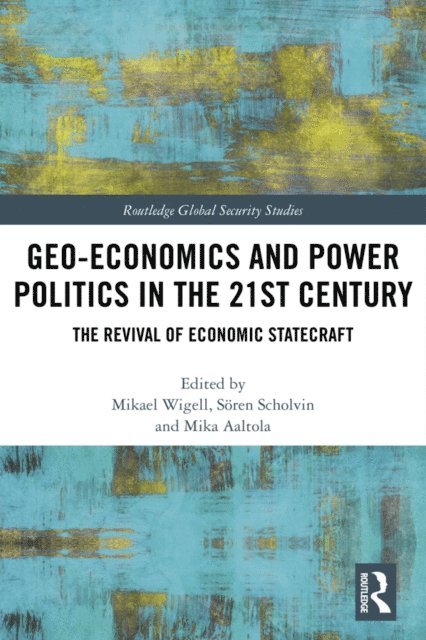
Geo-economics and Power Politics in the 21st Century
The Revival of Economic Statecraft
Häftad, Engelska, 2020
644 kr
Skickas inom 10-15 vardagar
Starting from the key concept of geo-economics, this book investigates the new power politics and argues that the changing structural features of the contemporary international system are recasting the strategic imperatives of foreign policy practice.States increasingly practice power politics by economic means. Whether it is about Iran’s nuclear programme or Russia’s annexation of Crimea, Western states prefer economic sanctions to military force. Most rising powers have also become cunning agents of economic statecraft. China, for instance, is using finance, investment and trade as means to gain strategic influence and embed its global rise. Yet the way states use economic power to pursue strategic aims remains an understudied topic in International Political Economy and International Relations. The contributions to this volume assess geo-economics as a form of power politics. They show how power and security are no longer simply coupled to the physical control of territory by military means, but also to commanding and manipulating the economic binds that are decisive in today’s globalised and highly interconnected world. Indeed, as the volume shows, the ability to wield economic power forms an essential means in the foreign policies of major powers. In so doing, the book challenges simplistic accounts of a return to traditional, military-driven geopolitics, while not succumbing to any unfounded idealism based on the supposedly stabilising effects of interdependence on international relations. As such, it advances our understanding of geo-economics as a strategic practice and as an innovative and timely analytical approach.This book will be of much interest to students of security studies, international political economy, foreign policy and International Relations in general.
Geo-economics and Power Politics in the 21st Century
The Revival of Economic Statecraft
Inbunden, Engelska, 2018
2 088 kr
Skickas inom 10-15 vardagar
Starting from the key concept of geo-economics, this book investigates the new power politics and argues that the changing structural features of the contemporary international system are recasting the strategic imperatives of foreign policy practice.States increasingly practice power politics by economic means. Whether it is about Iran’s nuclear programme or Russia’s annexation of Crimea, Western states prefer economic sanctions to military force. Most rising powers have also become cunning agents of economic statecraft. China, for instance, is using finance, investment and trade as means to gain strategic influence and embed its global rise. Yet the way states use economic power to pursue strategic aims remains an understudied topic in International Political Economy and International Relations. The contributions to this volume assess geo-economics as a form of power politics. They show how power and security are no longer simply coupled to the physical control of territory by military means, but also to commanding and manipulating the economic binds that are decisive in today’s globalised and highly interconnected world. Indeed, as the volume shows, the ability to wield economic power forms an essential means in the foreign policies of major powers. In so doing, the book challenges simplistic accounts of a return to traditional, military-driven geopolitics, while not succumbing to any unfounded idealism based on the supposedly stabilising effects of interdependence on international relations. As such, it advances our understanding of geo-economics as a strategic practice and as an innovative and timely analytical approach.This book will be of much interest to students of security studies, international political economy, foreign policy and International Relations in general.
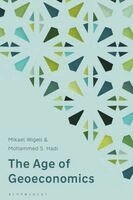
Age of Geoeconomics
How the Logic of International Economics and Politics is Changing
Häftad, Engelska, 2026
396 kr
Kommande
Since the 1970s, market economics - which is concerned with opening markets for international trade and finance - has been guiding policymaking in many states, with the focus being on giving market actors a free reign in deciding where economic activity takes place. As a result, corporations have been globalizing their supply chains to take advantage of specialization and maximize efficiency, giving rise to a deepening economic interdependence across the globe.Governments and policymakers took a benign view of this deepening interdependence for both economic and political reasons. Economically, interdependence was assumed to foster synergies and economies of scale, maximising gains for states by increasing efficiency within and across their economies. Politically, interdependence was assumed to incentivise cooperation and constrain conflicts between states.Western governments and policymakers, in particular, believed that growing interdependence would encourage states to abandon power politics in favour of cooperation and integration into the liberal world order and global marketplace, benefitting the countries involved proportionally to their participation. However, The Age of Geoeconomics argues that this prevailing view has now been broken.It powerfully explains how market economics is being supplanted by geoeconomics. Geoeconomics refers to the way in which countries use economic tools—trade, investments, financial policies and penalties, such as tariffs and sanctions—to achieve political or strategic goals. Instead of using military power, countries compete and influence each other through economic means. This entails a shift from an economic to a security mindset. It reflects a world in which the economy is no longer seen as a neutral domain governed solely by market forces, but rather as an arena of strategic competition and a tool of statecraft. Geoeconomics is the mix of economics and geopolitics—where money and markets shape global power dynamics.The Age of Geoeconomics skilfully outlines ways in which governments may choose to impose trade restrictions such as tariffs to pressure other governments, invest in infrastructure projects to gain influence, or use control over key resources (like oil or rare minerals) as leverage in international negotiations. This very timely book assesses the re-shaping of the economic world-order following the US election, including an analysis of 'MAGAnomics'.
Age of Geoeconomics
How the Logic of International Economics and Politics is Changing
Inbunden, Engelska, 2026
1 239 kr
Kommande
Since the 1970s, market economics - which is concerned with opening markets for international trade and finance - has been guiding policymaking in many states, with the focus being on giving market actors a free reign in deciding where economic activity takes place. As a result, corporations have been globalizing their supply chains to take advantage of specialization and maximize efficiency, giving rise to a deepening economic interdependence across the globe.Governments and policymakers took a benign view of this deepening interdependence for both economic and political reasons. Economically, interdependence was assumed to foster synergies and economies of scale, maximising gains for states by increasing efficiency within and across their economies. Politically, interdependence was assumed to incentivise cooperation and constrain conflicts between states.Western governments and policymakers, in particular, believed that growing interdependence would encourage states to abandon power politics in favour of cooperation and integration into the liberal world order and global marketplace, benefitting the countries involved proportionally to their participation. However, The Age of Geoeconomics argues that this prevailing view has now been broken.It powerfully explains how market economics is being supplanted by geoeconomics. Geoeconomics refers to the way in which countries use economic tools—trade, investments, financial policies and penalties, such as tariffs and sanctions—to achieve political or strategic goals. Instead of using military power, countries compete and influence each other through economic means. This entails a shift from an economic to a security mindset. It reflects a world in which the economy is no longer seen as a neutral domain governed solely by market forces, but rather as an arena of strategic competition and a tool of statecraft. Geoeconomics is the mix of economics and geopolitics—where money and markets shape global power dynamics.The Age of Geoeconomics skilfully outlines ways in which governments may choose to impose trade restrictions such as tariffs to pressure other governments, invest in infrastructure projects to gain influence, or use control over key resources (like oil or rare minerals) as leverage in international negotiations. This very timely book assesses the re-shaping of the economic world-order following the US election, including an analysis of 'MAGAnomics'.
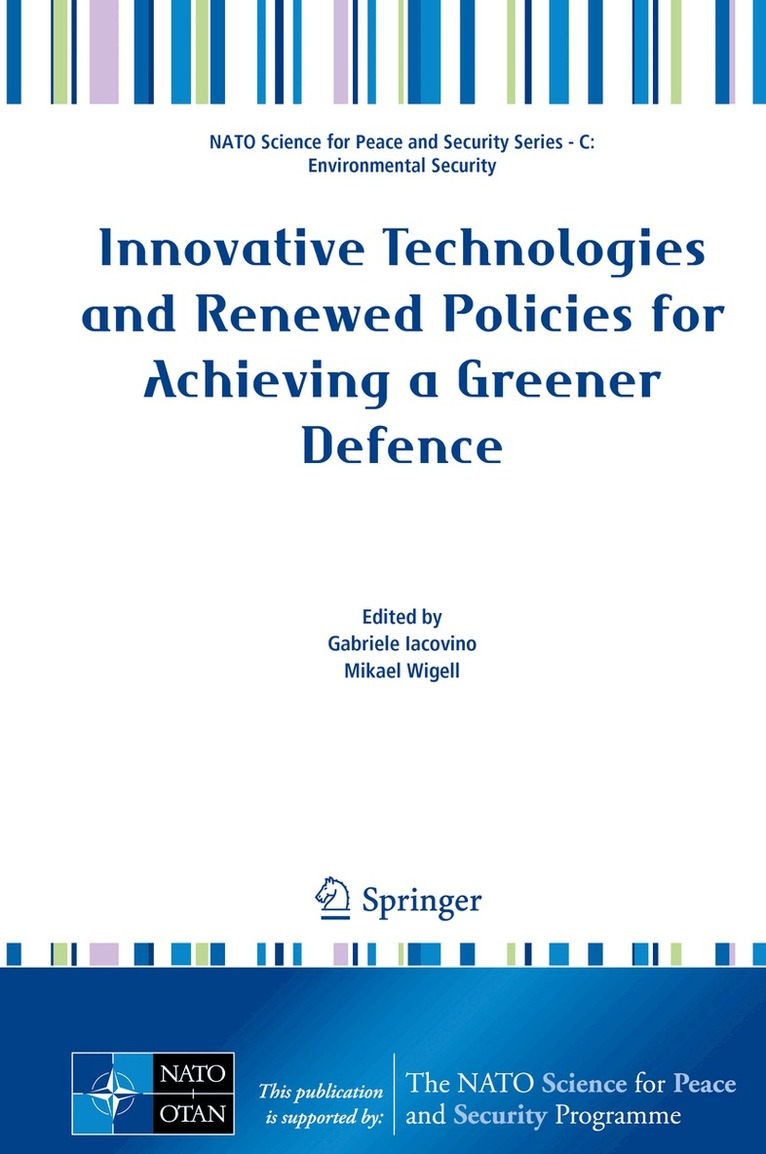
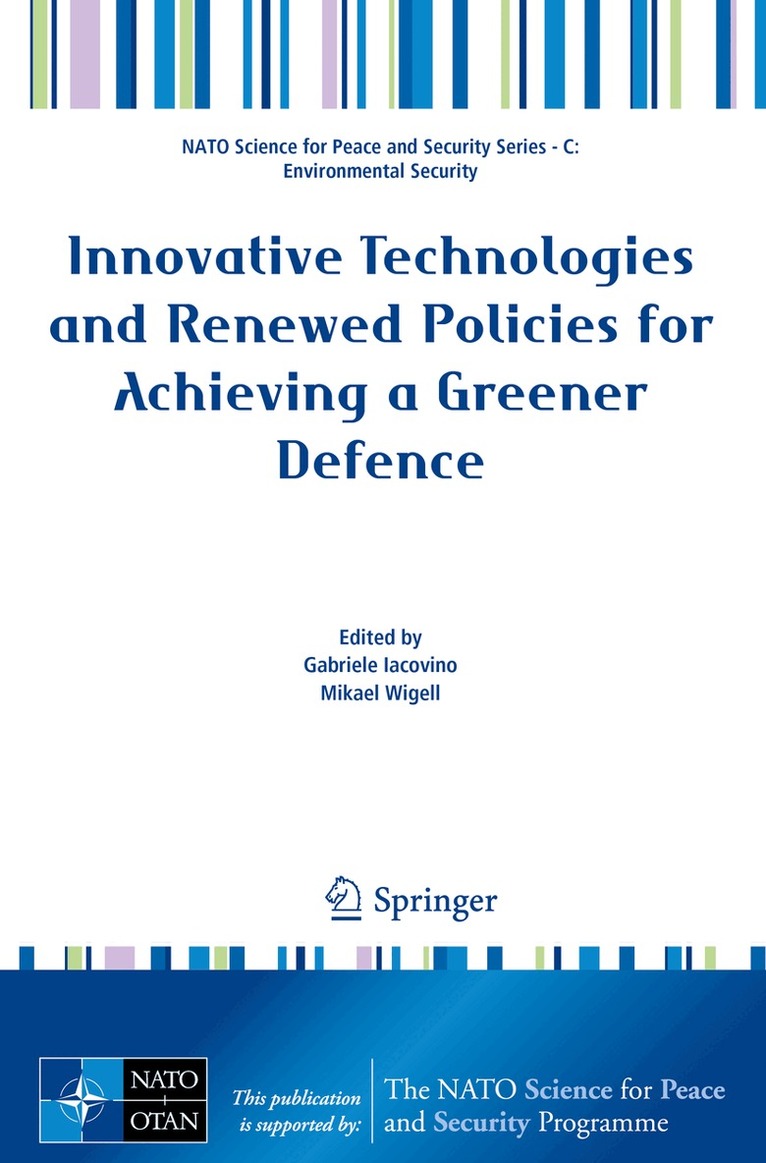
Innovative Technologies and Renewed Policies for Achieving a Greener Defence
Inbunden, Engelska, 2022
1 891 kr
Skickas inom 10-15 vardagar
This book presents a fresh and original contribution to the debate on the policies and technologies needed to achieve a Greener Defence. It will provide an overall and comprehensive analysis of the current state and future prospects of the public and private discourse on the matter, by leveraging on four different and complementary perspectives: the national experiences of relevant NATO Member States and Partner Countries, the institutional framework of International Organizations, the role of industry and private companies and the intellectual contribution of research centers and academia. It will provide new policy recommendations and advanced and innovative technological solutions to be implemented in order to reduce the environmental footprint of Armed Forces, while improving at the same time the energy efficiency and strengthening the operational capabilities of Militaries. The book is addressed to all those interested in studying the connections between climate change, environmental issues, energy security and the role of Armed Forces, the latter seen as an important actor for reducing the environmental impact of human activities and as a forum where to discuss and implement new green technological solutions and applications.
1 891 kr
Skickas inom 10-15 vardagar
This book presents a fresh and original contribution to the debate on the policies and technologies needed to achieve a Greener Defence. It will provide an overall and comprehensive analysis of the current state and future prospects of the public and private discourse on the matter, by leveraging on four different and complementary perspectives: the national experiences of relevant NATO Member States and Partner Countries, the institutional framework of International Organizations, the role of industry and private companies and the intellectual contribution of research centers and academia. It will provide new policy recommendations and advanced and innovative technological solutions to be implemented in order to reduce the environmental footprint of Armed Forces, while improving at the same time the energy efficiency and strengthening the operational capabilities of Militaries. The book is addressed to all those interested in studying the connections between climate change, environmental issues, energy security and the role of Armed Forces, the latter seen as an important actor for reducing the environmental impact of human activities and as a forum where to discuss and implement new green technological solutions and applications.