Mike Rapport - Böcker
Visar alla böcker från författaren Mike Rapport. Handla med fri frakt och snabb leverans.
9 produkter
9 produkter
111 kr
Skickas inom 5-8 vardagar
The Napoleonic Wars have an important place in the history of Europe, leaving their mark on European and world societies in a variety of ways. In many European countries they provided the stimulus for radical social and political change - particularly in Spain, Germany, and Italy - and are frequently viewed in these places as the starting point of their modern histories. In this Very Short Introduction, Mike Rapport provides a brief outline of the wars, introducing the tactics, strategies, and weaponry of the time. Presented in three parts, he considers the origins and course of the wars, the ways and means in which it was fought, and the social and political legacy it has left to the world today. ABOUT THE SERIES: The Very Short Introductions series from Oxford University Press contains hundreds of titles in almost every subject area. These pocket-sized books are the perfect way to get ahead in a new subject quickly. Our expert authors combine facts, analysis, perspective, new ideas, and enthusiasm to make interesting and challenging topics highly readable.
446 kr
Skickas inom 10-15 vardagar
To learn about the ""Age of Revolutions"" in Europe and the Americas is to engage with the emergence of the modern world. In the late eighteenth and early nineteenth centuries, nations were founded, old empires collapsed, and new ones arose. Struggles for emancipation—whether from royal authority, colonial rule, slavery, or patriarchy—inspired both hopes and fears. This book, designed for university and secondary school teachers, provides up-to-date content and perspectives, classroom-tested techniques, innovative ideas, and an exciting variety of pathways to introduce students to this complex era of history.The volume includes chapters on sources and methods for stimulating student debate and learning, including Tom Paine's Common Sense, the Haitian Declaration of Independence, and other key documents; role-playing games; visual arts and culture; and music, including opera and popular songs. Other chapters delve into specific themes, including revolution and riot, revolutionary terror, enlightenment, gender, slavery, nationalism, environment and climate, and the roles of politically excluded groups. Collectively, the contributions ensure a broad Atlantic scope, discussing the revolutions in Britain's North American colonies, Haiti, and Latin America, and European revolutions including France, Belgium, and the Netherlands.
162 kr
Skickas inom 7-10 vardagar
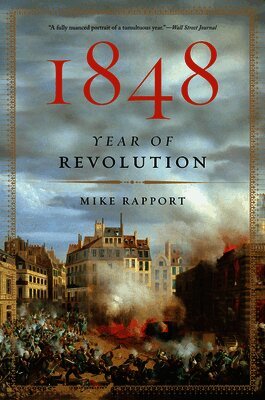
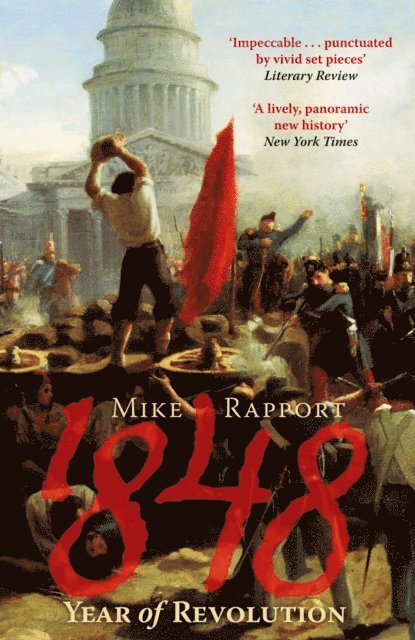
In 1848, Europe was engulfed in a firestorm of revolution. The streets of cities from Paris to Bucharest and from Berlin to Palermo were barricaded and flooded by armed insurgents proclaiming political liberties and national freedom. The conservative order which had held sway since the fall of Napoleon in 1815 crumbled beneath the revolutionary assault. This book narrates the breathtaking events which overtook Europe in 1848, tracing brilliantly their course from the exhilaration of the liberal triumph, through the fear of social chaos to the final despair of defeat and disillusionment. The failures of 1848 would scar European history with the contradictions of authoritarianism and revolution until deep into the twentieth century.
142 kr
Skickas inom 7-10 vardagar
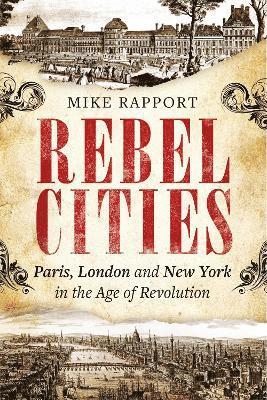
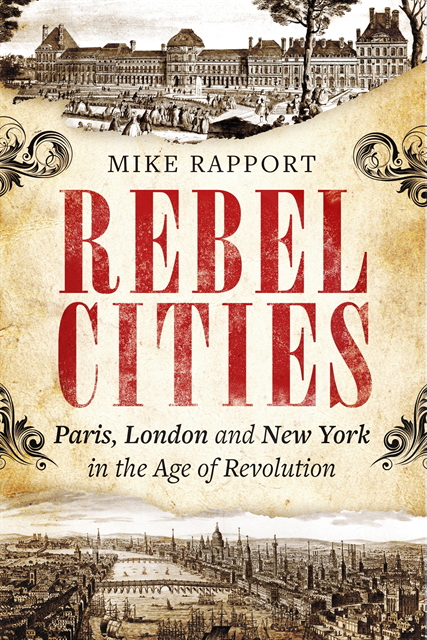
London, Paris and New York in the eighteenth century, as today, were places where political authority, commerce and money, art and intellectual life intersected. They straddled an Atlantic world where ships powered by nothing more than wind, currents and human muscle criss-crossed the sea, carrying with them goods, ideas and above all people: men and women, bewigged aristocrats and lawyers, rough-handed craftworkers, quill-wielding bluestockings and doughty fishwives. But the cities were also home to dangerous criminals, corrupt politicians - and slaves.Rebel Cities explores the stormy debate about the nature of cities in the eighteenth and nineteenth centuries: were they places of enlightenment, sparkling wells of progress and civilisation, or were they dens of vice, degeneracy and disorder? Against a backdrop of accelerating urban expansion and revolution in both Europe and North America, revolutionary burghers of these extraordinary cities expended ink, paint, breath and, sometimes, blood in their struggle to understand, control and master the urban world.Drawing on hundreds of letters, travelogues and eye-witness accounts, Mike Rapport vividly evokes the sights, sounds and smells of these cities, masterfully weaving their history with the politics of revolution.When New Yorkers and Parisians experienced their revolution, when their cities went to war, and when Londoners engaged in political protest, they underwent the whole torrent and exhilaration of human emotions. Determining the character of the cities through their inhabitants, as well as their architecture, topography and the events that shaped them, this magnificent book evokes what it was like for all parts of society to live in London, Paris and New York in one of the most transformative periods in the history of civilisation.
152 kr
Skickas inom 7-10 vardagar
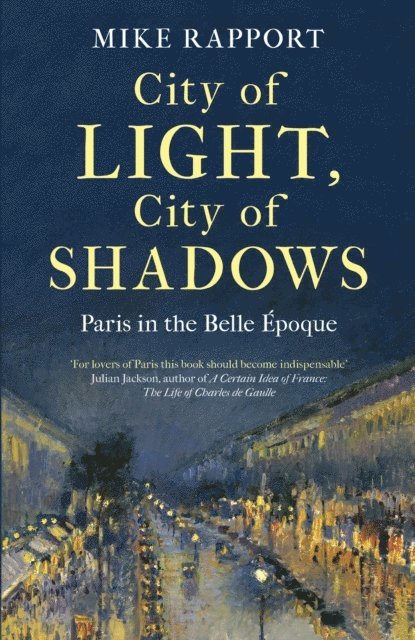
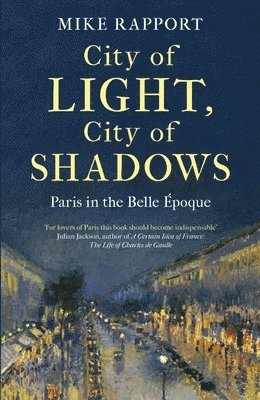
Paris in the Belle Époque is remembered as a golden age of cultural flourishing and political progress. The time between the revolutionary 1870s and the outbreak of war in 1914 saw the modern French capital take shape: by day Parisians could admire the rising Eiffel Tower and Sacré-Coeur Basilica, while at night they roamed the Bohemian world of the Moulin Rouge. But as Mike Rapport reveals in this authoritative and beautifully written new history beneath its elegant veneer Paris was at war with itself. The Belle Époque was also an era of social and religious unrest, women's emancipation and violent clashes over what it meant to be French.Paris pulsated with the pleasures and anxieties of modernity: blazing electric lights illuminating the night, the first cars speeding down the boulevards, as well as the first Métro trains and plane flights. At the same time reactionary forces reasserted themselves-mostly dramatically in the infamous Dreyfus affair. Told through the eyes of the greatest personalities of the age-novelist Émile Zola, feminist activist Marguerite Durand, Vietnamese diplomat Nguy?n Tr?ng H?p and socialist politician Jean Jaurès-the book weaves together stories of splendour and suffering, delight and agony, offering a brilliant account of the shadows cast across the City of Light.
204 kr
Skickas inom 7-10 vardagar
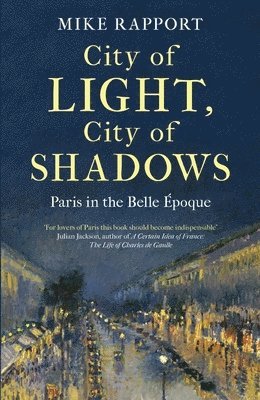
Paris in the Belle Époque is remembered as a golden age of cultural flourishing and political progress. The period between the revolutionary 1870s and the outbreak of war in 1914 saw the modern French capital take shape: by day Parisians could admire the rising Eiffel Tower and Sacré-Coeur Basilica, while at night they roamed the Bohemian world of the Moulin Rouge. But as Mike Rapport reveals in this authoritative and beautifully written new history, City of Light, City of Shadows, beneath the elegant veneer Paris was at war with itself. For the Belle Époque was also an era of social and religious unrest, arguments over women's emancipation and violent clashes over what it meant to be French.Paris pulsated with pleasure, anxieties and tension stemming from the giddying speed of modernity: blazing electric lights illuminating the night, the first cars speeding down the boulevards, as well as the first Métro trains and aeroplane flights. At the same time reactionary forces reasserted themselves through the new mass media-mostly dramatically in the infamous Dreyfus affair, which exposed the dark heart of French antisemitism. Told through the eyes of the greatest personalities of the age-novelist Émile Zola, feminist activist Marguerite Durand, Vietnamese diplomat Nguy?n Tr?ng Hi?p and socialist politician Jean Jaurès-the book weaves together stories of splendour and suffering, delight and agony, offering a brilliant account of the shadows cast across the City of Light.
318 kr
Skickas inom 7-10 vardagar
Paris in the Belle Époque is remembered as a golden age of cultural flourishing and political progress. The period between the revolutionary 1870s and the outbreak of war in 1914 saw the modern French capital take shape: by day Parisians could admire the rising Eiffel Tower and Sacré-Coeur Basilica, while at night they roamed the Bohemian world of the Moulin Rouge. But as Mike Rapport reveals in this authoritative and beautifully written new history, City of Light, City of Shadows, beneath the elegant veneer Paris was at war with itself. For the Belle Époque was also an era of social and religious unrest, arguments over women's emancipation and violent clashes over what it meant to be French.Paris pulsated with pleasure, anxieties and tension stemming from the giddying speed of modernity: blazing electric lights illuminating the night, the first cars speeding down the boulevards, as well as the first Métro trains and aeroplane flights. At the same time reactionary forces reasserted themselves through the new mass media-mostly dramatically in the infamous Dreyfus affair, which exposed the dark heart of French antisemitism. Told through the eyes of the greatest personalities of the age-novelist Émile Zola, feminist activist Marguerite Durand, Vietnamese diplomat Nguyễn Trọng Hợp and socialist politician Jean Jaurès-the book weaves together stories of splendour and suffering, delight and agony, offering a brilliant account of the shadows cast across the City of Light.
284 kr
Skickas inom 3-6 vardagar
266 kr
Skickas inom 7-10 vardagar
London, Paris and New York in the eighteenth century, as today, were places where political authority, commerce and money, art and intellectual life intersected. They straddled an Atlantic world where ships powered by nothing more than wind, currents and human muscle criss-crossed the sea, carrying with them goods, ideas and above all people: men and women, bewigged aristocrats and lawyers, rough-handed craftworkers, quill-wielding bluestockings and doughty fishwives. But the cities were also home to dangerous criminals, corrupt politicians - and slaves.Rebel Cities explores the stormy debate about the nature of cities in the eighteenth and nineteenth centuries: were they places of enlightenment, sparkling wells of progress and civilisation, or were they dens of vice, degeneracy and disorder? Against a backdrop of accelerating urban expansion and revolution in both Europe and North America, revolutionary burghers of these extraordinary cities expended ink, paint, breath and, sometimes, blood in their struggle to understand, control and master the urban world.Drawing on hundreds of letters, travelogues and eye-witness accounts, Mike Rapport vividly evokes the sights, sounds and smells of these cities, masterfully weaving their history with the politics of revolution.When New Yorkers and Parisians experienced their revolution, when their cities went to war, and when Londoners engaged in political protest, they underwent the whole torrent and exhilaration of human emotions. Determining the character of the cities through their inhabitants, as well as their architecture, topography and the events that shaped them, this magnificent book evokes what it was like for all parts of society to live in London, Paris and New York in one of the most transformative periods in the history of civilisation.