Miklos Telek – författare
Visar alla böcker från författaren Miklos Telek. Handla med fri frakt och snabb leverans.
11 produkter
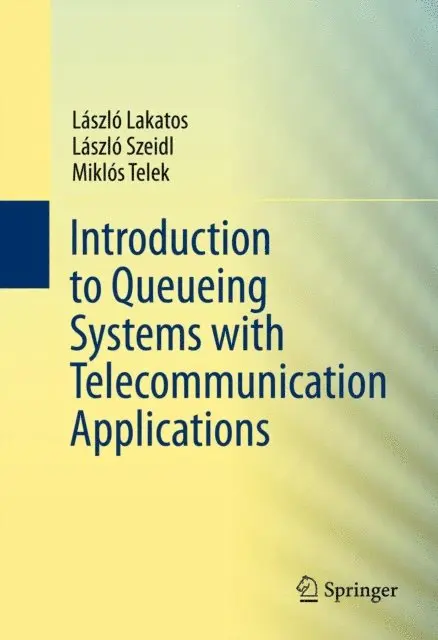
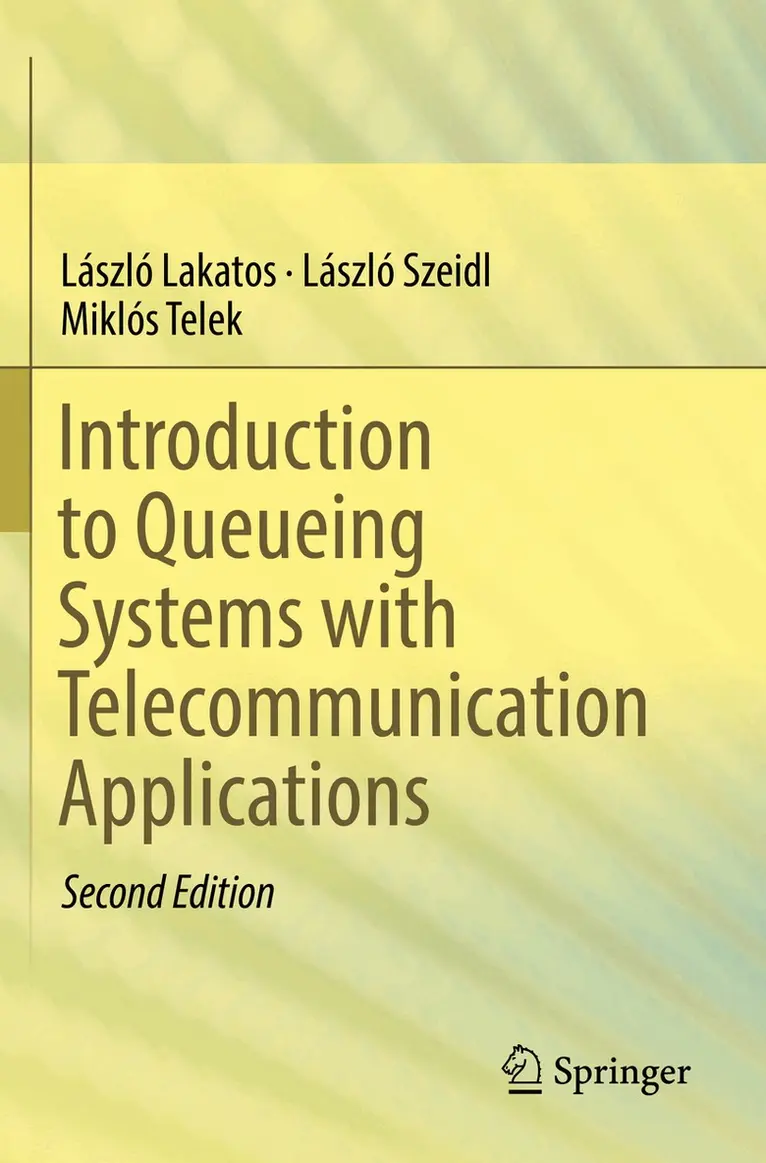
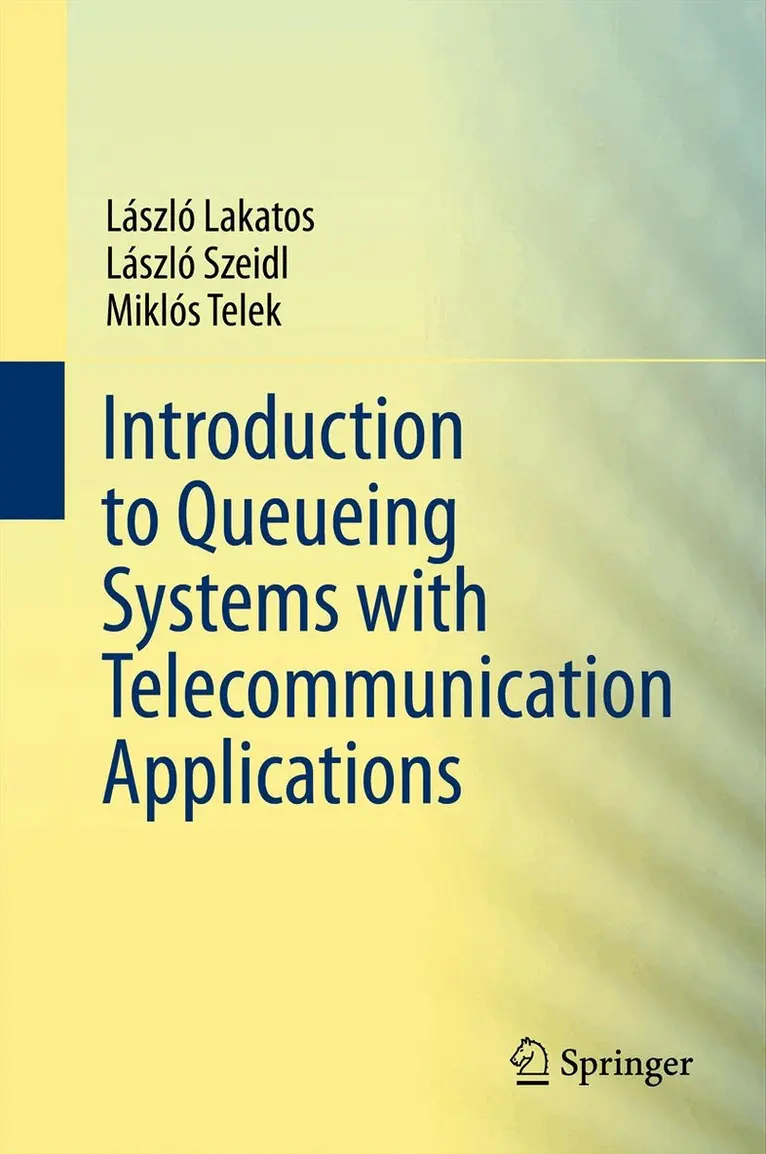
Introduction to Queueing Systems with Telecommunication Applications
Av Miklos Telek, Laszlo Szeidl m. fl.
E-bok, 2012
734 kr
Lägg i varukorg
The book is composed of two main parts: mathematical background and queueing systems with applications. The mathematical background is a self containing introduction to the stochastic processes of the later studies queueing systems. It starts with a quick introduction to probability theory and …
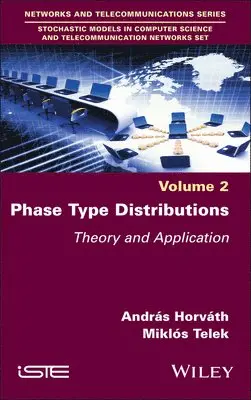
Phase Type Distributions
Theory and Application
Av András Horváth, Miklós Telek
Inbunden, 2024
1773 kr
Lägg i varukorg
Phase type distributions are widely applicable modeling and statistical tools for non-negative random quantities. They are built on Markov chains, which provide a simple, intuitive stochastic interpretation for their use. Phase Type Distribution starts from the Markov chain-based definition of …
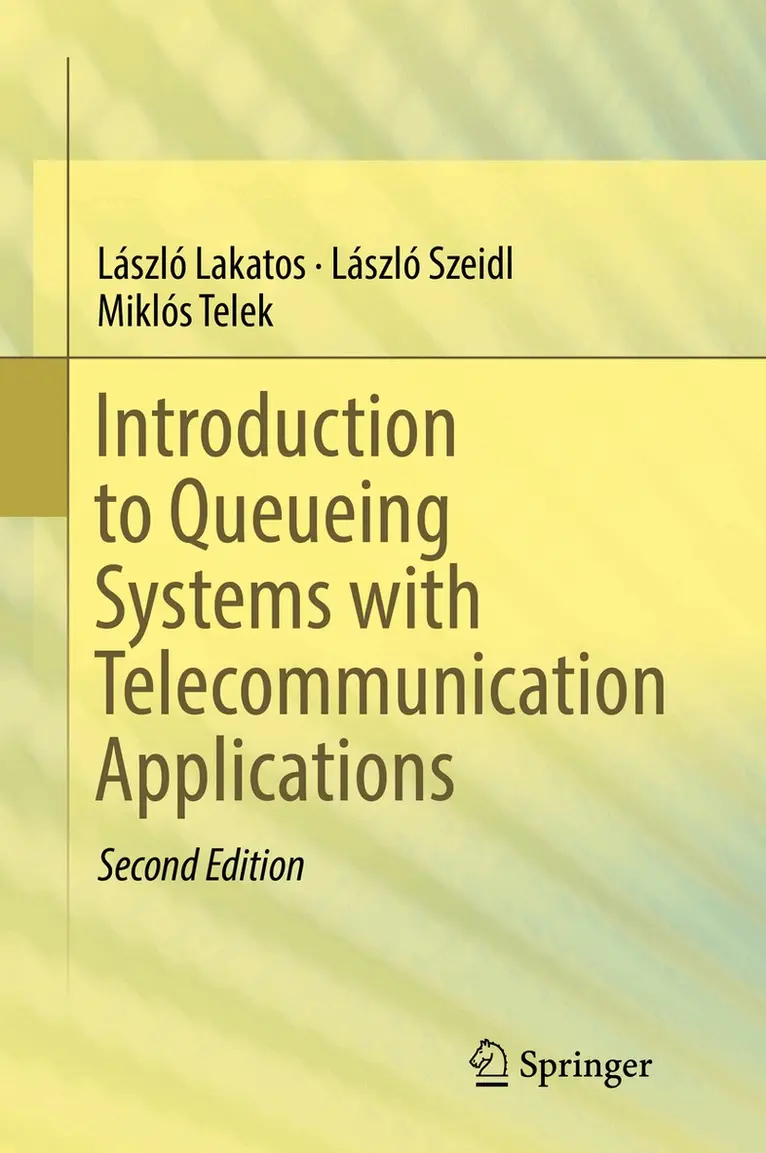
Introduction to Queueing Systems with Telecommunication Applications
Av László Lakatos, László Szeidl m. fl.
Inbunden, 2019
824 kr
Lägg i varukorg
The book is the extended and revised version of the 1st edition and is composed of two main parts: mathematical background and queueing systems with applications. The mathematical background is a self-containing introduction to the stochastic processes of the later studied queueing systems. It …
Introduction to Queueing Systems with Telecommunication Applications
Av Miklos Telek, Laszlo Szeidl m. fl.
E-bok, 2019
815 kr
Lägg i varukorg
The book is the extended and revised version of the 1st edition and is composed of two main parts: mathematical background and queueing systems with applications. The mathematical background is a self-containing introduction to the stochastic processes of the later studied queueing systems. It …
Introduction to Queueing Systems with Telecommunication Applications
Av László Lakatos, László Szeidl m. fl.
Häftad, 2020
606 kr
Lägg i varukorg
The book is the extended and revised version of the 1st edition and is composed of two main parts: mathematical background and queueing systems with applications. The mathematical background is a self-containing introduction to the stochastic processes of the later studied queueing systems. It …
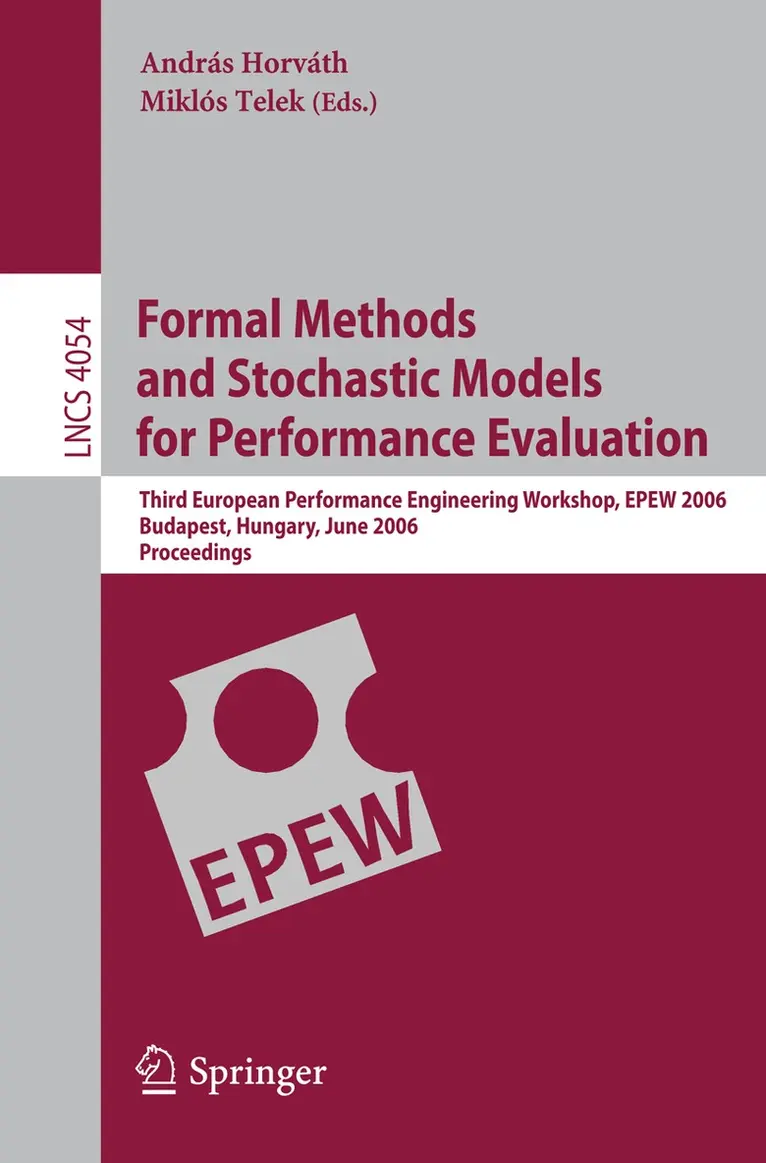
Formal Methods and Stochastic Models for Performance Evaluation
Third European Performance Engineering Workshop, EPEW 2006, Budapest, Hungary, June 21-22, 2006, Proceedings
Av András Horváth, Miklós Telek
Häftad, 2006
568 kr
Lägg i varukorg
The idea to establish a European forum for academic and industrial researchers working on various aspects of performance modeling and analysis of manuf- toring and information systems gave rise to an annual series of workshops, - ferred to as European Performance Engineering Workshop (EPEW). The …
Formal Methods and Stochastic Models for Performance Evaluation
Third European Performance Engineering Workshop, EPEW 2006, Budapest, Hungary, June 21-22, 2006, Proceedings
Av Miklos Telek, Andras Horvath
E-bok, 2006
739 kr
Lägg i varukorg
The idea to establish a European forum for academic and industrial researchers working on various aspects of performance modeling and analysis of manuf- toring and information systems gave rise to an annual series of workshops, - ferred to as European Performance Engineering Workshop (EPEW). The …
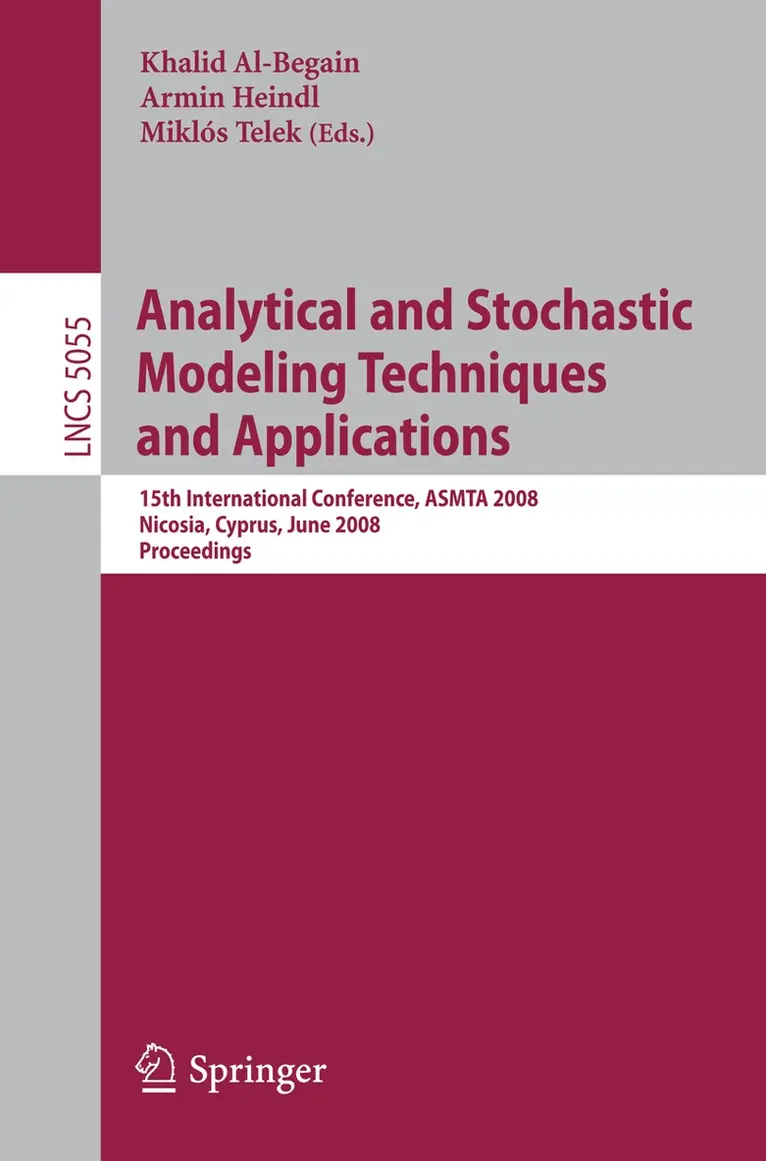
Analytical and Stochastic Modeling Techniques and Applications
15th International Conference, ASMTA 2008 Nicosia, Cyprus, June 4-6, 2008 Proceedings
Av Khalid Al-Begain, Armin Heindl m. fl.
Häftad, 2008
568 kr
Lägg i varukorg
Itisourgreatpleasuretopresenttheproceedingsofthe15thInternationalConf- ence on Analytical and Stochastic Modelling Techniques and Applications (ASMTA2008)thattookplaceonthebeautifulislandofCyprusforthe?rsttime. The conference has become an important annual event in the ?elds of - alytical modelling …
Analytical and Stochastic Modeling Techniques and Applications
15th International Conference, ASMTA 2008 Nicosia, Cyprus, June 4-6, 2008 Proceedings
Av Miklos Telek, Armin Heindl m. fl.
E-bok, 2008
734 kr
Lägg i varukorg
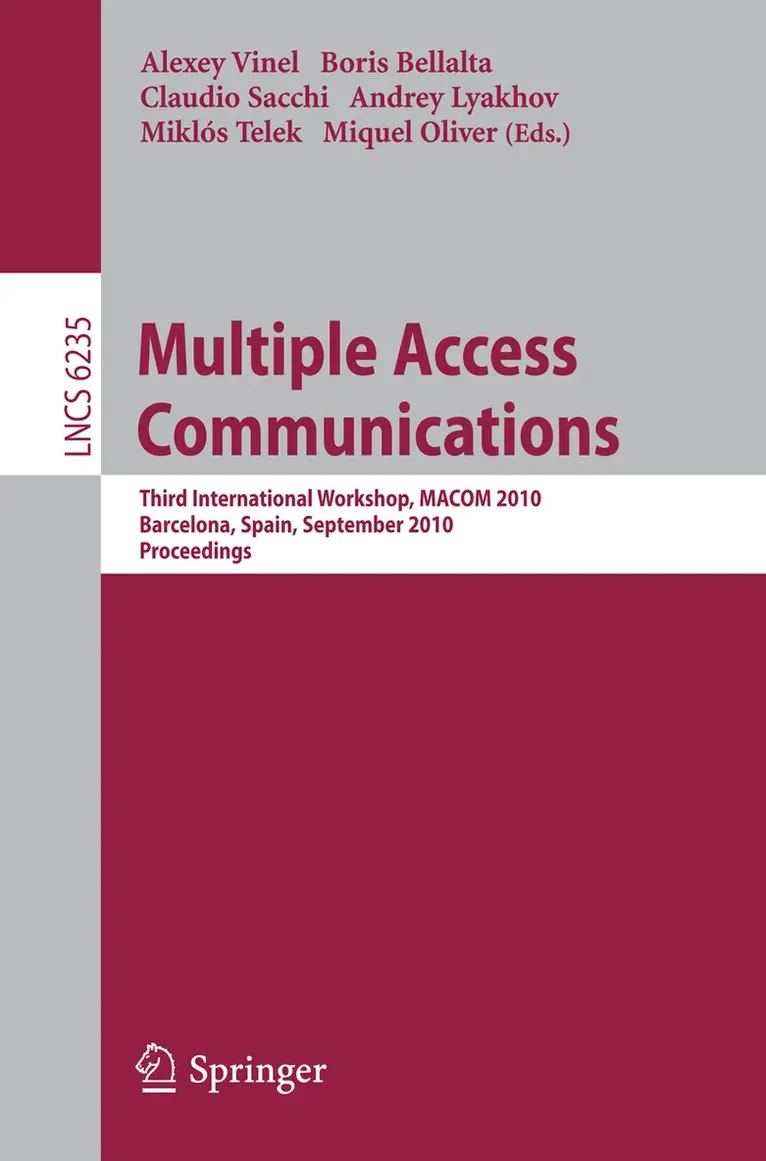
Multiple Access Communications
Third International Workshop, MACOM 2010, Barcelona, Spain, September 13-14, 2010, Proceedings
Av Alexey Vinel, Boris Bellalta m. fl.
Häftad, 2010
568 kr
Lägg i varukorg
It is our great pleasure to present the proceedings of the Third International Workshop on Multiple Access Communications (MACOM) that was held in Barcelona during September 13–14, 2010. In 1961, Claude Shannon established the foundation for the discipline now known as “multi-user information …
Introduction to Queueing Systems with Telecommunication Applications
Av Laszlo Lakatos, Laszlo Szeidl m. fl.
Inbunden, 2012
748 kr
Tillfälligt slut
The book is composed of two main parts: mathematical background and queueing systems with applications. The mathematical background is a self containing introduction to the stochastic processes of the later studies queueing systems. It starts with a quick introduction to probability theory and …