Milton Santos – författare
1 968 kr
Skickas inom 10-15 vardagar
553 kr
Skickas inom 10-15 vardagar
633 kr
Läs direkt efter köp
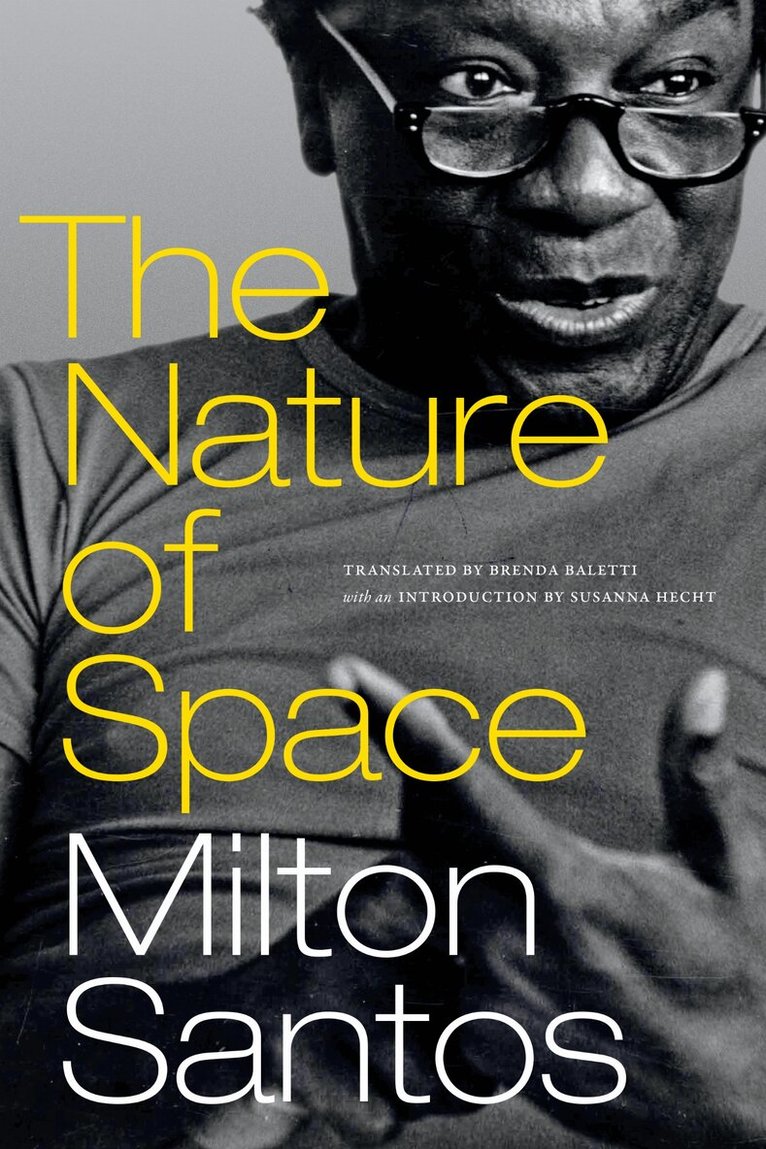
Originally published in 1979. In this forcefully argued book, Milton Santos shows that contemporary explanations of urbanization and spatial organization in underdeveloped countries are inadequate. This failure is attributable to their origins in theories elaborated to explain the development of advanced Western societies. Santos'' work provides the basis for the new theory which is so badly needed. He describes the urban economy in these countries in terms of two circuits of activity – an upper circuit consisting of those enterprises and structures which are based on modern technology and are oriented towards the advanced capitalist world, and a lower circuit comprised of more traditional processes and forms of exchange. The dialectical interaction of these two circuits is seen to generate the patterns of growth, forms of State intervention and, above all, the spatial organization characteristic of Third World economies.
This was a revision and translation of L’Espace Partagé (1975).
639 kr
Läs direkt efter köp
Originally published in 1979. In this forcefully argued book, Milton Santos shows that contemporary explanations of urbanization and spatial organization in underdeveloped countries are inadequate. This failure is attributable to their origins in theories elaborated to explain the development of advanced Western societies. Santos'' work provides the basis for the new theory which is so badly needed. He describes the urban economy in these countries in terms of two circuits of activity – an upper circuit consisting of those enterprises and structures which are based on modern technology and are oriented towards the advanced capitalist world, and a lower circuit comprised of more traditional processes and forms of exchange. The dialectical interaction of these two circuits is seen to generate the patterns of growth, forms of State intervention and, above all, the spatial organization characteristic of Third World economies.
This was a revision and translation of L’Espace Partagé (1975).
1 176 kr
Skickas inom 5-8 vardagar
306 kr
Skickas inom 5-8 vardagar
1 325 kr
Skickas inom 10-15 vardagar
310 kr
Skickas inom 5-8 vardagar
16 kr
Läs direkt efter köp
15 kr
Läs direkt efter köp
13 kr
Läs direkt efter köp
17 kr
Läs direkt efter köp
13 kr
Läs direkt efter köp
13 kr
Läs direkt efter köp
13 kr
Läs direkt efter köp
13 kr
Läs direkt efter köp
13 kr
Läs direkt efter köp
13 kr
Läs direkt efter köp
13 kr
Läs direkt efter köp
13 kr
Läs direkt efter köp
982 kr
Skickas inom 10-15 vardagar
1 214 kr
Läs direkt efter köp
This book presents an alternative theory of globalization that derives not from the dominant perspective of the West, from which this process emerged, but from the critical vantage point of the Third World, which has borne the heaviest burdens of globalization. It offers a critical and uniquely first-hand perspective that is lacking not only from the apologists of Western hegemony, but from most scholars writing against this hegemony from within the globalizing world. Renowned throughout Latin America and parts of Europe, the author, Brazilian geographer Milton Santos, has long been for the most part inaccessible to the English-speaking world. Only one of his books, The Shared Space: The Two Circuits of the Urban Economy in Underdeveloped Countries, published in 1975, has been translated into English; nevertheless, the works of Santos''s most important phase, from the 1980s until his death in 2001, have remained unavailable to English readers. With the translation of Towardan Other Globalization, one of the last works published in Santos’s lifetime, this situation has finally been rectified. In this book, Santos argues that we must consider globalization in three different senses: globalization as a fable (the world as globalizing agents make us believe), as perversity (the world as it is presently, in the throes of globalization), and as possibility (the world as it could be). What emerges from the analysis of these three senses is an alternative theory of globalization rooted in the perspective of the so-called Global South. Santos concludes his text with a message that is optimistic, but in no way naïve. What he offers instead is a revolutionary optimism and, indeed, an other globalization.
982 kr
Skickas inom 10-15 vardagar
235 kr
Skickas inom 5-8 vardagar