Miriam Felton-Dansky - Böcker
Visar alla böcker från författaren Miriam Felton-Dansky. Handla med fri frakt och snabb leverans.
3 produkter
3 produkter
372 kr
Skickas inom 7-10 vardagar
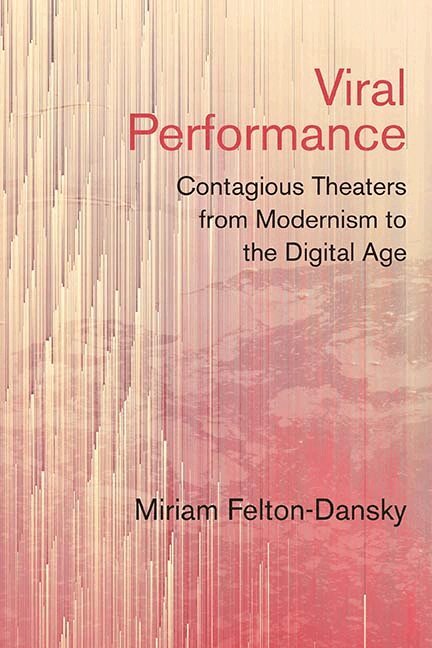
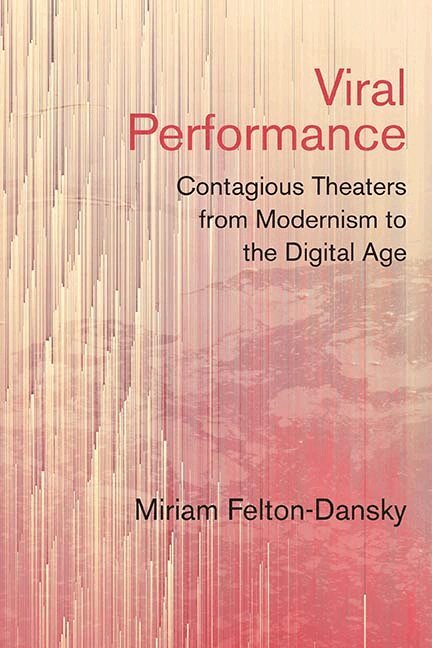
Digital culture has occasioned a seismic shift in the discourse around contagion, transmission, and viral circulation. Yet theater, in the cultural imagination, has always been contagious. Viral Performance proposes the concept of the viral as an essential means of understanding socially engaged and transmedial performance practices since the mid-twentieth century. Its chapters rethink the Living Theatre’s Artaudian revolution through the lens of affect theory, bring fresh attention to General Idea’s media-savvy performances of the 1970s, explore the digital-age provocations of Franco and Eva Mattes and Critical Art Ensemble, and survey the dramaturgies and political stakes of global theatrical networks.Viral performance practices testify to the age-old—and ever renewed—instinct that when people gather, something spreads. Performance, an art form requiring and relying on live contact, renders such spreading visible, raises its stakes, and encodes it in theatrical form. The artists explored here rarely disseminate their ideas or gestures as directly as a viral marketer or a political movement would; rather, they undermine simplified forms of contagion while holding dialogue with the philosophical and popular discourses, old and new, that have surrounded viral culture.Viral Performance argues that the concept of the viral is historically deeper than immediate associations with the contemporary digital landscape might suggest, and far more intimately linked to live performance.
1 323 kr
Skickas inom 10-15 vardagar
Digital culture has occasioned a seismic shift in the discourse around contagion, transmission, and viral circulation. Yet theater, in the cultural imagination, has always been contagious. Viral Performance proposes the concept of the viral as an essential means of understanding socially engaged and transmedial performance practices since the mid-twentieth century. Its chapters rethink the Living Theatre’s Artaudian revolution through the lens of affect theory, bring fresh attention to General Idea’s media-savvy performances of the 1970s, explore the digital-age provocations of Franco and Eva Mattes and Critical Art Ensemble, and survey the dramaturgies and political stakes of global theatrical networks.Viral performance practices testify to the age-old—and ever renewed—instinct that when people gather, something spreads. Performance, an art form requiring and relying on live contact, renders such spreading visible, raises its stakes, and encodes it in theatrical form. The artists explored here rarely disseminate their ideas or gestures as directly as a viral marketer or a political movement would; rather, they undermine simplified forms of contagion while holding dialogue with the philosophical and popular discourses, old and new, that have surrounded viral culture.Viral Performance argues that the concept of the viral is historically deeper than immediate associations with the contemporary digital landscape might suggest, and far more intimately linked to live performance.
129 kr
Skickas inom 7-10 vardagar
Contributors to this special issue investigate the ways surveillance and the fields of theater and performance inform one another. Considering forms of surveillance from government mass spying to data mining to all-seeing social networks, the contributors demonstrate how surveillance has found its way into our lives, both online and off, and how theater and performance-art forms predicated on heightened experiences of viewing-might help us recognize it. This issue includes scripts, photographs, essays, interviews, and reviews from Live Arts Bard’s 2017 performance biennial We’re Watching, a series of commissioned performances paired with a conference of scholars and artists. The performances focus on the appropriation and integration of surveillance technologies into theater and performance, such as a piece that uses Python code and Twitter data to create performance text, and one that uses an interplay of video projection, movement, and poetry. Drawing on these performances and more, contributors collectively argue that contemporary surveillance is characterized by both anonymous systems of digital control and human behaviors enacted by individuals. Contributors: David Bruin, Annie Dorsen, Shonni Enelow, Miriam Felton-Dansky, Jacob Gallagher-Ross, Caden Manson, John H. Muse, Jemma Nelson, Jennifer Parker-Starbuck, Alexandro Segade, Tom Sellar