
MirosA‚aw MichaA‚ Sadowski – författare
774 kr
Läs direkt efter köp
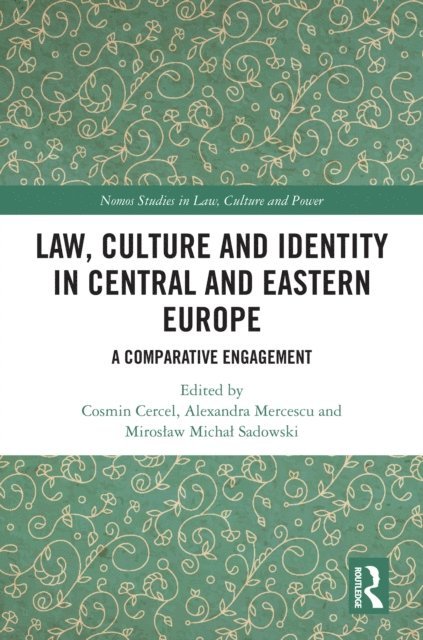
Combining insights from comparative legal theory, jurisprudence and legal history, this collection examines the legal and constitutional identity of Central and Eastern Europe.
Although the various countries of Central and Eastern Europe have often compared themselves to the West, the failure of these countries to engage with one another has resulted in a whole spectrum of legal identities remaining hidden. This book takes up a comparison of such identities within the region of Central and Eastern Europe, and following from the prima facie similarity between the region’s countries, given the experience of communism and legal transfers. The book thereby illuminates, through comparisons, the distinct legal identities of the 16 Central and Eastern European states; whilst, at the same time, arguing for a shared Central and Eastern European legal identity.
This book will appeal to scholars and students in the area of comparative law, as well as lawyers, political scientists, sociologists, and historians with particular interests in Central and Eastern Europe.
774 kr
Läs direkt efter köp
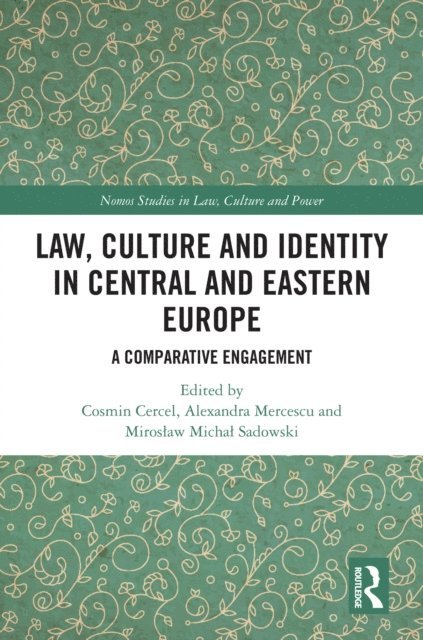
Combining insights from comparative legal theory, jurisprudence and legal history, this collection examines the legal and constitutional identity of Central and Eastern Europe.
Although the various countries of Central and Eastern Europe have often compared themselves to the West, the failure of these countries to engage with one another has resulted in a whole spectrum of legal identities remaining hidden. This book takes up a comparison of such identities within the region of Central and Eastern Europe, and following from the prima facie similarity between the region’s countries, given the experience of communism and legal transfers. The book thereby illuminates, through comparisons, the distinct legal identities of the 16 Central and Eastern European states; whilst, at the same time, arguing for a shared Central and Eastern European legal identity.
This book will appeal to scholars and students in the area of comparative law, as well as lawyers, political scientists, sociologists, and historians with particular interests in Central and Eastern Europe.
774 kr
Läs direkt efter köp
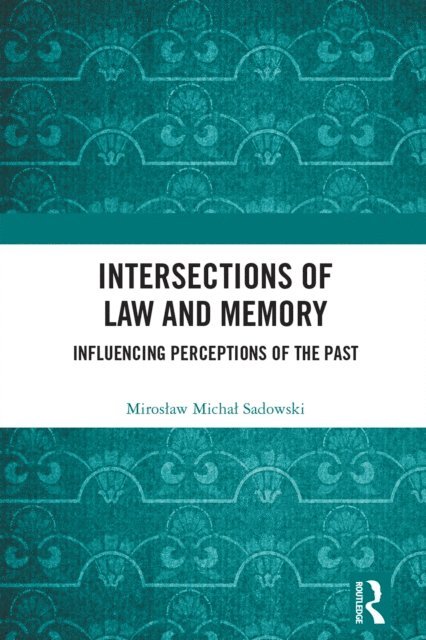
This book elaborates a new framework for considering and understanding the relationship between law and memory.
How can law influence collective memory? What are the mechanisms law employs to influence social perceptions of the past? And how successful is law in its attempts to rewrite narratives about the past? As the field of memory studies has grown, this book takes a step back from established transitional justice narratives, returning to the core sociological, philosophical and legal theoretical issues that underpin this field. The book then goes on to propose a new approach to the relationship between law and collective memory based on a conception of ‘legal institutions of memory’. It then elaborates the functioning of such institutions through a range of examples – taken from Japan, Iraq, Brazil, Portugal, Rwanda and Poland – that move from the work of international tribunals and truth commissions to more explicit memory legislation. The book concludes with a general assessment of the contemporary intersections of law and memory, and their legal institutionalisation.
This book will be of interest to scholars with relevant interests in the sociology of law, legal theory and international law, as well as in sociology and politics.
774 kr
Läs direkt efter köp
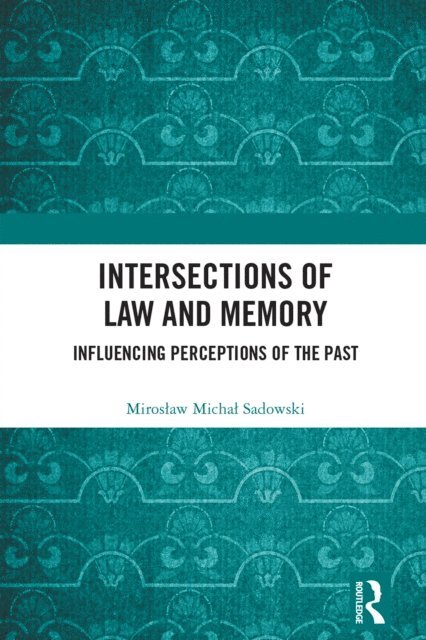
This book elaborates a new framework for considering and understanding the relationship between law and memory.
How can law influence collective memory? What are the mechanisms law employs to influence social perceptions of the past? And how successful is law in its attempts to rewrite narratives about the past? As the field of memory studies has grown, this book takes a step back from established transitional justice narratives, returning to the core sociological, philosophical and legal theoretical issues that underpin this field. The book then goes on to propose a new approach to the relationship between law and collective memory based on a conception of ‘legal institutions of memory’. It then elaborates the functioning of such institutions through a range of examples – taken from Japan, Iraq, Brazil, Portugal, Rwanda and Poland – that move from the work of international tribunals and truth commissions to more explicit memory legislation. The book concludes with a general assessment of the contemporary intersections of law and memory, and their legal institutionalisation.
This book will be of interest to scholars with relevant interests in the sociology of law, legal theory and international law, as well as in sociology and politics.