Mitu Gulati – författare
Visar alla böcker från författaren Mitu Gulati. Handla med fri frakt och snabb leverans.
6 produkter
6 produkter
Häftad, Engelska, 2015
298 kr
Skickas inom 5-8 vardagar
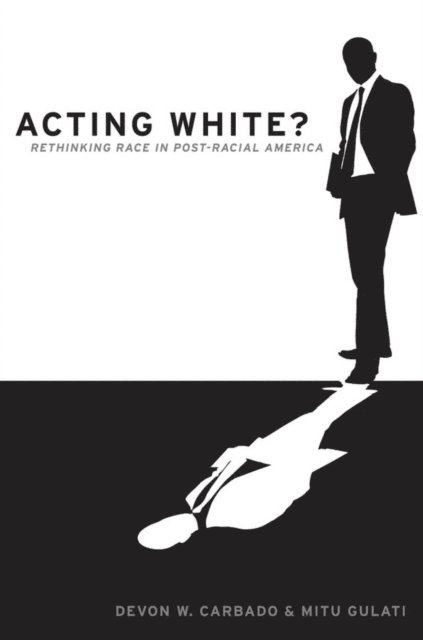
What does it mean to "act black" or "act white"? Is race merely a matter of phenotype, or does it come from the inflection of a person's speech, the clothes in her closet, how she chooses to spend her time and with whom she chooses to spend it? What does it mean to be "really" black, and who gets to make that judgment?In Acting White?, leading scholars of race and the law Devon Carbado and Mitu Gulati argue that, in spite of decades of racial progress and the pervasiveness of multicultural rhetoric, racial judgments are often based not just on skin color, but on how a person conforms to behavior stereotypically associated with a certain race. Specifically, racial minorities are judged on how they "perform" their race. This performance pervades every aspect of their daily life, whether it's the clothes they wear, the way they style their hair, the institutions with which they affiliate, their racial politics, the people they befriend, date or marry, where they live, how they speak, and their outward mannerisms and demeanor. Employing these cues, decision-makers decide not simply whether a person is black but the degree to which she or he is so. Relying on numerous examples from the workplace, higher education, and police interactions, the authors demonstrate that, for African Americans, the costs of "acting black" are high, and so are the pressures to "act white." But, as the authors point out, "acting white" has costs as well. Provocative yet never doctrinaire, Acting White? will boldly challenge your assumptions and make you think about racial prejudice from a fresh vantage point.
Inbunden, Engelska, 2013
578 kr
Skickas inom 5-8 vardagar
In Acting White, Devon Carbado and Mitu Gulati argue that racial judgments are often based not just on skin color, but on how a person conforms to behavior stereotypically associated with a certain race. Specifically, people judge racial minorities on how they "perform" their race. That includes the clothes they wear, how they style their hair, the institutions with which they affiliate, their racial politics, the people they befriend, date or marry, where they live, how they speak, and their outward mannerisms and demeanor. Employing these cues, decision-makers decide not simply whether a person is black but the degree to which she or he is so. Relying on numerous examples from the workplace, higher education, and police interactions, the authors demonstrate that, for African Americans, the costs of "acting black" are high. This creates pressures for blacks to "act white." But, as the authors point out, "acting white" has costs as well. Written in an easy style that is non-doctrinaire and provocative, the book makes complex concepts both accessible and interesting. Whether you agree and disagree with Acting White, the book will challenge your assumptions and make you think about racial prejudice from a fresh vantage point.
Inbunden, Engelska, 2026
1 627 kr
Skickas inom 3-6 vardagar
In today's global markets, commercial contracts are the backbone of complex financial and corporate transactions. Yet despite their centrality, these documents are often riddled with flaws-ambiguous terms, outdated provisions, and strategic traps-that persist across deals and markets. Legal theory tends to overlook these imperfections, assuming contracts are coherent, intentional, and complete. But the reality of contract production tells a different story.Contract Hazards: Lawyers and Their Landmines investigates the hidden dangers embedded in standardized contract language. These "landmines" are not rare mistakes-they are structural features of how contracts are assembled under pressure, often from recycled precedent and boilerplate. Drawing on both qualitative and quantitative research, it explores how flawed terms originate, why they endure, and how they are sometimes exploited by lawyers when deals unravel.Focusing on markets such as sovereign bonds, mergers, and syndicated loans, this analysis traces how different legal communities respond to these flaws-some seeking to repair them, others learning to weaponize them. While landmines are widespread, the behavior of lawyers and the institutional dynamics of each market shape how they are managed.By bridging the gap between contract theory and contract practice, Contract Hazards offers a compelling new perspective on how legal documents evolve. It challenges conventional assumptions and illuminates the complex, often messy realities of modern contract drafting.
E-bok
PDF, Engelska, 2013213 kr
Läs direkt efter köp
What does it mean to "act black" or "act white"? Is race merely a matter of phenotype, or does it come from the inflection of a person''s speech, the clothes in her closet, how she chooses to spend her time and with whom she chooses to spend it? What does it mean to be "really" black, and who gets to make that judgment?In Acting White?, leading scholars of race and the law Devon Carbado and Mitu Gulati argue that, in spite of decades of racial progress and the pervasiveness of multicultural rhetoric, racial judgments are often based not just on skin color, but on how a person conforms to behavior stereotypically associated with a certain race. Specifically, racial minorities are judged on how they "perform" their race. This performance pervades every aspect of their daily life, whether it''s the clothes they wear, the way they style their hair, the institutions with which they affiliate, their racial politics, the people they befriend, date or marry, where they live, how they speak, and their outward mannerisms and demeanor. Employing these cues, decision-makers decide not simply whether a person is black but the degree to which she or he is so. Relying on numerous examples from the workplace, higher education, and police interactions, the authors demonstrate that, for African Americans, the costs of "acting black" are high, and so are the pressures to "act white." But, as the authors point out, "acting white" has costs as well. Provocative yet never doctrinaire, Acting White? will boldly challenge your assumptions and make you think about racial prejudice from a fresh vantage point.
E-bok
Engelska, 2013154 kr
Läs direkt efter köp
What does it mean to "act black" or "act white"? Is race merely a matter of phenotype, or does it come from the inflection of a person''s speech, the clothes in her closet, how she chooses to spend her time and with whom she chooses to spend it? What does it mean to be "really" black, and who gets to make that judgment?In Acting White?, leading scholars of race and the law Devon Carbado and Mitu Gulati argue that, in spite of decades of racial progress and the pervasiveness of multicultural rhetoric, racial judgments are often based not just on skin color, but on how a person conforms to behavior stereotypically associated with a certain race. Specifically, racial minorities are judged on how they "perform" their race. This performance pervades every aspect of their daily life, whether it''s the clothes they wear, the way they style their hair, the institutions with which they affiliate, their racial politics, the people they befriend, date or marry, where they live, how they speak, and their outward mannerisms and demeanor. Employing these cues, decision-makers decide not simply whether a person is black but the degree to which she or he is so. Relying on numerous examples from the workplace, higher education, and police interactions, the authors demonstrate that, for African Americans, the costs of "acting black" are high, and so are the pressures to "act white." But, as the authors point out, "acting white" has costs as well. Provocative yet never doctrinaire, Acting White? will boldly challenge your assumptions and make you think about racial prejudice from a fresh vantage point.
Inbunden, Engelska, 2012
498 kr
Skickas inom 11-20 vardagar
Boilerplate language in contracts tends to stick around long after its origins and purpose have been forgotten. Usually there are no serious repercussions, but sometimes it can cause unexpected problems. Such was the case with the obscure pari passu clause in cross-border sovereign debt contracts, until a novel judicial interpretation rattled international finance by forcing a defaulting sovereign - for one of the first times in the market's centuries-long history - to repay its foreign creditors. Though neither party wanted this outcome, the vast majority of contracts subsequently issued demonstrate virtually no attempt to clarify the imprecise language of the clause. Using this case as a launching pad to explore the broader issue of the "stickiness" of contract boilerplate, Mitu Gulati and Robert E. Scott have sifted through more than one thousand sovereign debt contracts and interviewed hundreds of practitioners to show that the problem actually lies in the nature of the modern corporate law firm. The financial pressure on large firms to maintain a high volume of transactions contributes to an array of problems that deter innovation.With the near certainty of massive sovereign debt restructuring in Europe, "The Three and a Half Minute Transaction" speaks to critical issues facing the industry and has broader implications for contract design that will ensure it remains relevant to our understanding of legal practice long after the debt crisis has subsided.