Mohamed Abdel Raouf – författare
667 kr
Skickas inom 10-15 vardagar
2 183 kr
Skickas inom 10-15 vardagar
773 kr
Skickas inom 10-15 vardagar
2 323 kr
Skickas inom 10-15 vardagar
891 kr
Läs direkt efter köp
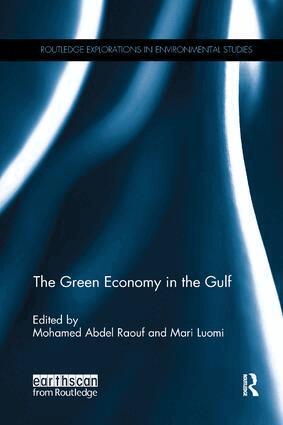
Filling a void in academic and policy-relevant literature on the topic of the green economy in the Arabian Gulf, this edited volume provides a multidisciplinary analysis of the key themes and challenges relating to the green economy in the region, including in the energy and water sectors and the urban environment, as well as with respect to cross-cutting issues, such as labour, intellectual property and South-South cooperation.Over the course of the book, academics and practitioners from various fields demonstrate why transitioning into a ‘green economy’ – a future economy based on environmental sustainability, social equity and improved well-being – is not an option but a necessity for the Gulf Cooperation Council (GCC) States. Through chapters covering key economic sectors and cross-cutting issues, the book examines the GCC states’ quest to align their economies and economic development with the imperatives of environmental sustainability and social welfare, and proposes a way forward, based on lessons learned from experiences in the region and beyond.This volume will be of great relevance to scholars and policy makers with an interest in environmental economics and policy.
891 kr
Läs direkt efter köp
Filling a void in academic and policy-relevant literature on the topic of the green economy in the Arabian Gulf, this edited volume provides a multidisciplinary analysis of the key themes and challenges relating to the green economy in the region, including in the energy and water sectors and the urban environment, as well as with respect to cross-cutting issues, such as labour, intellectual property and South-South cooperation.Over the course of the book, academics and practitioners from various fields demonstrate why transitioning into a ‘green economy’ – a future economy based on environmental sustainability, social equity and improved well-being – is not an option but a necessity for the Gulf Cooperation Council (GCC) States. Through chapters covering key economic sectors and cross-cutting issues, the book examines the GCC states’ quest to align their economies and economic development with the imperatives of environmental sustainability and social welfare, and proposes a way forward, based on lessons learned from experiences in the region and beyond.This volume will be of great relevance to scholars and policy makers with an interest in environmental economics and policy.
763 kr
Läs direkt efter köp
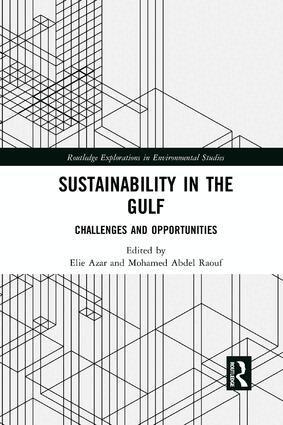
Sustainability is a topic of great interest today, particularly for the Gulf Cooperation Council (GCC) countries, which have witnessed very rapid economic and demographic growth over the past decade. The observed growth has led to unsustainable consumption patterns of vital resources such as water, energy, and food, highlighting the need for an urgent shift towards green growth and sustainable development strategies.
Sustainability in the Gulf covers the region’s contemporary development challenges through the lens of the UN’s Sustainable Development Goals (SDGs), which place sustainability at the centre of the solution to the current environmental, economic, and social imbalances facing GCC countries. The book presents multiple analyses of Gulf-specific sustainability topics, examining the current status, challenges, and opportunities, as well as identifying key lessons learned. Innovative and practical policy recommendations are provided, as well as new conceptual angles to the evolving academic debates on the post-oil era in the Gulf. Through chapters covering sector-related studies, as well as the socio-economic dimensions of the sustainability paradigm, this volume offers valuable insights into current research efforts made by the GCC states, proposing a way forward based on lessons learned.
This is a valuable resource for students, academics, and researchers in the areas of Environmental Studies, Political Economy, and Economics of the GCC states.
790 kr
Läs direkt efter köp
Sustainability is a topic of great interest today, particularly for the Gulf Cooperation Council (GCC) countries, which have witnessed very rapid economic and demographic growth over the past decade. The observed growth has led to unsustainable consumption patterns of vital resources such as water, energy, and food, highlighting the need for an urgent shift towards green growth and sustainable development strategies.
Sustainability in the Gulf covers the region’s contemporary development challenges through the lens of the UN’s Sustainable Development Goals (SDGs), which place sustainability at the centre of the solution to the current environmental, economic, and social imbalances facing GCC countries. The book presents multiple analyses of Gulf-specific sustainability topics, examining the current status, challenges, and opportunities, as well as identifying key lessons learned. Innovative and practical policy recommendations are provided, as well as new conceptual angles to the evolving academic debates on the post-oil era in the Gulf. Through chapters covering sector-related studies, as well as the socio-economic dimensions of the sustainability paradigm, this volume offers valuable insights into current research efforts made by the GCC states, proposing a way forward based on lessons learned.
This is a valuable resource for students, academics, and researchers in the areas of Environmental Studies, Political Economy, and Economics of the GCC states.
3 321 kr
Läs direkt efter köp
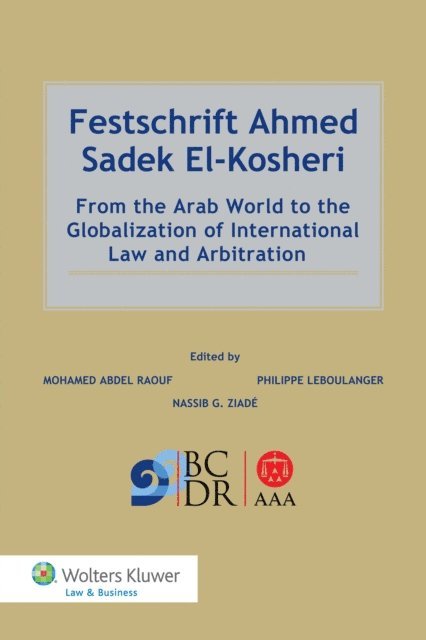
With this Festschrift, the Bahrain Chamber for Dispute Resolution (BCDR-AAA) is starting a tradition of honoring Arab scholars and practitioners who promote international arbitration and international law. Over the last few decades, international arbitration institutions and international law societies have generously acknowledged the work of leading scholars and practitioners from the region. The time has come, however, for these individuals to be honored by institutions within the region.
It should come as no surprise that the BCDR-AAA is dedicating this first Festschrift to Professor Dr. Ahmed El-Kosheri. His immense contributions to international commercial arbitration, international investment arbitration, and international law more broadly, as well as his significant influence on a generation of lawyers and students from the Arab region and beyond, fully justify this choice.
As a testament to Dr. El-Kosheri''s remarkable career, broad intellectual horizons and extensive geographical reach, the Festschrift includes contributions from forty-six authors-judges, arbitrators, practitioners and scholars-representing twenty-one nationalities from the Middle East, North and Western Africa, East Asia, Europe, and North and South America, who wrote on topics as diverse as international arbitration and ADR mechanisms, international investment law, public international law (including international administrative law), and private international law in Arabic, English, and French.
One can hardly think of another Arab figure who has done more than Dr. El-Kosheri to strengthen international law while bridging legal-cultural divides between the Arab region and the rest of the world. He will undoubtedly continue to inspire many generations to come.
3 204 kr
Läs direkt efter köp
With this Festschrift, the Bahrain Chamber for Dispute Resolution (BCDR-AAA) is starting a tradition of honoring Arab scholars and practitioners who promote international arbitration and international law. Over the last few decades, international arbitration institutions and international law societies have generously acknowledged the work of leading scholars and practitioners from the region. The time has come, however, for these individuals to be honored by institutions within the region.
It should come as no surprise that the BCDR-AAA is dedicating this first Festschrift to Professor Dr. Ahmed El-Kosheri. His immense contributions to international commercial arbitration, international investment arbitration, and international law more broadly, as well as his significant influence on a generation of lawyers and students from the Arab region and beyond, fully justify this choice.
As a testament to Dr. El-Kosheri''s remarkable career, broad intellectual horizons and extensive geographical reach, the Festschrift includes contributions from forty-six authors-judges, arbitrators, practitioners and scholars-representing twenty-one nationalities from the Middle East, North and Western Africa, East Asia, Europe, and North and South America, who wrote on topics as diverse as international arbitration and ADR mechanisms, international investment law, public international law (including international administrative law), and private international law in Arabic, English, and French.
One can hardly think of another Arab figure who has done more than Dr. El-Kosheri to strengthen international law while bridging legal-cultural divides between the Arab region and the rest of the world. He will undoubtedly continue to inspire many generations to come.
2 788 kr
Läs direkt efter köp
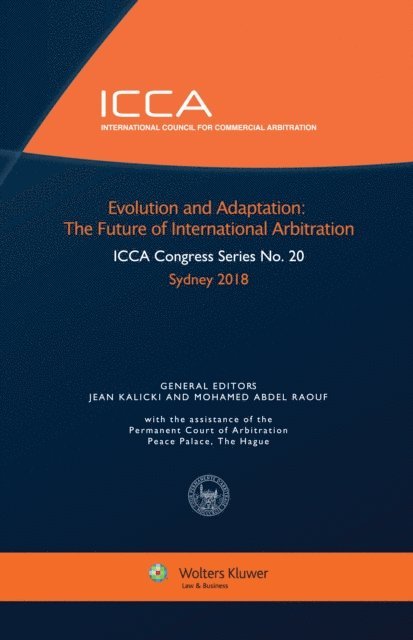
What is it about international arbitration that makes it so open to evolution and adaptation? What are the main pressure points today and the unmet needs of stakeholders? What are the opportunities for expansion to new sectors and new audiences? What are the drivers for change, the obstacles and the risks? And equally important, what are the core principles that should never be lost? These were the topics of the Twenty-Fourth ICCA Congress, held in Sydney, Australia, in April 2018, the proceedings of which are collected in this volume.
The volume highlights arbitration as a ‘living organism’ that has adapted in the past to various challenges, and that today – under attack from various quarters – might need to demonstrate its adaptability again. Accordingly, the contributions address the evolving needs of users, the impact of the rapidly changing face of technology, the expectations of the public, and the convergence and divergence of different aspects of legal traditions and cultures. Topical issues of interest for practitioners, academics, and students of arbitration include the following:
legitimacy and authority of arbitrators, institutions and professional organizations to act as lawmakers; investment treaty reform, with particular reference to the definition of ‘investment,’ the evolution of substantive treaty standards, and sustainable development obligations; commercial arbitration reform, including issues of public and private interest, the development of common law, and cost, delay and transparency concerns; revisiting party autonomy in choosing decision-makers, including through institutional appointments or investment courts; equality of arms, the economics of access, and the role of costs and third-party funding; public-private disputes and special issues that arise when State entities arbitrate; public participation and transparency, and their effect on both ISDS and commercial arbitration; revisiting conventional wisdom in organizing arbitral proceedings; lessons to be learned from other dispute resolution frameworks; technology as friend and enemy, including new tools, new threats, and cybersecurity; arbitration of disputes in conflict and post-conflict zones; inter-generational blame and praise in investment arbitration; and the emergence of sovereign wealth funds as arbitration participants.A special section on ‘New Frontiers in Arbitration’ offers enlightening perspectives on new types of claims and new types of stakeholders likely to affect the future of international arbitration, including the potential for climate change disputes and enlarged participation.
2 788 kr
Läs direkt efter köp
What is it about international arbitration that makes it so open to evolution and adaptation? What are the main pressure points today and the unmet needs of stakeholders? What are the opportunities for expansion to new sectors and new audiences? What are the drivers for change, the obstacles and the risks? And equally important, what are the core principles that should never be lost? These were the topics of the Twenty-Fourth ICCA Congress, held in Sydney, Australia, in April 2018, the proceedings of which are collected in this volume.
The volume highlights arbitration as a ‘living organism’ that has adapted in the past to various challenges, and that today – under attack from various quarters – might need to demonstrate its adaptability again. Accordingly, the contributions address the evolving needs of users, the impact of the rapidly changing face of technology, the expectations of the public, and the convergence and divergence of different aspects of legal traditions and cultures. Topical issues of interest for practitioners, academics, and students of arbitration include the following:
legitimacy and authority of arbitrators, institutions and professional organizations to act as lawmakers; investment treaty reform, with particular reference to the definition of ‘investment,’ the evolution of substantive treaty standards, and sustainable development obligations; commercial arbitration reform, including issues of public and private interest, the development of common law, and cost, delay and transparency concerns; revisiting party autonomy in choosing decision-makers, including through institutional appointments or investment courts; equality of arms, the economics of access, and the role of costs and third-party funding; public-private disputes and special issues that arise when State entities arbitrate; public participation and transparency, and their effect on both ISDS and commercial arbitration; revisiting conventional wisdom in organizing arbitral proceedings; lessons to be learned from other dispute resolution frameworks; technology as friend and enemy, including new tools, new threats, and cybersecurity; arbitration of disputes in conflict and post-conflict zones; inter-generational blame and praise in investment arbitration; and the emergence of sovereign wealth funds as arbitration participants.A special section on ‘New Frontiers in Arbitration’ offers enlightening perspectives on new types of claims and new types of stakeholders likely to affect the future of international arbitration, including the potential for climate change disputes and enlarged participation.