Mohamed Ghoul – författare
1 924 kr
Läs direkt efter köp
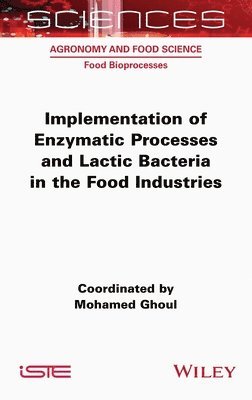
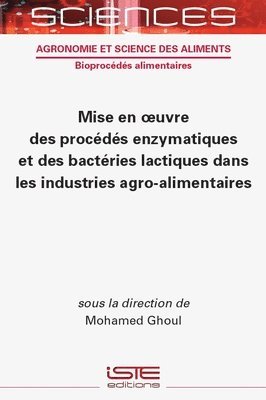
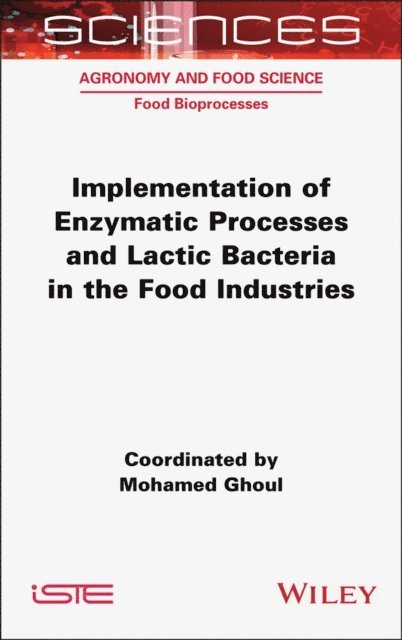
Consumers are demanding healthy, natural food products with no environmental impacts. The use of ingredients of plant origin and the implementation of bioprocesses using enzymes and micro-organisms as biocatalysts represent a promising alternative to satisfy this demand.
Implementation of Enzymatic Processes and Lactic Bacteria in the Food Industries focuses on describing the latest developments in the use of enzymatic biocatalysts and lactic acid bacteria in the food industry.
The first part of the book is devoted to the presentation of different classes of enzymes, production and application processes, ways of improving enzymes and the main industrial applications using biocatalysts.
The second part of the book describes a family of micro-organisms widely used in health food processing and formulation: lactic acid bacteria and bifidobacteria. Then, the most commonly used encapsulation matrices, encapsulation processes and the process of bacterial adhesion to these matrices are discussed. Finally, the best-known fermented foods and new approaches developed in this field are presented.
1 924 kr
Läs direkt efter köp
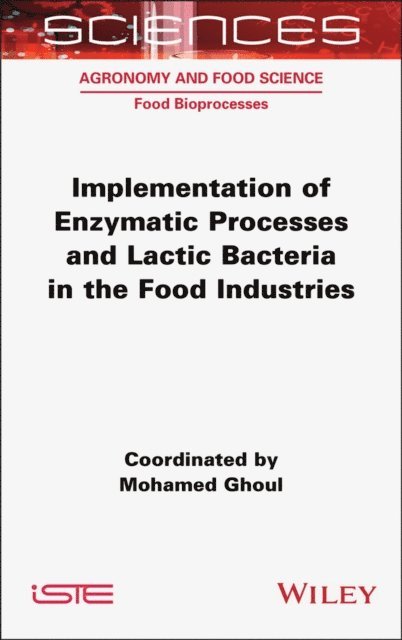
Consumers are demanding healthy, natural food products with no environmental impacts. The use of ingredients of plant origin and the implementation of bioprocesses using enzymes and micro-organisms as biocatalysts represent a promising alternative to satisfy this demand.
Implementation of Enzymatic Processes and Lactic Bacteria in the Food Industries focuses on describing the latest developments in the use of enzymatic biocatalysts and lactic acid bacteria in the food industry.
The first part of the book is devoted to the presentation of different classes of enzymes, production and application processes, ways of improving enzymes and the main industrial applications using biocatalysts.
The second part of the book describes a family of micro-organisms widely used in health food processing and formulation: lactic acid bacteria and bifidobacteria. Then, the most commonly used encapsulation matrices, encapsulation processes and the process of bacterial adhesion to these matrices are discussed. Finally, the best-known fermented foods and new approaches developed in this field are presented.
2 076 kr
Läs direkt efter köp
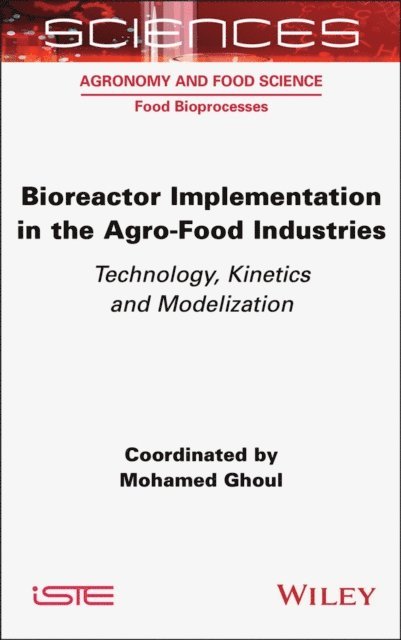
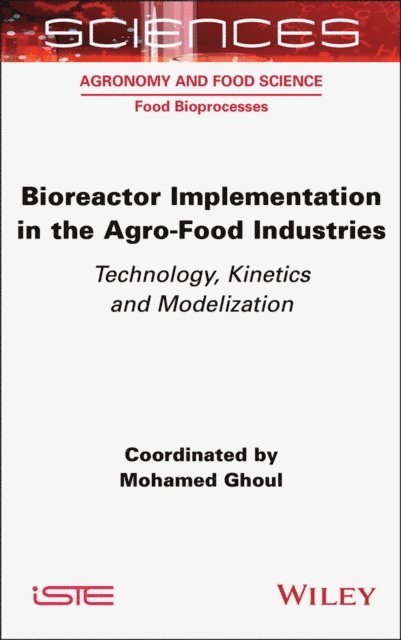
The use of bioreactors in food ingredient production has expanded rapidly in recent years. These processes create a controlled environment that is tailored to the specific needs of each microorganism, while also minimizing their environmental impact.
However, to optimize the implementation of these processes, it is necessary to master a number of scientific concepts relating to material and heat balances, thermodynamics, microbial kinetics, extrapolation and agitation techniques, as well as the techno-economic analysis of processes.
This book aims to provide an exhaustive and precise presentation of all of these concepts, making them accessible to students, researchers and professionals alike.
Bioreactor Implementation in the Agro-Food Industries is structured in two complementary parts. The first part outlines the essential principles of bioreactor engineering. This knowledge is essential if we are to master the biological and physico-chemical processes that take place in bioreactors.
The second part presents practical examples of the use of bioreactors for the production of several ingredients and metabolites of interest.
2 076 kr
Läs direkt efter köp
The use of bioreactors in food ingredient production has expanded rapidly in recent years. These processes create a controlled environment that is tailored to the specific needs of each microorganism, while also minimizing their environmental impact.
However, to optimize the implementation of these processes, it is necessary to master a number of scientific concepts relating to material and heat balances, thermodynamics, microbial kinetics, extrapolation and agitation techniques, as well as the techno-economic analysis of processes.
This book aims to provide an exhaustive and precise presentation of all of these concepts, making them accessible to students, researchers and professionals alike.
Bioreactor Implementation in the Agro-Food Industries is structured in two complementary parts. The first part outlines the essential principles of bioreactor engineering. This knowledge is essential if we are to master the biological and physico-chemical processes that take place in bioreactors.
The second part presents practical examples of the use of bioreactors for the production of several ingredients and metabolites of interest.
1 718 kr
Skickas inom 5-8 vardagar
1 718 kr
Skickas inom 5-8 vardagar
2 654 kr
Skickas inom 5-8 vardagar
2 654 kr
Skickas inom 5-8 vardagar
540 kr
Skickas inom 10-15 vardagar
687 kr
Läs direkt efter köp
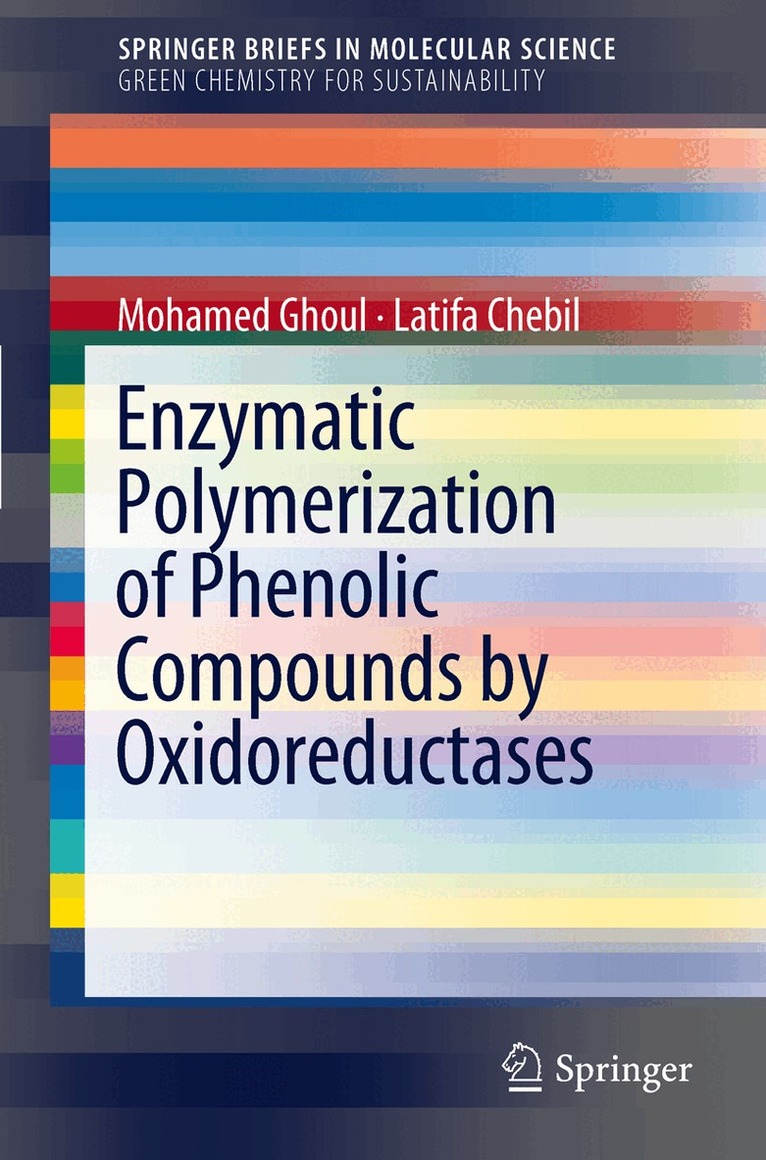
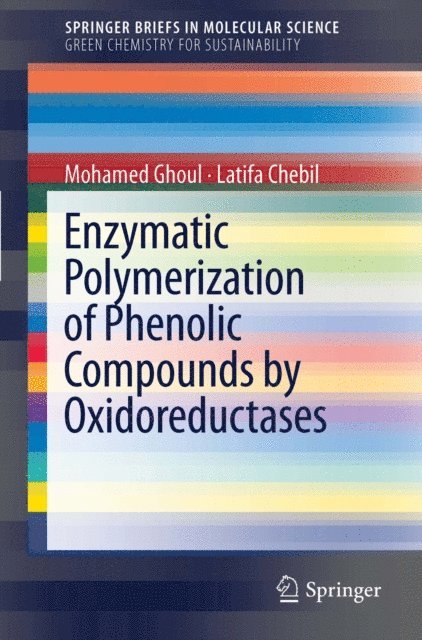
The enzymatic polymerization of phenolic compounds has been generating interest in several fields such as food, cosmetics, and pharmaceuticals.
These compounds are employed for their antioxidant properties; however, their use is limited by their low solubility and thermal stability. Polymerization can improve their solubility and their thermal stability though and create new properties which are dependent on the molecular mass and the structure of polymers. The reaction yield, the polydispersity, the molecular mass, the structure and the properties of synthesized polymers can be controlled by the mode of control of the reaction and by the reaction conditions.
Enzymatic polymerization of phenolic compounds by oxidoreductases analyze the processes used and the key factors (temperature, solvent, origin of the enzyme, structure of the substrate, reactor design, …) which control the polymerization of phenolic species by these oxidoreductase enzymes in order to obtain polymers with desired characteristics and properties.