Mohammad Musfequs Salehin – författare
Visar alla böcker från författaren Mohammad Musfequs Salehin. Handla med fri frakt och snabb leverans.
8 produkter
8 produkter
Inbunden, Engelska, 2026
2 225 kr
Kommande
This edited volume introduces memoryscapes to explain how collective memory moves between conflict and healing. Through a dynamic framework and diverse cases, it shows how inclusive, participatory practices can transform violent pasts and foster accountability, reconciliation and sustainable peace.Readers gain a practical framework to analyze and shape memory work that supports healing, justice and sustainable peace. The book delivers this through its three-gradient model (healing, dissent, resistance), a methodological toolkit, and comparative cases from museums, monuments, heritage and burial sites, refugee camps, media, education and the arts—while confronting politicisation, institutionalisation and post-truth challenges.Intended for researchers, students and practitioners in peace and conflict studies, heritage and memory studies, anthropology, sociology, political science and media/education, as well as museum and memorial professionals, peacebuilders, educators, civil society organisers and policymakers working with contested pasts.
Häftad, Engelska, 2018
695 kr
Skickas inom 10-15 vardagar
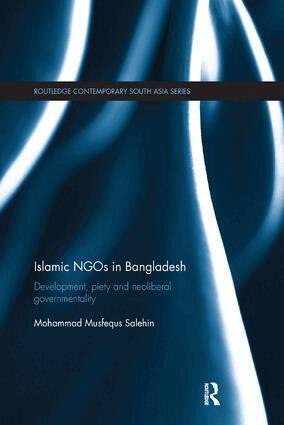
NGOs (Non-Governmental Organizations) have emerged in both a development and aid capacity in Bangladesh, providing wide-reaching public services to the country’s population living in extreme poverty. However, resistance to and limitations of NGO-led development - which in conjunction with Bangladesh’s social transformation - led to a new religious-based NGO development practice.Looking at the role of Islamic NGOs in Bangladesh, the book investigates new forms of neoliberal governmentality supported by international donors. It discusses how this form of social regulation produces and reproduces subjectivities, particularly Muslim women subjectivity, and has combined religious and economic rationality, further complicating the boundaries and the relationship between Islam, modernity, and development. The book argues that both secular and Islamic NGOs target women in the name of empowerment but more importantly as the most reliable partners to meet their debt obligations of micro-financing schemes, including shari’a-based financing. The targeted women, in turn, experience Islamic NGOs as less coercive and more sensitive to their religious environment in the rural village community than are secular NGOs. Providing a comparative study of the role of religious and secular NGOs in the implementation of neoliberal policies and development strategies, this book will be a significant addition to research on South Asian Politics, Development Studies, Gender Studies, and Religion.
Inbunden, Engelska, 2016
2 252 kr
Skickas inom 10-15 vardagar
NGOs (Non-Governmental Organizations) have emerged in both a development and aid capacity in Bangladesh, providing wide-reaching public services to the country’s population living in extreme poverty. However, resistance to and limitations of NGO-led development - which in conjunction with Bangladesh’s social transformation - led to a new religious-based NGO development practice.Looking at the role of Islamic NGOs in Bangladesh, the book investigates new forms of neoliberal governmentality supported by international donors. It discusses how this form of social regulation produces and reproduces subjectivities, particularly Muslim women subjectivity, and has combined religious and economic rationality, further complicating the boundaries and the relationship between Islam, modernity, and development. The book argues that both secular and Islamic NGOs target women in the name of empowerment but more importantly as the most reliable partners to meet their debt obligations of micro-financing schemes, including shari’a-based financing. The targeted women, in turn, experience Islamic NGOs as less coercive and more sensitive to their religious environment in the rural village community than are secular NGOs. Providing a comparative study of the role of religious and secular NGOs in the implementation of neoliberal policies and development strategies, this book will be a significant addition to research on South Asian Politics, Development Studies, Gender Studies, and Religion.
E-bok
Engelska, 2016795 kr
Läs direkt efter köp
NGOs (Non-Governmental Organizations) have emerged in both a development and aid capacity in Bangladesh, providing wide-reaching public services to the country’s population living in extreme poverty. However, resistance to and limitations of NGO-led development - which in conjunction with Bangladesh’s social transformation - led to a new religious-based NGO development practice.Looking at the role of Islamic NGOs in Bangladesh, the book investigates new forms of neoliberal governmentality supported by international donors. It discusses how this form of social regulation produces and reproduces subjectivities, particularly Muslim women subjectivity, and has combined religious and economic rationality, further complicating the boundaries and the relationship between Islam, modernity, and development. The book argues that both secular and Islamic NGOs target women in the name of empowerment but more importantly as the most reliable partners to meet their debt obligations of micro-financing schemes, including shari’a-based financing. The targeted women, in turn, experience Islamic NGOs as less coercive and more sensitive to their religious environment in the rural village community than are secular NGOs. Providing a comparative study of the role of religious and secular NGOs in the implementation of neoliberal policies and development strategies, this book will be a significant addition to research on South Asian Politics, Development Studies, Gender Studies, and Religion.
E-bok
PDF, Engelska, 2016795 kr
Läs direkt efter köp
NGOs (Non-Governmental Organizations) have emerged in both a development and aid capacity in Bangladesh, providing wide-reaching public services to the country’s population living in extreme poverty. However, resistance to and limitations of NGO-led development - which in conjunction with Bangladesh’s social transformation - led to a new religious-based NGO development practice.Looking at the role of Islamic NGOs in Bangladesh, the book investigates new forms of neoliberal governmentality supported by international donors. It discusses how this form of social regulation produces and reproduces subjectivities, particularly Muslim women subjectivity, and has combined religious and economic rationality, further complicating the boundaries and the relationship between Islam, modernity, and development. The book argues that both secular and Islamic NGOs target women in the name of empowerment but more importantly as the most reliable partners to meet their debt obligations of micro-financing schemes, including shari’a-based financing. The targeted women, in turn, experience Islamic NGOs as less coercive and more sensitive to their religious environment in the rural village community than are secular NGOs. Providing a comparative study of the role of religious and secular NGOs in the implementation of neoliberal policies and development strategies, this book will be a significant addition to research on South Asian Politics, Development Studies, Gender Studies, and Religion.
Inbunden, Engelska, 2024
549 kr
Skickas inom 10-15 vardagar
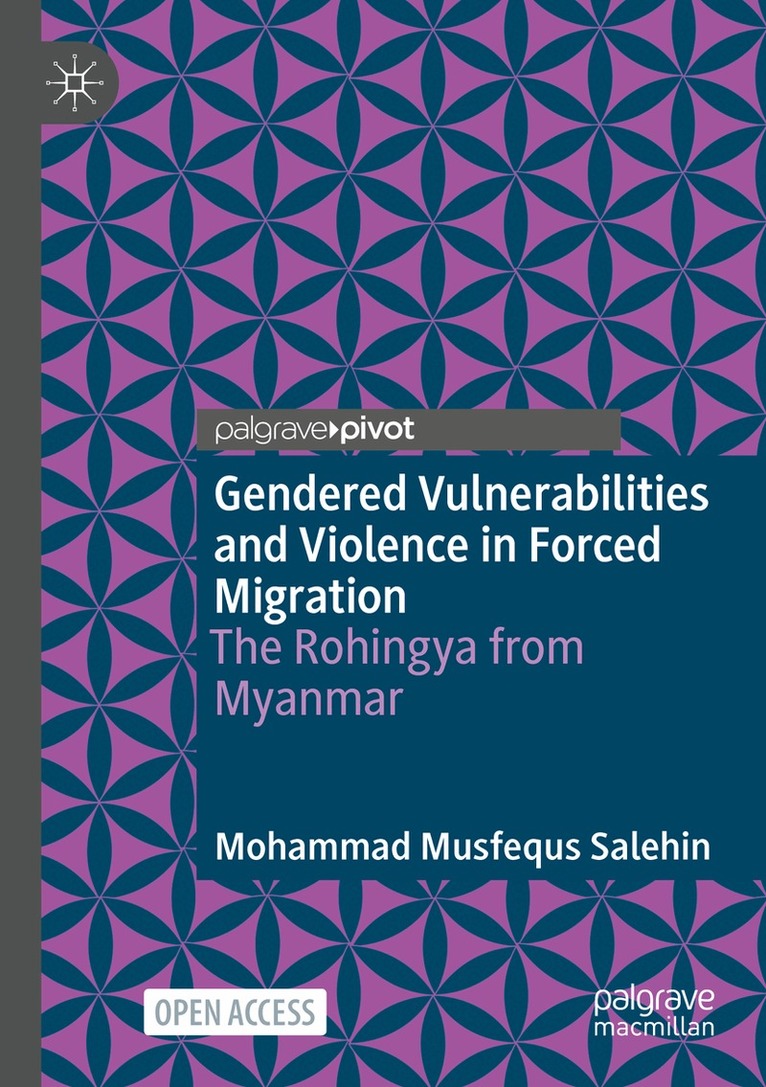
This open access book investigates the gendered violence and vulnerabilities experienced by Rohingya men and women, drawing on qualitative data from refugee camps in Bangladesh. It shows that in Myanmar, men suffered torture and sexual violence, while women experienced physical, mental and sexual violence, legitimized by patriarchal norms. Sexual violence was wielded as a weapon to coerce their exodus from Myanmar and to disrupt the essential facets of Rohingya femininity, motherhood, and reproductive capabilities. Structural, cultural and symbolic violence affected the Rohingya differently across gender lines. A gendered threat narrative and othering cast women as ‘ugly’ and reproductive threats while men are framed as potential threats to national security and Buddhist nationalism. In Bangladesh, gendered othering continued, with Rohingya men seen as security threats and women as vulnerable victims. This book contributes to peace and conflict studies, gender studies, and migration and refugee studies, by analysing gendered violence.
Häftad, Engelska, 2024
441 kr
Skickas inom 10-15 vardagar
This open access book investigates the gendered violence and vulnerabilities experienced by Rohingya men and women, drawing on qualitative data from refugee camps in Bangladesh. It shows that in Myanmar, men suffered torture and sexual violence, while women experienced physical, mental and sexual violence, legitimized by patriarchal norms. Sexual violence was wielded as a weapon to coerce their exodus from Myanmar and to disrupt the essential facets of Rohingya femininity, motherhood, and reproductive capabilities. Structural, cultural and symbolic violence affected the Rohingya differently across gender lines. A gendered threat narrative and othering cast women as ‘ugly’ and reproductive threats while men are framed as potential threats to national security and Buddhist nationalism. In Bangladesh, gendered othering continued, with Rohingya men seen as security threats and women as vulnerable victims. This book contributes to peace and conflict studies, gender studies, and migration and refugee studies, by analysing gendered violence.
Inbunden, Engelska, 2027
2 255 kr
Kommande
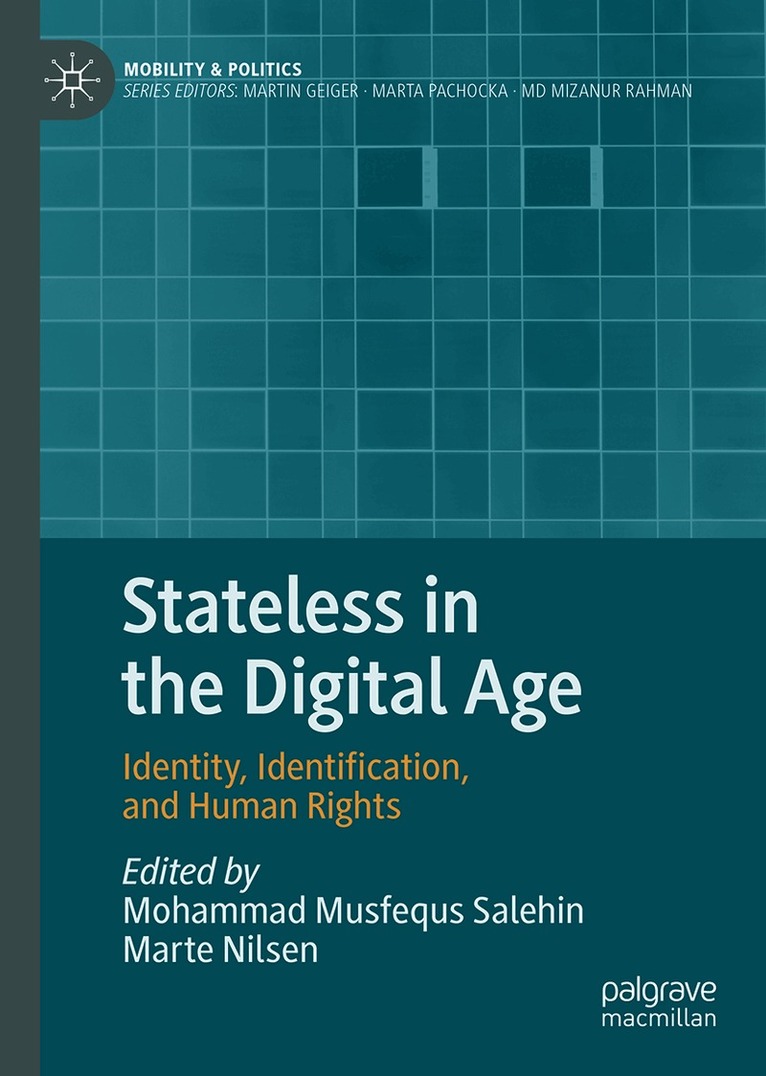
Stateless in the Digital Age delves into the complex ways smart technologies, including biometrics and digital communication tools, are reshaping the lived realities of stateless and displaced populations. While these technologies propose opportunities that may empower refugees, migrants and marginalized populations in accessing information, education, critical resources and services, they also present new challenges, from digital divides to systemic discrimination and heightened surveillance.Focusing on the Rohingya and Assamese Bengalis in South Asia, this book uncovers how digital identification practices such as biometric registration can exacerbate exclusion, restrict mobility, and erode human rights. It sheds light on the resilience of stateless communities through practicing invisibility in everyday life situations as well as navigating fluid borderlands, even as the digital era complicates survival without an official identity. While digital platforms such as Facebook have enabled empowerment, they have also become a space for escalating hostility. The digital cultural practices and networks of stateless youth are both important as a coping mechanism as well as a form of resistance. Drawing on case studies and critical insights, Stateless in the Digital Age illuminates the paradox of technology as both a tool of empowerment and oppression.This timely work offers a novel academic lens on the pressing issues of identity, digitalization, citizenship, and the human rights of stateless people—both in South Asia and beyond. Targeting scholars, policymakers, and Human Rights advocates, it challenges readers to rethink the implications of technological control in an increasingly interconnected yet divided world.