
Moira Fradinger – författare
Visar alla böcker från författaren . Handla med fri frakt och snabb leverans.
7 produkter
7 produkter
E-bok
PDF, Engelska, 20231 817 kr
Läs direkt efter köp
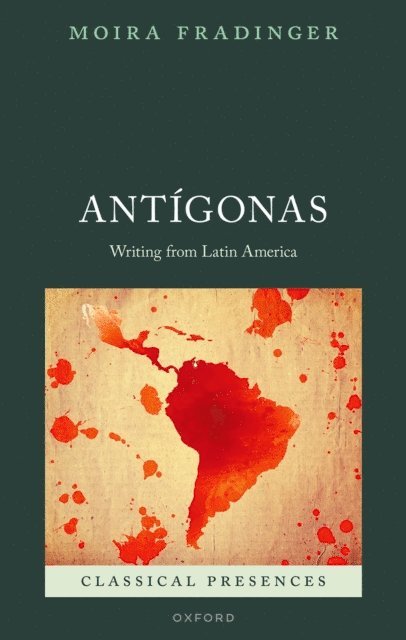
Antígonas: Writing from Latin America is the first book in the English language to approach classical reception through the study of one classical fragment as it circulates throughout Latin America. This interdisciplinary research engages comparative literature, Latin American studies, classical reception, history, feminist theory, political philosophy, and theatre history. Moira Fradinger tracks the ways in which, since the early nineteenth century, fragments of Antigone''s myth and tragedy have been persistently cannibalized and ruminated throughout South and Central America and the Caribbean, quilted to local dramatic forms, revealing an archive of political thought about Latin America''s heterogeneous neo-colonial histories. Antígona is consistently characterized as a national mother and, as the twentieth century advances, multiplied on stage, forming female collectives, foregrounding the urgency of systemic change or staging gender politics. Through meticulous examination of classical culture in necolonial contexts, Fradinger explores ways of reading Creole texts from the geopolitical South that disrupt the colonial reading protocols that deracinate texts or lock them into locality. By historicizing Antígona plays and interpreting them with a purpose to address specific colonial legacies, the book reveals how Antígona has ceased being Greek and instead tells stories of twentieth- and twenty-first-century Latin America. Antígonas rethinks the paradigms through which we understand the presence of ancient cultural materials in former colonial territories, while illuminating an understudied continent in Anglophone reception studies.
E-bok
Engelska, 20231 817 kr
Läs direkt efter köp
Antígonas: Writing from Latin America is the first book in the English language to approach classical reception through the study of one classical fragment as it circulates throughout Latin America. This interdisciplinary research engages comparative literature, Latin American studies, classical reception, history, feminist theory, political philosophy, and theatre history. Moira Fradinger tracks the ways in which, since the early nineteenth century, fragments of Antigone''s myth and tragedy have been persistently cannibalized and ruminated throughout South and Central America and the Caribbean, quilted to local dramatic forms, revealing an archive of political thought about Latin America''s heterogeneous neo-colonial histories. Antígona is consistently characterized as a national mother and, as the twentieth century advances, multiplied on stage, forming female collectives, foregrounding the urgency of systemic change or staging gender politics. Through meticulous examination of classical culture in necolonial contexts, Fradinger explores ways of reading Creole texts from the geopolitical South that disrupt the colonial reading protocols that deracinate texts or lock them into locality. By historicizing Antígona plays and interpreting them with a purpose to address specific colonial legacies, the book reveals how Antígona has ceased being Greek and instead tells stories of twentieth- and twenty-first-century Latin America. Antígonas rethinks the paradigms through which we understand the presence of ancient cultural materials in former colonial territories, while illuminating an understudied continent in Anglophone reception studies.
Inbunden, Engelska, 2023
2 581 kr
Skickas inom 3-6 vardagar
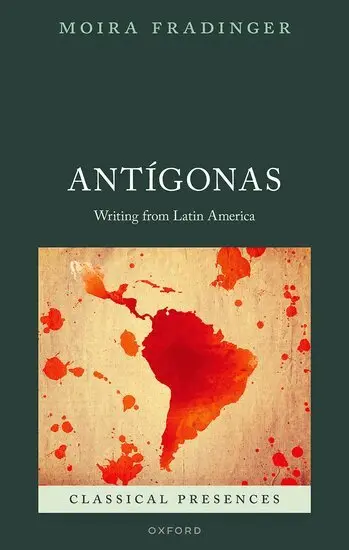
Antígonas: Writing from Latin America is the first book in the English language to approach classical reception through the study of one classical fragment as it circulates throughout Latin America. This interdisciplinary research engages comparative literature, Latin American studies, classical reception, history, feminist theory, political philosophy, and theatre history. Moira Fradinger tracks the ways in which, since the early nineteenth century, fragments of Antigone's myth and tragedy have been persistently cannibalized and ruminated throughout South and Central America and the Caribbean, quilted to local dramatic forms, revealing an archive of political thought about Latin America's heterogeneous neo-colonial histories. Antígona is consistently characterized as a national mother and, as the twentieth century advances, multiplied on stage, forming female collectives, foregrounding the urgency of systemic change or staging gender politics. Through meticulous examination of classical culture in necolonial contexts, Fradinger explores ways of reading Creole texts from the geopolitical South that disrupt the colonial reading protocols that deracinate texts or lock them into locality. By historicizing Antígona plays and interpreting them with a purpose to address specific colonial legacies, the book reveals how Antígona has ceased being Greek and instead tells stories of twentieth- and twenty-first-century Latin America. Antígonas rethinks the paradigms through which we understand the presence of ancient cultural materials in former colonial territories, while illuminating an understudied continent in Anglophone reception studies.

Inbunden, Engelska, 2026
1 922 kr
Kommande
This collection is the first translated anthology of Latin American plays that engage the ancient character of Antigone, her legend, and/or Sophocles' version. The seven plays in this anthology are neither rewritings nor adaptations, but rather vernacular Antígonas that absorb a fragment, or a scene, or a dialogue, or some lines of the Sophoclean tragedy into local dramatic forms responding to local political urgency. Each of the plays in the anthology belongs in the existing corpus of more than seventy Latin American Antígonas the author has compiled and represents an example of how the myth has been “cannibalized” in neo-colonial contexts in a given period and country. The work presents each play with an introduction that locates it in the larger corpus, giving information about the playwright, the play's historical specificity and the linguistic particularities that presented problems for translation. The anthology offers ways to read Creole texts that absorb the Greek classical tradition in neocolonial contexts without deracinating them from their material conditions of production. By historicizing each translated play, the anthology shows how Antígona tells stories of twentieth- and twenty-first-century Latin America. Thus far, only five of seventy Antígona vernaculars had been translated into English. This anthology aims at expanding Anglophone audiences' knowledge of Latin America's engagement with classical Greek antiquity. The anthology consists of Haitian Félix Morisseau-Leroy's Antigòn an Kreyòl / Antigòn (Haiti, 1953), written in Haitian Creole; Brazilian Jorge Andrade's Pedreira das almas / Soul quarry (Brazil, 1969), written in Portuguese; and five more plays written in Spanish: José Watanabe's Antígona (Perú, 2000); Daniel Fermani's Trans-Antígona-Sexual (Argentina, 2000); Argentine Jorge Huertas's Antígonas: Linaje de Hembras / Antígonas: A Female Lineage (Argentina, 2001); Mexican Perla de la Rosa's Antígonas: las voces que incendian el desierto/ Antígonas: the voices that set the desert on fire (Mexico, 2004); and Colombian Carlos Satizábal's Antígonas: Tribunal de mujeres / Antígonas: A Women's Tribunal (Colombia. 2014).

Häftad, Engelska, 2026
544 kr
Kommande
This collection is the first translated anthology of Latin American plays that engage the ancient character of Antigone, her legend, and/or Sophocles' version. The seven plays in this anthology are neither rewritings nor adaptations, but rather vernacular Antígonas that absorb a fragment, or a scene, or a dialogue, or some lines of the Sophoclean tragedy into local dramatic forms responding to local political urgency. Each of the plays in the anthology belongs in the existing corpus of more than seventy Latin American Antígonas the author has compiled and represents an example of how the myth has been “cannibalized” in neo-colonial contexts in a given period and country. The work presents each play with an introduction that locates it in the larger corpus, giving information about the playwright, the play's historical specificity and the linguistic particularities that presented problems for translation. The anthology offers ways to read Creole texts that absorb the Greek classical tradition in neocolonial contexts without deracinating them from their material conditions of production. By historicizing each translated play, the anthology shows how Antígona tells stories of twentieth- and twenty-first-century Latin America. Thus far, only five of seventy Antígona vernaculars had been translated into English. This anthology aims at expanding Anglophone audiences' knowledge of Latin America's engagement with classical Greek antiquity. The anthology consists of Haitian Félix Morisseau-Leroy's Antigòn an Kreyòl / Antigòn (Haiti, 1953), written in Haitian Creole; Brazilian Jorge Andrade's Pedreira das almas / Soul quarry (Brazil, 1969), written in Portuguese; and five more plays written in Spanish: José Watanabe's Antígona (Perú, 2000); Daniel Fermani's Trans-Antígona-Sexual (Argentina, 2000); Argentine Jorge Huertas's Antígonas: Linaje de Hembras / Antígonas: A Female Lineage (Argentina, 2001); Mexican Perla de la Rosa's Antígonas: las voces que incendian el desierto/ Antígonas: the voices that set the desert on fire (Mexico, 2004); and Colombian Carlos Satizábal's Antígonas: Tribunal de mujeres / Antígonas: A Women's Tribunal (Colombia. 2014).
Inbunden, Engelska, 2010
1 015 kr
Skickas inom 5-8 vardagar
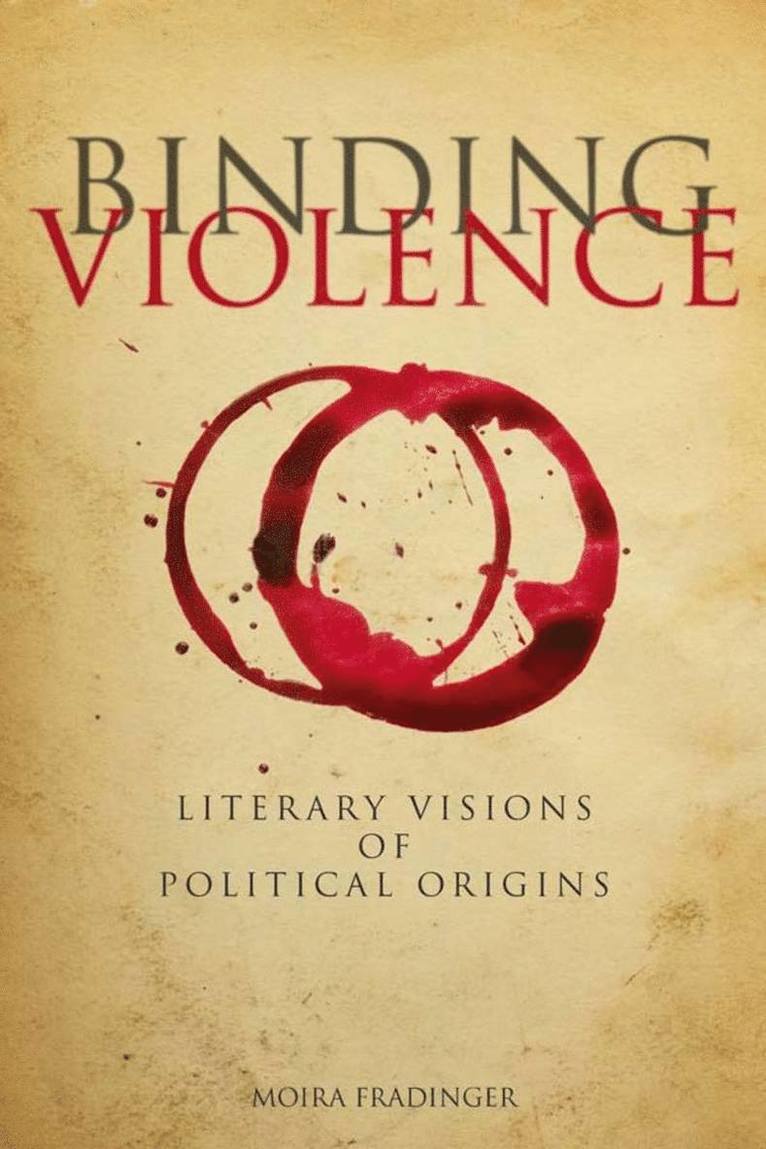
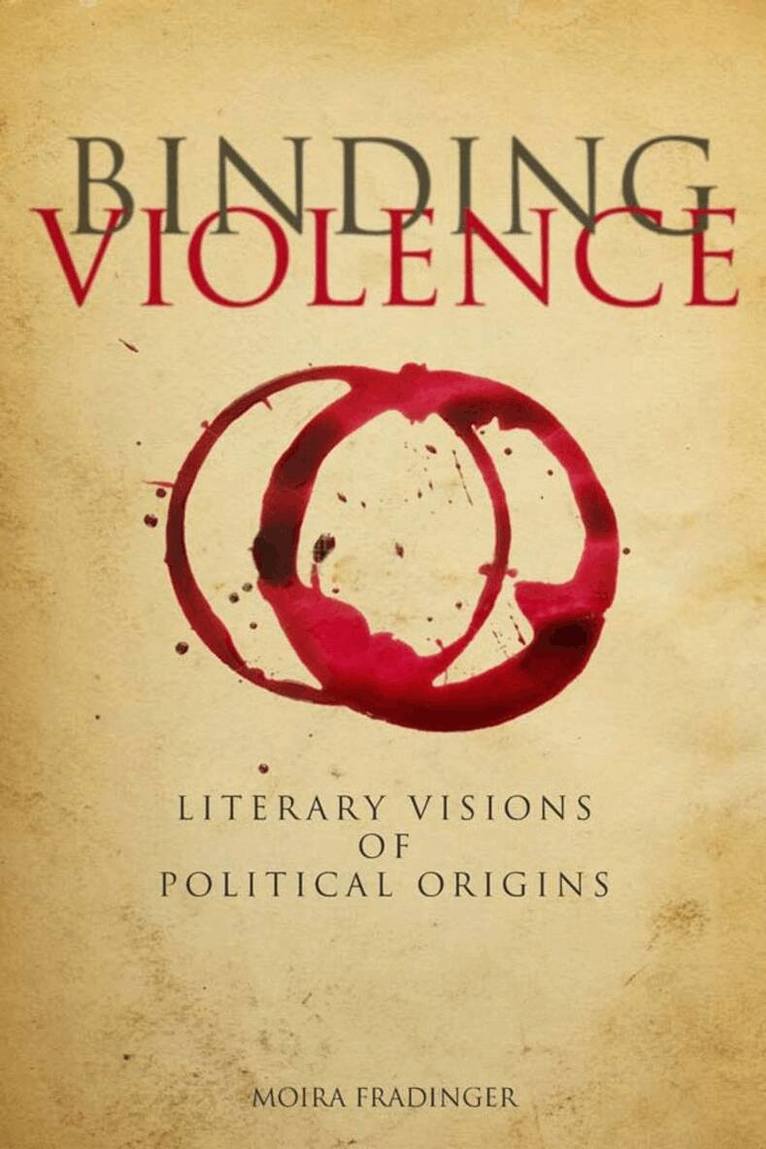
Binding Violence exposes the relation between literary imagination, autonomous politics, and violence through the close analysis of literary texts—in particular Sophocles' Antigone, D. A. F. de Sade's 120 Days of Sodom, and Vargas Llosa's The Feast of the Goat—that speak to a blind spot in democratic theory, namely, how we decide democratically on the borders of our political communities. These works bear the imprint of the anxieties of democracy concerning its other—violence—especially when the question of a redefinition of membership is at stake.The book shares the philosophical interest in rethinking politics that has recently surfaced at the crossroads of literary criticism, philosophy, critical theory, and psychoanalysis. Fradinger takes seriously the responsibility to think through and give names to the political uses of violence and to provoke useful reflection on the problem of violence as it relates to politics and on literature as it relates to its times.
E-bok
Engelska, 20101 157 kr
Läs direkt efter köp
Binding Violence exposes the relation between literary imagination, autonomous politics, and violence through the close analysis of literary texts—in particular Sophocles' Antigone, D. A. F. de Sade's 120 Days of Sodom, and Vargas Llosa's The Feast of the Goat—that speak to a blind spot in democratic theory, namely, how we decide democratically on the borders of our political communities. These works bear the imprint of the anxieties of democracy concerning its other—violence—especially when the question of a redefinition of membership is at stake.The book shares the philosophical interest in rethinking politics that has recently surfaced at the crossroads of literary criticism, philosophy, critical theory, and psychoanalysis. Fradinger takes seriously the responsibility to think through and give names to the political uses of violence and to provoke useful reflection on the problem of violence as it relates to politics and on literature as it relates to its times.