Monika Seisenberger – författare
Visar alla böcker från författaren Monika Seisenberger. Handla med fri frakt och snabb leverans.
5 produkter
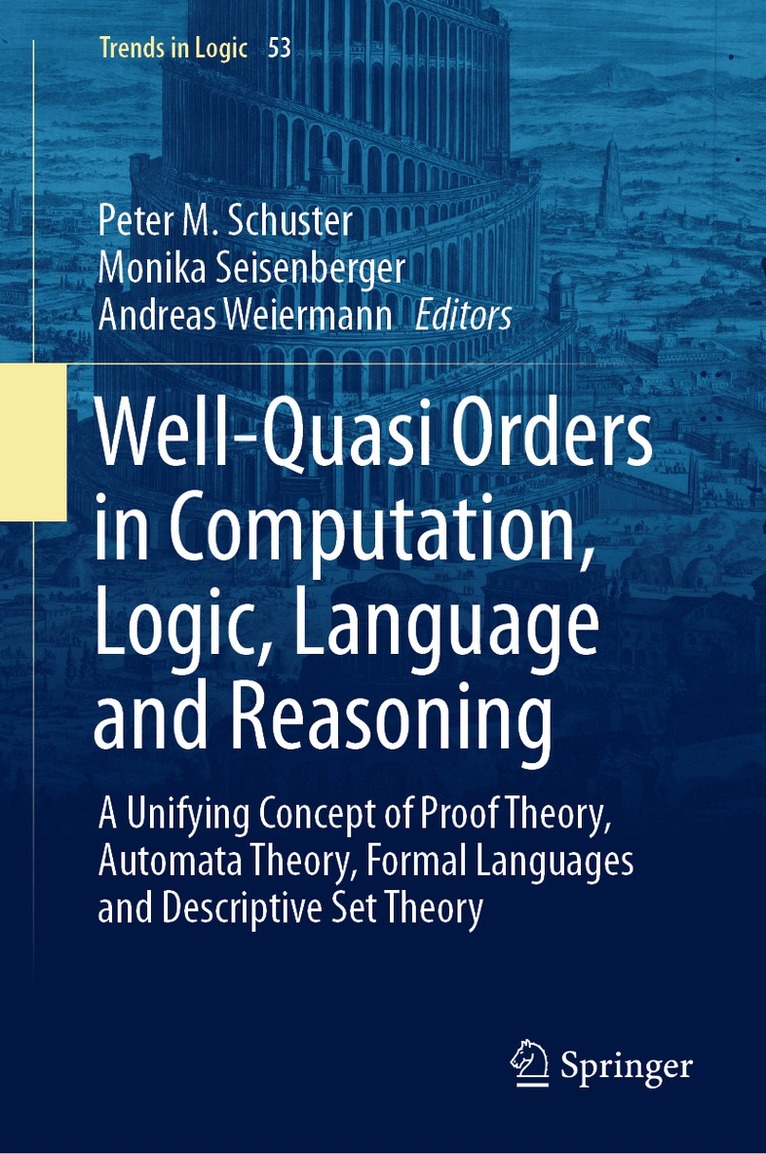
Well-Quasi Orders in Computation, Logic, Language and Reasoning
A Unifying Concept of Proof Theory, Automata Theory, Formal Languages and Descriptive Set Theory
Av Peter M. Schuster, Monika Seisenberger m. fl.
Inbunden, 2020
1967 kr
Lägg i varukorg
This book bridges the gaps between logic, mathematics and computer science by delving into the theory of well-quasi orders, also known as wqos. This highly active branch of combinatorics is deeply rooted in and between many fields of mathematics and logic, including proof theory, commutative …
Well-Quasi Orders in Computation, Logic, Language and Reasoning
A Unifying Concept of Proof Theory, Automata Theory, Formal Languages and Descriptive Set Theory
Av Andreas Weiermann, Monika Seisenberger m. fl.
E-bok, 2020
2599 kr
Lägg i varukorg
This book bridges the gaps between logic, mathematics and computer science by delving into the theory of well-quasi orders, also known as wqos. This highly active branch of combinatorics is deeply rooted in and between many fields of mathematics and logic, including proof theory, commutative …
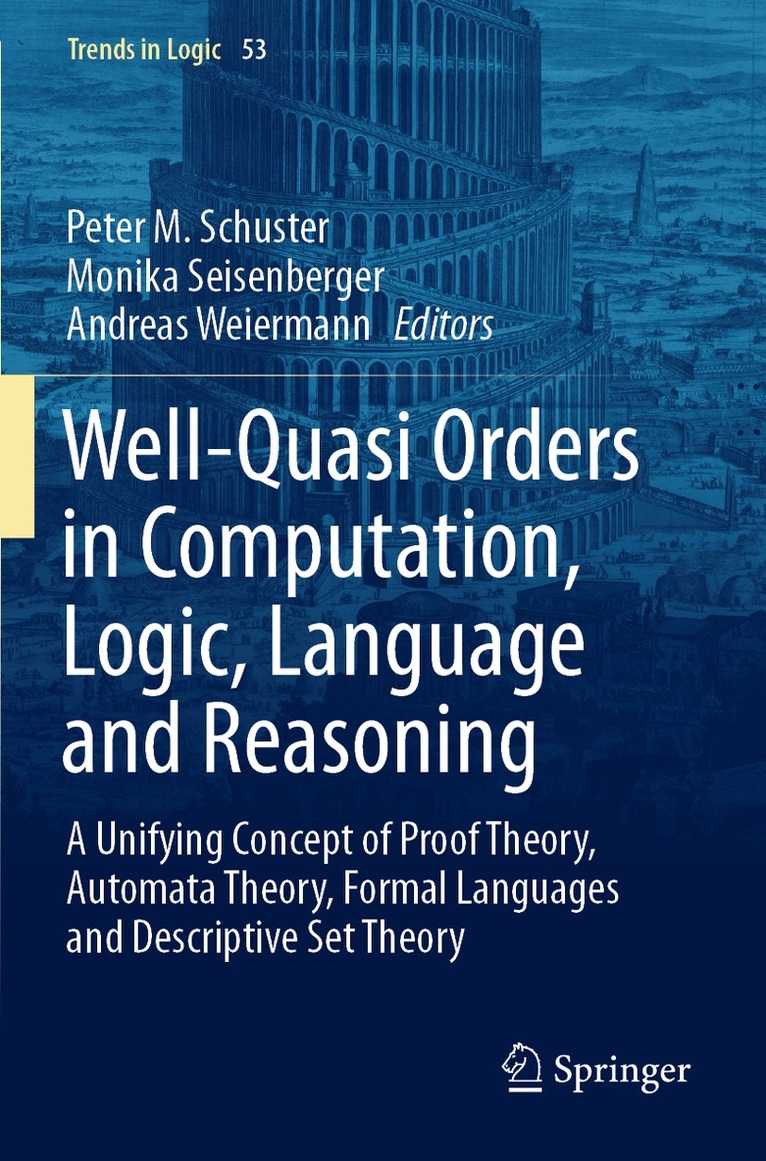
Well-Quasi Orders in Computation, Logic, Language and Reasoning
A Unifying Concept of Proof Theory, Automata Theory, Formal Languages and Descriptive Set Theory
Av Peter M. Schuster, Monika Seisenberger m. fl.
Häftad, 2021
1967 kr
Lägg i varukorg
This book bridges the gaps between logic, mathematics and computer science by delving into the theory of well-quasi orders, also known as wqos. This highly active branch of combinatorics is deeply rooted in and between many fields of mathematics and logic, including proof theory, commutative …
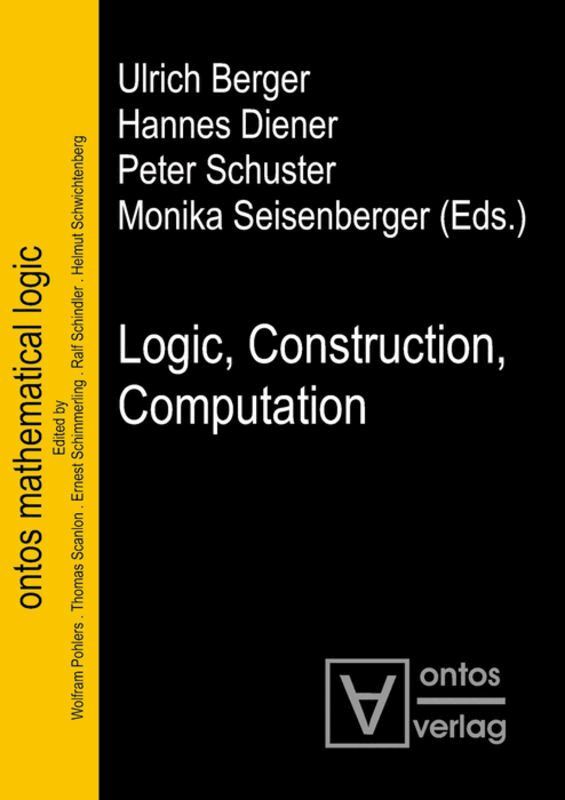
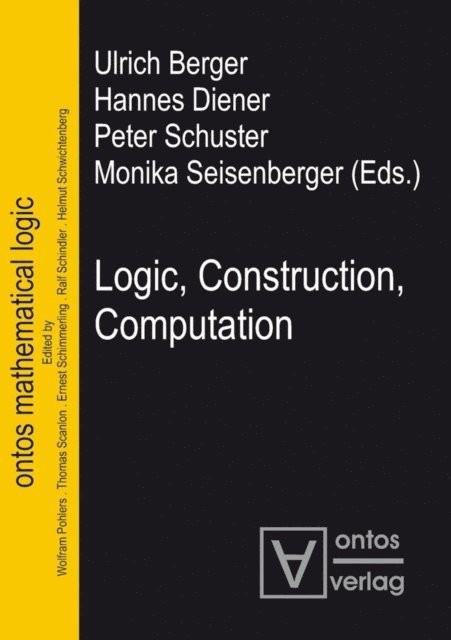
Logic, Construction, Computation
Av Ulrich Berger, Hannes Diener m. fl.
Inbunden, 2012
3127 kr
Lägg i varukorg
Over the last few decades the interest of logicians and mathematicians in constructive and computational aspects of their subjects has been steadily growing, and researchers from disparate areas realized that they can benefit enormously from the mutual exchange of techniques concerned with those …
Logic, Construction, Computation
Av Monika Seisenberger, Peter Schuster m. fl.
E-bok, 2013
3173 kr
Lägg i varukorg
Over the last few decades the interest of logicians and mathematicians in constructive and computational aspects of their subjects has been steadily growing, and researchers from disparate areas realized that they can benefit enormously from the mutual exchange of techniques concerned with those …