Monique De Saint Martin – författare
Visar alla böcker från författaren Monique De Saint Martin. Handla med fri frakt och snabb leverans.
5 produkter
5 produkter
Häftad, Engelska, 1996
406 kr
Skickas inom 3-6 vardagar
Education depends crucially on language: knowledge and skills are taught through a process of linguistic exchange. But how much of the language used by teachers and professors is actually understood by students? To what extent does the social background of students affect their capacity to understand the language used in the classroom or the lecture hall? Why do students and teachers overestimate the success of the educational process and underestimate the degree of misunderstanding involved?In this important work Pierre Bourdieu and his associates explore these and other questions through a careful study of the role of language and linguistic misunderstanding in the teaching contexts of higher education.
E-bok
PDF, Franska, 2015295 kr
Läs direkt efter köp
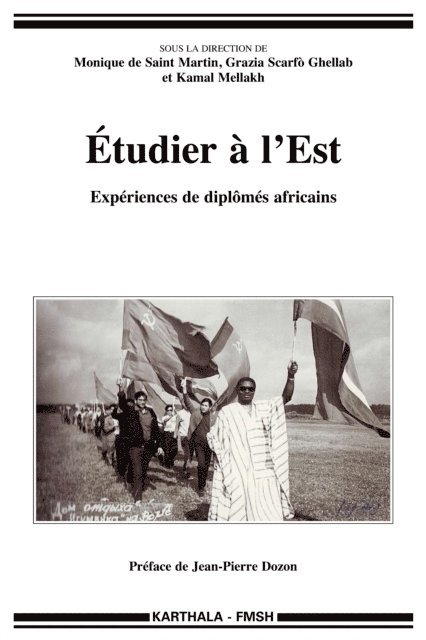
Au moment où ils accèdent à l’indépendance, de nombreux pays d’Afrique subsaharienne et du Maghreb établissent des relations diplomatiques avec Moscou. Certains, comme l’Éthiopie, entretenaient depuis longtemps déjà des liens étroits avec la Russie. Cependant, c’est surtout avec le mouvement de décolonisation que les pays communistes s’ouvrent à l’accueil massif et systématique d’étudiants maghrébins et subsahariens.Les trajectoires de formation de ces diplômés africains partis en URSS ou dans un autre pays de l’ancien bloc de l’Est ont été peu étudiées. En rendre compte, c’est notamment s’intéresser aux expériences diverses et contrastées d’étudiants formés non pas dans l’ancien pays colonisateur, comme cela était souvent le cas, mais dans un pays tiers qui suscitait chez eux à la fois admiration et méfiance, où ils ont connu pour les uns de fortes désillusions, pour d’autres « les meilleurs moments de leur vie ». C’est aussi étudier les cadres sociaux et politiques de leurs expériences, et prêter attention aux nombreux étudiants, partagés entre deux ou plusieurs mondes, et souvent confrontés aux soubresauts de l’histoire.À l’issue des études, les diplômés étaient immédiatement renvoyés dans leur pays. Mais les devenirs des étudiants et stagiaires africains formés dans les pays de l’ancien bloc socialiste n’ont pas eu la linéarité prévue par cette description formelle. Les parcours professionnels et sociaux, parfois politiques, sont autant le fruit d’arbitrages individuels que de mutations politiques : l’effondrement de l’URSS, mais aussi les changements politiques et économiques dans les pays d’origine.
Del 8 - Cahiers Du Centre de Sociologie Européenne / Ecole Des Haute
Les fonctions sociales de l'enseignement scientifique
Inbunden, Franska, 1971
1 587 kr
Skickas inom 5-8 vardagar
E-bok
PDF, Franska, 20191 505 kr
Läs direkt efter köp
Häftad, Engelska, 1996
193 kr
Tillfälligt slut
Education depends crucially on language: knowledge and skills are taught largely through a process of linguistic exchange. But how much of the language used by teachers and professors is actually understood by students? To what extent does the social background of students affect their capacity to understand the language used in the classroom or the lecture hall? Why do students and teachers over-estimate the success of the educational process and under-estimate the degree of misunderstanding involved? In this important work Pierre Bourdieu and his associates explore these and other questions through a careful study of the role of language and linguistic misunderstanding in the teaching contexts of higher education. They study the extent to which university students actually understand the academic discourse they hear in lectures, as well as the factors that influence the ways in which students' essays are assessed. They also examine the extent to which the mastery and the misunderstanding of academic discourse depends on the social background of the individuals concerned. Drawing on empirical research and developing a distinctive theoretical perspective, Bourdieu and his associates argue that academic discourse is a medium of communication that both expresses and reproduces a relation of pedagogical power and respect.Academic Discourse is an important part of the work of Bourdieu and his associates on culture and education and is complementary to some of their most well-known books, such as Reproduction, The Inheritors and Homo Academicus. This translation will be welcomed not only by scholars interested in the development of Bourdieu's work, but also by students of sociology, education and applied linguistics and by teachers and others concerned with the role of language and power in the process of education.