Moritz Albrecht – författare
Visar alla böcker från författaren Moritz Albrecht. Handla med fri frakt och snabb leverans.
2 produkter
2 produkter
Inbunden, Engelska, 2026
2 225 kr
Kommande
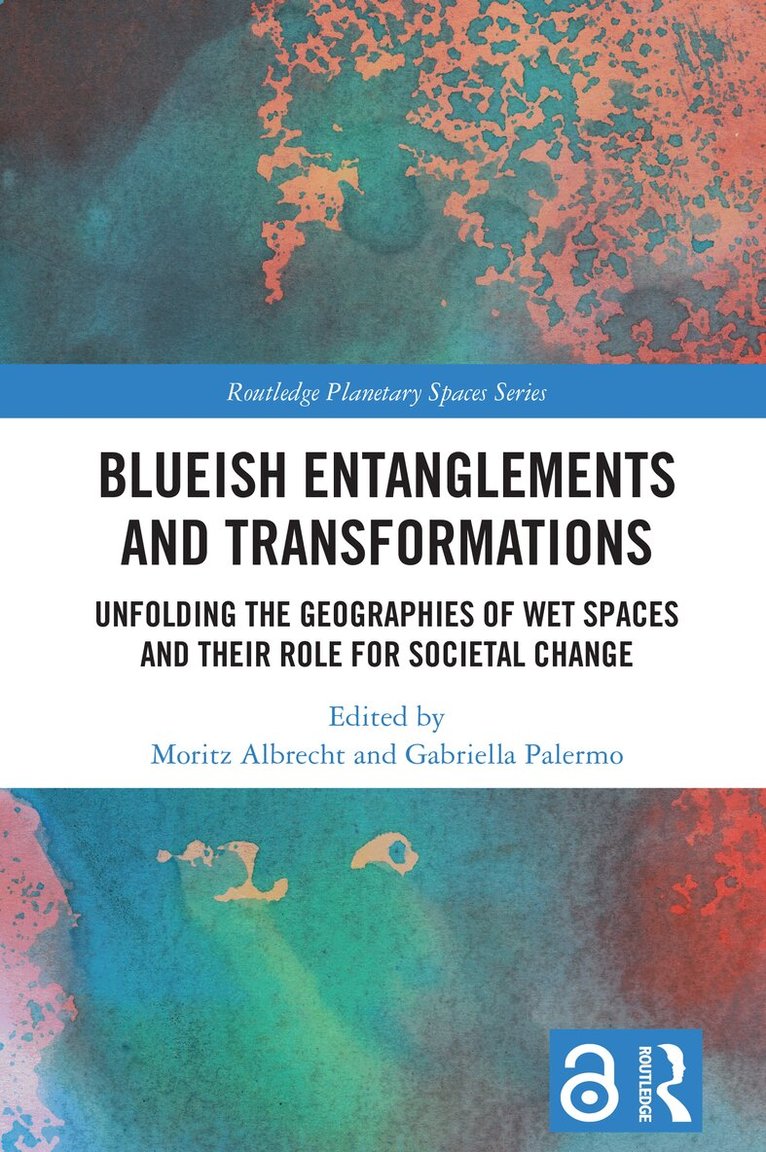
This book explores blueish geographies: new ways of thinking with ‘wet’ space through a porous and open conceptualisation. Through critical ocean thinking, more-than-wet ontologies, blue humanities, blue economy and planning, the diverse chapters think the blueish as extension, relation and representation of water, extending the field and questioning its absences.The book offers an original and interdisciplinary contribution to critical ocean and marine studies by expanding the ‘disciplines’ vocabularies, debates, possibilities, epistemologies and methodologies. By bringing together diverse critical perspectives on wet spaces, politics and their excess, this book provides new conceptual and methodological tools for understanding temporalities and counter-archives, more-than-human ecologies and possible future plannings. Combining established and early-career scholars from different disciplines and regions, the volume advances current debates in critical geography and ocean studies while remaining accessible for teaching and other applied purposes.Blueish Entanglements and Transformations is intended for scholars, researchers and students in the field of critical ocean geographies, more-than-human geographies, maritime studies, hydrosocial studies, blue humanities, blue economy, political ecology and related water-related disciplines. It should also appeal to non-research readers working on water related policies, development and planning.
Inbunden, Engelska, 2024
549 kr
Skickas inom 10-15 vardagar
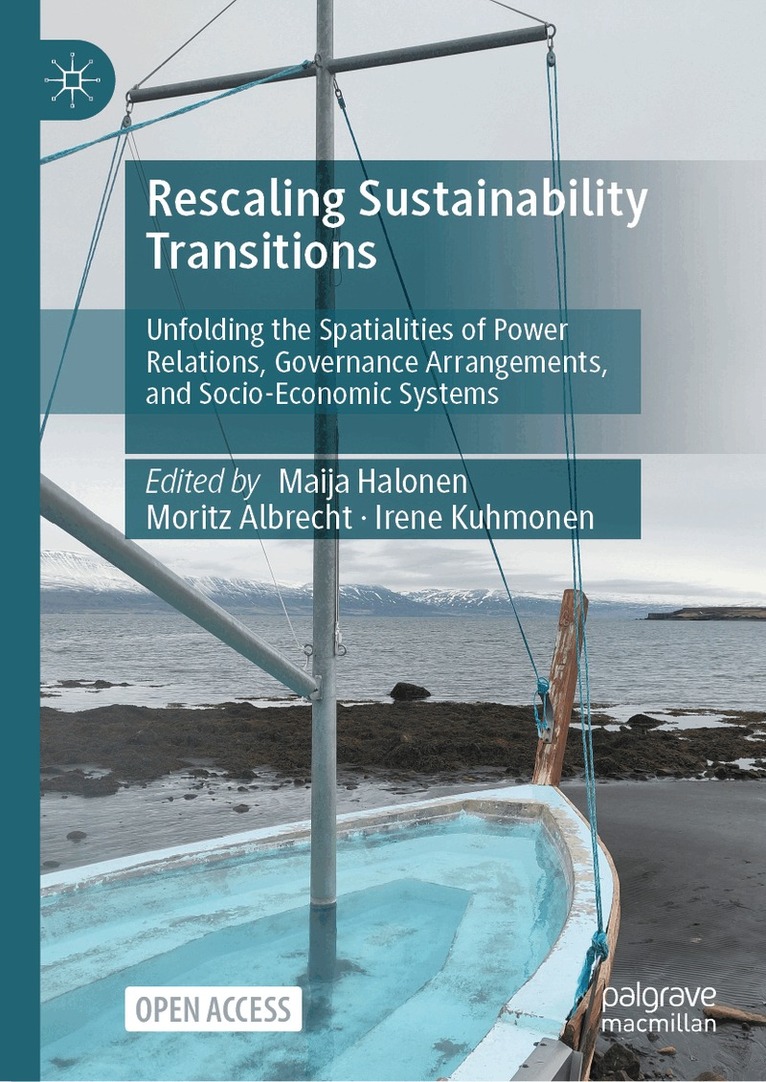
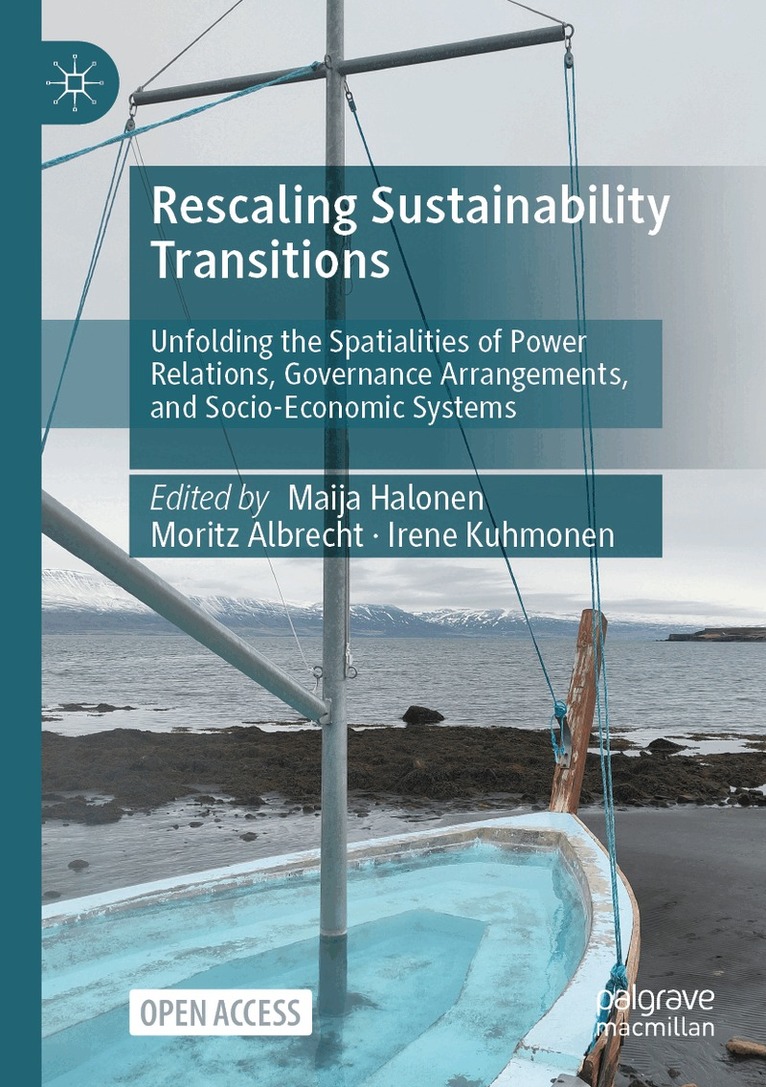
This Open Access book explores sustainability transitions with a focus on their influence on the relationships between cores and peripheries, the rural and the urban, and the large and the small-scale. The societal changes induced by sustainability transitions are expected to assemble as a variegated and heterogeneous process reproduced by different spatial contexts and scales. Hence, the practical solutions and impacts of processes framed as sustainability transitions are expected to vary between different localities in terms of their natural, material, or human resources, the heritage of the development, their power and market relations, virtual and physical connections as well as shifting individual rationalities – within and across certain socio-economic spaces. To highlight these socio-spatial processes, their alignments, frictions and contradictions for sustainability transitions, this book and its contributions call for an increased engagement in the scalar aspects of sustainability transitions and their governance. The authors argue that rescaling follows from two observations on the extant literature concerning sustainability transitions. Firstly there is a call for a stronger engagement of sustainability transitions research with questions of place and relocalization practices, their embedded power relations, but also questions on small-scale trajectories for the territorial and economic materializations in terms of production and market reach as an alternative to the large-scale dominance of resource exploitation and use. Secondly there is a call for increased attention to the relational processes and ontological framing that reproduce mobilities and scalar shifts in governance arrangements.