Moti Mizrahi – författare
Visar alla böcker från författaren Moti Mizrahi. Handla med fri frakt och snabb leverans.
9 produkter
9 produkter
Inbunden, Engelska, 2022
1 248 kr
Skickas inom 10-15 vardagar
The term “scientism” is used in several ways. It is used to denote an epistemological thesis according to which science is the source of our knowledge about the world and ourselves. Relatedly, it is used to denote a methodological thesis according to which the methods of science are superior to the methods of non-scientific fields or areas of inquiry. It is also used to put forward a metaphysical thesis that what exists is what science says exists. In recent decades, the term “scientism” has acquired a derogatory meaning when it is used in defense of non-scientific ways of knowing. In particular, some philosophers level the charge of “scientism” against those (mostly scientists) who are dismissive of philosophy. Other philosophers, however, embrace scientism, or some variant thereof, and object to the pejorative use of the term. This book critically examines arguments for and against different varieties of scientism in order to answer the central question: Does scientism pose an existential threat to academic philosophy? Or should philosophy become more scientific?
Häftad, Engelska, 2023
448 kr
Skickas inom 10-15 vardagar
The term “scientism” is used in several ways. It is used to denote an epistemological thesis according to which science is the source of our knowledge about the world and ourselves. Relatedly, it is used to denote a methodological thesis according to which the methods of science are superior to the methods of non-scientific fields or areas of inquiry. It is also used to put forward a metaphysical thesis that what exists is what science says exists. In recent decades, the term “scientism” has acquired a derogatory meaning when it is used in defense of non-scientific ways of knowing. In particular, some philosophers level the charge of “scientism” against those (mostly scientists) who are dismissive of philosophy. Other philosophers, however, embrace scientism, or some variant thereof, and object to the pejorative use of the term. This book critically examines arguments for and against different varieties of scientism in order to answer the central question: Does scientism pose an existential threat to academic philosophy? Or should philosophy become more scientific?
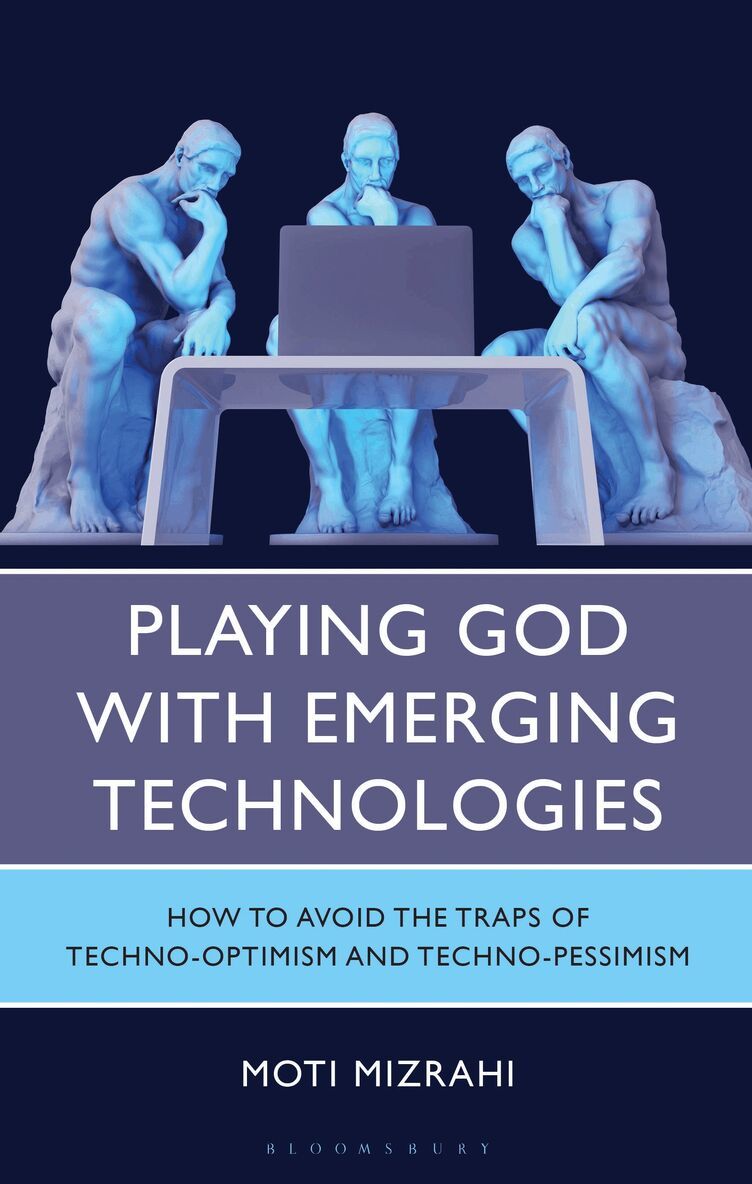
Playing God with Emerging Technologies
How to Avoid the Traps of Techno-Optimism and Techno-Pessimism
Inbunden, Engelska, 2026
1 110 kr
Skickas inom 10-15 vardagar
Public debates over the morality of new or emerging technologies tend to devolve into false dichotomies of optimism versus pessimism. Playing God with Emerging Technologies: How to Avoid the Traps of Techno-Optimism and Techno-Pessimism provides a conceptual apparatus for engaging in such debates in a critical manner through the constructive lens of “playing God” arguments. Moti Mizrahi sketches a conceptual framework consisting of an argumentation scheme for “playing God” arguments along with Critical Questions. This framework can be used to analyze and evaluate “playing God” arguments as they are made in debates over the ethical development and deployment of new or emerging technologies, such as solar geoengineering, Artificial Intelligence (AI), autonomous vehicles, autonomous weapons, and more.Mizrahi argues that “playing God” arguments allow us to assume an intermediate, critical attitude between the extremes of hype and panic as well as approach the governance of new or emerging technologies in ways that might help to increase our control over, improve our understanding of, and prevent our misuse or abuse of such technologies.
Inbunden, Engelska, 2017
1 661 kr
Skickas inom 10-15 vardagar
More than 50 years after the publication of Thomas Kuhn’s seminal book, The Structure of Scientific Revolutions, this volume assesses the adequacy of the Kuhnian model in explaining certain aspects of science, particularly the social and epistemic aspects of science. One argument put forward is that there are no good reasons to accept Kuhn’s incommensurability thesis, according to which scientific revolutions involve the replacement of theories with conceptually incompatible ones. Perhaps, therefore, it is time for another “decisive transformation in the image of science by which we are now possessed.” Only this time, the image of science that needs to be transformed is the Kuhnian one. Does the Kuhnian image of science provide an adequate model of scientific practice? If we abandon the Kuhnian picture of revolutionary change and incommensurability, what consequences would follow from that vis-à-vis our understanding of scientific knowledge as a social endeavour?The essays in this collection continue this debate, offering a critical examination of the arguments for and against the Kuhnian image of science as well as their implications for our understanding of science as a social and epistemic enterprise.
Häftad, Engelska, 2019
503 kr
Skickas inom 10-15 vardagar
More than 50 years after the publication of Thomas Kuhn’s seminal book, The Structure of Scientific Revolutions, this volume assesses the adequacy of the Kuhnian model in explaining certain aspects of science, particularly the social and epistemic aspects of science. One argument put forward is that there are no good reasons to accept Kuhn’s incommensurability thesis, according to which scientific revolutions involve the replacement of theories with conceptually incompatible ones. Perhaps, therefore, it is time for another “decisive transformation in the image of science by which we are now possessed.” Only this time, the image of science that needs to be transformed is the Kuhnian one. Does the Kuhnian image of science provide an adequate model of scientific practice? If we abandon the Kuhnian picture of revolutionary change and incommensurability, what consequences would follow from that vis-à-vis our understanding of scientific knowledge as a social endeavour?The essays in this collection continue this debate, offering a critical examination of the arguments for and against the Kuhnian image of science as well as their implications for our understanding of science as a social and epistemic enterprise.
E-bok
Engelska, 2017526 kr
Läs direkt efter köp
More than 50 years after the publication of Thomas Kuhn’s seminal book, The Structure of Scientific Revolutions, this volume assesses the adequacy of the Kuhnian model in explaining certain aspects of science, particularly the social and epistemic aspects of science. One argument put forward is that there are no good reasons to accept Kuhn’s incommensurability thesis, according to which scientific revolutions involve the replacement of theories with conceptually incompatible ones. Perhaps, therefore, it is time for another “decisive transformation in the image of science by which we are now possessed.” Only this time, the image of science that needs to be transformed is the Kuhnian one. Does the Kuhnian image of science provide an adequate model of scientific practice? If we abandon the Kuhnian picture of revolutionary change and incommensurability, what consequences would follow from that vis-à-vis our understanding of scientific knowledge as a social endeavour?The essays in this collection continue this debate, offering a critical examination of the arguments for and against the Kuhnian image of science as well as their implications for our understanding of science as a social and epistemic enterprise.
Inbunden, Engelska, 2020
982 kr
Skickas inom 10-15 vardagar
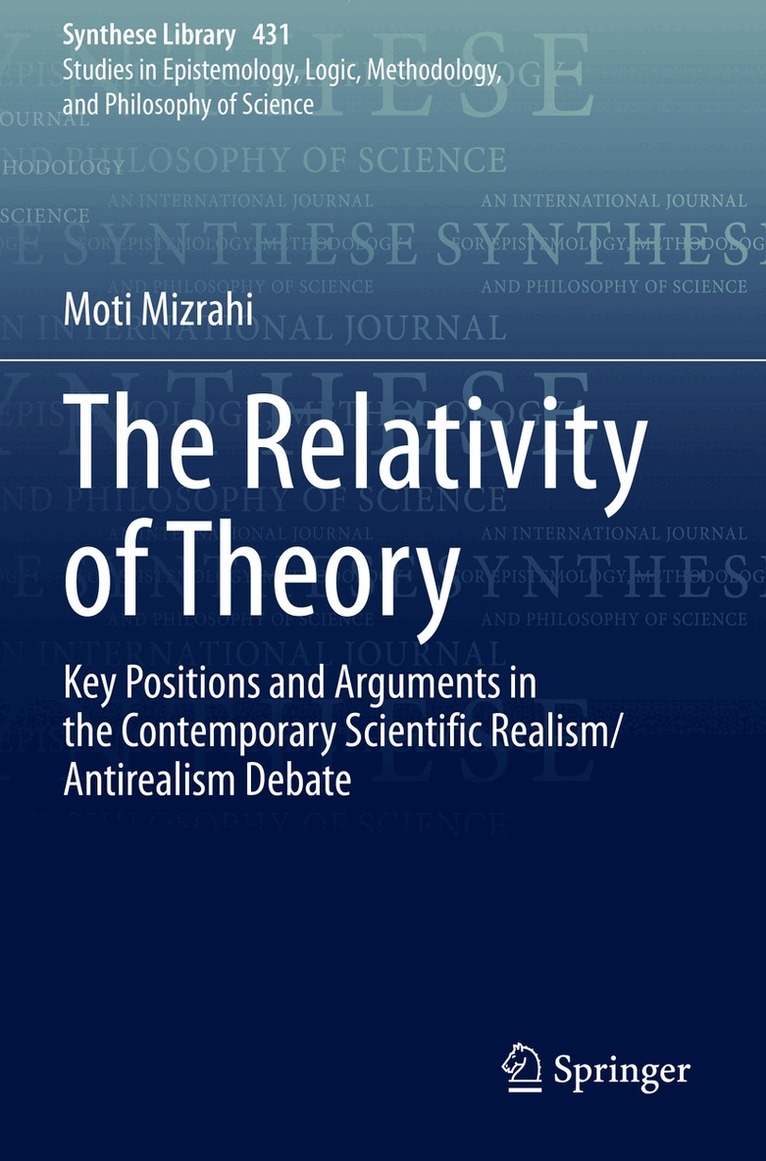
This book offers a close and rigorous examination of the arguments for and against scientific realism and introduces key positions in the scientific realism/antirealism debate, which is one of the central debates in contemporary philosophy of science. On the one hand, scientific realists argue that we have good reasons to believe that our best scientific theories are approximately true because, if they were not even approximately true, they would not be able to explain and predict natural phenomena with such impressive accuracy. On the other hand, antirealists argue that the success of science does not warrant belief in the approximate truth of our best scientific theories. This is because the history of science is a graveyard of theories that were once successful but were later discarded. The author eventually settles on a middle-ground position between scientific realism and antirealism called “relative realism”.
E-bok
Engelska, 20201 214 kr
Läs direkt efter köp
This book offers a close and rigorous examination of the arguments for and against scientific realism and introduces key positions in the scientific realism/antirealism debate, which is one of the central debates in contemporary philosophy of science. On the one hand, scientific realists argue that we have good reasons to believe that our best scientific theories are approximately true because, if they were not even approximately true, they would not be able to explain and predict natural phenomena with such impressive accuracy. On the other hand, antirealists argue that the success of science does not warrant belief in the approximate truth of our best scientific theories. This is because the history of science is a graveyard of theories that were once successful but were later discarded. The author eventually settles on a middle-ground position between scientific realism and antirealism called “relative realism”.
Häftad, Engelska, 2021
982 kr
Skickas inom 10-15 vardagar
This book offers a close and rigorous examination of the arguments for and against scientific realism and introduces key positions in the scientific realism/antirealism debate, which is one of the central debates in contemporary philosophy of science. On the one hand, scientific realists argue that we have good reasons to believe that our best scientific theories are approximately true because, if they were not even approximately true, they would not be able to explain and predict natural phenomena with such impressive accuracy. On the other hand, antirealists argue that the success of science does not warrant belief in the approximate truth of our best scientific theories. This is because the history of science is a graveyard of theories that were once successful but were later discarded. The author eventually settles on a middle-ground position between scientific realism and antirealism called “relative realism”.