Murray G. Murphey – författare
Visar alla böcker från författaren Murray G. Murphey. Handla med fri frakt och snabb leverans.
5 produkter
5 produkter
Häftad, Engelska, 2019
496 kr
Skickas inom 5-8 vardagar
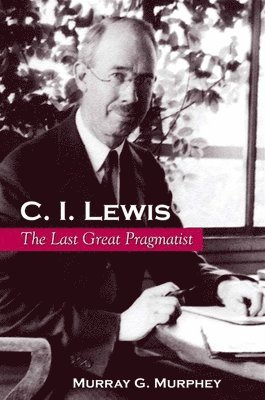
An intellectual biography of the American philosopher C. I. Lewis.2006 CHOICE Outstanding Academic Title Noted scholar-historian Murray G. Murphey explores the life and intellectual work of C. I. Lewis (1883–1964), the central figure in American philosophy between the "golden age" of James and Royce and the later scene of Quine and Goodman, Sellars and Rorty. As professor of philosophy at Harvard and the founder of modal symbolic logic, Lewis taught and deeply influenced a generation of philosophers. Murphey traces the development of Lewis's thought from his early Idealism through his Conceptual Pragmatism and his defense of that position against the onslaught of Logical Positivism in the 1930s and 1940s. He also examines how Lewis developed in a more precise and systematic way the Pragmatism of Peirce, James, and Dewey, while retaining their combination of empiricism and humanism and marshalling the weapons of analytic philosophy in their defense. Detailed attention is given to the important contributions of Lewis's work in logic, epistemology, value theory, meaning, and ethics.
Inbunden, Engelska, 2008
1 004 kr
Skickas inom 7-10 vardagar
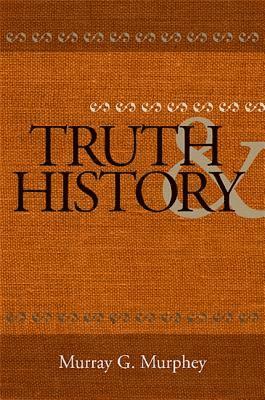
Addresses historical skepticism by presenting histories as testable theories of the past.Setting aside barren issues such as the scientific status of history, Murray G. Murphey develops an empirical approach to historical study that can yield theories (interpretations) that are testable and confirmable. He examines the evidence on which historical theories are based, the types of explanations used, and particularly the way historical theories are tested. The book treats not only the actual process of historical research but also the philosophical problems involved in historical work. The treatment of causation is new, as is the discussion of epistemology. In his discussions, Murphey covers a wide range of sources and examples, including Frederick Jackson Turner, the Gospels, perspectives on the causes of the Great Depression, the Vinland Map, witchcraft, and material culture. The book is addressed to all who do history or write about it, and it will be a useful text for those who teach courses in historiography.
Inbunden, Engelska, 1993
540 kr
Skickas inom 11-20 vardagar
Includes a new preface and a new appendix with footnotes keyed to the manuscript classifications by Max Fisch.
Häftad, Engelska, 1994
397 kr
Tillfälligt slut
A masterful philosophical exploration that reveals how we can truly know—and trust—our understanding of the past.What does it mean to know the past—and how can such knowledge claim truth, objectivity, or reality? In Philosophical Foundations of Historical Knowledge, Murray G. Murphey confronts these enduring questions with remarkable clarity and intellectual force.Bridging epistemology, metaphysics, and historiography, Murphey constructs a rigorous and compelling account of how historical knowledge is possible. From the complexities of meaning and reference to the challenges of understanding other minds, causation, and human action, this work systematically builds toward a powerful defense of pragmatic naturalism and natural realism. Each chapter deepens the inquiry, culminating in a sophisticated vision of truth and reality as they apply to our understanding of the past.Widely praised for its analytical precision and originality, Murphey engages deeply with contemporary philosophical debates while remaining lucid and accessible. Murphey's mastery of diverse literatures allows him to weave a single, sustained argument—one that reshapes how we think about history as a discipline and as a form of knowledge.
Häftad, Engelska, 2009
388 kr
Tillfälligt slut
Addresses historical skepticism by presenting histories as testable theories of the past.Setting aside barren issues such as the scientific status of history, Murray G. Murphey develops an empirical approach to historical study that can yield theories (interpretations) that are testable and confirmable. He examines the evidence on which historical theories are based, the types of explanations used, and particularly the way historical theories are tested. The book treats not only the actual process of historical research but also the philosophical problems involved in historical work. The treatment of causation is new, as is the discussion of epistemology. In his discussions, Murphey covers a wide range of sources and examples, including Frederick Jackson Turner, the Gospels, perspectives on the causes of the Great Depression, the Vinland Map, witchcraft, and material culture. The book is addressed to all who do history or write about it, and it will be a useful text for those who teach courses in historiography.