Muzzamal Hussain - Böcker
Visar alla böcker från författaren Muzzamal Hussain. Handla med fri frakt och snabb leverans.
5 produkter
5 produkter
1 761 kr
Skickas inom 10-15 vardagar
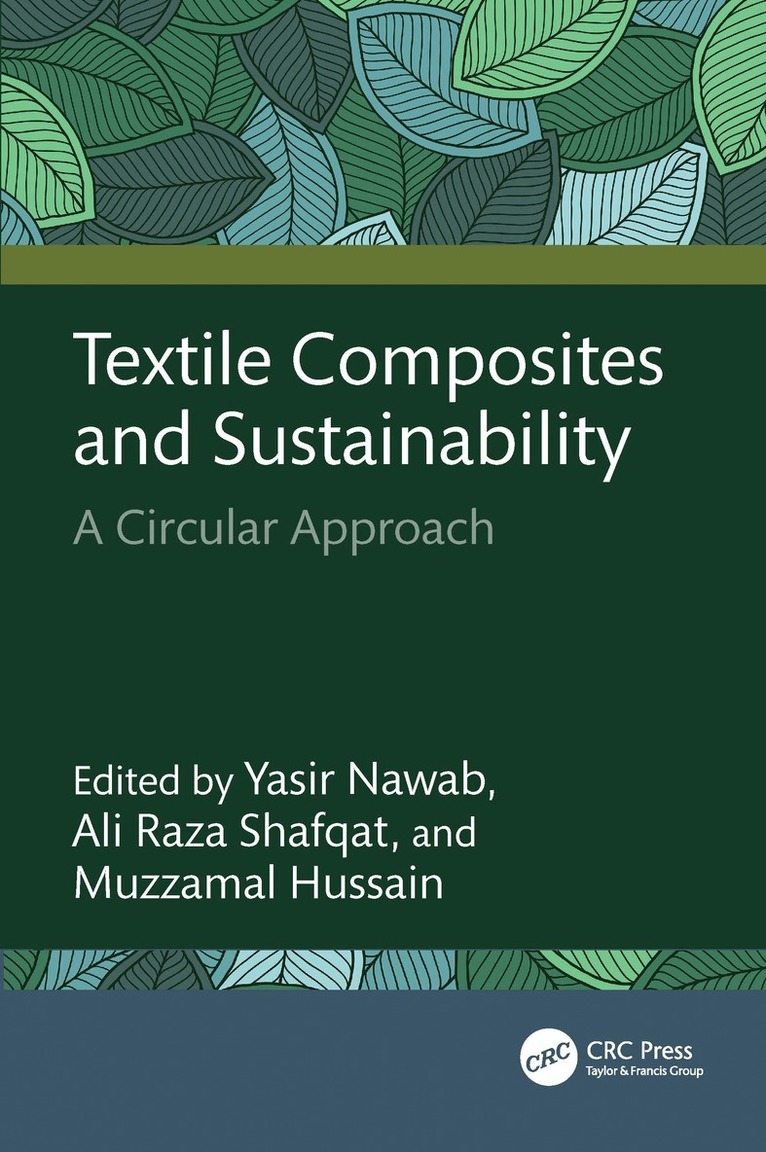
The book Textile Composites and Sustainability: A Circular Approach provides an essential, comprehensive guide to integrating sustainability and circular economy principles specifically within the textile composites sector. This book addresses the urgent need for the textile industry to transition from linear to circular models, focusing on waste reduction, resource efficiency, and sustainable innovation. It covers critical aspects including sustainable material selection, innovative design strategies, advanced manufacturing processes, lifecycle management, and end-of-life recycling techniques tailored to textile composites. Real-world case studies and global perspectives ensure readers gain a holistic understanding of current trends and effective applications of sustainability practices. This book uniquely addresses the distinctive challenges and opportunities inherent in textile composites, making it invaluable for anyone committed to advancing environmental responsibility, enhancing economic sustainability, and fostering innovation within the textile composites sector.Features:• Highlights the approaches for innovation, shifting to a circular economy and sustainable development in the field of textile reinforced composites.• Covers the latest sustainable materials and advancements in textile composites, including natural fibers, biopolymers, and recycled materials.• Provides practical advice and case studies on circular design concepts and sustainable manufacturing processes.• Encompasses perspectives from diverse geographic regions and market categories.This book is aimed at professionals, researchers, and graduate students in textiles, materials, and environmental engineering.
Sustainable Design in Fashion and Textiles
Concepts, Case Studies, and Practical Tools
Häftad, Engelska, 2026
575 kr
Kommande
Addressing the urgent environmental issues resulting from conventional textile production, this book delivers essential knowledge and tools that will enable policymakers, industry professionals, and students to implement sustainable practices and reduce the environmental impact of these sectors globally.Providing a comprehensive guide to how to apply sustainable design principles, the book covers a broad range of topics and opens with an introduction to sustainable design concepts and the pressing need for change in the textile industry. It examines environmentally-friendly processing techniques, sustainable fibres and materials, life cycle analysis (LCA) and the environmental impacts of current practices through case studies from Asia, Europe, and North America. It promotes discussions on traceability and the integration of circular economy principles, including upcycling, closed-loop systems, and disassembly-friendly design, and showcases practical applications of these ideas. Each chapter concludes with summaries of the key concepts and practical takeaways. The book provides readers with an in depth understanding of the commercial implications of sustainable design, including market trends, regulatory compliance, benefits of eco-labelling and certification, and the promotion of openness and accountability in the supply chain.Designed as both a professional reference and an academic resource, this book catalyzes systemic transformation by equipping stakeholders with the knowledge and tools necessary to reduce environmental impact, enhance transparency, and build resilient circular business models. In doing so, it supports industry professionals, such as fashion designers, textile engineers, sustainability consultants, businesses, and policymakers, with everything they need to stay ahead in a rapidly developing sector.
Sustainable Design in Fashion and Textiles
Concepts, Case Studies, and Practical Tools
Inbunden, Engelska, 2026
2 325 kr
Kommande
Addressing the urgent environmental issues resulting from conventional textile production, this book delivers essential knowledge and tools that will enable policymakers, industry professionals, and students to implement sustainable practices and reduce the environmental impact of these sectors globally.Providing a comprehensive guide to how to apply sustainable design principles, the book covers a broad range of topics and opens with an introduction to sustainable design concepts and the pressing need for change in the textile industry. It examines environmentally-friendly processing techniques, sustainable fibres and materials, life cycle analysis (LCA) and the environmental impacts of current practices through case studies from Asia, Europe, and North America. It promotes discussions on traceability and the integration of circular economy principles, including upcycling, closed-loop systems, and disassembly-friendly design, and showcases practical applications of these ideas. Each chapter concludes with summaries of the key concepts and practical takeaways. The book provides readers with an in depth understanding of the commercial implications of sustainable design, including market trends, regulatory compliance, benefits of eco-labelling and certification, and the promotion of openness and accountability in the supply chain.Designed as both a professional reference and an academic resource, this book catalyzes systemic transformation by equipping stakeholders with the knowledge and tools necessary to reduce environmental impact, enhance transparency, and build resilient circular business models. In doing so, it supports industry professionals, such as fashion designers, textile engineers, sustainability consultants, businesses, and policymakers, with everything they need to stay ahead in a rapidly developing sector.
1 690 kr
Skickas inom 7-10 vardagar
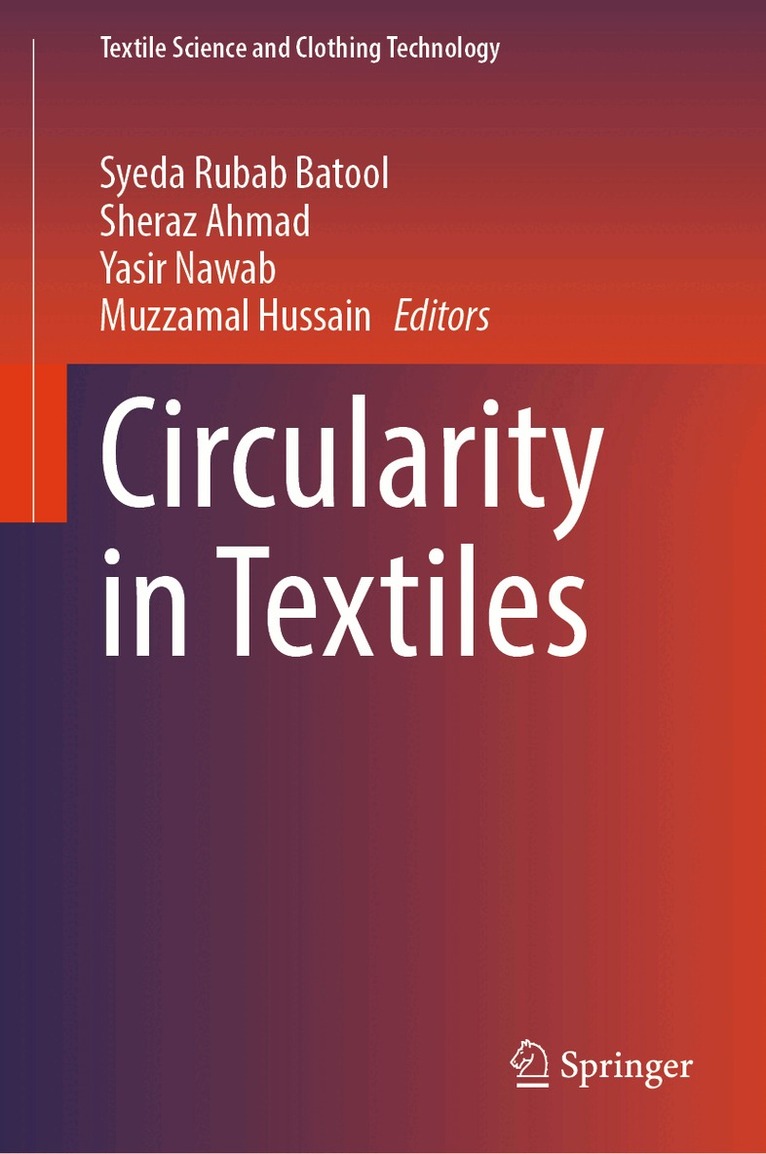
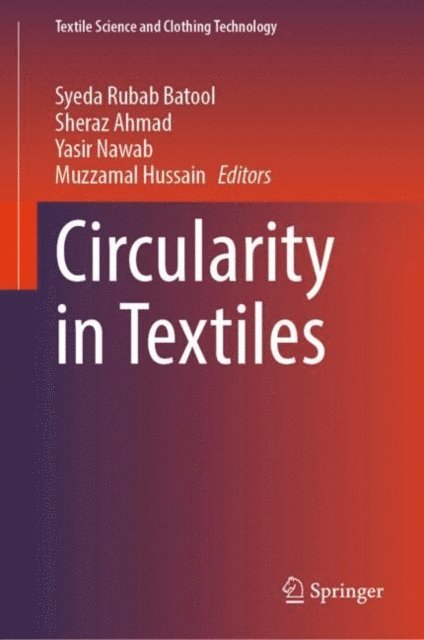
This book explains the basic principles of recycling and circularity in textiles. With the emergence of "quick fashion," textile manufacturing has expanded significantly over the past few decades. The importance of textiles to human society goes beyond their practical uses in providing warmth, protection, and comfort. Therefore, the usage and production of textiles are enhanced substantially compared to the past globally. As a result, rates of textile production and trash output have grown drastically. The other side of the story is the drastic rate at which they are dumped into landfills which is almost a garbage truck every second. If this alarming trend continues, there will be serious environmental consequences. It is well known that the textile sector is recognized as the second largest industrial polluter in the world, producing 20% of the global wastewater and accounting for 10% of carbon emissions. Additionally, harmful chemicals are utilized and emitted during the manufacture of textiles, which has an impact on ecosystems and public health The last 150 years of the textile industrial system fundamentally follow the "take-make-dispose" principle, in which resources are continuously taken out of a natural system (take), changed during production (make), and used for various purposes within the human system (use), and then released back into the environment (dispose of). In this way, manufacturing industries produce waste-producing commodities to make money, which eventually has a negative impact leading to the lack of resources resulting in price volatility, uncertainty, and economic crises. This book consists of 11 potential chapters to cover all the aspects of “circularity in textiles.”
1 690 kr
Skickas inom 10-15 vardagar
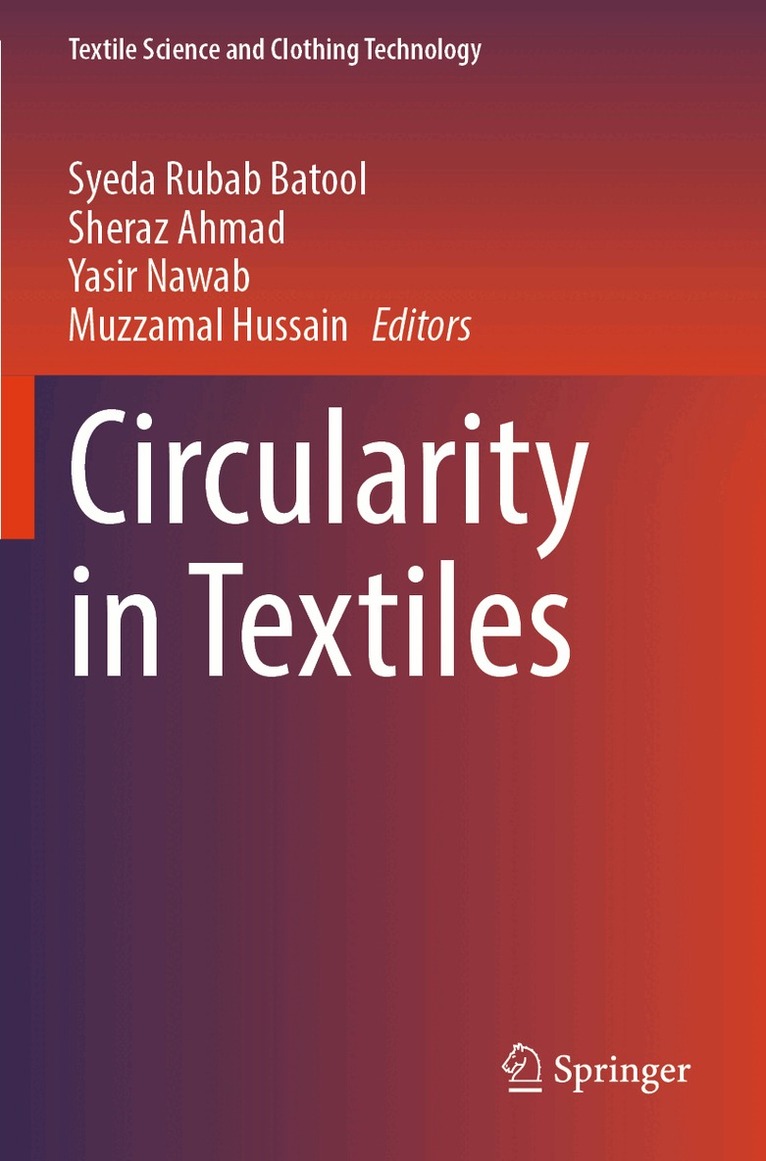
This book explains the basic principles of recycling and circularity in textiles. With the emergence of "quick fashion," textile manufacturing has expanded significantly over the past few decades. The importance of textiles to human society goes beyond their practical uses in providing warmth, protection, and comfort. Therefore, the usage and production of textiles are enhanced substantially compared to the past globally. As a result, rates of textile production and trash output have grown drastically. The other side of the story is the drastic rate at which they are dumped into landfills which is almost a garbage truck every second. If this alarming trend continues, there will be serious environmental consequences. It is well known that the textile sector is recognized as the second largest industrial polluter in the world, producing 20% of the global wastewater and accounting for 10% of carbon emissions. Additionally, harmful chemicals are utilized and emitted during the manufacture of textiles, which has an impact on ecosystems and public health The last 150 years of the textile industrial system fundamentally follow the "take-make-dispose" principle, in which resources are continuously taken out of a natural system (take), changed during production (make), and used for various purposes within the human system (use), and then released back into the environment (dispose of). In this way, manufacturing industries produce waste-producing commodities to make money, which eventually has a negative impact leading to the lack of resources resulting in price volatility, uncertainty, and economic crises. This book consists of 11 potential chapters to cover all the aspects of “circularity in textiles.”