

Häftad, Tyska, 2017
395 kr
Skickas inom 3-6 vardagar
395 kr
Skickas inom 3-6 vardagar

310 kr
Läs direkt efter köp
2 755 kr
Skickas inom 3-6 vardagar

3 431 kr
Läs direkt efter köp
The unique value of the book for practitioners resides in (among other things) the following:
• coverage of both common law and civil law jurisdictions;
• attention to the diversity of legal cultures and systems on four continents;
• a richer analysis of mediation models, standards, laws and practices than is available in other publications; and
• a much wider spectrum of mediation laws and approaches worldwide than is traditional in comparative studies.
A comprehensive introductory chapter establishes an international comparative framework for an analysis of the national chapters that follow, synthesising the main themes of the book and analysing global and systemic trends.
"Global Trends is a book which provides a comprehensive overview of mediation in 14 jurisdictions.........As well as being a wonderful resource, it provides a context for valuing and challenging the familiar mediation systems of home, wherever that may be."
"Global Trends in Mediation is a book which contributes significantly to the emergence of a ''collective consciousness'' of mediation while enabling a glocalisation of the mediation movement: ''think globally, act locally. It is a book to be re-read for new information, nuances and inspiration as each topical issue arises."
Margaret Halsmith in ADR Bulletin February 2007 (Vol 9 Number 5)
2 513 kr
Läs direkt efter köp
This book meets the practice needs of lawyers confronted with cross-border disputes now arising far beyond the traditional areas of international commerce, such as consumer disputes, inter-family conflicts, and disagreements over Internet-based transactions. The author takes full account of mediation’s risks and limitations, primarily its lack of finality and uncertainty in relation to enforceability issues which will persist until the advent of appropriate international regulation. Among the aspects discussed and analysed are the following:
• the emerging and significant new wave of global disputants;
• need to resolve disputes on the basis of factors other than law;
• increasing tendency of disputes to defy specific legal categories;
• dispute prevention systems drawing on mediation principles, such as project management mediation, partnering, and alliancing;
• mediation compared to others forms of dispute resolution;
• referral to mediation;
• mediation and multi-tiered dispute resolution (MDR) clauses;
• the duties of mediators, lawyers and parties;
• confidentiality and its implications;
• enforceability of mediated settlements; and
• the impact of mediation on legal rights and remedies.
While the book draws on examples from around the world, six primary jurisdictions (the United States, Australia, England, France, Germany, and Austria) are selected for several reasons, including comparison of legal traditions, significant volume of mediation-related case law, and the existence of mediation-related legislation and implementation requirements. Cross-border legal instruments examined include the European Directive on Mediation, UNCITRAL’s Model Law on International Commercial Conciliation (MLICC), and the Uniform Mediation Act (UMA) in the United States. In the 21st century mediation is at the forefront of contemporary social and legal development and is finding a place in both physical dispute resolution forums and worldwide electronic-based communities. International and Comparative Mediation, with its deeply informed insights into emerging international trends and the diversity of mediation regulation applicable to international disputes, shows conflict management practitioners how to create a forum culturally acceptable to each specific group of participants, with a view to agreeing on appropriate norms for the regulation of future relationships. It will be welcomed by lawyers working in a wide range of cross-border practice. Professor Nadja Alexander holds appointments at City University Hong Kong, Murdoch University in Australia and University of the Witwatersrand in South Africa. Her books on dispute resolution have been published internationally and her work has appeared in English, German and Russian language versions.
2 866 kr
Läs direkt efter köp
Mediation is rapidly becoming a norm in cross-border dispute resolution among European Union (EU) Member States. Accordingly, an important question for legal advisers to ask themselves is: Which jurisdiction offers the best legal framework to support a potential future mediation of my client’s dispute? This book responds to this question by examining the law on mediation in each Member State on a chapter-by-chapter basis. Each country analysis applies the book’s overarching principle of a specially designed Regulatory Robustness Rating System, which is thoroughly explained in an introductory chapter.
This framework offers a highly effective way to analyse the quality and robustness of each of the EU’s twenty-nine national jurisdictions’ legal frameworks relevant to mediation (including legislation, case law, practice directions, codes of conduct, standards, and other regulatory instruments) and factor such an analysis into choices about governing law in mediation clauses and other agreements. Among the issues and topics covered are the following:
• congruence of domestic and international legal frameworks;• transparency and clarity of content of mediation laws;• standards and qualifications for mediators;• rights and obligations of participants in mediation;• access to mediation services;• access to internationally recognised and skilled mediators;• enforceability of clauses and mediated settlement agreements;• confidentiality and flexibility;• admissibility of evidence from mediation in subsequent proceedings;• impact of commencement of mediation on litigation limitation periods;• relationship and attitude of courts to mediation; and• regulatory incentives for legal advisers to engage in mediation.This detailed analysis clearly allows users and other regulatory stakeholders to look closely and critically at regulatory regimes for mediation in order to make informed choices and develop appropriate strategies in relation to the law that governs their mediation.
This is the first book to consider authoritatively what makes good mediation law and what makes a jurisdiction attractive for cross-border mediation purposes in terms of its regulatory framework. As a resource that identifies potential strengths and weaknesses of each EU Member State’s regulatory regime, it has no peers and will be welcomed and put to use by the alternative dispute resolution community in Europe and beyond.
2 866 kr
Läs direkt efter köp
Mediation is rapidly becoming a norm in cross-border dispute resolution among European Union (EU) Member States. Accordingly, an important question for legal advisers to ask themselves is: Which jurisdiction offers the best legal framework to support a potential future mediation of my client’s dispute? This book responds to this question by examining the law on mediation in each Member State on a chapter-by-chapter basis. Each country analysis applies the book’s overarching principle of a specially designed Regulatory Robustness Rating System, which is thoroughly explained in an introductory chapter.
This framework offers a highly effective way to analyse the quality and robustness of each of the EU’s twenty-nine national jurisdictions’ legal frameworks relevant to mediation (including legislation, case law, practice directions, codes of conduct, standards, and other regulatory instruments) and factor such an analysis into choices about governing law in mediation clauses and other agreements. Among the issues and topics covered are the following:
• congruence of domestic and international legal frameworks;• transparency and clarity of content of mediation laws;• standards and qualifications for mediators;• rights and obligations of participants in mediation;• access to mediation services;• access to internationally recognised and skilled mediators;• enforceability of clauses and mediated settlement agreements;• confidentiality and flexibility;• admissibility of evidence from mediation in subsequent proceedings;• impact of commencement of mediation on litigation limitation periods;• relationship and attitude of courts to mediation; and• regulatory incentives for legal advisers to engage in mediation.This detailed analysis clearly allows users and other regulatory stakeholders to look closely and critically at regulatory regimes for mediation in order to make informed choices and develop appropriate strategies in relation to the law that governs their mediation.
This is the first book to consider authoritatively what makes good mediation law and what makes a jurisdiction attractive for cross-border mediation purposes in terms of its regulatory framework. As a resource that identifies potential strengths and weaknesses of each EU Member State’s regulatory regime, it has no peers and will be welcomed and put to use by the alternative dispute resolution community in Europe and beyond.
2 062 kr
Läs direkt efter köp
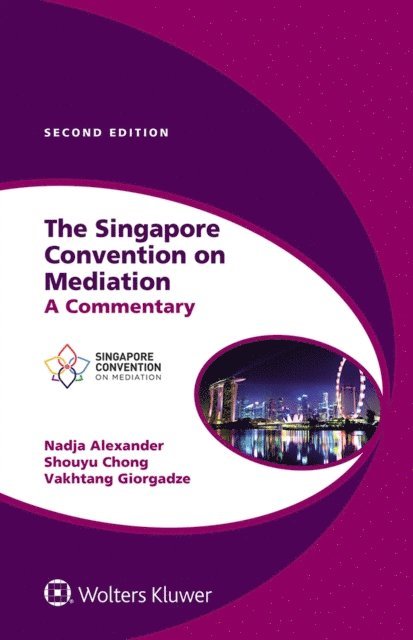
The Singapore Convention on Mediation is just beginning its life as an international legal instrument. How is it likely to fare? In the second edition of this comprehensive, article-by-article commentary, the authors provide a robust report on the features of the Convention and their implications, with an analysis of potential controversies and authoritative clarifications of particular provisions.
The book’s meticulous examination considers these issues and topics:
international mediated settlement agreements as a new type of legal instrument in international law;
types of settlement agreements that fall within the scope of the Convention;
how the Convention’s enforcement mechanism works;
the meaning of ‘international’ and the absence of a seat of mediation;
the Convention’s approach to recognition and enforcement of international mediated settlement agreements;
the grounds for refusal to grant relief under the Convention;
mediator misconduct as a ground for refusal to grant relief;
the role of confidentiality in granting relief for international mediated settlement agreements;
the impact of the Convention on private international law;
the relationship of the Singapore Convention to other international instruments such as the UN Model Law on International Commercial Mediation and the New York Convention on Arbitration;
possibilities for Contracting States to declare reservations;
court decisions from around the globe on the recognition and enforceability of international mediated settlement agreements; and
domestic mediation legislation including domestic laws that implement the Singapore Convention.
This book takes a giant step towards relieving the inherent uncertainty associated with how this newly constituted instrument may operate, and how States may become ‘Convention ready’. It is an essential reference for international lawyers, mediators and government officials as the Convention proves itself in the coming years.
2 062 kr
Läs direkt efter köp
The Singapore Convention on Mediation is just beginning its life as an international legal instrument. How is it likely to fare? In the second edition of this comprehensive, article-by-article commentary, the authors provide a robust report on the features of the Convention and their implications, with an analysis of potential controversies and authoritative clarifications of particular provisions.
The book’s meticulous examination considers these issues and topics:
international mediated settlement agreements as a new type of legal instrument in international law;
types of settlement agreements that fall within the scope of the Convention;
how the Convention’s enforcement mechanism works;
the meaning of ‘international’ and the absence of a seat of mediation;
the Convention’s approach to recognition and enforcement of international mediated settlement agreements;
the grounds for refusal to grant relief under the Convention;
mediator misconduct as a ground for refusal to grant relief;
the role of confidentiality in granting relief for international mediated settlement agreements;
the impact of the Convention on private international law;
the relationship of the Singapore Convention to other international instruments such as the UN Model Law on International Commercial Mediation and the New York Convention on Arbitration;
possibilities for Contracting States to declare reservations;
court decisions from around the globe on the recognition and enforceability of international mediated settlement agreements; and
domestic mediation legislation including domestic laws that implement the Singapore Convention.
This book takes a giant step towards relieving the inherent uncertainty associated with how this newly constituted instrument may operate, and how States may become ‘Convention ready’. It is an essential reference for international lawyers, mediators and government officials as the Convention proves itself in the coming years.
Eine Deutsch-Australische Studie
752 kr
Tillfälligt slut

3 730 kr
Tillfälligt slut
2 780 kr
Tillfälligt slut