Nak Nyeon Kim – författare
2 874 kr
Skickas inom 10-15 vardagar
3 137 kr
Läs direkt efter köp
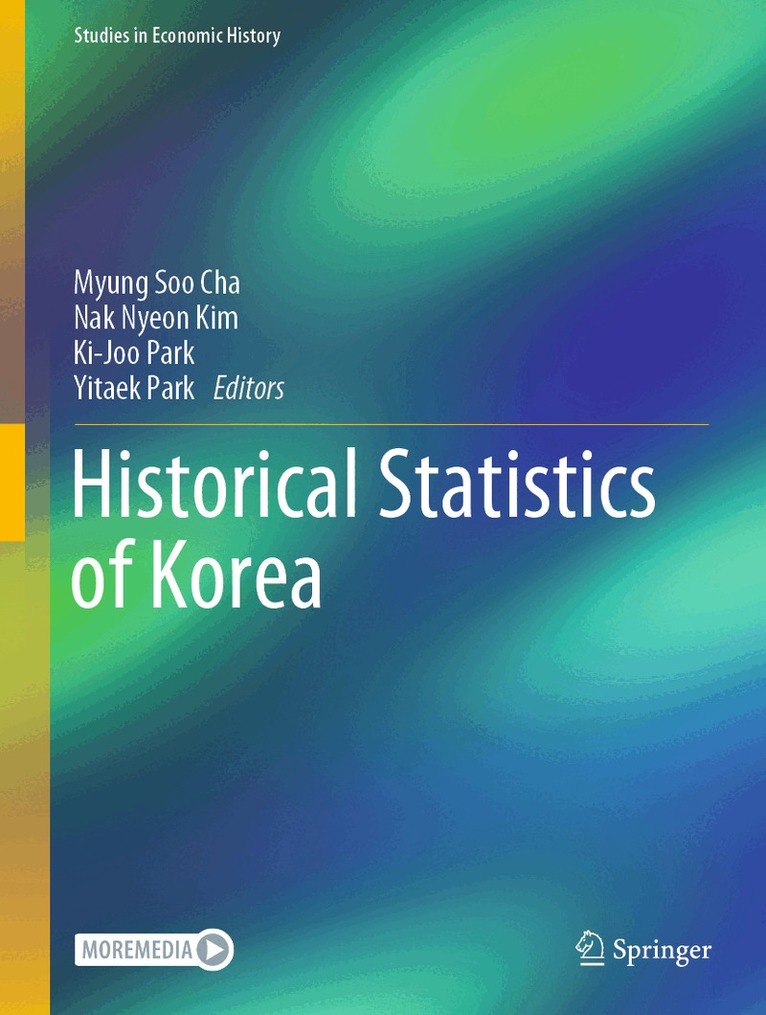
This book presents economic statistics of Korea in the past three centuries, focusing on the century following 1910. The data, typically time series rather than cross-sectional, are given in 22 chapters, which refer to population, wages, prices, education, health, national income and wealth, and technology, among others. Rather than simply putting together available data, the contributors to this statistical compendium made adjustments to ensure intertemporal consistency when required. An overview draws attention to the discontinuous shifts occurring over time in the quantity and quality of the statistical information available, which was associated with the regime changes Korea underwent including the imposition of Japanese rule in 1910 and de-colonization and split into two Koreas three and half decades later. Individual chapters begin with a brief introduction, which helps users better understand and use the data. Data sources and references in the Japanese and Korean language are fully provided following the standard Hepburn and McCune–Reischauer Romanization with English translation to assist users to identify materials and explore more deeply the wealth of statistical data waiting to be analyzed.
2 874 kr
Skickas inom 10-15 vardagar
1 443 kr
Skickas inom 10-15 vardagar
1 785 kr
Läs direkt efter köp
This book provides the first comprehensive explanation of Korea’s 150 years of economic growth, from the opening of the ports to the present, based on consistently organized long-term statistics. The book also compares Korea’s experience with that of other countries. During this period, Korea experienced major systemic transitions, from a traditional society to colonial rule, and after liberation, the division between North and South Korea. East Asian latecomer nations, including Korea, rapidly closed the gap with advanced countries through learning and adaptation following their opening to the world. The book uses Korea’s case to demonstrate how institutional changes influence economic performance and explain the conditions under which rapid catch-up growth can occur or fail to occur. Korea’s high growth was achieved under an authoritarian regime with state-led industrial policies. As the limitations of this model became evident, Korea transitioned to a private-sector-led approach, facing economic crises in the process. Economic growth led to the rise of a highly educated middle class. This, in turn, surfaced demands that had been suppressed under the authoritarian regime, paving the way for democratization. Social development and fairness, long overshadowed by economic growth, became key policy agendas. Following the 1997 Asian financial crisis, Korea has faced the dual challenges of slow growth and rising inequality, driving increased calls for income redistribution and the establishment of a Korean-style welfare state. The book is divided into two parts. Part 1 explores long-term trends in Korea’s economic growth, comparing them with other countries. Part 2 provides a detailed, stage-by-stage analysis, highlighting the specific institutional and policy changes that shaped Korea’s development.
1 443 kr
Skickas inom 10-15 vardagar