Nanci N. Smith – författare
365 kr
Läs direkt efter köp
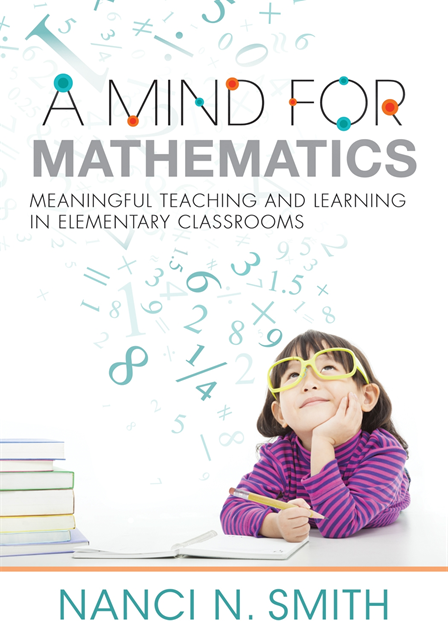
What does it take to be a good mathematics teacher who actively engages students and addresses learning differences? Gain a mental picture of an effective mathematics learning environment and why it must be founded on growth mindset principles. This easy-to-read text breaks down the complex components of mathematics teaching and divides them into practical strategies. Combining mathematics research, useful tactics, and examples from K–6 classrooms, the book includes reflection questions, action tasks, and activities to inspire and engage mathematical minds.
Benefits:
LEARN HOW TO USE DIFFERENT TYPES OF ASSESSMENTS to advance student learning and inform mathematics instruction.OBSERVE SPECIFIC CLASSROOM EXAMPLES and vignettes that illustrate the mathematical concepts covered in each chapter.LEARN THE CHARACTERISTICS OF HIGH-QUALITY, RIGOROUS TASKS that engage students in learning mathematics.GET ADVICE ON BALANCING TEACHING RESPONSIBILITIES and making sound plans for teaching mathematics, including communicating with students’ families.INFLUENCE STUDENTS TO WORK HARD, grapple with challenging problems, and ultimately value mathematics.Contents:
About the Author
Introduction
Creating the Mathematical EnvironmentEngaging Mathematical MindsReaching Different Mathematical MindsChallenging Student MathematiciansMonitoring Mathematical AssessmentBalancing It AllReferences and Resources
Index
365 kr
Läs direkt efter köp
Benefits
LEARN THE FUNDAMENTALS OF FLOW.REIMAGINE STUDENT ENGAGEMENT to create conditions that foster a state of flow regularly.MOTIVATE STUDENTS to become naturally curious, creative critical thinkers.MAKE LEARNING INHERENTLY FUN, encouraging students to love learning.GAIN EFFECTIVE STRATEGIES for improving motivation, instruction, pacing, and feedback in the classroom.Understand how intrinsic motivations can better inspire students’ learning than extrinsic rewards.Grasp how to effectively match students’ perceived skills with an equal level of challenge.Issue immediate and effective feedback to help students monitor their own learning progress.When students are fully engaged, present, focused, and alert, they experience flow. By rethinking student engagement and bringing flow to the center of instruction, teachers inspire students to love learning and reach new levels of achievement. Using the key components of flow, generate a state of flow in the classroom every day to spark optimal student performance. Learn what steps teachers can take to personalize instruction, empowering students to own their learning.
Contents
Introduction: What Is Flow?
Motivation—Shifting From Extrinsic to Intrinsic RewardsInstruction—Shifting From Differentiation to PersonalizationPacing—Shifting From Action to SuspenseFeedback—Shifting From Top-Down to Horizontal AssessmentConclusion
365 kr
Läs direkt efter köp
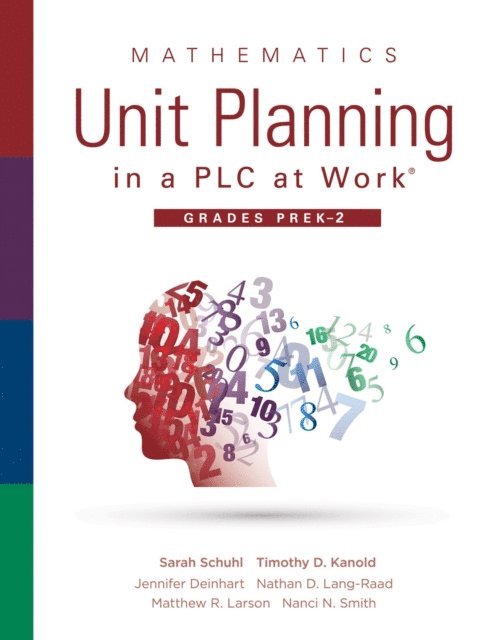
Bring a laser-like focus to the mathematics content your students need to learn throughout the year. Written by trusted mathematics experts, this resource helps PreK-2 teachers fully answer PLC critical question one: what do we want all students to know and be able to do? Read the book as a team to acquire detailed model mathematics units, learn how to perform seven collaborative tasks, and more.
Use this resource to increase mathematics achievement and provide students with a more equitable learning experience:
Understand how to collaboratively plan curriculum units in grades preK-2.Study the seven unit-planning elements and learn how to incorporate each in unit designs for early childhood education.Review the role of the PLC at Work®️ process in enhancing student learning and teacher collaboration.Observe four model units related to the foundations of addition and subtraction, one for each grade level.Receive tools and templates for effective unit planning in a professional learning community (PLC).Contents:Introduction by Timothy D. KanoldPart 1: Mathematics Unit Planning and Design ElementsChapter 1: Planning for Student Learning of Mathematics in Grades PreK-2Chapter 2: Unit Planning as a Collaborative Mathematics TeamPart 2: Foundations of Addition and Subtraction Unit Examples, Grades PreK-2Chapter 3: PreK Unit: Counting and CardinalityChapter 4: Kindergarten Unit: Addition and Subtraction to 10Chapter 5: Grade 1 Unit: Addition and Subtraction to 20Chapter 6: Grade 2 Unit: Multidigit Addition and SubtractionEpilogue: Mathematics Team OrganizationAppendix A: Create a Proficiency MapAppendix B: Team Checklist and Questions for Mathematics Unit PlanningReferences and ResourcesIndex