Nancy Disher Baird – författare
659 kr
Skickas inom 3-6 vardagar
96 kr
Läs direkt efter köp
Most towns did not have hospitals of their own before the mid-twentieth century, and Kentucky towns were no exception. Kentucky''s first real hospital opened in 1823, but it was in Louisville -- too far away to serve many Kentucky communities, especially in cases of emergency. For this and other reasons, the lifespan of the average Kentuckian in the 1800s was only 40 years. Today it has grown to 75, and trained medical professionals are available to most communities throughout the state. Healing Kentucky tells how medical care changed in Kentucky over 200 years and became the much safer and better system we know today. It also describes early healing practices and methods used to care for the sick in the days before safe hospitals, even on Civil War battlefields. From cholera epidemics to polio and plastic surgery, readers will learn much about the people who shaped medicine in Kentucky.
103 kr
Läs direkt efter köp
Most towns did not have hospitals of their own before the mid-twentieth century, and Kentucky towns were no exception. Kentucky''s first real hospital opened in 1823, but it was in Louisville -- too far away to serve many Kentucky communities, especially in cases of emergency. For this and other reasons, the lifespan of the average Kentuckian in the 1800s was only 40 years. Today it has grown to 75, and trained medical professionals are available to most communities throughout the state. Healing Kentucky tells how medical care changed in Kentucky over 200 years and became the much safer and better system we know today. It also describes early healing practices and methods used to care for the sick in the days before safe hospitals, even on Civil War battlefields. From cholera epidemics to polio and plastic surgery, readers will learn much about the people who shaped medicine in Kentucky.
608 kr
Läs direkt efter köp
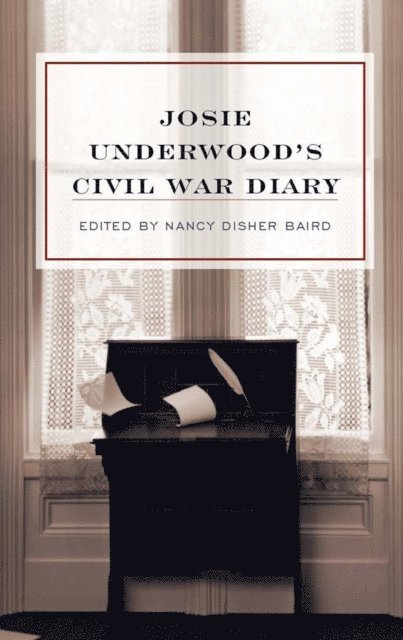
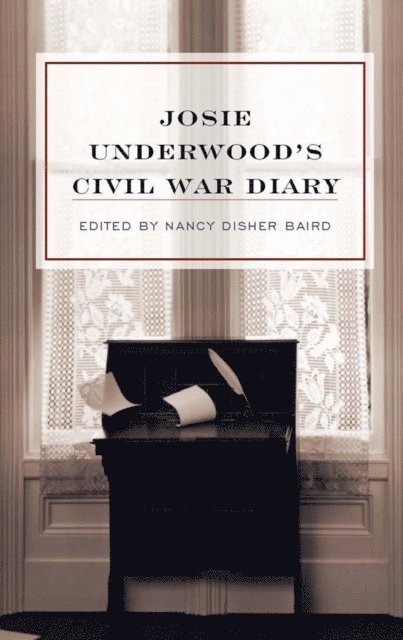
A well-educated, outspoken member of a politically prominent family in Bowling Green, Kentucky, Josie Underwood (1840--1923) left behind one of the few intimate accounts of the Civil War written by a southern woman sympathetic to the Union. This vivid portrayal of the early years of the war begins several months before the first shots were fired on Fort Sumter in April 1861. "The Philistines are upon us," twenty-year-old Josie writes in her diary, leaving no question about the alarm she feels when Confederate soldiers occupy her once-peaceful town. Offering a unique perspective on the tensions between the Union and the Confederacy, Josie reveals that Kentucky was a hotbed of political and military action, particularly in her hometown of Bowling Green, known as the Gibraltar of the Confederacy. Located along important rail and water routes that were vital for shipping supplies in and out of the Confederacy, the city linked the upper South''s trade and population centers and was strategically critical to both armies. Capturing the fright and frustration she and her family experienced when Bowling Green served as the Confederate army''s headquarters in the fall of 1861, Josie tells of soldiers who trampled fields, pilfered crops, burned fences, cut down trees, stole food, and invaded homes and businesses. In early 1862, Josie''s outspoken Unionist father, Warner Underwood, was ordered to evacuate the family''s Mount Air estate, which was later destroyed by occupying forces. Wartime hardships also strained relationships among Josie''s family, neighbors, and friends, whose passionate beliefs about Lincoln, slavery, and Kentucky''s secession divided them. Published for the first time, Josie Underwood''s Civil War Diary interweaves firsthand descriptions of the political unrest of the day with detailed accounts of an active social life filled with travel, parties, and suitors. Bringing to life a Unionist, slave-owning young woman who opposed both Lincoln''s policies and Kentucky''s secession, the diary dramatically chronicles the physical and emotional traumas visited on Josie''s family, community, and state during wartime.
342 kr
Läs direkt efter köp
342 kr
Läs direkt efter köp
547 kr
Läs direkt efter köp
A well-educated, outspoken member of a politically prominent family in Bowling Green, Kentucky, Josie Underwood (1840--1923) left behind one of the few intimate accounts of the Civil War written by a southern woman sympathetic to the Union. This vivid portrayal of the early years of the war begins several months before the first shots were fired on Fort Sumter in April 1861. "The Philistines are upon us," twenty-year-old Josie writes in her diary, leaving no question about the alarm she feels when Confederate soldiers occupy her once-peaceful town. Offering a unique perspective on the tensions between the Union and the Confederacy, Josie reveals that Kentucky was a hotbed of political and military action, particularly in her hometown of Bowling Green, known as the Gibraltar of the Confederacy. Located along important rail and water routes that were vital for shipping supplies in and out of the Confederacy, the city linked the upper South''s trade and population centers and was strategically critical to both armies. Capturing the fright and frustration she and her family experienced when Bowling Green served as the Confederate army''s headquarters in the fall of 1861, Josie tells of soldiers who trampled fields, pilfered crops, burned fences, cut down trees, stole food, and invaded homes and businesses. In early 1862, Josie''s outspoken Unionist father, Warner Underwood, was ordered to evacuate the family''s Mount Air estate, which was later destroyed by occupying forces. Wartime hardships also strained relationships among Josie''s family, neighbors, and friends, whose passionate beliefs about Lincoln, slavery, and Kentucky''s secession divided them. Published for the first time, Josie Underwood''s Civil War Diary interweaves firsthand descriptions of the political unrest of the day with detailed accounts of an active social life filled with travel, parties, and suitors. Bringing to life a Unionist, slave-owning young woman who opposed both Lincoln''s policies and Kentucky''s secession, the diary dramatically chronicles the physical and emotional traumas visited on Josie''s family, community, and state during wartime.