Nancy Gentile Ford – författare
Visar alla böcker från författaren Nancy Gentile Ford. Handla med fri frakt och snabb leverans.
5 produkter
5 produkter
Inbunden, Engelska, 2008
717 kr
Skickas inom 10-15 vardagar
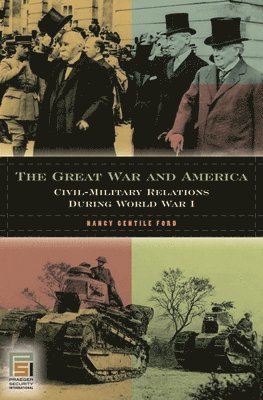
The First World War marked a key turning point in America's involvement on the global stage. Isolationism fell, and America joined the ranks of the Great Powers. Civil-Military relations faced new challenges as a result. Ford examines the multitude of changes that stemmed from America's first major overseas coalition war, including the new selective service process; mass mobilization of public opinion; training diverse soldiers; civil liberties, anti-war sentiment and conscientious objectors; segregation and warfare; Americans under British or French command. Post war issues of significance, such as the Red Scare and retraining during demobilization are also covered.Both the federal government and the military were expanding rapidly both in terms of size and in terms of power during this time. The new group of citizen-soldiers, diverse in terms of class, religion, ethnicity, regional identity, education, and ideology, would provide training challenges. New government-military-business relationships would experience failures and successes. Delicate relationships with allies would translate into diplomatic considerations and battlefield command concerns.
Inbunden, Engelska, 2001
1 001 kr
Skickas inom 10-15 vardagar
Since its birth, America has been involved in more than a dozen military conflicts. From the battle of King's Mountain in the American Revolution to the Persian Gulf War, this resource provides a wealth of primary documents and commentary on pivotal events of war and peace. Expert commentary and the text of 70 primary documents expressing a variety of positions on these issues bring to light the complexities of American military conflicts. Documents include excerpts from speeches, diaries, pamphlets, broadsides, songs, newspaper articles, congressional debates, and government reports.Among the issues covered are the arguments between Federalists and anti-Federalists over the War of 1812, the debate over westward expansion during the Mexican War, the New York City draft riot in the Civil War, the debate over the Indian Question, the annexation of the Philippines, the Espionage and Sedition Acts of World War I, the decision to drop the bomb on Hiroshima, the recall of General Douglas MacArthur, the My Lai massacre, and the bombing of Iraq. Each entry contains a comprehensive discussion and analysis of the event, followed by the text of 3-8 primary documents presenting a variety of viewpoints by participants in the event. A narrative introduction to the topic, a helpful annotated bibliographic research guide for each event, including recommended web sites and videos, and a timeline of key events will aid the student researcher. This is an ideal resource for student research and class debate.
E-bok
PDF, Engelska, 2008752 kr
Läs direkt efter köp
The First World War marked a key turning point in America's involvement on the global stage. Isolationism fell, and America joined the ranks of the Great Powers. Civil-Military relations faced new challenges as a result. Ford examines the multitude of changes that stemmed from America's first major overseas coalition war, including the new selective service process; mass mobilization of public opinion; training diverse soldiers; civil liberties, anti-war sentiment and conscientious objectors; segregation and warfare; Americans under British or French command. Post war issues of significance, such as the Red Scare and retraining during demobilization are also covered.Both the federal government and the military were expanding rapidly both in terms of size and in terms of power during this time. The new group of citizen-soldiers, diverse in terms of class, religion, ethnicity, regional identity, education, and ideology, would provide training challenges. New government-military-business relationships would experience failures and successes. Delicate relationships with allies would translate into diplomatic considerations and battlefield command concerns.
Häftad, Engelska, 2001
220 kr
Skickas inom 10-15 vardagar
A surge of immigrant draftees in the US Army permanently challenged the way military leaders approached citizenship training.
E-bok
PDF, Engelska, 2001172 kr
Läs direkt efter köp
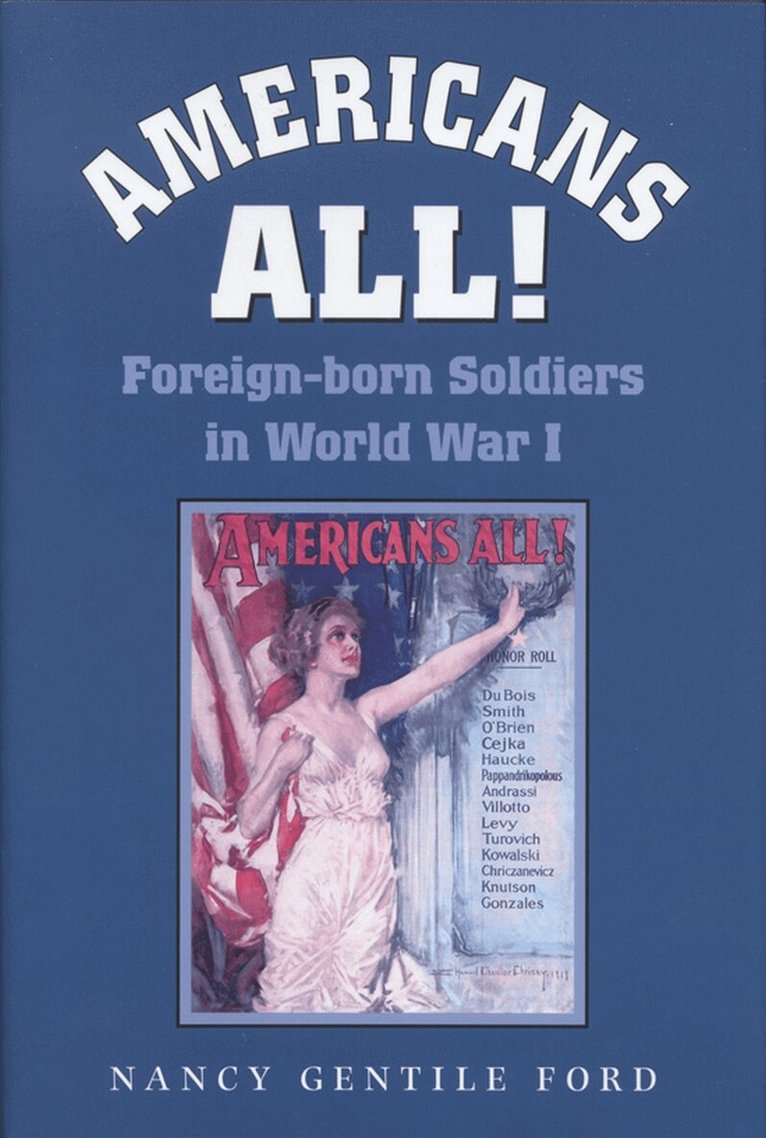
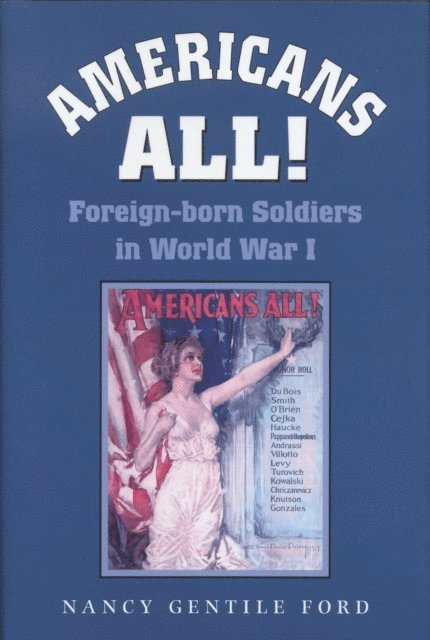
During the First World War, nearly half a million immigrant draftees from forty-six different nations served in the U.S. Army. This surge of Old World soldiers challenged the American military''s cultural, linguistic, and religious traditions and required military leaders to reconsider their training methods for the foreign-born troops. How did the U.S. War Department integrate this diverse group into a united fighting force?The war department drew on the experiences of progressive social welfare reformers, who worked with immigrants in urban settlement houses, and they listened to industrial efficiency experts, who connected combat performance to morale and personnel management. Perhaps most significantly, the military enlisted the help of ethnic community leaders, who assisted in training, socializing, and Americanizing immigrant troops and who pressured the military to recognize and meet the important cultural and religious needs of the ethnic soldiers. These community leaders negotiated the Americanization process by promoting patriotism and loyalty to the United States while retaining key ethnic cultural traditions.Offering an exciting look at an unexplored area of military history, Americans All! Foreign-born Soldiers in World War I constitutes a work of special interest to scholars in the fields of military history, sociology, and ethnic studies. Ford''sresearch illuminates what it meant for the U.S. military to reexamine early twentieth-century nativism; instead of forcing soldiers into a melting pot, war department policies created an atmosphere that made both American and ethnic pride acceptable.During the war, a German officer commented on the ethnic diversity of the American army and noted, with some amazement, that these "semi-Americans" considered themselves to be "true-born sons of their adopted country." The officer was wrong on one count. The immigrant soldiers were not "semi-Americans"; they were "Americans all!"