Naomi Roht-Arriaza – författare
Visar alla böcker från författaren Naomi Roht-Arriaza. Handla med fri frakt och snabb leverans.
10 produkter
10 produkter
Inbunden, Engelska, 1995
2 362 kr
Skickas inom 3-6 vardagar
Roht-Arriaza explores the basis in international law to investigate past human rights violations, to prosecute perpetrators, and to provide redress for victims.
E-bok
PDF, Engelska, 1995788 kr
Läs direkt efter köp
As dictatorships topple around the world and transitional regimes emerge from the political rubble, the new governments inherit a legacy of widespread repression against the civilian population. This repression ranges from torture, forced disappearances, and imprisonment to the killings of both real and perceived political opponents. Nonetheless, the official status of the perpetrators shields them from sanction, creating a culture of impunity in which the most inhumane acts can be carried out without fear of repercussions. The new governments wrestle with whether or not to investigate prior wrongdoings by state officials. They must determine who, if any, of those responsible for the worst crimes should be brought to justice, even if this means annulling a previous amnesty law or risking a violent backlash by military or security forces. Finally, they have to decide how to compensate the victims of this repression, if at all. Beginning with a general consideration of theories of punishment and redress for victims, Impunity and Human Rights in International Law and Practice explores how international law provides guidance on these issues of investigation, prosecution, and compensation. It reviews some of the more well-known historical examples of societies grappling with impunity, including those arising from the Second World War and from the fall of the Greek, Spanish, and Portuguese dictatorships in the 1970s. Country studies from around the world look at how the problem of impunity has been dealt with in practice in the last two decades. The work then distills these experiences into a general discussion of what has and hasn''t worked. It concludes by considering the role of international law and institutions in the future, especially given renewed interest in international mechanisms to punish wrong-doers. As individuals, governments, and international organizations come to grips with histories of repression and impunity in countries around the world, the need to define legal procedures and criteria for dealing with past abuses of human rights takes on a special importance. Impunity and Human Rights in International Law and Practice aims to share their experiences in the hope that lawyers, scholars, and activists in those countries where dealing with the past is only now becoming an imperative may learn from those who have recently confronted similar challenges. This work will be essential reading for lawyers, political and social scientists, historians and journalists, as well as human rights experts concerned with this important issue.
Häftad, Engelska, 2006
603 kr
Skickas inom 7-10 vardagar
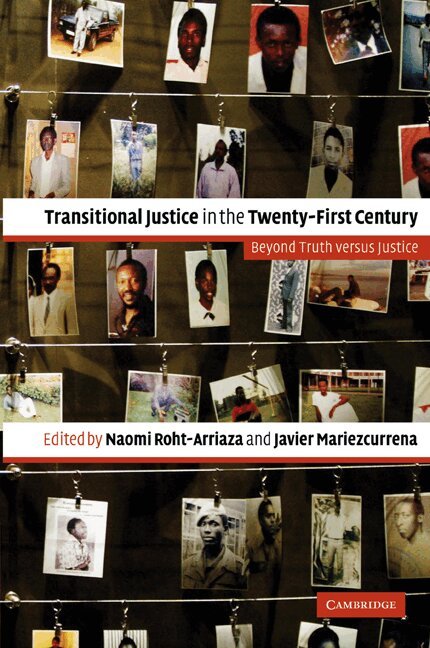
Dealing with the aftermath of civil conflict or the fall of a repressive government continues to trouble countries throughout the world. Whereas much of the 1990s was occupied with debates concerning the relative merits of criminal prosecutions and truth commissions, by the end of the decade a consensus emerged that this either/or approach was inappropriate and unnecessary. A second generation of transitional justice experiences have stressed both truth and justice and recognize that a single method may inadequately serve societies rebuilding after conflict or dictatorship. Based on studies in ten countries, this book analyzes how some combine multiple institutions, others experiment with community-level initiatives that draw on traditional law and culture, whilst others combine internal actions with transnational or international ones. The authors argue that transitional justice efforts must also consider the challenges to legitimacy and local ownership emerging after external military intervention or occupation.
Inbunden, Engelska, 2006
967 kr
Skickas inom 7-10 vardagar
Dealing with the aftermath of civil conflict or the fall of a repressive government continues to trouble countries throughout the world. Whereas much of the 1990s was occupied with debates concerning the relative merits of criminal prosecutions and truth commissions, by the end of the decade a consensus emerged that this either/or approach was inappropriate and unnecessary. A second generation of transitional justice experiences have stressed both truth and justice and recognize that a single method may inadequately serve societies rebuilding after conflict or dictatorship. Based on studies in ten countries, this book analyzes how some combine multiple institutions, others experiment with community-level initiatives that draw on traditional law and culture, whilst others combine internal actions with transnational or international ones. The authors argue that transitional justice efforts must also consider the challenges to legitimacy and local ownership emerging after external military intervention or occupation.
E-bok
PDF, Engelska, 2010491 kr
Läs direkt efter köp
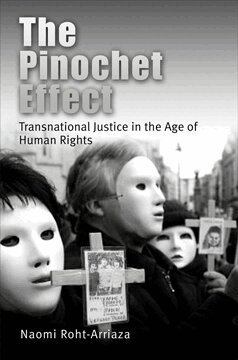
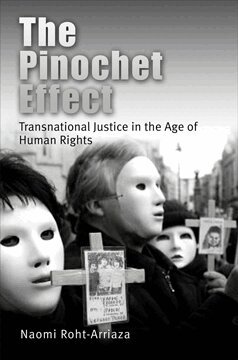
The 1998 arrest of General Augusto Pinochet in London and subsequent extradition proceedings sent an electrifying wave through the international community. This legal precedent for bringing a former head of state to trial outside his home country signaled that neither the immunity of a former head of state nor legal amnesties at home could shield participants in the crimes of military governments. It also allowed victims of torture and crimes against humanity to hope that their tormentors might be brought to justice. In this meticulously researched volume, Naomi Roht-Arriaza examines the implications of the litigation against members of the Chilean and Argentine military governments and traces their effects through similar cases in Latin American and Europe.Roht-Arriaza discusses the difficulties in bringing violators of human rights to justice at home, and considers the role of transitional justice in transnational prosecutions and investigations in the national courts of countries other than those where the crimes took place. She traces the roots of the landmark Pinochet case and follows its development and those of related cases, through Spain, the United Kingdom, elsewhere in Europe, and then through Chile, Argentina, Mexico, and the United States. She situates these transnational cases within the context of an emergent International Criminal Court, as well as the effectiveness of international law and of the lawyers, judges, and activists working together across continents to make a new legal paradigm a reality. Interviews and observations help to contextualize and dramatize these compelling cases.These cases have tremendous ramifications for the prospect of universal jurisdiction and will continue to resonate for years to come. Roht-Arriaza's deft navigation of these complicated legal proceedings elucidates the paradigm shift underlying this prosecution as well as the traction gained by advocacy networks promoting universal jurisdiction in recent decades.
Häftad, Engelska, 2006
350 kr
Skickas inom 10-15 vardagar
The 1998 arrest of General Augusto Pinochet in London and subsequent extradition proceedings sent an electrifying wave through the international community. This legal precedent for bringing a former head of state to trial outside his home country signaled that neither the immunity of a former head of state nor legal amnesties at home could shield participants in the crimes of military governments. It also allowed victims of torture and crimes against humanity to hope that their tormentors might be brought to justice. In this meticulously researched volume, Naomi Roht-Arriaza examines the implications of the litigation against members of the Chilean and Argentine military governments and traces their effects through similar cases in Latin American and Europe.Roht-Arriaza discusses the difficulties in bringing violators of human rights to justice at home, and considers the role of transitional justice in transnational prosecutions and investigations in the national courts of countries other than those where the crimes took place. She traces the roots of the landmark Pinochet case and follows its development and those of related cases, through Spain, the United Kingdom, elsewhere in Europe, and then through Chile, Argentina, Mexico, and the United States. She situates these transnational cases within the context of an emergent International Criminal Court, as well as the effectiveness of international law and of the lawyers, judges, and activists working together across continents to make a new legal paradigm a reality. Interviews and observations help to contextualize and dramatize these compelling cases.These cases have tremendous ramifications for the prospect of universal jurisdiction and will continue to resonate for years to come. Roht-Arriaza's deft navigation of these complicated legal proceedings elucidates the paradigm shift underlying this prosecution as well as the traction gained by advocacy networks promoting universal jurisdiction in recent decades.
E-bok
Engelska, 2025351 kr
Läs direkt efter köp
Inbunden, Engelska, 2025
902 kr
Skickas inom 7-10 vardagar
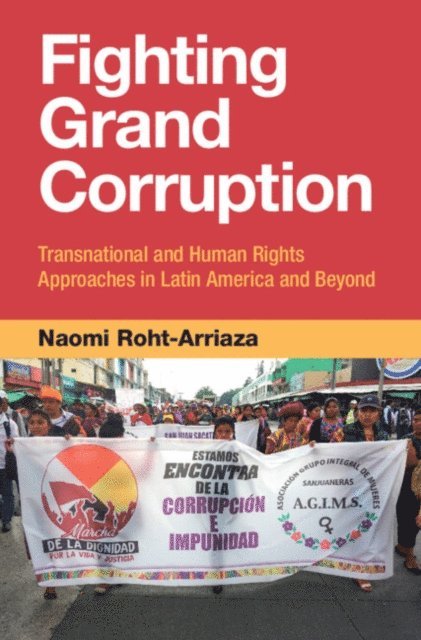
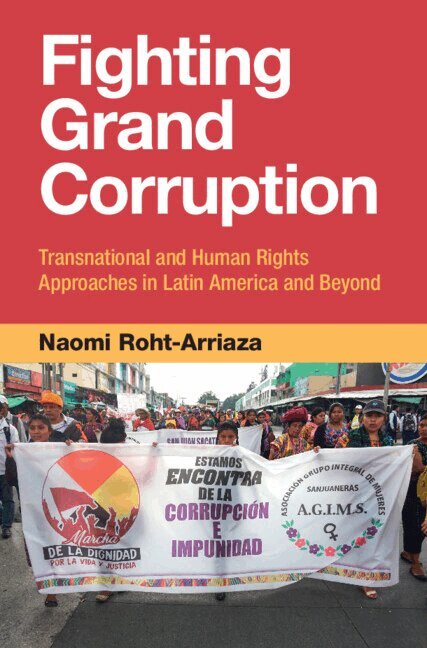
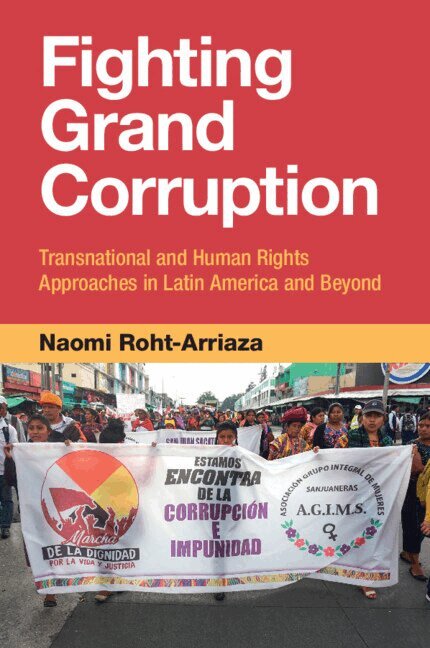
Grand corruption-systemic, large-scale, and top-down misappropriation of public resources for private gain-remains a pervasive problem around the world. It affects the ability of governments to educate, feed, and care for their people. It undermines human rights, perpetuates impunity, and erodes trust in government and the judiciary. It strengthens disgruntlement, authoritarianism, and insurgency. Corruption, however, is not a static force. In this work, Naomi Roht-Arriaza explores how corruption has changed, and how new anti-corruption thinking, especially in Latin America, centers human rights, victims' access to justice, and reparations. Roht-Arriaza shows how activists have used outside pressure and support for local actors where state institutions have been captured and foregrounds anti-corruption considerations in dealing with transitional justice and atrocity crimes. Written with engaging stories and examples, this book will appeal to lawyers, scholars of Latin America, and anyone else interested in fighting kleptocrats with the goal of reclaiming the common good.
E-bok
PDF, Engelska, 2025351 kr
Läs direkt efter köp
Häftad, Engelska, 2025
292 kr
Skickas inom 7-10 vardagar
Grand corruption-systemic, large-scale, and top-down misappropriation of public resources for private gain-remains a pervasive problem around the world. It affects the ability of governments to educate, feed, and care for their people. It undermines human rights, perpetuates impunity, and erodes trust in government and the judiciary. It strengthens disgruntlement, authoritarianism, and insurgency. Corruption, however, is not a static force. In this work, Naomi Roht-Arriaza explores how corruption has changed, and how new anti-corruption thinking, especially in Latin America, centers human rights, victims' access to justice, and reparations. Roht-Arriaza shows how activists have used outside pressure and support for local actors where state institutions have been captured and foregrounds anti-corruption considerations in dealing with transitional justice and atrocity crimes. Written with engaging stories and examples, this book will appeal to lawyers, scholars of Latin America, and anyone else interested in fighting kleptocrats with the goal of reclaiming the common good.