Narayan Das – författare
Visar alla böcker från författaren Narayan Das. Handla med fri frakt och snabb leverans.
12 produkter
12 produkter
E-bok
Engelska, 20143 798 kr
Läs direkt efter köp
Historically the caste system has formed the socio-cultural and economic fabric of the life of the people of India. The caste system is based on the Manusmrithi, the norms to the followed by different groups. The caste system divides the people into social groups where the rights are assigned and determined by birth and it is hereditary. The rights among the groups are unequal and hierarchical. Those on the top enjoy all the benefits and do little work and those at the bottom of the hierarchy have very few benefits and do most of the works that are considered menial and impure. This system is maintained through a strict system of enforcement. The deviants are punished. One could see that the doctrine of inequality is the core of the Caste system. The system is oppressive. It is chock full of the latest research findings on many aspects of women offenders and victims. This authentic work is recommended for academics, researchers and students in sociology, women''s studies, criminology and criminal justice.
E-bok
Engelska, 20134 450 kr
Läs direkt efter köp
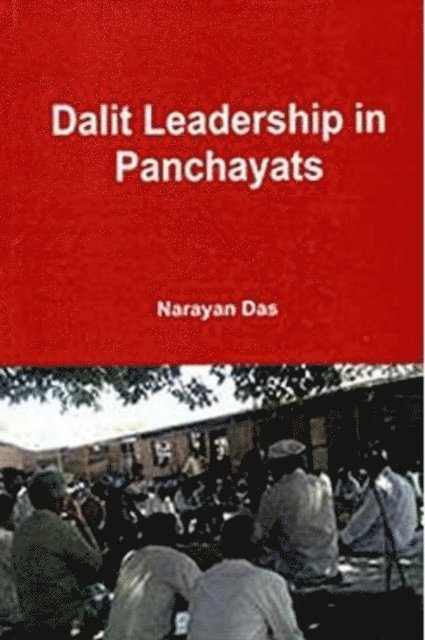
The Dalits, also known as "untouchables", are often limited from equal and meaningful political participation due to the persistence of discriminatory practices and their weak economic, social and political position in caste-affected countries in India. Dalit women are particularly vulnerable and marginalized as they suffer from multiple discrimination as women, as poor and as Dalits. While some governments have enacted constitutional safeguards and affirmative action to promote equal access and opportunities, e.g. reservation policies in public sector employment, implementation of such laws and programmes remains weak and insufficient. Some governments have yet to introduce legislative measures, while others are in the process of establishing systems of proportionate representation in the restructuring of the state. Direct political participation of Dalit women in local governance is a central human right in itself and enables the realization of a host of other human rights. This book makes an analytical study of Dalit and tribal leadership in village panchayats after the 73rd amendment which makes further provision of reservations for SC. It addresses issues concerning scheduled caste.
E-bok
Engelska, 20146 154 kr
Läs direkt efter köp
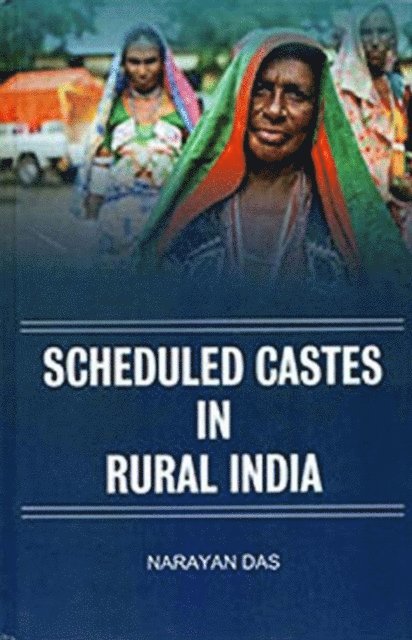
The Indians have also become more flexible in their caste system customs. In general the urban people in India are less strict about the caste system than the rural. In cities one can see different caste people mingling with each other, while in some rural areas there is still discrimination based on castes and sometimes also on untouchability. Sometimes in villages or in the cities there are violent clashes which, are connected to caste tensions. Sometimes the high castes strike the lower castes who dare to uplift their status. Sometimes the lower caste get back on the higher castes. This book explains the social and economic position of castes of scheduled castes in rural India. The author is sure that, the researcher and the planner will be benefited by this book.
E-bok
Engelska, 20173 077 kr
Läs direkt efter köp
The cancerous tumour of caste system of our society would be cured, and the society would become one. Dr. Ambedkar said that the caste system was a very disgusting aspect of our society. By denying opportunities to rise, the Hindu social order has fixed the socio-economic status of the lower vamas or castes for ever through the mystic scheme of karma (deeds), Bhagya (fate) and Punarjanma (rebirth). Ambedkar literally viewed as "Origin of Caste" means "The Origin of the Mechanism for Endogamy" and treated class and caste as next door neighbours and defined "A caste is an Enclosed Class". Ambedkar criticised the Hindu caste system and its law books. He argued that inter-caste dining and inter-caste marriage is not sufficient to annihilate the caste system, but that "the real method of breaking up the Caste System was... to destroy the religious notions upon which caste is founded". This book focuses on his key roles as statesman, politician, social theorist and activist.
E-bok
Engelska, 20173 077 kr
Läs direkt efter köp
In the ancient under the class division (hierarchy) time, all the right and work of all the class was decided. Initially this was according to the work done by the people but later it me as per the family to which a person is born, the result of which is the caste system and as time passed these caste also were divided into sub castes. The biggest disadvantage of this system was that one who was born in this caste or sub Caste had to die in the same. The financial condition of the dalits was so bad that it showed in their food, clothing and shelter, it showed that they were the most financial suppressed lot. Culturally they were always humiliated. In the Dalit Community Dr. Ambedkar is considered to be a messenger of God. He constantly tried to bring about improvement in the life and condition of the Dalits and sacrificed his whole life in helping the Dalit Community where ever he went he advocated for the betterment of the Dalits and the under privileged. In every platform he raised his voice against the injustice and harassment, his political history was not bared on bargaining but on moral values. This is a must read and have book for those researching on Ambedkar and his work.
E-bok
Engelska, 20173 189 kr
Läs direkt efter köp
The contribution of Dr. Ambedkar in Indian Democracy is not to be forgotten. As a chairman of the Constitutional Committee he gave a shape to our country of a complete Sovereign, Democratic and Republic based on adult franchise. Baba Saheb Ambedkar’s name will be written in golden letters in the history of India as a creator of social justice. This fact is doubtless. He was not only the man of age and builder of the Constitution but also the creator of social justice and betterment of the downtrodden. He was one of the few sons in the History of India that he can be said to the gift of Indian freedom movement. If Mahatma Gandhi gave direction and lesson of morality then Baba Saheb gave shape to social aspect without exploitation. In true sense of the word, he gave democratic and anti caste aim. He spent his whole life for the betterment of the poor, exploited, untouchables and troubled classes. Thus, Dr. Ambedkar’s contribution to the Indian Constitution is undoubtedly of the highest order. Indeed he deserved to be called the “father or the Chief Architect” of the Indian Constitution. This valuable book focuses on his key roles as statesman, politician, social theorist and activist. This book would be useful for all those who are interested in understanding the mechanisms of the Constitution and its functioning.
E-bok
Engelska, 20173 077 kr
Läs direkt efter köp
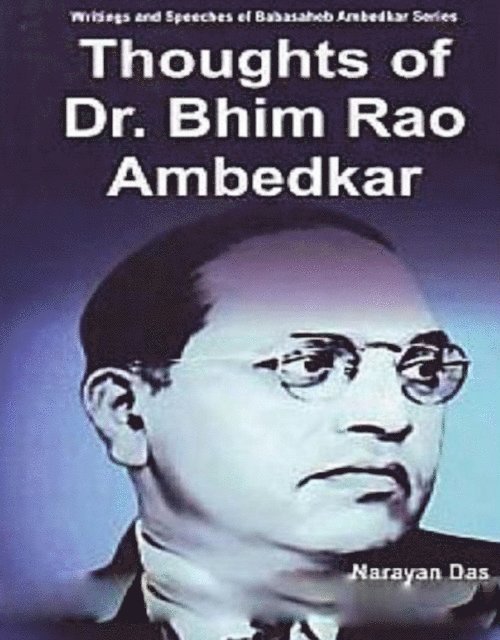
A lawyer and a politician, Bhimrao Ramji Ambedkar left a deep impression on Indian society for at least three main reasons: he had a major influence on drawing up the Constitution of India; he introduced persons regarded as ’’untouchables’’ into the centre of Indian political life; and, finally, he initiated a renewal of Buddhism in India. Father of the Constitution and virulent critic of the caste system, he remains today a key figure for the Dalits, who have a hard time finding their way into the official narratives of the struggle for independence. Dr. Ambedkar said that, "Men do not become society by living in physical proximity any more than a man ceases to be member of his society by living so many miles away from other man. This book tells about great vision of Babasaheb Ambedkar. He had handled the issues like Family Planning, Woman Empowerment, Water Power Plant in a very broad manner. His thoughts are still really very relevant today to save our country from corruption, increasing birth rate etc. Every person interested to learn about Ambedkar and his philosophy must read this book.
E-bok
Engelska, 20173 077 kr
Läs direkt efter köp
E-bok
Engelska, 20173 189 kr
Läs direkt efter köp
An autonomous Dalit leadership in India has always been perceived as synonymous to the leadership of Dr. B.R. Ambedkar. Though, it is a well-known fact that Dr. Ambedkar was the first Dalit leader who had an all India following, the autonomous Dalit Leadership of several varieties existed much before he came on the horizon of the Dalit liberation. Such leadership had existed in different parts of the country. It will be recalled that in the era when they voted overwhelmingly for Congress their political and social power was considerably less than it is today. The common political task of the Dalits is to add to their collective power, but there can be no single strategy that will deliver this objective. Analyses the policies and debates surrounding the lower castes and minorities this book examines the political philosophies of inclusion of subalterns/Dalits in Ambedkar’s political philosophies. This book is a ground-breaking intervention on Dalit politics in India.
E-bok
Engelska, 20173 077 kr
Läs direkt efter köp
Women have very low status in the male dominated Indian society. Dr. BR Ambedkar was true liberator of Indian women who were enslave to traditional and religious superstitions from millennium. The Manusmiriti was burnt in full public view by Dr. Ambedkar on 25th December 1927, thus he blew bugle of fight against discrimination and exploitation on the basis of one’s caste, creed, sex or place of birth. Ambedkar get put his seal of equality for women by getting them right of vote to equalize her position in running the State affairs. Ambedkar raised a new battle cry by finally submitting modified and revised Hindu Code bill to Constituent assembly in October 1948, which was under consideration since 1941. Dr. Ambedkar’s heart can be read for women welfare from his following saying "Unity is meaningless without the accompaniment of women. Education is fruitless without educated women, and agitation is incomplete without the strength of women". This book tells about great vision of Dr. Ambedkar. He had handled the issues like Family Planning, Woman Empowerment in a very broad manner. His thoughts are still really very relevant today to save our country from corruption, increasing birth rate, discrimination etc. Every human being must read this book.
E-bok
Engelska, 20173 077 kr
Läs direkt efter köp
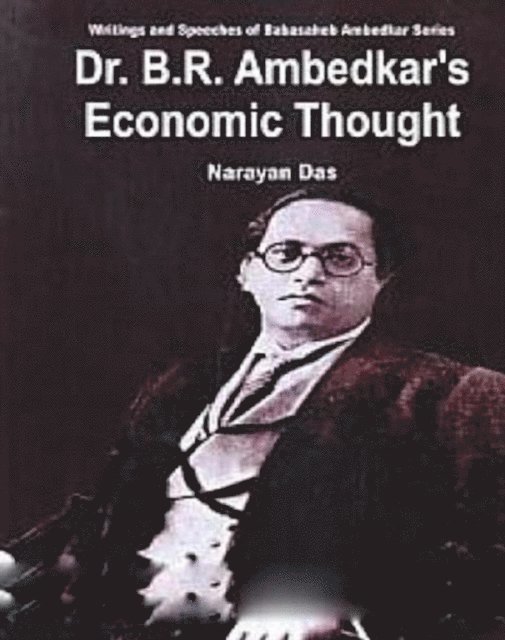
Whenever any country faces difficult situations, challenges, whether it is a political or economical, the intellectuals and politcians at some point or another need to search their own country’s history for the solutions. The historical events, its people and their thoughts, that has shaped the country and its people future, proves to be the vital elements for the solving the current challenges of the country. Dr. Babasaheb Ambedkar is one such great thinker, leader and intellectual of its time in India who has not only changed the life of millions of untouchables but shaped India as a biggest democratic nation by writing its constitution. What is well known about Dr. Ambedkar is his fights against Caste system in India, But what is not known is how Dr. Babasaheb Ambedkar had also impacted the Indian economy. Dr. Ambedkar was for development of agriculture, employment of all idle labour, economic holding, increase of productivity of factors responsible for the development of human and the nation. This book is a systematic compilation of the futuristic perspective of Dr. B.R. Ambedkar and must be read by all who want to study this most learned and an expert voice among economist of India.
E-bok
Engelska, 20173 077 kr
Läs direkt efter köp
Dr. Ambedkar in 1943, argued that, " A democratic form of Government presupposes a democratic form of society. The formal framework of democracy is of no value and would indeed be a misfit if there was no social democracy". He further emphasized, "The politicals never realized that democracy was not a form of Government: it was essentially a form of society". He was extremely apprehensive of the Dalits` fate in the independent India. The political philosophy of Ambedkar may help in renegotiating the crisis of western political theory in particular and leading the struggles of the masses in general. One can see Ambedkar’s association with the grand political streams such as liberal, radical or conservative through his writings. At same time he differentiates himself with these three dominant political traditions. Ambedkar’s philosophy is essentially ethical and religious. For him, social precedes the political. Social morality is the central to his political philosophy. This is a valuable resource book for all those interested in learning and researching about Ambedkar.