Natasa Todorovic – författare
Visar alla böcker från författaren Natasa Todorovic. Handla med fri frakt och snabb leverans.
3 produkter
3 produkter
Inbunden, Engelska, 2028
2 471 kr
Kommande
E-bok
PDF, Engelska, 20203 639 kr
Läs direkt efter köp
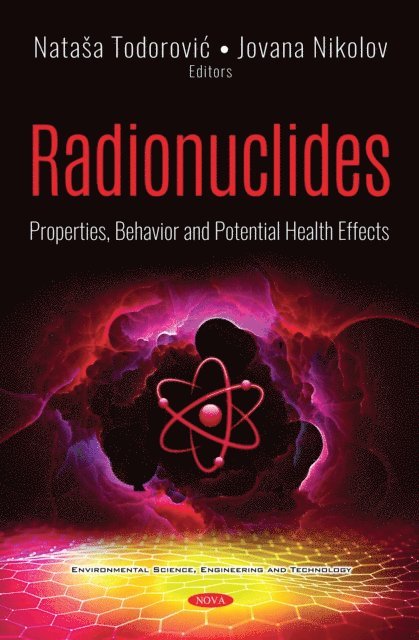
Our world has been radioactive ever since! Humans are primarily exposed to natural radiation from the Sun, cosmic rays, and naturally-occurring radionuclides found in the Earth’s crust. Besides the natural radioactivity, industries, which produce radioactive wastes during their normal operations or during their dismantling and decommissioning processes, do contaminate the environment through the release of radionuclides into the air, soil and water. Among them, nuclear power plants, NORM (Naturally Occurring Radioactive Materials) related industries, hospitals, radionuclide production facilities, uranium mining and other nuclear facilities, along with radioactive/nuclear disposal sites are a potential source of environmental contamination by emission/discharging of natural/artificial radionuclides through water, air and soil to the other environmental compartments like plants, animals and foods. In a word, everything that makes our existence! The book ''''Radionuclides: Properties, Behavior and Potential Health Effects" is a comprehensive overview of some information on radiation in the environment and human exposure to radioactivity. This book highlights the sources, properties, behaviors, and biological and ecological effects of radioactivity from both natural and anthropogenic sources. The emphasis is on the environmental aspects of radionuclides and their eventual effects on biota, particularly humans.
Del 16 - Potsdam Linguistic Investigations / Potsdamer Linguistische Untersuchungen / Recherches Linguistiques à Potsdam
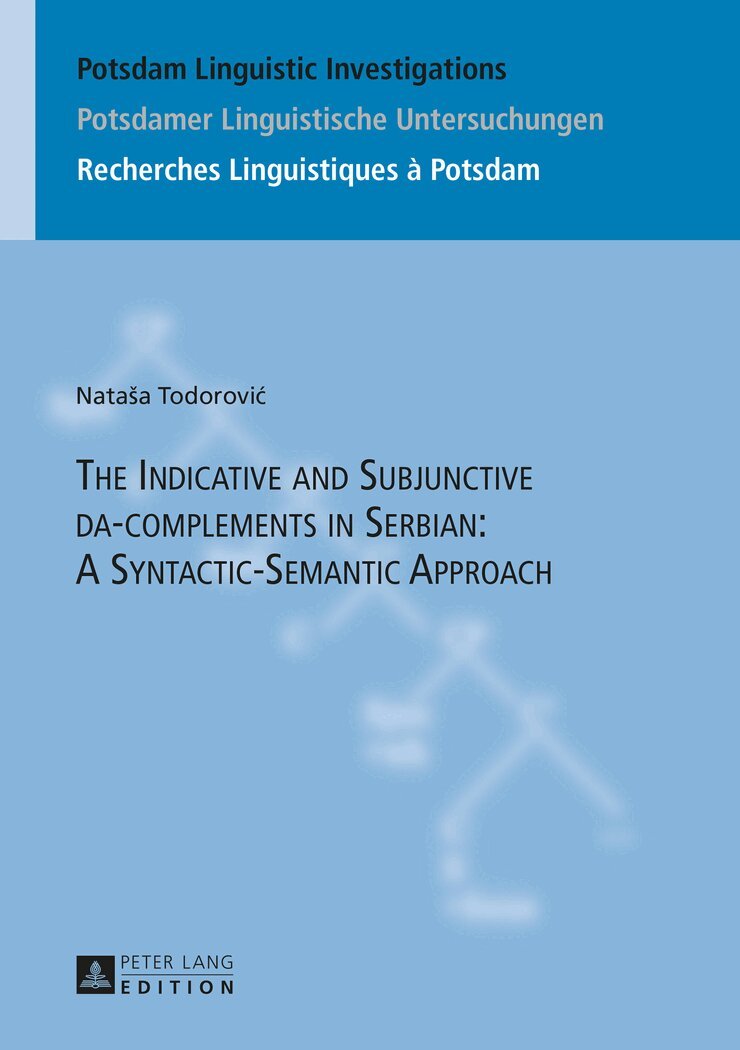
Indicative and Subjunctive da-complements in Serbian: A Syntactic-Semantic Approach
Inbunden, Engelska, 2015
524 kr
Skickas inom 5-8 vardagar
This study analyzes the indicative and subjunctive da-complements in the Serbian language while comparing and contrasting them with similar finite constructions in other Slavic and Balkan languages. In complex structures, semantic properties of the matrix verb, homophonous da, and aspectual and tense properties of the embedded verb all contribute to interpretations of the morphologically unmarked subjunctive and indicative moods in the Serbian language. Merging Giannakidou’s theory of mood and veridicality with Progovac’s clausal structure, the author suggests that the choice of the indicative or subjunctive complement determines negation interpretation and implies that clitics in Serbian are not always restricted to the second position.