Nathaniel Davis – författare
Visar alla böcker från författaren Nathaniel Davis. Handla med fri frakt och snabb leverans.
6 produkter
6 produkter
772 kr
Skickas inom 10-15 vardagar
2 198 kr
Skickas inom 10-15 vardagar
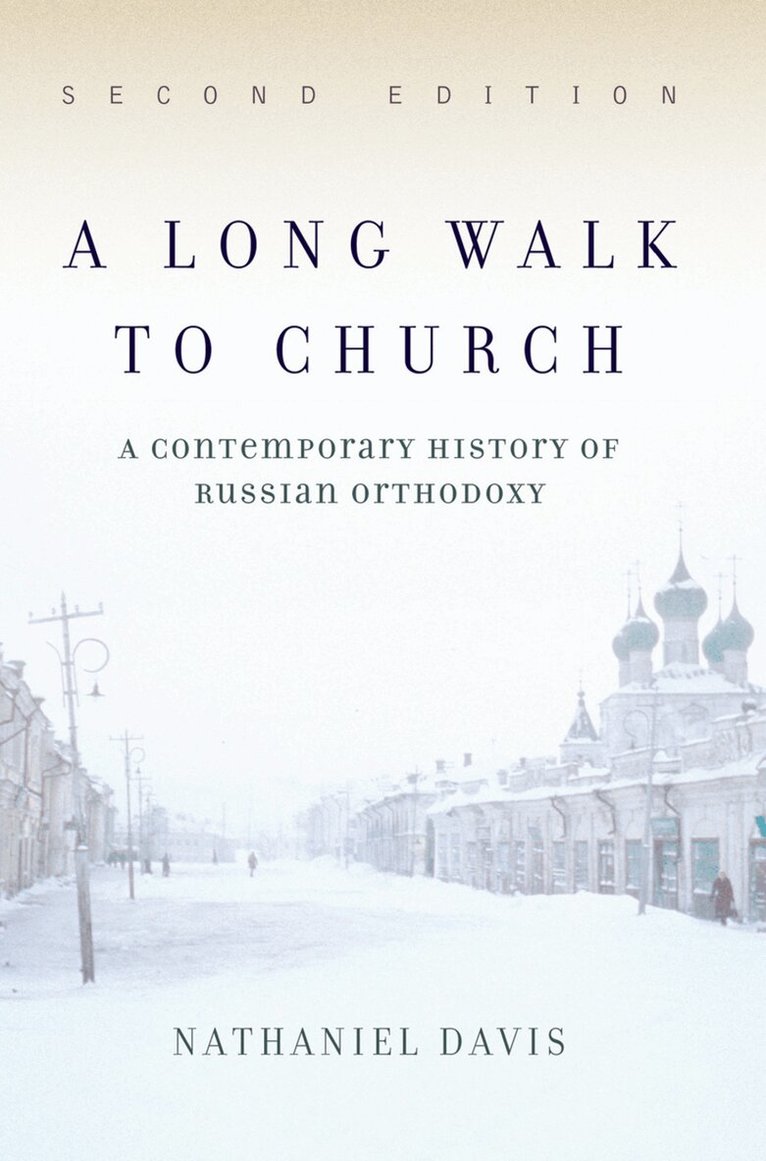
Making use of the formerly secret archives of the Soviet government, interviews, and first-hand personal experiences, Nathaniel Davis describes how the Russian Orthodox Church hung on the brink of institutional extinction twice in the past sixty-five years. In 1939, only a few score widely scattered priests were still functioning openly. Ironically, Hitler's invasion and Stalin's reaction to it rescued the church -- and parishes reopened, new clergy and bishops were consecrated, a patriarch was elected, and seminaries and convents were reinstituted. However, after Stalin's death, Khrushchev resumed the onslaught against religion. Davis reveals that the erosion of church strength between 1948 and 1988 was greater than previously known and it was none too soon when the Soviet government changed policy in anticipation of the millennium of Russia's conversion to Christianity. More recently, the collapse of communism has created a mixture of dizzying opportunity and daunting trouble for Russian Orthodoxy. The newly revised and updated edition addresses the tumultuous events of recent years, including schisms in Ukraine, Estonia, and Moldova, and confrontations between church traditionalists, conservatives and reformers. The author also covers battles against Greek-Catholics, Roman Catholics, Protestant evangelists, and pagans in the south and east, the canonization of the last Czar, the church's financial crisis, and hard data on the slowing Russian orthodox recovery and growth. Institutional rebuilding and moral leadership now beckon between promise and possibility.
844 kr
Skickas inom 10-15 vardagar
Making use of the formerly secret archives of the Soviet government, interviews, and first-hand personal experiences, Nathaniel Davis describes how the Russian Orthodox Church hung on the brink of institutional extinction twice in the past sixty-five years. In 1939, only a few score widely scattered priests were still functioning openly. Ironically, Hitler's invasion and Stalin's reaction to it rescued the church - and parishes reopened, new clergy and bishops were consecrated, a patriarch was elected, and seminaries and convents were reinstituted. However, after Stalin's death, Khrushchev resumed the onslaught against religion. Davis reveals that the erosion of church strength between 1948 and 1988 was greater than previously known and it was none too soon when the Soviet government changed policy in anticipation of the millennium of Russia's conversion to Christianity. More recently, the collapse of communism has created a mixture of dizzying opportunity and daunting trouble for Russian Orthodoxy. The newly revised and updated edition addresses the tumultuous events of recent years, including schisms in Ukraine, Estonia, and mouldova, and confrontations between church traditionalists, conservatives and reformers. The author also covers battles against Greek-Catholics, Roman Catholics, Protestant evangelists, and pagans in the south and east, the canonization of the last Czar, the church's financial crisis, and hard data on the slowing Russian orthodox recovery and growth. Institutional rebuilding and moral leadership now beckon between promise and possibility.
296 kr
Skickas inom 5-8 vardagar
188 kr
Tillfälligt slut
Since 2010, this anthology has been an essential resource for readers, critics, and publishers interested in contemporary European literature. In this, the seventh installment of the series, Best European Fiction 2016 continues its commitment to uncovering the best prose writing happening on the continent-from Azerbaijan to Denmark, from Portugal to the Ukraine-featuring work by established authors such as Josef Winkler, Christian Gailly, and João de Melo, as well as up-and-coming writers like Krisztina Tóth, Justyna Bargielska, Veronika Simoniti, and Bessora.The volume is also a forum for the best translators working today, featuring new translations by Lawrence Venuti, Vera Rich, Amaia Gabantxo, Adrian Nathan West, and many more. Also featuring a provocative prefatory essay written by John Fosse, Best European Fiction 2016 is another essential report on the state of global literature in the twenty-first century.
683 kr
Skickas inom 5-8 vardagar