
Nathaniel Pearce – författare
Visar alla böcker från författaren . Handla med fri frakt och snabb leverans.
12 produkter
12 produkter
Inbunden, Engelska, 2022
414 kr
Skickas inom 5-8 vardagar
Häftad, Engelska, 2022
300 kr
Skickas inom 5-8 vardagar
Inbunden, Engelska, 2022
402 kr
Skickas inom 5-8 vardagar
Häftad, Engelska, 2022
291 kr
Skickas inom 5-8 vardagar

Inbunden, Engelska, 2022
542 kr
Skickas inom 5-8 vardagar
Häftad, Engelska, 2022
400 kr
Skickas inom 5-8 vardagar
Inbunden, Engelska, 2022
401 kr
Skickas inom 5-8 vardagar
Häftad, Engelska, 2022
291 kr
Skickas inom 5-8 vardagar
Inbunden, Engelska, 2022
414 kr
Skickas inom 5-8 vardagar
Häftad, Engelska, 2022
300 kr
Skickas inom 5-8 vardagar
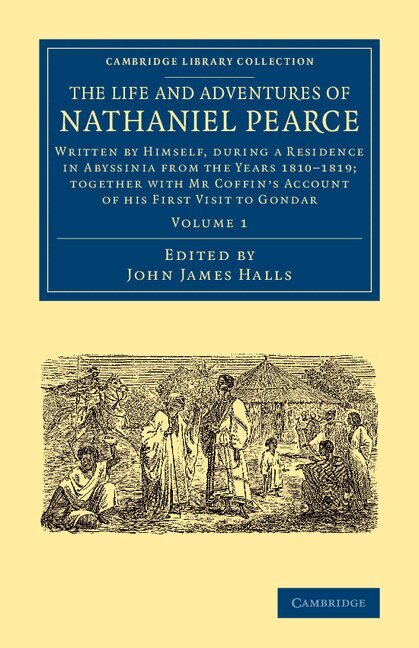
Häftad, Engelska, 2014
506 kr
Skickas inom 7-10 vardagar
Nathaniel Pearce (1779-1820) was, according to J. J. Halls, who edited and published his autobiographical writings in 1831, 'one of those remarkable and adventurous beings, whom Nature ... seems to take delight in creating'. Having run away to sea twice, deserted from the navy, accidentally killed a man, and briefly converted to Islam, he came into his own as a guide and factotum to British travellers in Egypt. He accompanied Henry Salt's 1805 mission to Abyssinia, where he married a local girl and served the ruler of Tigré until the latter's death in 1816. Pearce's humorous account of his life is particularly interesting in the details it gives of the land and people of Ethiopia, then little known by Europeans. Volume 1 begins the narrative of Pearce's life and his African travels and also contains an account of an expedition to the city of Gondar by his friend William Coffin.
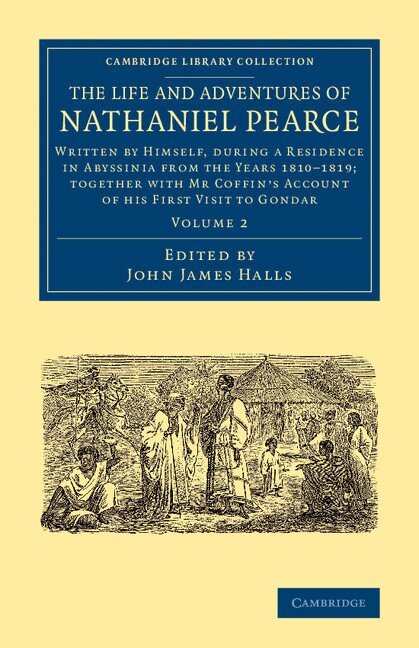
Häftad, Engelska, 2014
521 kr
Skickas inom 7-10 vardagar
Nathaniel Pearce (1779-1820) was, according to J. J. Halls, who edited and published his autobiographical writings in 1831, 'one of those remarkable and adventurous beings, whom Nature ... seems to take delight in creating'. Having run away to sea twice, deserted from the navy, accidentally killed a man, and briefly converted to Islam, he came into his own as a guide and factotum to British travellers in Egypt. He accompanied Henry Salt's 1805 mission to Abyssinia, where he married a local girl and served the ruler of Tigré until the latter's death in 1816. Pearce's humorous account of his life is particularly interesting in the details it gives of the land and people of Ethiopia, then little known by Europeans. In Volume 2, the situation in Abyssinia becomes dangerous and Pearce decides to escape down the Nile. The journal ends abruptly in 1819, a year before his death.