Neal Shasore – författare
Visar alla böcker från författaren Neal Shasore. Handla med fri frakt och snabb leverans.
6 produkter
6 produkter
E-bok
PDF, Engelska, 20221 228 kr
Läs direkt efter köp
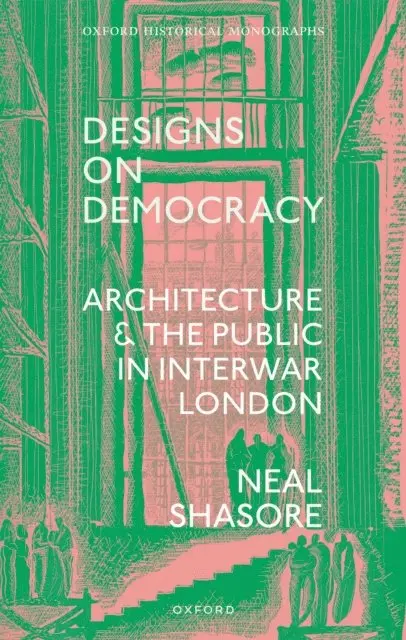
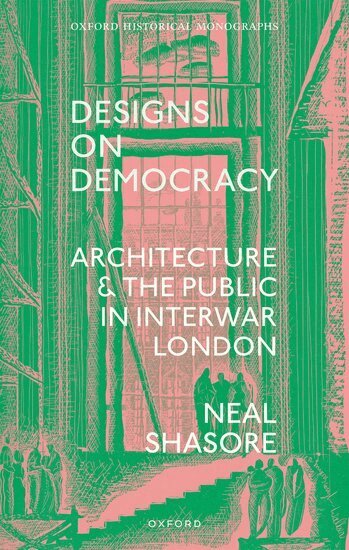
Designs on Democracy examines a pivotal period in the formation of the modern profession of architecture in Britain. It shows how architects sought to meet the newly articulated demands of a mass democracy in the wake of the First World War. It does so by providing a vivid picture of architectural culture in interwar London, the Imperial metropolis, drawing on histories of design, practice, professionalism, and representation. Most accounts of this period tend to deal exclusively with the emergence of Modernism; this study takes a different approach, encompassing a much broader perspective on the liberal professional consensus that held sway, including architecture''s mainstream and its so-called avant-garde. Readers will encounter a number of unexpected narratives, episodes, and projects: from the British Empire Exhibition at Wembley to the rebuilding of Waterloo Bridge; from the impact of the Great Slump to the passing of the first Architects Registration Act (1931); from Trystan Edwards''s radical housing campaigns to the Londoners'' League''s unorthodox preservationism. Pulling in a range of evidence and sources - periodicals, exhibitions, photographs, and films, alongside architecture - it evokes architectural culture by listening carefully to the tenor of its discourse. Architecture''s public realm is thus analysed through sometimes surprising phrases: ''manners'' to understand ideals of public propriety, ''vigilance'' to explore public proprietorship, ''slump'' to contextualise the emergence of public relations, ''machine-craft'' to understand the forging of public institutions. The volume spans the excitable discussions about the reconstruction of the profession for a democratic age after WWI, to reconstruction and planning following WWII, providing an ambitious revision of how we can understand twentieth century architecture in Britain.
E-bok
Engelska, 20221 228 kr
Läs direkt efter köp
Designs on Democracy examines a pivotal period in the formation of the modern profession of architecture in Britain. It shows how architects sought to meet the newly articulated demands of a mass democracy in the wake of the First World War. It does so by providing a vivid picture of architectural culture in interwar London, the Imperial metropolis, drawing on histories of design, practice, professionalism, and representation. Most accounts of this period tend to deal exclusively with the emergence of Modernism; this study takes a different approach, encompassing a much broader perspective on the liberal professional consensus that held sway, including architecture''s mainstream and its so-called avant-garde. Readers will encounter a number of unexpected narratives, episodes, and projects: from the British Empire Exhibition at Wembley to the rebuilding of Waterloo Bridge; from the impact of the Great Slump to the passing of the first Architects Registration Act (1931); from Trystan Edwards''s radical housing campaigns to the Londoners'' League''s unorthodox preservationism. Pulling in a range of evidence and sources - periodicals, exhibitions, photographs, and films, alongside architecture - it evokes architectural culture by listening carefully to the tenor of its discourse. Architecture''s public realm is thus analysed through sometimes surprising phrases: ''manners'' to understand ideals of public propriety, ''vigilance'' to explore public proprietorship, ''slump'' to contextualise the emergence of public relations, ''machine-craft'' to understand the forging of public institutions. The volume spans the excitable discussions about the reconstruction of the profession for a democratic age after WWI, to reconstruction and planning following WWII, providing an ambitious revision of how we can understand twentieth century architecture in Britain.
Inbunden, Engelska, 2022
1 419 kr
Skickas inom 7-10 vardagar
Designs on Democracy examines a pivotal period in the formation of the modern profession of architecture in Britain. It shows how architects sought to meet the newly articulated demands of a mass democracy in the wake of the First World War. It does so by providing a vivid picture of architectural culture in interwar London, the Imperial metropolis, drawing on histories of design, practice, professionalism, and representation. Most accounts of this period tend to deal exclusively with the emergence of Modernism; this study takes a different approach, encompassing a much broader perspective on the liberal professional consensus that held sway, including architecture's mainstream and its so-called avant-garde. Readers will encounter a number of unexpected narratives, episodes, and projects: from the British Empire Exhibition at Wembley to the rebuilding of Waterloo Bridge; from the impact of the Great Slump to the passing of the first Architects Registration Act (1931); from Trystan Edwards's radical housing campaigns to the Londoners' League's unorthodox preservationism. Pulling in a range of evidence and sources - periodicals, exhibitions, photographs, and films, alongside architecture - it evokes architectural culture by listening carefully to the tenor of its discourse. Architecture's public realm is thus analysed through sometimes surprising phrases: 'manners' to understand ideals of public propriety, 'vigilance' to explore public proprietorship, 'slump' to contextualise the emergence of public relations, 'machine-craft' to understand the forging of public institutions. The volume spans the excitable discussions about the reconstruction of the profession for a democratic age after WWI, to reconstruction and planning following WWII, providing an ambitious revision of how we can understand twentieth century architecture in Britain.
E-bok
PDF, Engelska, 2023405 kr
Läs direkt efter köp
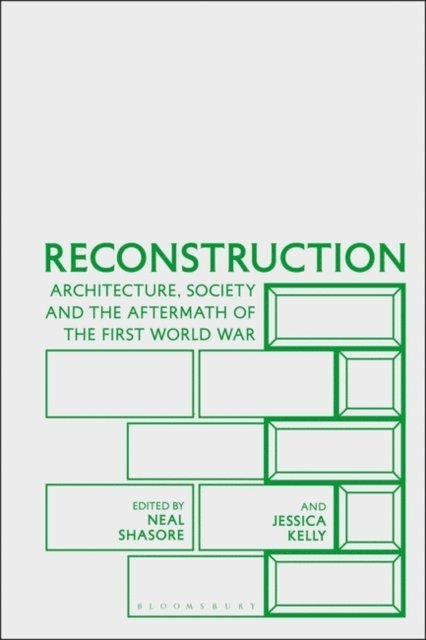
Commendation, the Colvin Prize 2023 (Society of Architectural Historians of Great Britain)Reconstruction explores the impact of the First World War on the built environment – examining the immediate and longer term aftermath of the Great War on the architecture of Britain and the British Empire during the interwar years. While much attention has been paid by historians to post-war architectural reconstruction after 1945, the earlier developments of the interwar period (1919-1939) have been comparatively overlooked. This volume reveals how the architectural developments of this period not only provided important foundations for what happened after 1945 – they are also of real significance in their own right.Sixteen essays written by leading and emerging scholars bring together new and diverse approaches to the period – a period of reconstruction, fraught with the challenges of modernity and democratisation. The collection considers the complex effects of reconstruction on design, discourse, practice, and professionalism, and deals with the full spectrum of architectural styles and approaches, privileging neither Modernism nor traditional styles like the neo-Georgian. It brings to the fore social and political histories of the built environment, and makes important postcolonial interventions into the architectural history of British Imperialism at home and in its far reaches; in Cairo, South Africa, Australia, and India.
E-bok
Engelska, 2023405 kr
Läs direkt efter köp
Commendation, the Colvin Prize 2023 (Society of Architectural Historians of Great Britain)Reconstruction explores the impact of the First World War on the built environment – examining the immediate and longer term aftermath of the Great War on the architecture of Britain and the British Empire during the interwar years. While much attention has been paid by historians to post-war architectural reconstruction after 1945, the earlier developments of the interwar period (1919-1939) have been comparatively overlooked. This volume reveals how the architectural developments of this period not only provided important foundations for what happened after 1945 – they are also of real significance in their own right.Sixteen essays written by leading and emerging scholars bring together new and diverse approaches to the period – a period of reconstruction, fraught with the challenges of modernity and democratisation. The collection considers the complex effects of reconstruction on design, discourse, practice, and professionalism, and deals with the full spectrum of architectural styles and approaches, privileging neither Modernism nor traditional styles like the neo-Georgian. It brings to the fore social and political histories of the built environment, and makes important postcolonial interventions into the architectural history of British Imperialism at home and in its far reaches; in Cairo, South Africa, Australia, and India.
Häftad, Engelska, 2024
374 kr
Skickas inom 5-8 vardagar
Commendation, the Colvin Prize 2023 (Society of Architectural Historians of Great Britain)Reconstruction explores the impact of the First World War on the built environment – examining the immediate and longer term aftermath of the Great War on the architecture of Britain and the British Empire during the interwar years.While much attention has been paid by historians to post-war architectural reconstruction after 1945, the earlier developments of the interwar period (1919-1939) have been comparatively overlooked. Filling an important gap in surveys of 20th-century British architecture, this volume reveals how the architectural developments of this period not only provided important foundations for what happened after 1945 – they are also of real significance in their own right.Sixteen essays bring together new and diverse approaches to the period – a period of reconstruction, fraught with the challenges of modernity and democratisation. The collection considers the complex effects of reconstruction on design, discourse, practice, and professionalism, and makes important postcolonial interventions into the architectural history of British Imperialism at home and in its far reaches; in Cairo, South Africa, Australia, and India.