Nenad Blau – författare
Visar alla böcker från författaren Nenad Blau. Handla med fri frakt och snabb leverans.
12 produkter
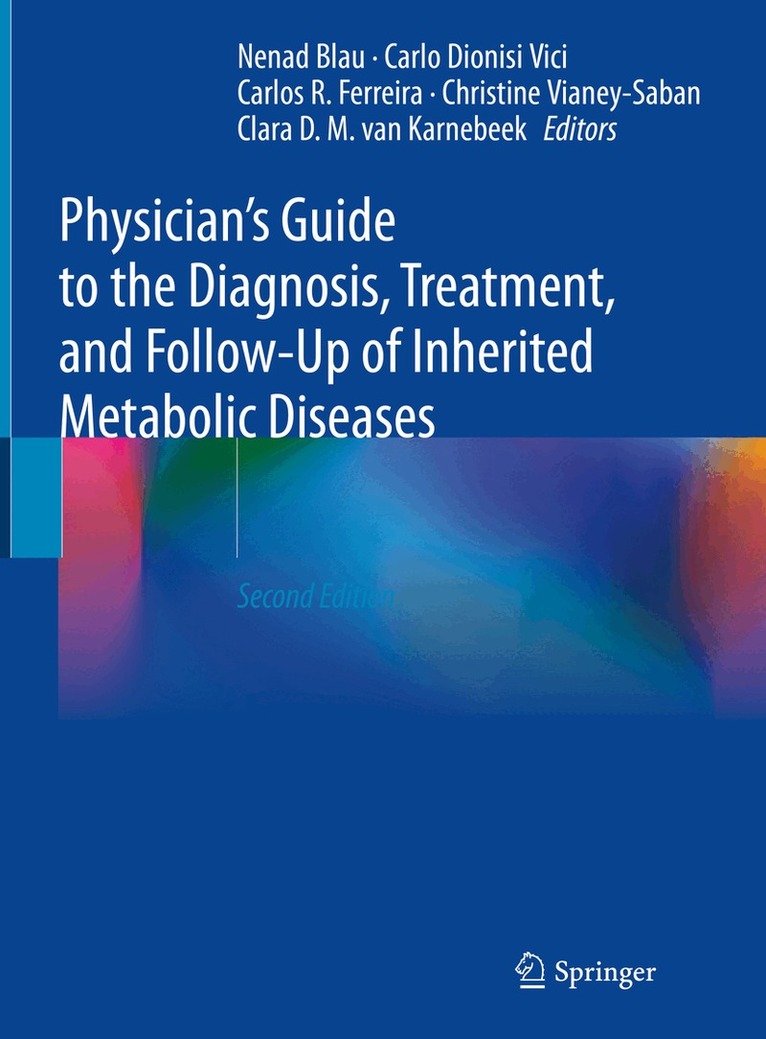
Physician's Guide to the Diagnosis, Treatment, and Follow-Up of Inherited Metabolic Diseases
Av Nenad Blau, Carlo Dionisi Vici m. fl.
2022
3048 kr
Lägg i varukorg
This updated and enlarged second edition is a unique source of information on the diagnosis, treatment, and follow-up of metabolic diseases.The clinical and laboratory data characteristic of rare metabolic conditions can be bewildering for clinicians and laboratory personnel alike – reference …
Physician's Guide to the Diagnosis, Treatment, and Follow-Up of Inherited Metabolic Diseases
Av Clara D. M. van Karnebeek, Christine Vianey-Saban m. fl.
E-bok, 2022
2509 kr
Lägg i varukorg
This updated and enlarged second edition is a unique source of information on the diagnosis, treatment, and follow-up of metabolic diseases. The clinical and laboratory data characteristic of rare metabolic conditions can be bewildering for clinicians and laboratory personnel alike – reference …
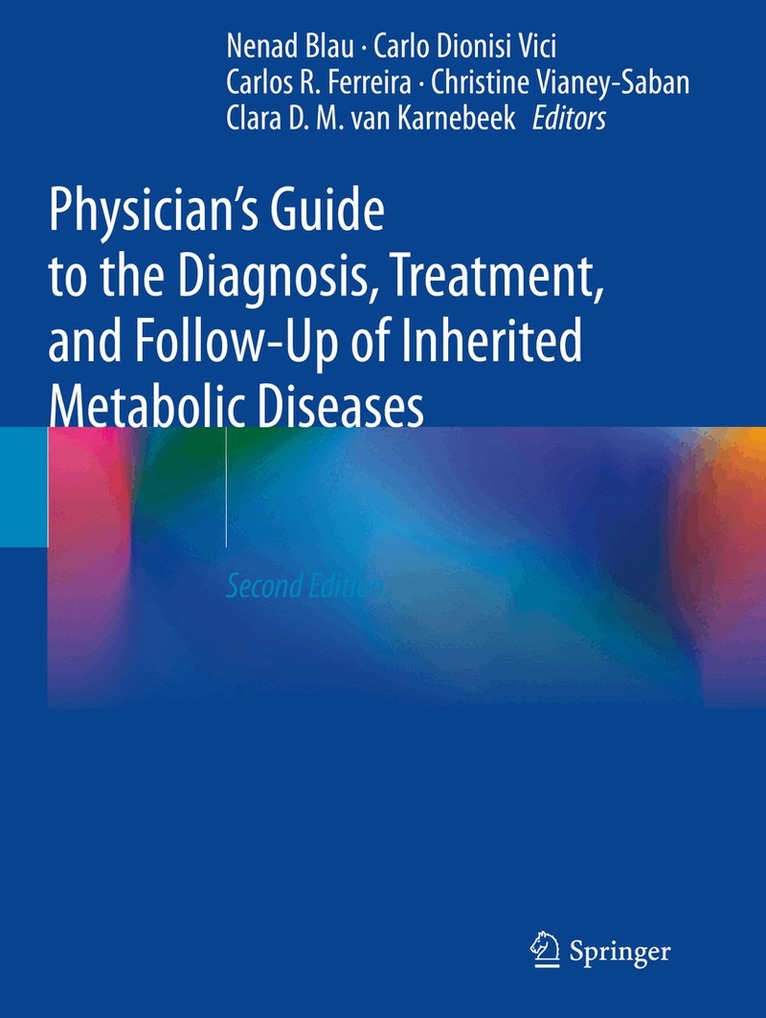
Physician's Guide to the Diagnosis, Treatment, and Follow-Up of Inherited Metabolic Diseases
Av Nenad Blau, Carlo Dionisi Vici m. fl.
2023
2255 kr
Lägg i varukorg
This updated and enlarged second edition is a unique source of information on the diagnosis, treatment, and follow-up of metabolic diseases.The clinical and laboratory data characteristic of rare metabolic conditions can be bewildering for clinicians and laboratory personnel alike – reference …
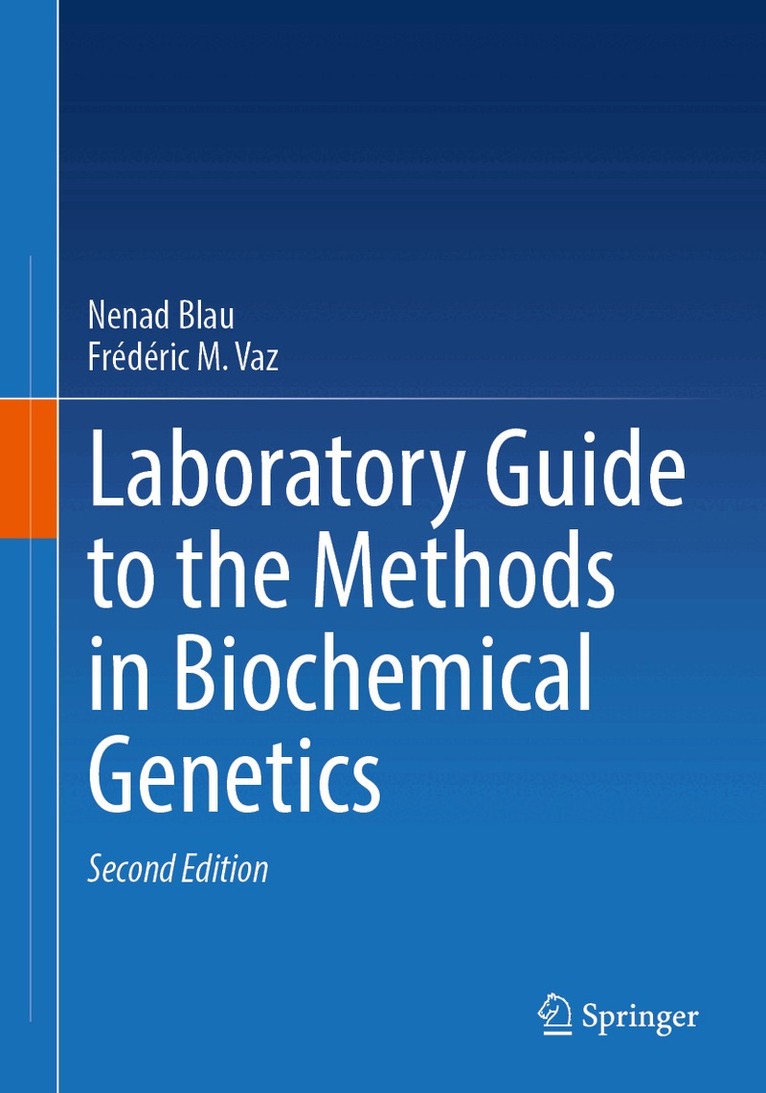
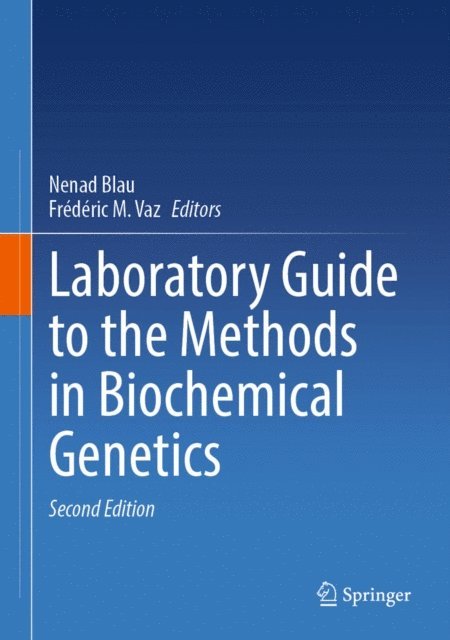
Laboratory Guide to the Methods in Biochemical Genetics
Av Nenad Blau, Frédéric M. Vaz
Inbunden, 2024
1912 kr
Lägg i varukorg
Now in its 2nd edition, this manual describes laboratory methodology for the diagnosis of inherited metabolic diseases.The book describes a spectrum of tests, from simple screening methods via classical methods that are operational in most (if not all) biochemical laboratories, to analytical …
Laboratory Guide to the Methods in Biochemical Genetics
Av Frederic M. Vaz, Nenad Blau
E-bok, 2024
2430 kr
Lägg i varukorg
Now in its 2nd edition, this manual describes laboratory methodology for the diagnosis of inherited metabolic diseases. The book describes a spectrum of tests, from simple screening methods via classical methods that are operational in most (if not all) biochemical laboratories, to analytical …
Laboratory Guide to the Methods in Biochemical Genetics
Av Nenad Blau, Frédéric M. Vaz
Häftad, 2025
1912 kr
Lägg i varukorg
Now in its 2nd edition, this manual describes laboratory methodology for the diagnosis of inherited metabolic diseases.The book describes a spectrum of tests, from simple screening methods via classical methods that are operational in most (if not all) biochemical laboratories, to analytical …
PKU Book
Phenylketonuria and Other Hyperphenylalaninemias
Av Nenad Blau, Jerry Vockley m. fl.
Inbunden, 2026
1800 kr
Lägg i varukorg
Phenylketonuria (PKU) is the most frequent inborn error of the amino acid metabolism (prevalence about 1:10,000 newborns). These autosomal-recessive inherited variants lead to deficiency in the PAH enzyme which hydroxylates phenylalanine to tyrosine, with the help of a cofactor …
Zurich, Switzerland, September 3–8, 1989
Av Hans-Christoph Curtius, Sandro Ghisla m. fl.
Inbunden, 1990
5308 kr
Lägg i varukorg
No detailed description available for "Zurich, Switzerland, September 3–8, 1989".
Physician's Guide to the Treatment and Follow-Up of Metabolic Diseases
Av Joe T. R. Clarke, J.V. Leonard m. fl.
E-bok, 2006
3306 kr
Lägg i varukorg
The greatest dif?culty in life is to make knowledge effective, to convert it into practical wisdom. Sir William Osler. The inborn errors of metabolism, as a group of metabolic diseases, are re- tively rare and are sometimes called “orphan diseases. ” As a group, they account for about 1 in 2,500 …
Laboratory Guide to the Methods in Biochemical Genetics
Av K. Michael Gibson, Marinus Duran m. fl.
E-bok, 2008
1964 kr
Lägg i varukorg
Physician's Guide to the Diagnosis, Treatment, and Follow-Up of Inherited Metabolic Diseases
Av Carlo Dionisi Vici, K Michael Gibson m. fl.
E-bok, 2014
3013 kr
Lägg i varukorg
This book, combining and updating two previous editions, is a unique source of information on the diagnosis, treatment, and follow-up of metabolic diseases. The clinical and laboratory data characteristic of rare metabolic conditions can be bewildering for both clinicians and laboratory personnel. …
Physician's Guide to the Diagnosis, Treatment, and Follow-Up of Inherited Metabolic Diseases
Av Nenad Blau, Marinus Duran m. fl.
Häftad, 2016
2461 kr
Lägg i varukorg
This book, combining and updating two previous editions, is a unique source of information on the diagnosis, treatment, and follow-up of metabolic diseases. The clinical and laboratory data characteristic of rare metabolic conditions can be bewildering for both clinicians and laboratory personnel. …