
Nguyen Thi Kim Oanh – författare
Visar alla böcker från författaren Nguyen Thi Kim Oanh. Handla med fri frakt och snabb leverans.
7 produkter
7 produkter
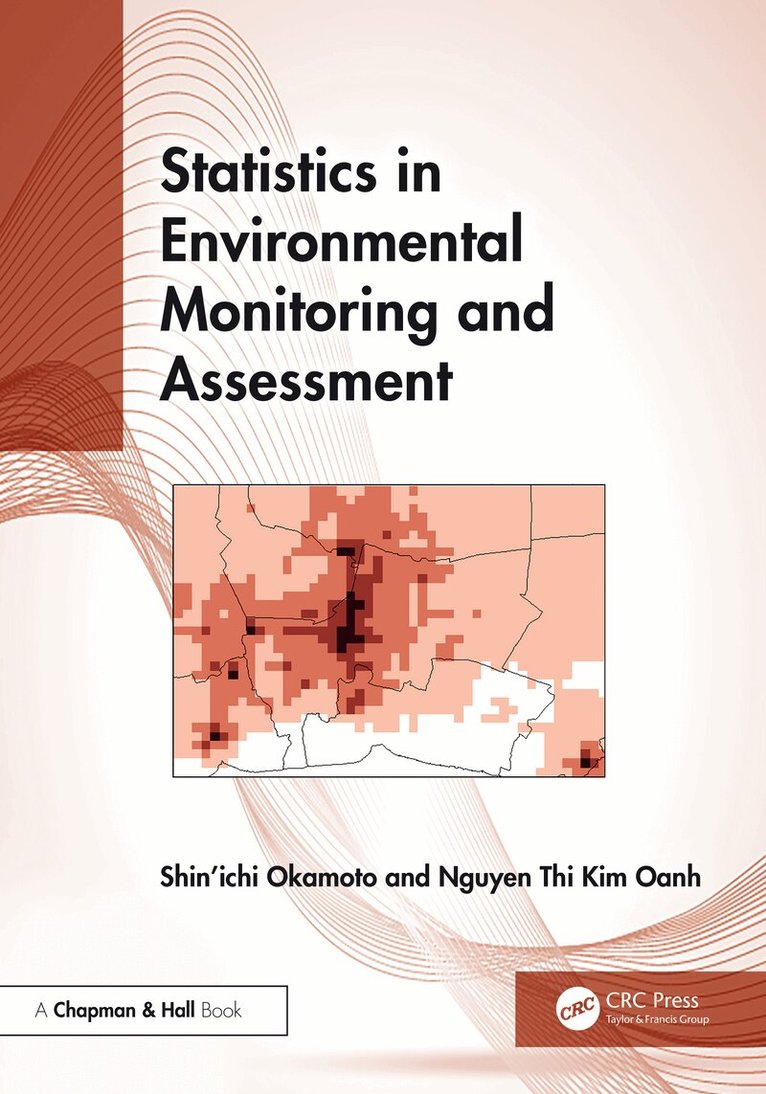
Inbunden, Engelska, 2026
1 898 kr
Skickas inom 10-15 vardagar
Statistics in Environmental Monitoring and Assessment details how statistics plays an essential role in every step of an environmental monitoring and assessment program, from the sampling design to the data management and data analysis methods that are used to extract meaningful information for environmental quality management.Large temporal and spatial variations of the environmental variables present a great challenge for producing a representative characterisation of the status of any given environmental media, water, air, biota, or solid. This book explains these issues in an easy-to-understand manner and illustrates using actual applications in real-life case studies. Each case study comes with a clear explanation for every related fundamental concept and methodology that details the statistical methods used in the analysis and considerations taken when using a particular method.Primarily intended for graduate students in environmental sciences who wish to use statistics as a research tool, it will also benefit researchers who are interested in applications of statistical methods for designing environmental monitoring programs and analysis of environmental data to assess the status of various environmental matrices. This book is organised in three parts with Part I providing a review of the basics of statistics, Part II focusing on sampling designs, and Part III focusing on applications of statistical methods for data analysis.Key Features:Contains real-life case studiesIncludes practical statistical designs for environmental samplingAnalyses monitoring data for environmental assessmentComprehensively explains theoretical parts related to the statistical analysis methods
E-bok
Engelska, 20121 299 kr
Läs direkt efter köp
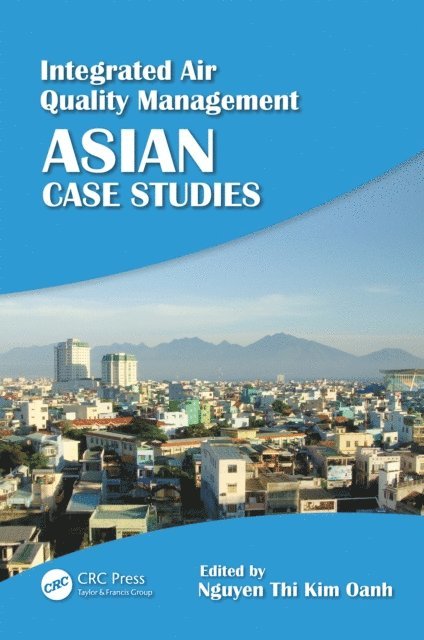
The steady growth in the number of vehicles on the road, heavy reliance on coal, use of dirty fuels for residential combustion, and extensive open burning are some of the major factors leading to the progressive deterioration of air quality in developing countries in Asia. And despite efforts to establish and implement air quality measurement syste
E-bok
PDF, Engelska, 20262 190 kr
Läs direkt efter köp
Statistics in Environmental Monitoring and Assessment details how statistics plays an essential role in every step of an environmental monitoring and assessment program, from the sampling design to the data management and data analysis methods that are used to extract meaningful information for environmental quality management.Large temporal and spatial variations of the environmental variables present a great challenge for producing a representative characterisation of the status of any given environmental media, water, air, biota, or solid. This book explains these issues in an easy-to-understand manner and illustrates using actual applications in real-life case studies. Each case study comes with a clear explanation for every related fundamental concept and methodology that details the statistical methods used in the analysis and considerations taken when using a particular method.Primarily intended for graduate students in environmental sciences who wish to use statistics as a research tool, it will also benefit researchers who are interested in applications of statistical methods for designing environmental monitoring programs and analysis of environmental data to assess the status of various environmental matrices. This book is organised in three parts with Part I providing a review of the basics of statistics, Part II focusing on sampling designs, and Part III focusing on applications of statistical methods for data analysis.Key Features: Contains real-life case studies Includes practical statistical designs for environmental sampling Analyses monitoring data for environmental assessment Comprehensively explains theoretical parts related to the statistical analysis methods
E-bok
Engelska, 20262 190 kr
Läs direkt efter köp
Statistics in Environmental Monitoring and Assessment details how statistics plays an essential role in every step of an environmental monitoring and assessment program, from the sampling design to the data management and data analysis methods that are used to extract meaningful information for environmental quality management.Large temporal and spatial variations of the environmental variables present a great challenge for producing a representative characterisation of the status of any given environmental media, water, air, biota, or solid. This book explains these issues in an easy-to-understand manner and illustrates using actual applications in real-life case studies. Each case study comes with a clear explanation for every related fundamental concept and methodology that details the statistical methods used in the analysis and considerations taken when using a particular method.Primarily intended for graduate students in environmental sciences who wish to use statistics as a research tool, it will also benefit researchers who are interested in applications of statistical methods for designing environmental monitoring programs and analysis of environmental data to assess the status of various environmental matrices. This book is organised in three parts with Part I providing a review of the basics of statistics, Part II focusing on sampling designs, and Part III focusing on applications of statistical methods for data analysis.Key Features: Contains real-life case studies Includes practical statistical designs for environmental sampling Analyses monitoring data for environmental assessment Comprehensively explains theoretical parts related to the statistical analysis methods
Häftad, Engelska, 2017
1 128 kr
Skickas inom 10-15 vardagar
The steady growth in the number of vehicles on the road, heavy reliance on coal, use of dirty fuels for residential combustion, and extensive open burning are some of the major factors leading to the progressive deterioration of air quality in developing countries in Asia. And despite efforts to establish and implement air quality measurement systems, the development of infrastructure, environmental technology, and management practices continues to lag behind the rate of emission increase. Based on ten years of coordinated research, Integrated Air Quality Management: Asian Case Studies discusses technical and policy tools for the integrated air quality management of developing countries in Asia.The book begins with an overview of major issues of air quality management practices in developing Asia and potential approaches to reduce pollution, including opportunities for integration of air quality improvement and climate migration strategies. It covers the methodology and results of fine particulate matter monitoring using traditional filter-based and satellite monitoring techniques. It examines the applications of a 3D dispersion modeling tool for urban and regional air quality management focusing on surface ozone, fine particulate matter, and acid deposition. The final chapters discuss innovative control technologies for gaseous air pollutants and illustrate the integrated air quality management in developing Asia through case studies for target source categories including agricultural residue field burning, vehicle emissions, brick kilns, and industrial VOC emission.Illustrated with case studies, this book presents an integrated air quality management methodology that employs technical and policy tools to achieve air quality goals. It includes technical information and policy recommendations based on the outcomes of several multi-year air quality research programs coordinated by the Asian Institute of Technology. The text combines fundamental information and advanced knowledge useful to large audiences dealing with subjects of integrated air quality management.
Inbunden, Engelska, 2012
2 829 kr
Skickas inom 5-8 vardagar
The steady growth in the number of vehicles on the road, heavy reliance on coal, use of dirty fuels for residential combustion, and extensive open burning are some of the major factors leading to the progressive deterioration of air quality in developing countries in Asia. And despite efforts to establish and implement air quality measurement systems, the development of infrastructure, environmental technology, and management practices continues to lag behind the rate of emission increase. Based on ten years of coordinated research, Integrated Air Quality Management: Asian Case Studies discusses technical and policy tools for the integrated air quality management of developing countries in Asia.The book begins with an overview of major issues of air quality management practices in developing Asia and potential approaches to reduce pollution, including opportunities for integration of air quality improvement and climate migration strategies. It covers the methodology and results of fine particulate matter monitoring using traditional filter-based and satellite monitoring techniques. It examines the applications of a 3D dispersion modeling tool for urban and regional air quality management focusing on surface ozone, fine particulate matter, and acid deposition. The final chapters discuss innovative control technologies for gaseous air pollutants and illustrate the integrated air quality management in developing Asia through case studies for target source categories including agricultural residue field burning, vehicle emissions, brick kilns, and industrial VOC emission.Illustrated with case studies, this book presents an integrated air quality management methodology that employs technical and policy tools to achieve air quality goals. It includes technical information and policy recommendations based on the outcomes of several multi-year air quality research programs coordinated by the Asian Institute of Technology. The text combines fundamental information and advanced knowledge useful to large audiences dealing with subjects of integrated air quality management.
E-bok
PDF, Engelska, 20121 299 kr
Läs direkt efter köp
The steady growth in the number of vehicles on the road, heavy reliance on coal, use of dirty fuels for residential combustion, and extensive open burning are some of the major factors leading to the progressive deterioration of air quality in developing countries in Asia. And despite efforts to establish and implement air quality measurement syste