N.H. Pijls - Böcker
Visar alla böcker från författaren N.H. Pijls. Handla med fri frakt och snabb leverans.
3 produkter
3 produkter
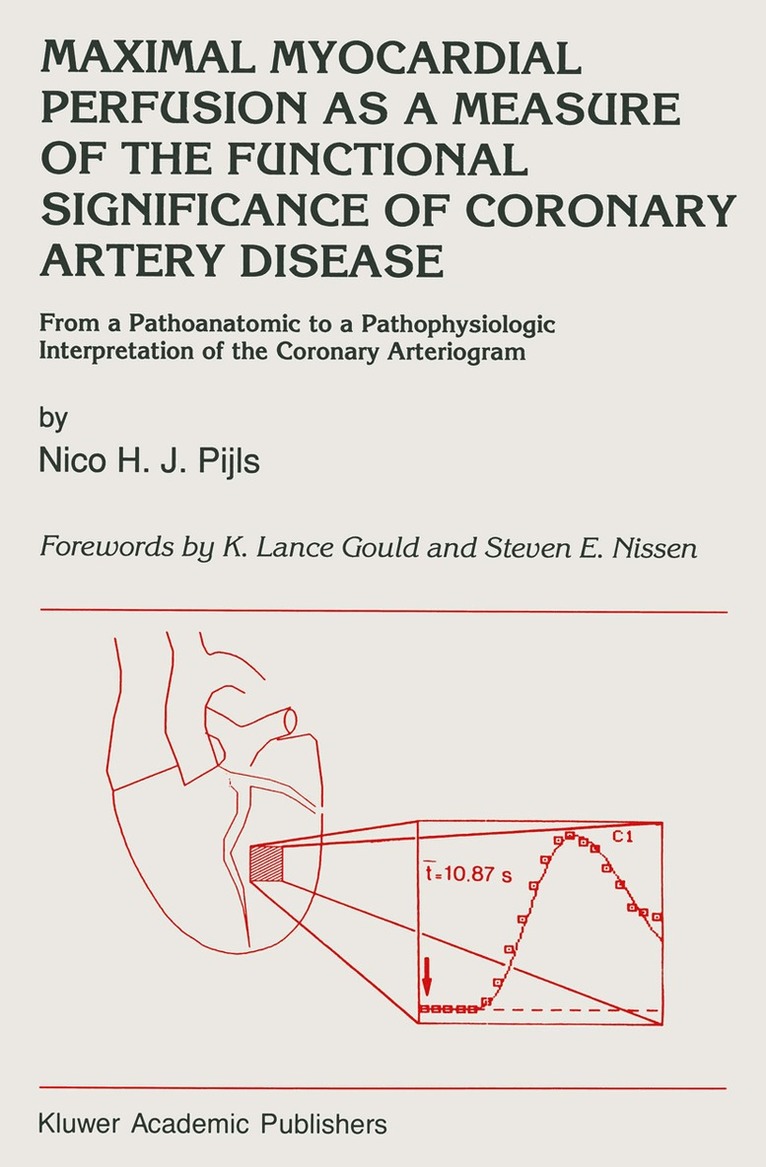
Maximal Myocardial Perfusion as a Measure of the Functional Significance of Coronary Artery Disease
From a Pathoanatomic to a Pathophysiologic Interpretation of the Coronary Arteriogram
Inbunden, Engelska, 1991
552 kr
Skickas inom 10-15 vardagar
Coronary flow reserve is a functional measure of stenosis severity re flecting the integrated effects of its geometry including percent stenosis, absolute lumen area, length and shape. Its clinical application has been primarily qualitative in non-invasive, perfusion imaging. Measurement of coronary flow reserve during routine coronary arte riography has been an elusive goal. Transit time and indicator dilution techniques for assessing coronary flow reserve at cardiac catheteriza tion are associated with marked variability compared to microspheres or flow meters, thereby making their use questionable in comparison to the precision of good quantitative arteriography. Coronary flow reserve measured by special Doppler catheters as an adjunct to coronary arte riography shows in man the value of this integrated functional measure of stenosis severity and the limitations of percent diameter narrowing as a measure of its physiologic significance. However, Doppler catheters require additional instrumentation that is not yet an integral part of coronary arteriography and provide measures of absolute coronary flow reserve only. Relative maximum flow or relative flow reserve has been demon strated to be an important independent, complimentary descriptor of stenosis severity independent of fluctuating hemodynamic conditions. The method developed for DSA by Nico Pijls, described in this book is the first approach for assessing relative coronary flow reserve as a part of routine coronary arteriography by DSA. The theory and basic con cepts are well developed, experimental validation thorough and clinical applications timely.
2 380 kr
Skickas inom 10-15 vardagar
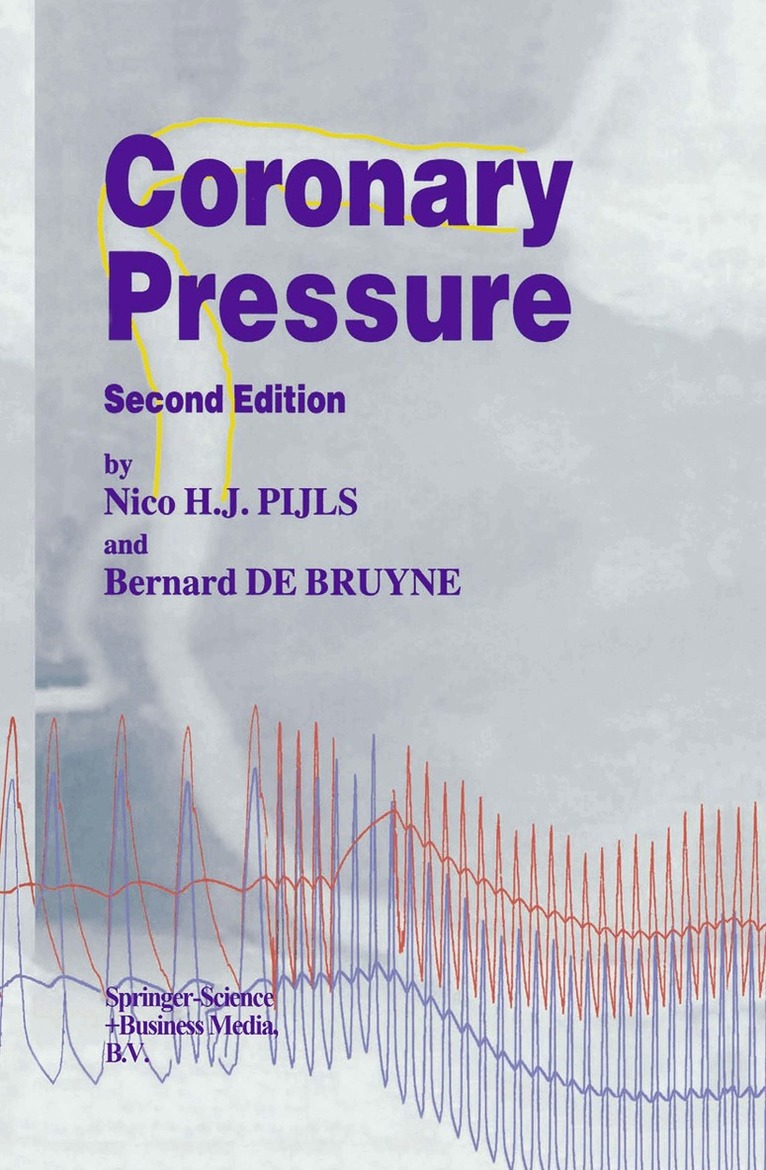
Coronary pressure measurement has emerged as a major step forward in the invasive assessment of coronary artery disease. This was made possible on one hand by technical progress in developing pressure-monitoring guide wires, and on the other hand to a theoretical innovation, the concept of coronary pressure-derived fractional flow reserve which closely relates distal coronary pressure to myocardial flow. In the catheterization laboratory, fractional flow reserve enables an "on-the-spot" quantification of the extent to which a given epicardial stenosis contributes to reversible myocardial ischemia and the decision whether revascularization of the stenosis is warranted or not. Moreover, this new approach has proven to be valuable in many complex diagnostic situations encountered in the catheterization laboratory. In addition, pressure-derived fractional flow reserve appears to be a useful index in monitoring and guiding coronary intervention, including stent deployment.In this text, the theoretical and physiological background of this approach is systematically reviewed and the most advanced clinical applications are illustrated, both at diagnostic and interventional catheterization. Practical set-up of coronary pressure measurement, including tips, tricks, and potential pitfalls are particularly emphasized in this new edition.
2 380 kr
Skickas inom 10-15 vardagar
A little bit more than two years after the first edition, we are pleased to publish the second edition of this book. More than half of the chapters have been remodeled and completed as the result of technical improvements and recently acquired clinical data. During these two years, the number of coronary pressure measurements performed worldwide both during diagnostic and interventional procedures has increased almost exponentially. Most of the initial problems associated with this new approach have been overcome. Many colleagues have explored new research avenues and in many catheterization laboratories the method has matured from a research toy to a clinical tool. Classical indications such as the intermediate stenosis and guidance of PTCA or stent implantation, have been largely extended and coronary pressure measurement has proven to be useful in multi vessel disease, diffuse disease, long and serial stenosis, after myocardial infarction, and in many other diagnostic and interventional situations encountered in the catheterization laboratory. Quite unexpectedly, this approach has also enforced the ties with our surgical colleagues in the selection of patients suitable for minimal invasive surgery or hybride revascularization. Also in mild and intermediate left main disease, there is a role for coronary pressure measurement in the process of decision making. We would like to express our gratitude to all those many colleagues who trusted and applied this new approach for the benefit of their patients. Aalst, Eindhoven, Bernard De Bruyne. Nico H. J. Pijls. March, 2000. Table of Contents (overview) 1 1.