Nicholas C. Carpita – författare
Visar alla böcker från författaren Nicholas C. Carpita. Handla med fri frakt och snabb leverans.
5 produkter
5 produkter
Inbunden, Engelska, 2001
873 kr
Skickas inom 10-15 vardagar
This work is a comprehensive collection of articles that cover aspects of cell wall research in the genomic era. Some 2500 genes are involved in some way in wall biogenesis and turnover, from generation of substrates, to polysaccharide and lignin synthesis, assembly, and rearrangement in the wall. Although a great numberof genes and gene families remain to be characterized, this issue provides a census of the genes that have been discovered so far. The articles comprising this issue not only illustrate the enormous progress made in identifying the wealth of wall-related genes but they also show the future directions and how far we have to go. As cell walls are an enormously important source of raw material, we anticipate that cell-wall-related genes are of significant economic importance. Examples include the modification of pectin-cross-linking or cell-cell adhesion to increase shelf life of fruits and vegetables, the enhancement of dietary fiber contents of cereals, the improvement of yield and quality of fibers, and the relative allocation of carbon to wall biomass for use as biofuels.The book is intended for academic and professional scientists working in the area of plant biology as well as material chemists and engineers, and food scientists who define new ways to use cell walls.
Inbunden, Engelska, 2013
1 631 kr
Skickas inom 10-15 vardagar
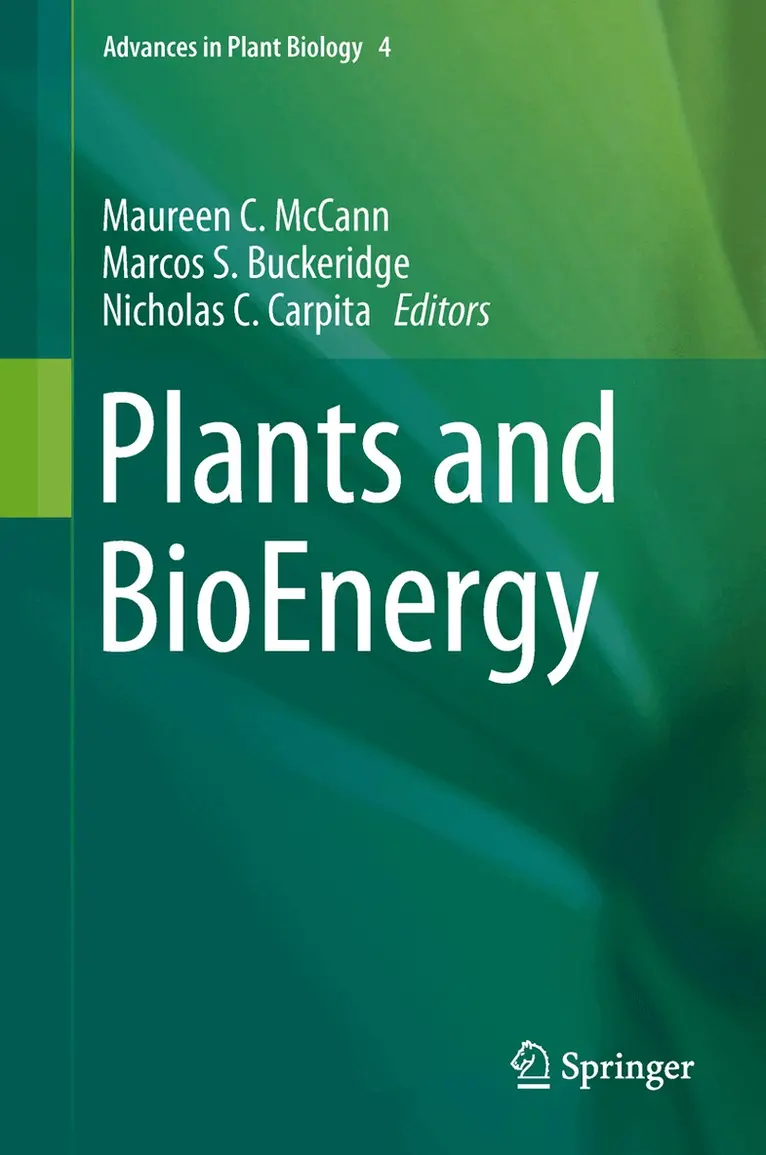
A country's vision for developing renewable and sustainable energy resources is typically propelled by three important drivers – security, cost, and environmental impact. The U.S. currently accounts for a quarter of the world’s total oil consumption, with domestic demands necessitating – at an ever growing cost – a net import of more than 50% of the oil used in this country. At the same time, Brazil, because of its forward thinking on energy strategy, is today energy independent. As emerging economies around the world increase their petroleum use by large margins and as large fractions of that new consumption are necessarily supplied from unstable parts of the world, the inevitable repercussions on petroleum-driven economies will continue to escalate. In addition, there is an unequivocal imperative to take immediate and aggressive measures to reduce net greenhouse gas emissions by decreasing fossil fuel consumption and increasing our use of carbon-neutral or carbon-negative fuels as well as improving efficiency of fuel use. Economic growth and development worldwide depend increasingly on secure supplies of reliable, affordable, clean energy. Together with its counterpart societies, was convened the First Pan-American Congress on Plants and BioEnergy, which was held in June, 2008, in Mérida, Mexico. Sponsored by the American Society of Plant Biologists, this congress was designed to initiate Pan-American research collaborations in energy biosciences. At that congress, the organizational committee committed themselves to continue the meeting biennially, resulting in the 2nd Pan-American Congress on Plants and BioEnergy to be held with the endorsement of ASPB, July 6-10, 2010, in São Paulo, Brazil. Whereas the 1st congress covered a broad range of topics that bioenergy impacted, the second congress will focus more on the advances in plant biology: the genetic improvement of energy crop plants, their fit into regional environments, and the development ofa sustainable energy agriculture.
E-bok
PDF, Engelska, 20131 977 kr
Läs direkt efter köp
A country''s vision for developing renewable and sustainable energy resources is typically propelled by three important drivers – security, cost, and environmental impact. The U.S. currently accounts for a quarter of the world’s total oil consumption, with domestic demands necessitating – at an ever growing cost – a net import of more than 50% of the oil used in this country. At the same time, Brazil, because of its forward thinking on energy strategy, is today energy independent. As emerging economies around the world increase their petroleum use by large margins and as large fractions of that new consumption are necessarily supplied from unstable parts of the world, the inevitable repercussions on petroleum-driven economies will continue to escalate. In addition, there is an unequivocal imperative to take immediate and aggressive measures to reduce net greenhouse gas emissions by decreasing fossil fuel consumption and increasing our use of carbon-neutral or carbon-negative fuels as well as improving efficiency of fuel use. Economic growth and development worldwide depend increasingly on secure supplies of reliable, affordable, clean energy. Together with its counterpart societies, was convened the First Pan-American Congress on Plants and BioEnergy, which was held in June, 2008, in Mérida, Mexico. Sponsored by the American Society of Plant Biologists, this congress was designed to initiate Pan-American research collaborations in energy biosciences. At that congress, the organizational committee committed themselves to continue the meeting biennially, resulting in the 2nd Pan-American Congress on Plants and BioEnergy to be held with the endorsement of ASPB, July 6-10, 2010, in São Paulo, Brazil. Whereas the 1st congress covered a broad range of topics that bioenergy impacted, the second congress will focus more on the advances in plant biology: the genetic improvement of energy crop plants, their fit into regional environments, and the development ofa sustainable energy agriculture.
Häftad, Engelska, 2016
1 631 kr
Skickas inom 10-15 vardagar
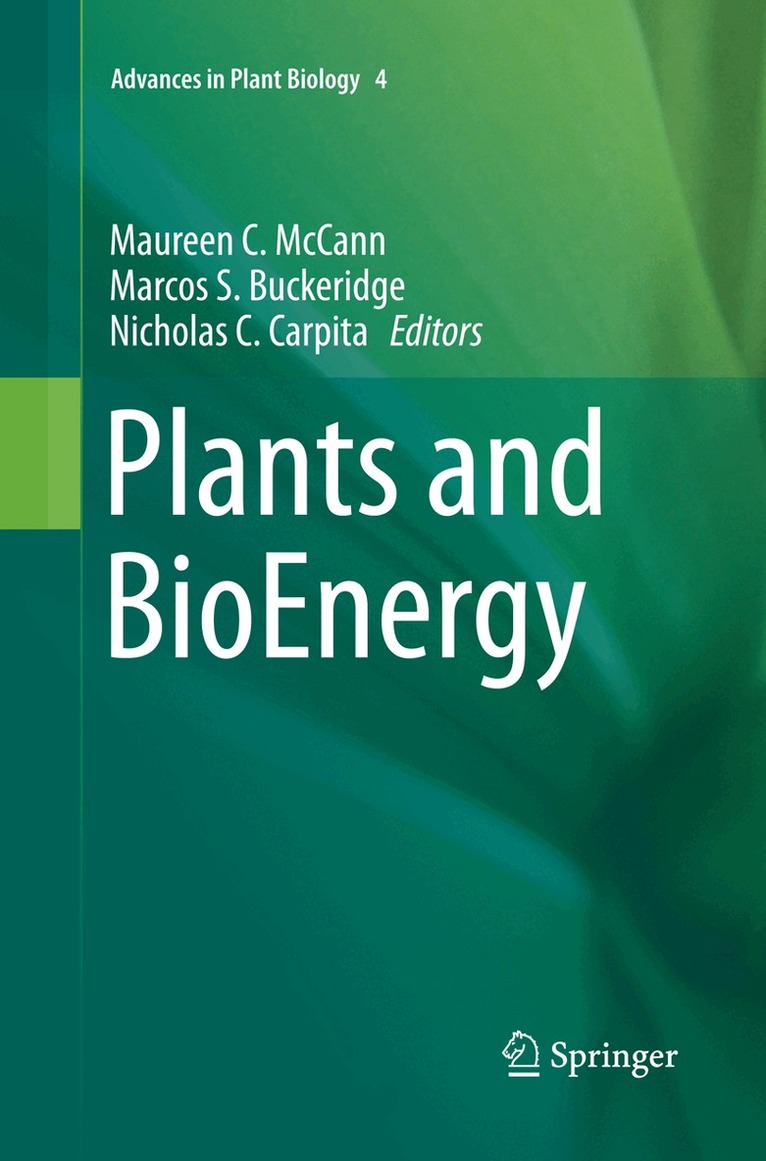
A country's vision for developing renewable and sustainable energy resources is typically propelled by three important drivers – security, cost, and environmental impact. The U.S. currently accounts for a quarter of the world’s total oil consumption, with domestic demands necessitating – at an ever growing cost – a net import of more than 50% of the oil used in this country. At the same time, Brazil, because of its forward thinking on energy strategy, is today energy independent. As emerging economies around the world increase their petroleum use by large margins and as large fractions of that new consumption are necessarily supplied from unstable parts of the world, the inevitable repercussions on petroleum-driven economies will continue to escalate. In addition, there is an unequivocal imperative to take immediate and aggressive measures to reduce net greenhouse gas emissions by decreasing fossil fuel consumption and increasing our use of carbon-neutral or carbon-negative fuels as well as improving efficiency of fuel use. Economic growth and development worldwide depend increasingly on secure supplies of reliable, affordable, clean energy. Together with its counterpart societies, was convened the First Pan-American Congress on Plants and BioEnergy, which was held in June, 2008, in Mérida, Mexico. Sponsored by the American Society of Plant Biologists, this congress was designed to initiate Pan-American research collaborations in energy biosciences. At that congress, the organizational committee committed themselves to continue the meeting biennially, resulting in the 2nd Pan-American Congress on Plants and BioEnergy to be held with the endorsement of ASPB, July 6-10, 2010, in São Paulo, Brazil. Whereas the 1st congress covered a broad range of topics that bioenergy impacted, the second congress will focus more on the advances in plant biology: the genetic improvement of energy crop plants, their fit into regional environments, and the development ofa sustainable energy agriculture.
E-bok
PDF, Engelska, 20121 100 kr
Läs direkt efter köp
This work is a comprehensive collection of articles that cover aspects of cell wall research in the genomic era. Some 2500 genes are involved in some way in wall biogenesis and turnover, from generation of substrates, to polysaccharide and lignin synthesis, assembly, and rearrangement in the wall. Although a great number of genes and gene families remain to be characterized, this issue provides a census of the genes that have been discovered so far. The articles comprising this issue not only illustrate the enormous progress made in identifying the wealth of wall-related genes but they also show the future directions and how far we have to go. As cell walls are an enormously important source of raw material, we anticipate that cell-wall-related genes are of significant economic importance. Examples include the modification of pectin-cross-linking or cell-cell adhesion to increase shelf life of fruits and vegetables, the enhancement of dietary fiber contents of cereals, the improvement of yield and quality of fibers, and the relative allocation of carbon to wall biomass for use as biofuels. The book is intended for academic and professional scientists working in the area of plant biology as well as material chemists and engineers, and food scientists who define new ways to use cell walls.