Nicholas Fox Weber – författare
Visar alla böcker från författaren Nicholas Fox Weber. Handla med fri frakt och snabb leverans.
18 produkter
18 produkter
Inbunden, Engelska, 2026
418 kr
Skickas inom 3-6 vardagar
The first major biography on Anni Albers traces the complex personality and influential artistic career of the groundbreaking modern artist “Brilliant anecdotes. . . . The first comprehensive biography of this fascinating artist, an indelible figure of not just textile art but modernism itself.”—Grace Edquist, VogueAnni Albers (1899–1994) was a pioneer of twentieth-century modernism. As a textile designer, weaver, writer, and graphic artist, she inspired a reconsideration of fabrics as an art form, both in their functional roles and as wall hangings, and took the processes of printmaking into uncharted territory. This intimate biography draws on personal conversations with Albers from the 1970s up until Albers’s death and on unprecedented archival research to tell a fresh and full story of Albers’s life and the development of her unique and influential artistic vision.Capturing Albers’s extraordinary perspective about the world around her, whether the milieu she was observing was the wealthy bourgeois Berlin of her childhood or the Mexican villages where she came to feel remarkably at home, Nicholas Fox Weber brings the artist’s pithy wit and imaginative mind to life. Weber presents a riveting narrative that follows Albers’s trajectory from her time at the Bauhaus and at Black Mountain College to her later years in Connecticut. He considers her complex relationship with her world-renowned husband, Josef Albers, as well as her encounters with luminaries such as John Cage, Buckminster Fuller, Walter Gropius, Wassily Kandinsky, Paul Klee, and Louise Nevelson. He also describes her torturous, late-life obsession with film star Maximilian Schell, thirty-one years her junior. Weber foregrounds Albers’s perpetual curiosity, originality, and humor, as well as her novelistic sense of the world around her.
E-bok
Engelska, 2008261 kr
Läs direkt efter köp
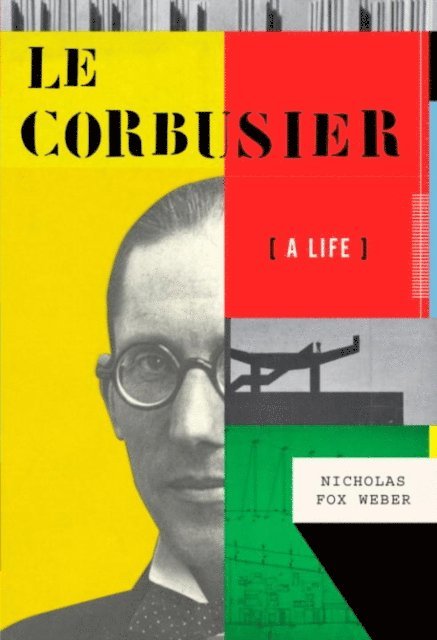
From acclaimed biographer and cultural historian, author of Balthus and Patron Saints—the first full-scale life of le Corbusier, one of the most influential, admired, and maligned architects of the twentieth century, heralded is a prophet in his lifetime, revered as a god after his death.He was a leader of the modernist movement that sought to create better living conditions and a better society through housing concepts. He predicted the city of the future with its large, white apartment buildings in parklike settings—a move away from the turn-of-the-century industrial city, which he saw as too fussy and suffocating and believed should be torn down, including most of Paris. Irascible and caustic, tender and enthusiastic, more than a mercurial innovator, Le Corbusier was considered to be the very conscience of modern architecture.In this first biography of the man, Nicholas Fox Weber writes about Le Corbusier the precise, mathematical, practical-minded artist whose idealism—vibrant, poetic, imaginative; discipline; and sensualism were reflected in his iconic designs and pioneering theories of architecture and urban planning.Weber writes about Le Corbusier’s training; his coming to live and work in Paris; the ties he formed with Nehru . . . Brassaï . . . Malraux (he championed Le Corbusier’s work and commissioned a major new museum for art to be built on the outskirts of Paris) . . . Einstein . . . Matisse . . . the Steins . . . Picasso . . . Walter Gropius, and others.We see how Le Corbusier, who appreciated goverments only for the possibility of obtaining architectural commissions, was drawn to the new Soviet Union and extolled the merits of communism (he never joined the party); and in 1928, as the possible architect of a major new building, went to Moscow, where he was hailed by Trotsky and was received at the Kremlin. Le Corbusier praised the ideas of Mussolini and worked for two years under the Vichy government, hoping to oversee new construction and urbanism throughout France. Le Corbusier believed that Hitler and Vichy rule would bring about “a marvelous transformation of society,” then renounced the doomed regime and went to work for Charles de Gaulle and his provisional government.Weber writes about Le Corbusier’s fraught relationships with women (he remained celibate until the age of twenty-four and then often went to prostitutes); about his twenty-seven-year-long marriage to a woman who had no interest in architecture and forbade it being discussed at the dinner table; about his numerous love affairs during his marriage, including his shipboard romance with the twenty-three-year-old Josephine Baker, already a legend in Paris, whom he saw as a “pure and guileless soul.” She saw him as “irresistibly funny.” “What a shame you’re an architect!” she wrote. “You’d have made such a good partner!”A brilliant revelation of this single-minded, elusive genius, of his extraordinary achivements and the age in which he lived.From the Hardcover edition.
E-bok
Engelska, 2009253 kr
Läs direkt efter köp
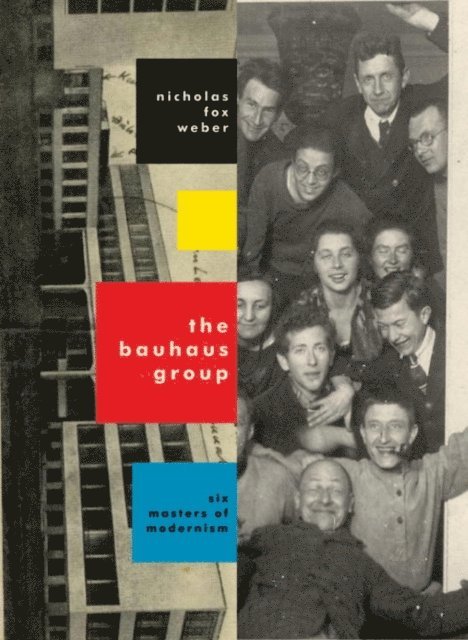
Nicholas Fox Weber, for thirty-three years head of the Albers Foundation, spent many years with Anni and Josef Albers, the only husband-and-wife artistic pair at the Bauhaus (she was a textile artist; he a professor and an artist, in glass, metal, wood, and photography). The Alberses told him their own stories and described life at the Bauhaus with their fellow artists and teachers, Walter Gropius, Paul Klee, Wassily Kandinsky, Ludwig Mies van der Rohe, as well these figures’ lesser-known wives and girlfriends. In this extraordinary group biography, Weber brilliantly brings to life the Bauhaus geniuses and the community of the pioneering art school in Germany’s Weimar and Dessau in the 1920s and early 1930s.Here are: Walter Gropius, founder of the Bauhaus, the architect who streamlined design early in his career and who saw the school as a place for designers to collaborate in an ideal setting . . . a dashing hussar, the ardent young lover of the renowned femme fatale Alma Mahler, beginning when she was the wife of composer Gustav Mahler . . . Paul Klee, the onlooker, smoking his pipe, observing Bauhaus dances as well as his colleagues’ lectures from the back of the room . . . the cook who invented recipes and threw together his limited ingredients with the same spontaneity, sense of proportion, and fascination that underscored his paintings . . . Wassily Kandinsky, the Russian-born pioneer of abstract painting, guarding a secret tragedy one could never have guessed from his lively paintings, in which he used bold colors not just for their visual vibrancy, but for their “sound” effects . . . Josef Albers, who entered the Bauhaus as a student in 1920 and was one of the seven remaining faculty members when the school was closed by the Gestapo in 1933 . . .Annelise Else Frieda Fleischmann, a Berlin heiress, an intrepid young woman, who later, as Anni Albers, made art the focal point of her existence . . . Ludwig Mies van der Rohe, imperious, decisive, often harsh, an architect who became director—the last—of the Bauhaus, and the person who guided the school’s final days after SS storm troopers raided the premises.Weber captures the life, spirit, and flair with which these geniuses lived, as well as their consuming goal of making art and architecture. A portrait infused with their fulsome embrace of life, their gift for laughter, and the powerful force of their individual artistic personalities.From the Hardcover edition.
E-bok
Engelska, 2009257 kr
Läs direkt efter köp
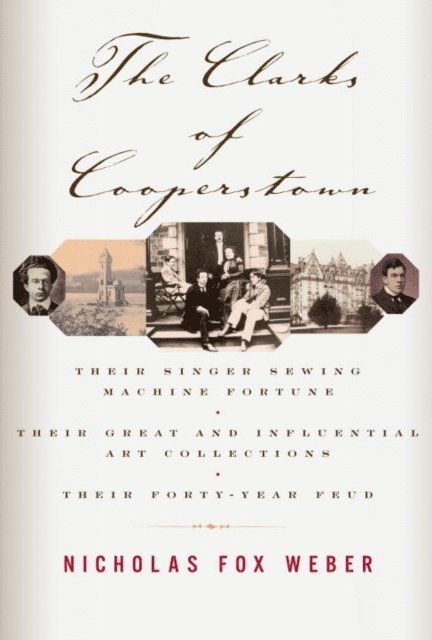
Nicholas Fox Weber, author of the acclaimed Patron Saints (“Exhilarating avant-garde entertainment”—Sam Hunter, The New York Times Book Review) and Balthus (“The authoritative account of his life and work”—Michael Ravitch, Newsday), gives us now the idiosyncratic lives of Sterling and Stephen Clark—two of America’s greatest art collectors, heirs to the Singer sewing machine fortune, and for decades enemies of each other. He tells the story, as well, of the two generations that preceded theirs, giving us an intimate portrait of one of the least known of America’s richest families.He begins with Edward Clark—the brothers’ grandfather, who amassed the Clark fortune in the late-nineteenth century—a man with nerves of steel; a Sunday school teacher who became the business partner of the wild inventor and genius Isaac Merritt Singer. And, by the turn of the twentieth century, was the major stockholder of the Singer Manufacturing Company.We follow Edward’s rise as a real estate wizard making headlines in 1880 when he commissioned Manhattan’s first luxury apartment building. The house was called “Clark’s Folly”; today it’s known as the Dakota.We see Clark’s son—Alfred—enigmatic and famously reclusive; at thirty-eight he inherited $50 million and became one of the country’s richest men. An image of propriety—good husband, father of four—in Europe, he led a secret homosexual life. Alfred was a man with a passion for art and charity, which he passed on to his four sons, in particular Sterling and Stephen Clark.Sterling, the second-oldest, buccaneering and controversial, loved impressionism, created his own museum in Williamstown, Massachusetts—and shocked his family by marrying an actress from the Comédie Française. Together the Sterling Clarks collected thousands of paintings and bred racehorses.In a highly public case, Sterling sued his three brothers over issues of inheritance, and then never spoke to them again.He was one of the central figures linked to a bizarre and little-known attempted coup against Franklin Delano Roosevelt’s presidency. We are told what really happened and why—and who in American politics was implicated but never prosecuted.Sterling’s brother—Stephen—self-effacing and responsible—became chairman and president of the Museum of Modern Art and gave that institution its first painting, Edward Hopper’s House by the Railroad. Thirteen years later, in an act that provoked intense controversy, Stephen dismissed the Museum’s visionary founding director, Alfred Barr, who for more than a decade had single-handedly established the collection and exhibition programs that determined how the art of the twentieth century was regarded.Stephen gave or bequeathed to museums many of the paintings that today are still their greatest attractions.With authority, insight, and a flair for evoking time and place, Weber examines the depths of the brothers’ passions, the vehemence of their lifelong feud, the great art they acquired, and the profound and lasting impact they had on artistic vision in America.From the Hardcover edition.
Inbunden, Engelska, 2024
355 kr
Skickas
E-bok
Engelska, 2024214 kr
Läs direkt efter köp
E-bok
Engelska, 2013228 kr
Läs direkt efter köp
The first full-scale biography of one of the most elusive and enigmatic painters of our time -- the self-proclaimed Count Balthus Klossowski de Rola -- whose brilliantly rendered, markedly sexualized portraits, especially of young girls, are among the most memorable images in contemporary art.The story of Balthus''s life has been shrouded by contradiction and hearsay, most of it his own invention; over the years he created for himself a persona of mystery, aristocracy, and glamour. Now, in Nicholas Fox Weber''s superb biography, Balthus, the man and the artist, stands revealed as never before. He was born in Paris in 1908 to Polish parents. At age twelve he first stepped into the spotlight with the publication of forty of his drawings illustrating a story about a cat by Rainer Maria Rilke, who was then Balthus''s mother''s lover and a crucial influence on the young boy. From that moment, Balthus has never been out of the public eye. In 1934 his first exhibition, in Paris, stunned the art world. The seven canvases drew attention to his extraordinary technique -- a mix of tradition and imagination informed by the work of Piero della Francesca, Courbet, and Joseph Reinhardt, but unique to the twenty-six-year-old artist -- and to their provocative content; one of the paintings, The Guitar Lesson, was so powerful in its sadomasochistic imagery that it was deemed necessary to remove it from public display. Continuously since then, Balthus''s work has provoked both great opprobrium and profound admiration -- as has the artist himself, whether collaborating with Antonin Artaud on his Theater of Cruelty, transforming the Villa Medici into the social center of Fellini''s Rome in the 1950s, or competing for the artistic limelight with his friends Picasso and André Derain.The artist''s complexities are clarified and his genius understood in a book that derives its particular immediacy from Weber''s long and intense conversations with Balthus -- who never previously consented to discuss his life and work with a biographer -- as well as his interviews with the painter''s closest friends, members of his family, and many of the subjects of his controversial canvases.Weber''s critical and human grasp (he acutely analyzes the paintings in terms of both their aesthetic achievement and what they reveal of their maker''s psyche), combined with his rich knowledge of Balthus''s life and his insight into the ideas and forces that have helped to shape Balthus''s work over the past seven decades, gives us a striking, illuminating portrait of one of the most admired and outrageous artists of our time.
E-bok
Engelska, 2020228 kr
Läs direkt efter köp
A rich, wide-ranging meditation on the iPhone as direct descendant of the 1930s Bauhaus, one of the twentieth century''s most influential schools of art and design (summed up in Mies van der Rohe''s dictum, "less is more") whose principle aim was to connect art and industry. From one of the leading authorities on the Bauhaus and modernism.Nicholas Fox Weber, in this deft, entertaining, and brilliant rumination on art and technology, writes of the iPhone as the essence of the Bauhaus principles of form following function--of honesty of design and materials that reflect the true nature of objects and buildings, favoring linear and geometrical forms; adhering to line, shape, and colors; synthesizing art to modern times; the fusion in design of art and technology. Weber, an authority and celebrant of twentieth-century modernism, ranging from the paintings of Balthus to the architecture of Le Corbusier, was a close associate of Anni and Josef Albers, the last living giants of the Bauhaus, and absorbed firsthand its truest beliefs. The Alberses emphasized their passion for "good design over bad art." Anni, a groundbreaking textile artist and printmaker, and Josef, a painter and color theorist and influential art teacher, stuck to "what was taught at the Bauhaus: the right use of materials, good technique, a purpose that serves all." Weber writes that the Bauhaus was not a style but an attitude: clear design and visual acuity as the embodiment of morality and honesty. And in iBauhaus, Weber explores how the iPhone, with its effective design and its versatility, honors these deepest beliefs, as well as the values that the Bauhaus sought to give to the world.
E-bok
Engelska, 2014214 kr
Läs direkt efter köp
This lively work of cultural history tells the stories of five young art patrons who, in the last 1920s and 1930s, were instrumental in bringing modern painting, sculpture, and dance to America. A combination of wealth, Harvard education privilege, and family connections enabled Lincoln Kirstein, Edward M. M. Warburg, Agnes Mongan, James Thrall Soby, and A. Everett (Chick) Austin, Jr., to introduce the work of Picasso, Balanchine, Calder, and other important artists to the United States.
Inbunden, Engelska, 2022
453 kr
Skickas inom 7-10 vardagar
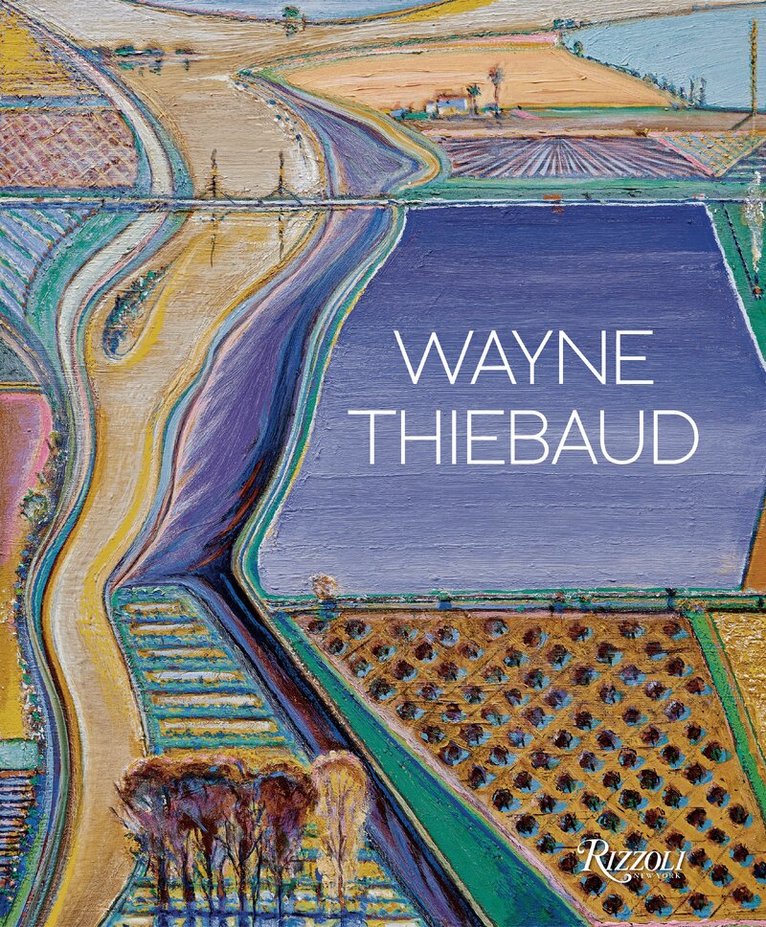
As he turns 100, the definitive monograph of Wayne Thiebaud's work is now available in a reformatted, accessibly priced edition, and including his most recent paintings. This is the most comprehensive monograph to date on Wayne Thiebaud, with new works added, in a reformatted size. Spanning the length of his career from the 1950s to the present, the book has been made in close collaboration with the artist. Thiebaud selected the works himself, making the book an act of autobiography in a sense. At age 100, he looks back over his life and his work, rich with breakthroughs in painting and masterful individuality. Required reading for those who have a healthy appetite for provocative art. -Bloomberg Business This comprehensive monograph of more than 200 illustrations can literally be considered eye candy. American artist Wayne Thiebaud is famed for his brightly coloured canvases of cakes, diner pies, pastries, ice cream cones, candy and brightly coloured gumball machines. . . . Whether still lifes or landscapes, Thiebaud's paintings are akin to visual Prozac; you simply cannot be in a bad mood looking at them. -Kansas City Magazine While Thiebaud is best known for his heavily pigmented still lifes of cakes, pies, and candies, [this] book shows his broader range, from vibrant landscapes depicting highways and farmland to portraits of solitary figures. . . The texts examine Thiebaud's influences as well as his impact on the art world and the individual viewers of his work. -Architectural Digest
Inbunden, Engelska, 2025
410 kr
Skickas inom 3-6 vardagar
Inbunden, Engelska, 2020
1 285 kr
Skickas inom 7-10 vardagar
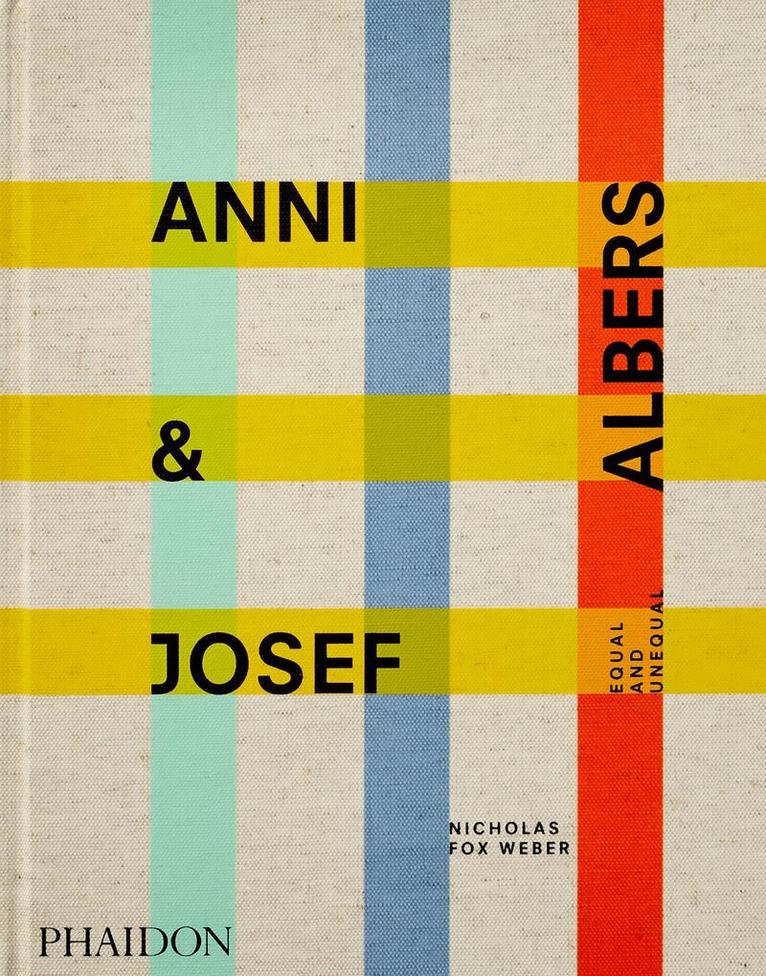
A spectacular and unprecedented visual biography of the leading pioneers and protagonists of modern art and designJosef - painter, designer, and teacher - and Anni Albers - textile artist and printmaker - are among the twentieth century's most important abstract artists, and this is the first monograph to celebrate the rich creative output and beguiling relationship of these two masters in one elegant volume. It presents their life and work as never before, from their formative years at the Bauhaus in Germany to their remarkable influence at Black Mountain College in the United States through their intensely productive period in Connecticut.Accessibly written, the book is packed with more than 750 artworks, archival images, and documents - many published here for the first time - all tracing the remarkable lives and careers of this legendary couple.Dispersed throughout area series of short essays on artists that focuses on the Alberses relationship with a number of important artists and architects of the 20th century, like Ruth Asawa, Marcel Breuer, Merce Cunningham, Philip Johnson, Paul Klee, Jacob Lawrence, and many more.The beautifully cloth-bound package utilizes an elegant color palette and design that speaks to the work of both artists. This comprehensive visual biography showcases the artists' rich and dynamic lives, and their infinite influence on each other, as they shared the profound conviction that art was central to human existence.
Inbunden, Engelska, 2017
322 kr
Skickas inom 3-6 vardagar
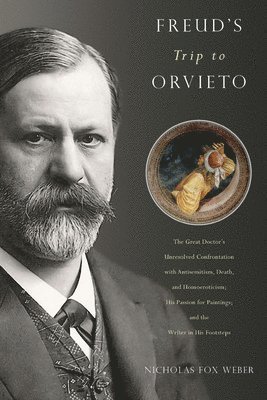
"[An] unusual meditation on sex, death, art, and Jewishness. . . . Weber weaves in musings on his own sexual and religious experiences, creating a freewheeling psychoanalytic document whose approach would surely delight the doctor, even if its conclusions might surprise him." —New Yorker"Freud's Trip to Orvieto is at once profound and wonderfully diverse, and as gripping as any detective story. Nicholas Fox Weber mixes psychoanalysis, art history, and the personal with an intricacy and spiritedness that Freud himself would have admired." —John Banville, author of The Sea and The Blue Guitar"This is an ingenious and fascinating reading of Freud's response to Signorelli's frescoes at Orvieto. It is also a meditation on Jewish identity, and on masculinity, memory, and the power of the image. It is filled with intelligence, wit, and clear-eyed analysis not only of the paintings themselves, but how we respond to them in all their startling sexuality and invigorating beauty." —Colm Tóibín, author of Brooklyn and Nora WebsterAfter a visit to the cathedral at Orvieto in Italy, Sigmund Freud deemed Luca Signorelli's frescoes the greatest artwork he'd ever encountered; yet, a year later, he couldn't recall the artist's name. When the name came back to him, the images he had so admired vanished from his mind's eye. This is known as the "Signorelli parapraxis" in the annals of Freudian psychoanalysis and is a famous example from Freud's own life of his principle of repressed memory. What was at the bottom of this? There have been many theories on the subject, but Nicholas Fox Weber is the first to study the actual Signorelli frescoes for clues.What Weber finds in these extraordinary Renaissance paintings provides unexpected insight into this famously confounding incident in Freud's biography. As he sounds the depths of Freud's feelings surrounding his masculinity and Jewish identity, Weber is drawn back into his own past, including his memories of an adolescent obsession with a much older woman.Freud's Trip to Orvieto is an intellectual mystery with a very personal, intimate dimension. Through rich illustrations, Weber evokes art's singular capacity to provoke, destabilize, and enchant us, as it did Freud, and awaken our deepest memories, fears, and desires.Nicholas Fox Weber is the director of the Josef and Anni Albers Foundation and author of fourteen books, including biographies of Balthus and Le Corbusier. He has written for the New Yorker, New York Times, Los Angeles Times, Wall Street Journal, Le Monde, ARTnews, Town & Country, and Vogue, among other publications.
Inbunden, Tyska, 2021
611 kr
Skickas inom 3-6 vardagar
Inbunden, Engelska, 2020
881 kr
Skickas inom 5-8 vardagar
Selected research projects and architecture exploring the role of design within complex social, political and environmental conditionsToshiko Mori is a New York-based architect and Professor in the Practice of Architecture at the Harvard University Graduate School of Design for many years. As a long-time member of the World Economic Forum’s Global Agenda Council on the Future of Cities, Mori led research and inquiry into sustainable architecture, enhancing cities’ livability, and creating efficient urban services. Mori is also on the board of Dassault Systems, a company connecting technology to environment and life science. And she has founded the platform VisionArc, a think tank dedicated to exploring the role of design within complex social and environmental issues.This book will focus on TMA’s projects based on research, and the impact of socially valuable projects to society. The book will illustrate how the observation of the architect operates as opposed to how the imagination of the architect manifests itself. Different chapters in the book are describing various ways of approaching the task of observation. Seven chapters are divided into specific projects and provide a look at the hidden thought processes that can take place behind the ideas, solutions, and physical manifestations or architecture.Presented projects include the Portable Concert Hall, called Paracoustica, which is an ongoing nonprofit work to come up with an affordable and sharable concert hall among many constituents in remote and underserved community; the Novartis Institutes for BioMedical Research focusing on socialization among scientists as a new model of work that promotes further discovery and teamwork. And i.e. the research on the role of libraries in the future using the example of the Brooklyn Public Library Central Branch. Another chapter is dedicated to the vernacular typology development in Senegal with the Albers Foundation, and the research on social spaces for collaborative educational environments.
Inbunden, Engelska, 2018
361 kr
Skickas
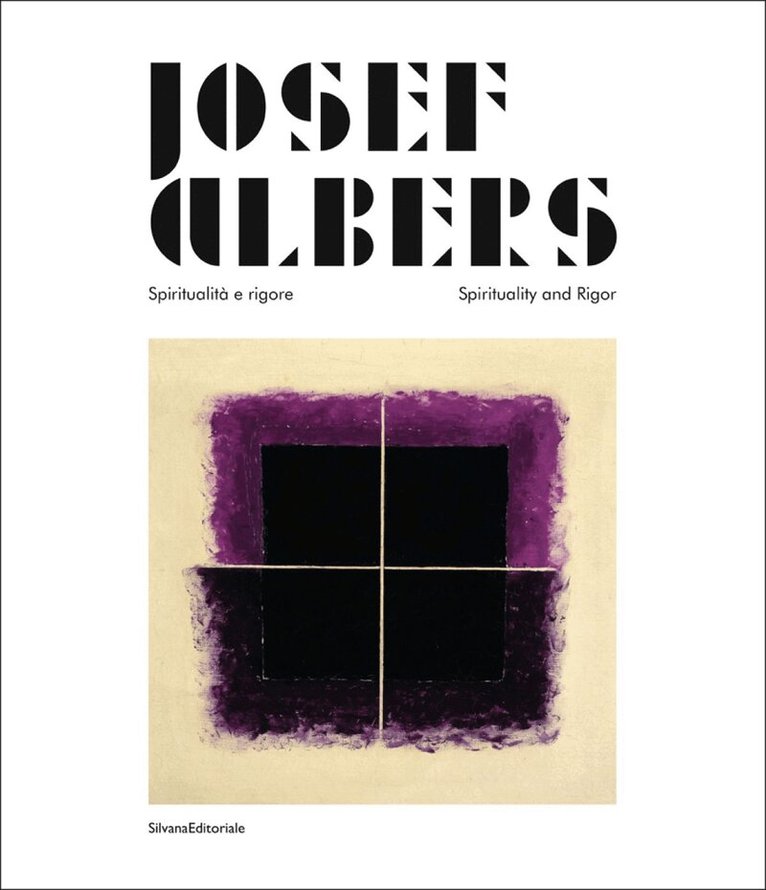
Josef Albers (1888-1976) believed firmly in art's spiritual dimension. Among his several aphorisms on the topic, none reflects the humble, ascetic character of his spiritual disposition better than the following: 'Easy to know that diamonds are precious. Good to know that rubies have depth. But more to see that pebbles are miraculous'. Conceived by the renowned Albers expert Nicholas Fox Weber, who directed the Albers Foundation for 20 years and knew the artist well, Spirituality and Rigor presents a selection of work by Albers that illustrates his ascetic spirituality and his deeply felt Catholicism. The book stems in part from Fox Weber's The Sacred Modernist: Josef Albers as a Catholic Artist, and is augmented with additional work by Fabio De Chirico. It includes Albers' early drawings of country churches and cathedrals; 'Rosa Mystica', his stained glass window for St Michael's Church, and other glass works containing religious imagery; his abstractions of crosses and geometric abstractions with spiritually themed titles, from his 'Black Mountain' years; his prints of Mexican gods; photographic interpretations of the theme of angels; and a selection from the 'Homage to the Square' series. Text in English and French.
Inbunden, Engelska, 2013
369 kr
Skickas inom 5-8 vardagar
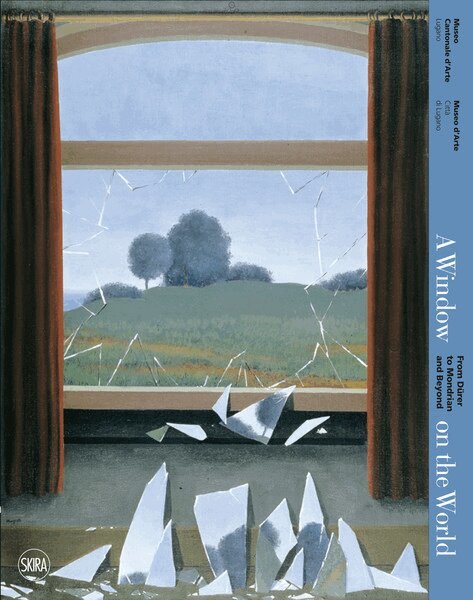
Through more than 200 works, the representation and pictorial meaning of the window in the Western Art Since the Renaissance, the window has been both a metaphor and an essential conceptual tool in Western painting. A Window on the World seeks to thoroughly analyze the gradual changes which have occurred in the representation and pictorial meaning of the window, in particular in the course of the twentieth century. It explores the radical change in perspective whereby artists developed and offered us a “global vision”, a formal perception freed from the need to imitate the objective world. The catalogue is structured into four main sections: Historical introduction, Seeing through, Grids, From the Window to the Screen. These sections include specific analysis consecrated to artists who have chosen the window as the privileged means of their artistic research or to recurrent themes such as the fascinating relationship between window and still life.
Häftad, Engelska, 2014
250 kr
Tillfälligt slut
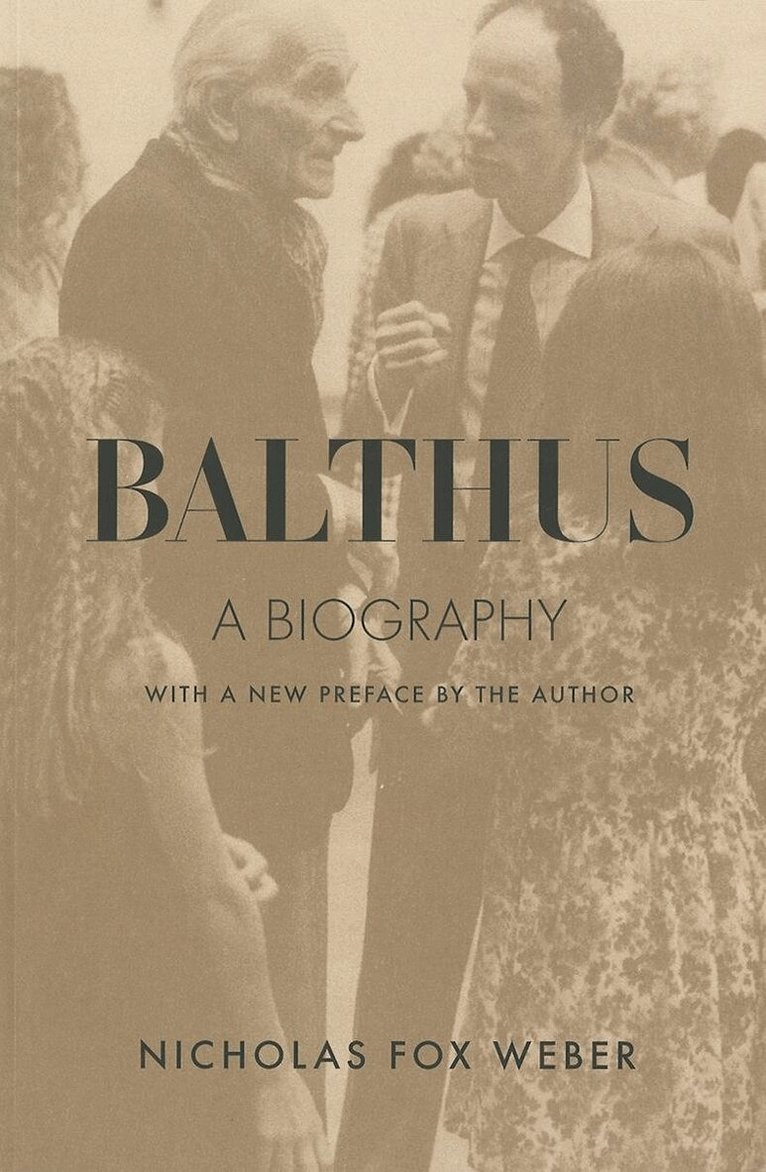
This is the first full-scale biography of one of the most elusive and enigmatic painters of our time: the self-proclaimed Count Balthus Klossowski de Rola, whose brilliant, markedly sexualized portraits, especially of young girls, are among the most memorable images in contemporary art.Balthus’s complexities are clarified and his genius understood in this book that derives its immediacy from Nicholas Fox Weber’s long and intense conversations with Balthus himself–who never previously consented to discuss his life and work with a biographer–as well as Weber’s interviews with the artist’s closest associates. This biography was first published by Knopf in 1999 and is now available for the first time from Dalkey Archive Press.