Nicholas H. Bingham – författare
Visar alla böcker från författaren Nicholas H. Bingham. Handla med fri frakt och snabb leverans.
6 produkter
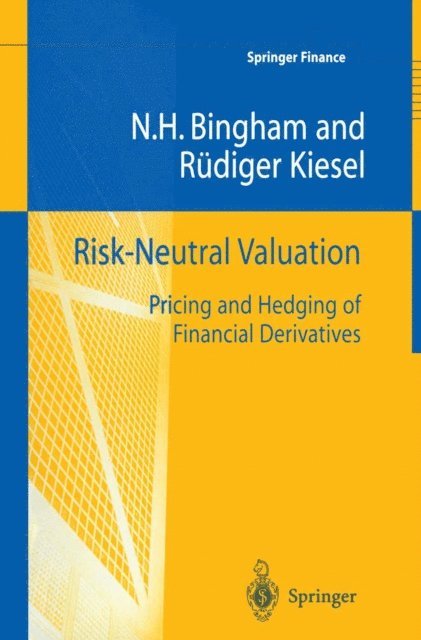
Risk-Neutral Valuation
Pricing and Hedging of Financial Derivatives
Av Rudiger Kiesel, Nicholas H. Bingham
E-bok, 2013
1174 kr
Lägg i varukorg
Written by Nick Bingham, Chairman and Professor of Statistics at Birkbeck College, and Rüdiger Kiesel, an "up-and-coming" academic, Risk Neutrality will benefit the Springer Finance Series in many ways. It provides a valuable introduction to Mathematical Finance for Graduate Students, and also …
Risk-Neutral Valuation : Pricing and Hedging of Financial Derivatives
Av Nicholas H. Bingham, Rudiger Kiesel
2014
667 kr
Lägg i varukorg
Risk-Neutral Valuation
Pricing and Hedging of Financial Derivatives
Av Rudiger Kiesel, Nicholas H. Bingham
E-bok, 2013
897 kr
Lägg i varukorg
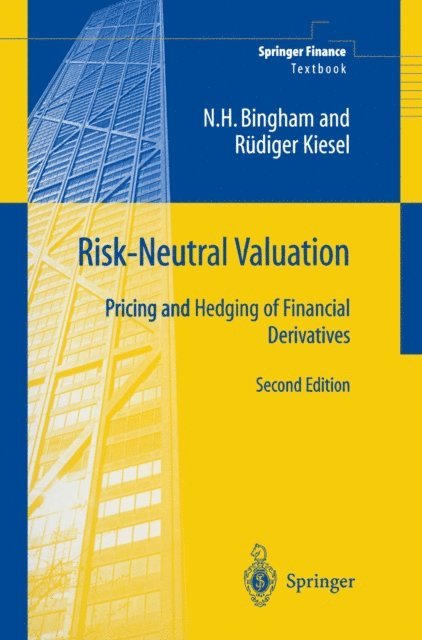
Since its introduction in the early 1980s, the risk-neutral valuation principle has proved to be an important tool in the pricing and hedging of financial derivatives. Following the success of the first edition of ‘Risk-Neutral Valuation’, the authors have thoroughly revised the entire book, taking …
Risk-Neutral Valuation : Pricing and Hedging of Financial Derivatives
Av Nicholas H. Bingham, Rüdiger Kiesel
2014
667 kr
Lägg i varukorg
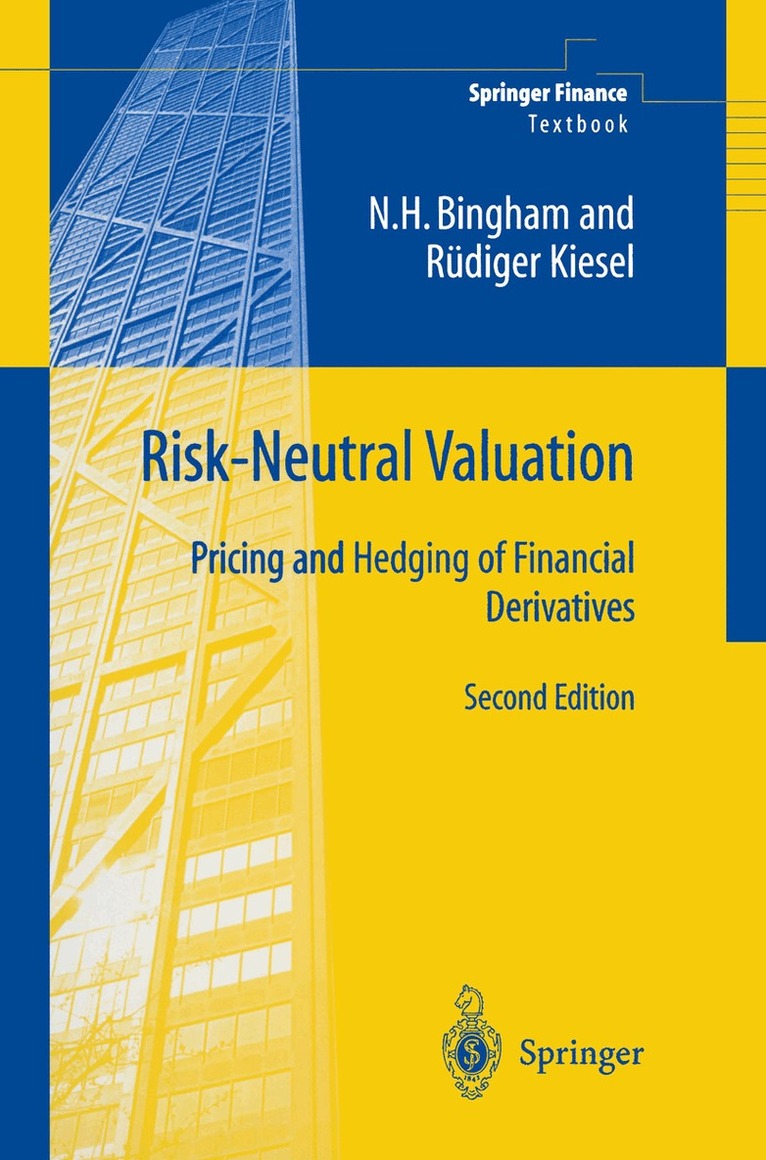
Risk-Neutral Valuation
Pricing and Hedging of Financial Derivatives
Av Nicholas H. Bingham, Rüdiger Kiesel
Häftad, 2010
715 kr
Lägg i varukorg
Since its introduction in the early 1980s, the risk-neutral valuation principle has proved to be an important tool in the pricing and hedging of financial derivatives. Following the success of the first edition of ‘Risk-Neutral Valuation’, the authors have thoroughly revised the entire book, taking …
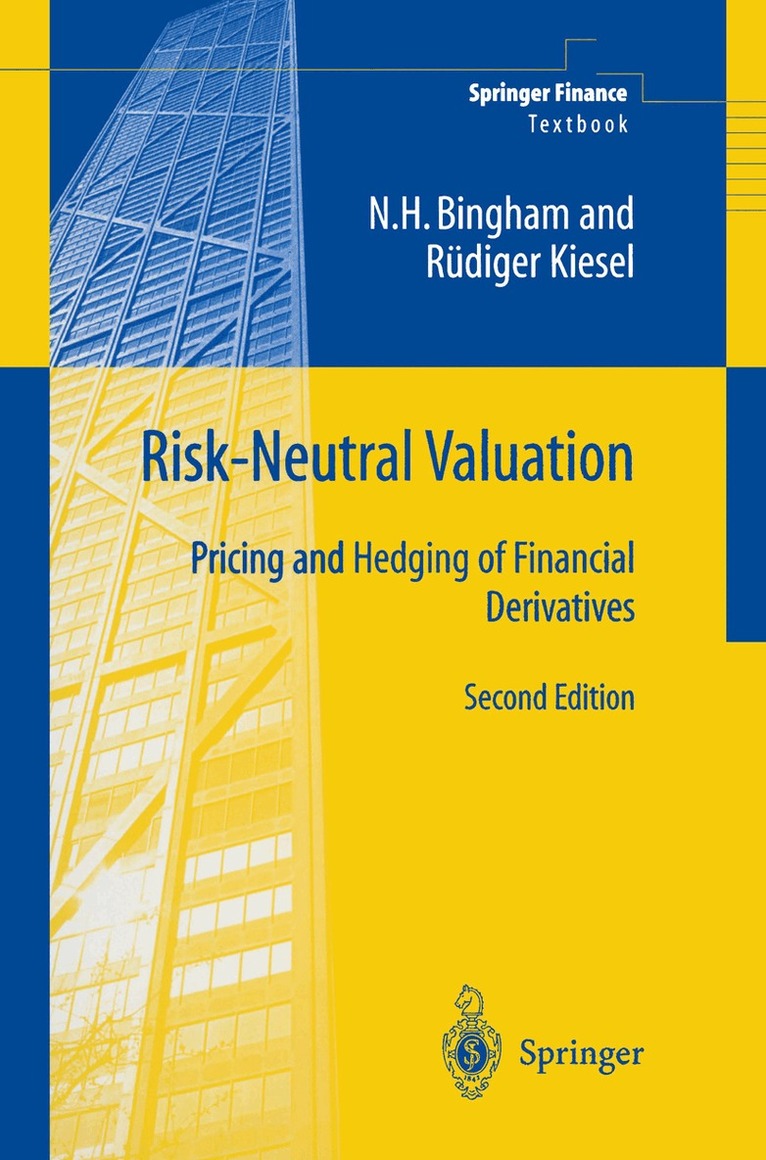
Risk-Neutral Valuation
Pricing and Hedging of Financial Derivatives
Av Nicholas H. Bingham, Rüdiger Kiesel
Inbunden, 2004
987 kr
Lägg i varukorg
Since its introduction in the early 1980s, the risk-neutral valuation principle has proved to be an important tool in the pricing and hedging of financial derivatives. Following the success of the first edition of ‘Risk-Neutral Valuation’, the authors have thoroughly revised the entire book, taking …