Nicholas Morris – författare
Visar alla böcker från författaren Nicholas Morris. Handla med fri frakt och snabb leverans.
6 produkter
6 produkter
1 371 kr
Skickas inom 5-8 vardagar
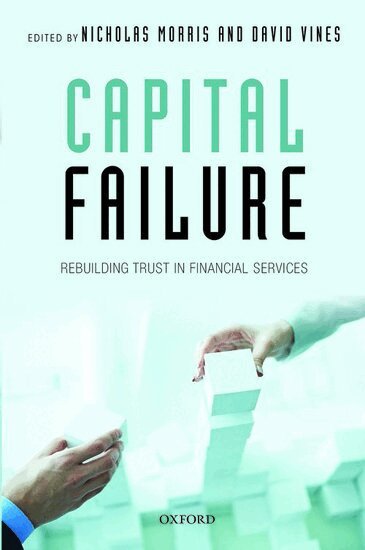
Adam Smith's 'invisible hand' relied on the self-interest of individuals to produce good outcomes. Economists' belief in efficient markets took this idea further by assuming that all individuals are selfish. This belief underpinned financial deregulation, and the theories on incentives and performance which supported it. However, although Adam Smith argued that although individuals may be self-interested, he argued that they also have other-regarding motivations, including a desire for the approbation of others. This book argues that the trust-intensive nature of financial services makes it essential to cultivate such other-regarding motivations, and it provides proposals on how this might be done. Trustworthiness in the financial services industry was eroded by deregulation and by the changes to industry structure which followed. Incentive structures encouraged managers to disguise risky products as yielding high returns, and regulation failed to curb this risk-taking, rent-seeking behaviour. The book makes a number of proposals for reforms of governance, and of legal and regulatory arrangements, to address these issues. The proposals seek to harness values and norms that would reinforce 'other-regarding' behaviour, so that the firms and individuals in the financial services act in a more trustworthy manner. Four requirements are identified which together might secure more strongly trustworthy behaviour: the definition of obligations, the identification of responsibilities, the creation of mechanisms which encourage trustworthiness, and the holding to account of those involved in an appropriate manner. Financial reforms at present lack sufficient focus on these requirements, and the book proposes a range of further actions for specific parts of the financial industry.
650 kr
Skickas inom 7-10 vardagar
Adam Smith's 'invisible hand' relied on the self-interest of individuals to produce good outcomes. Economists' belief in efficient markets took this idea further by assuming that all individuals are selfish. This belief underpinned financial deregulation, and the theories on incentives and performance which supported it. However, although Adam Smith argued that although individuals may be self-interested, he argued that they also have other-regarding motivations, including a desire for the approbation of others. This book argues that the trust-intensive nature of financial services makes it essential to cultivate such other-regarding motivations, and it provides proposals on how this might be done. Trustworthiness in the financial services industry was eroded by deregulation and by the changes to industry structure which followed. Incentive structures encouraged managers to disguise risky products as yielding high returns, and regulation failed to curb this risk-taking, rent-seeking behaviour. The book makes a number of proposals for reforms of governance, and of legal and regulatory arrangements, to address these issues. The proposals seek to harness values and norms that would reinforce 'other-regarding' behaviour, so that the firms and individuals in the financial services act in a more trustworthy manner. Four requirements are identified which together might secure more strongly trustworthy behaviour: the definition of obligations, the identification of responsibilities, the creation of mechanisms which encourage trustworthiness, and the holding to account of those involved in an appropriate manner. Financial reforms at present lack sufficient focus on these requirements, and the book proposes a range of further actions for specific parts of the financial industry.
575 kr
Skickas inom 10-15 vardagar
Perhaps the greatest long-term challenge facing modern economies is how to pay for the living expenses and care costs of the elderly. Following policy decisions made in Australia in the 1990s, a substantial part of the pension requirements of the next cohort of retirees will be met from savings accumulated during working years. The effective management of these savings is crucial. If they are invested wisely, the assets available to fund pensions and care will grow; if not, available funds may turn out to be insufficient. Unfortunately, there is considerable evidence worldwide that the management of funds attracts rent-seeking behaviour by the financial services industry which erodes much of the potential return.Australia introduced compulsory superannuation contributions for its working population in 1991, leading to a proliferation of funded schemes that are largely run by the private sector. Complexity, and many degrees of separation between fund members and those who manage their funds, have emerged as serious problems. Combined with weak competitive pressures and governance systems, and insufficient legal and regulatory constraints, the result is a system that does not serve its members well.This book provides a detailed evaluation of the Australian experience, highlights the extent to which the financial services industry has extracted rents from Australian pensioners, and how and why this occurred. Based on original empirical research, and examination of industry reviews and relevant literature, the book demonstrates the numerous principal–agent, conflict of interest and rent extraction problems that have emerged in Australia. The book makes suggestions for how these problems can be addressed in Australia, and also provides lessons for other countries wishing to enact pension reform.
528 kr
Kommande
As the global population ages, the demand for long-term care (LTC) for older adults is increasing rapidly, presenting significant challenges for health and social care systems worldwide.This book examines existing care systems for older adults worldwide, focusing on the unique challenges faced and potential solutions and policy reforms which could be implemented, particularly with regard to improving or maintaining their physical and mental health. This text offers a comprehensive exploration of diverse LTC approaches across 15 countries and regions. This essential resource examines critical issues such as workforce shortages, funding mechanisms, governance structures, and the integration of health and social care. Highlighting innovative solutions like community-based care models, technological advancements, and rights-based frameworks, the book provides evidence-based recommendations for designing sustainable, equitable, and person-centred care systems. With contributions from leading experts, this handbook is an invaluable guide for policymakers, practitioners, and researchers navigating the complexities of long-term care in an ageing world. This is an unmissable resource for those who are interested in addressing the multifaceted crises facing care for older people worldwide.
2 312 kr
Kommande
As the global population ages, the demand for long-term care (LTC) for older adults is increasing rapidly, presenting significant challenges for health and social care systems worldwide.This book examines existing care systems for older adults worldwide, focusing on the unique challenges faced and potential solutions and policy reforms which could be implemented, particularly with regard to improving or maintaining their physical and mental health. This text offers a comprehensive exploration of diverse LTC approaches across 15 countries and regions. This essential resource examines critical issues such as workforce shortages, funding mechanisms, governance structures, and the integration of health and social care. Highlighting innovative solutions like community-based care models, technological advancements, and rights-based frameworks, the book provides evidence-based recommendations for designing sustainable, equitable, and person-centred care systems. With contributions from leading experts, this handbook is an invaluable guide for policymakers, practitioners, and researchers navigating the complexities of long-term care in an ageing world. This is an unmissable resource for those who are interested in addressing the multifaceted crises facing care for older people worldwide.
1 954 kr
Skickas inom 10-15 vardagar
Perhaps the greatest long-term challenge facing modern economies is how to pay for the living expenses and care costs of the elderly. Following policy decisions made in Australia in the 1990s, a substantial part of the pension requirements of the next cohort of retirees will be met from savings accumulated during working years. The effective management of these savings is crucial. If they are invested wisely, the assets available to fund pensions and care will grow; if not, available funds may turn out to be insufficient. Unfortunately, there is considerable evidence worldwide that the management of funds attracts rent-seeking behaviour by the financial services industry which erodes much of the potential return.Australia introduced compulsory superannuation contributions for its working population in 1991, leading to a proliferation of funded schemes that are largely run by the private sector. Complexity, and many degrees of separation between fund members and those who manage their funds, have emerged as serious problems. Combined with weak competitive pressures and governance systems, and insufficient legal and regulatory constraints, the result is a system that does not serve its members well.This book provides a detailed evaluation of the Australian experience, highlights the extent to which the financial services industry has extracted rents from Australian pensioners, and how and why this occurred. Based on original empirical research, and examination of industry reviews and relevant literature, the book demonstrates the numerous principal–agent, conflict of interest and rent extraction problems that have emerged in Australia. The book makes suggestions for how these problems can be addressed in Australia, and also provides lessons for other countries wishing to enact pension reform.