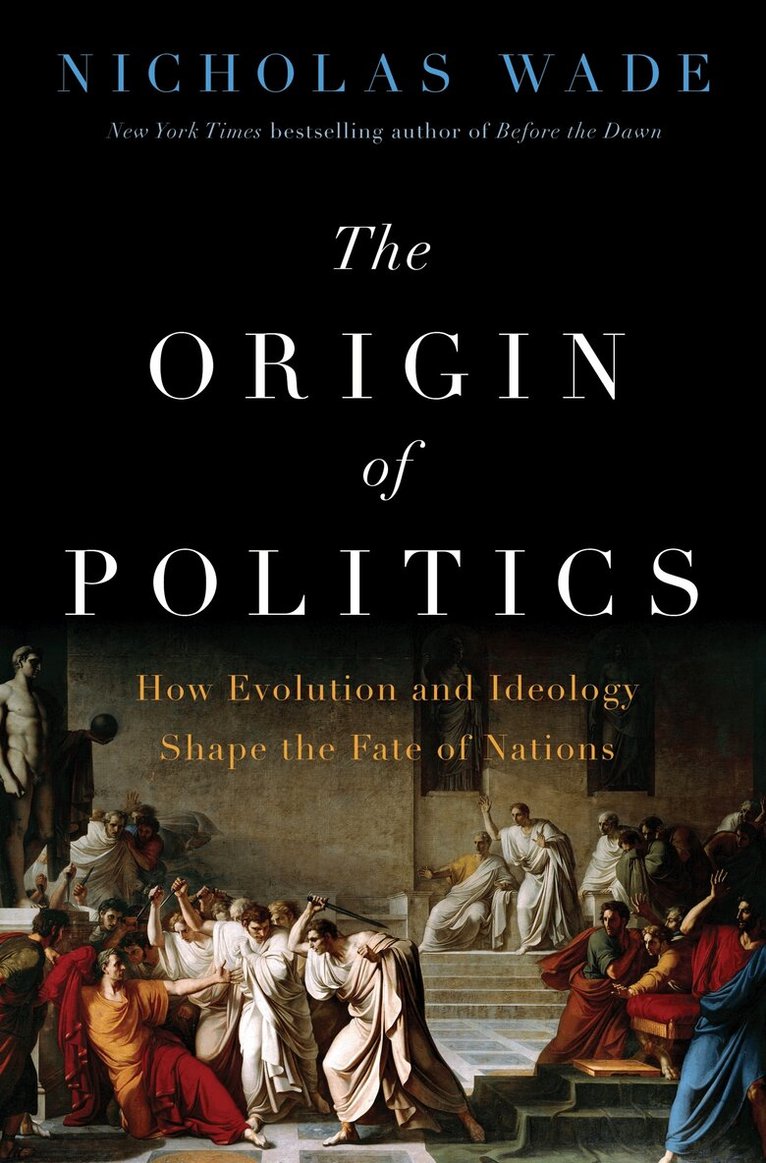
Nicholas Wade – författare
339 kr
Skickas inom 3-6 vardagar
339 kr
Skickas inom 3-6 vardagar
339 kr
Skickas inom 3-6 vardagar
178 kr
Skickas inom 5-8 vardagar
1 210 kr
Skickas inom 7-10 vardagar
251 kr
Skickas inom 5-8 vardagar
207 kr
Läs direkt efter köp
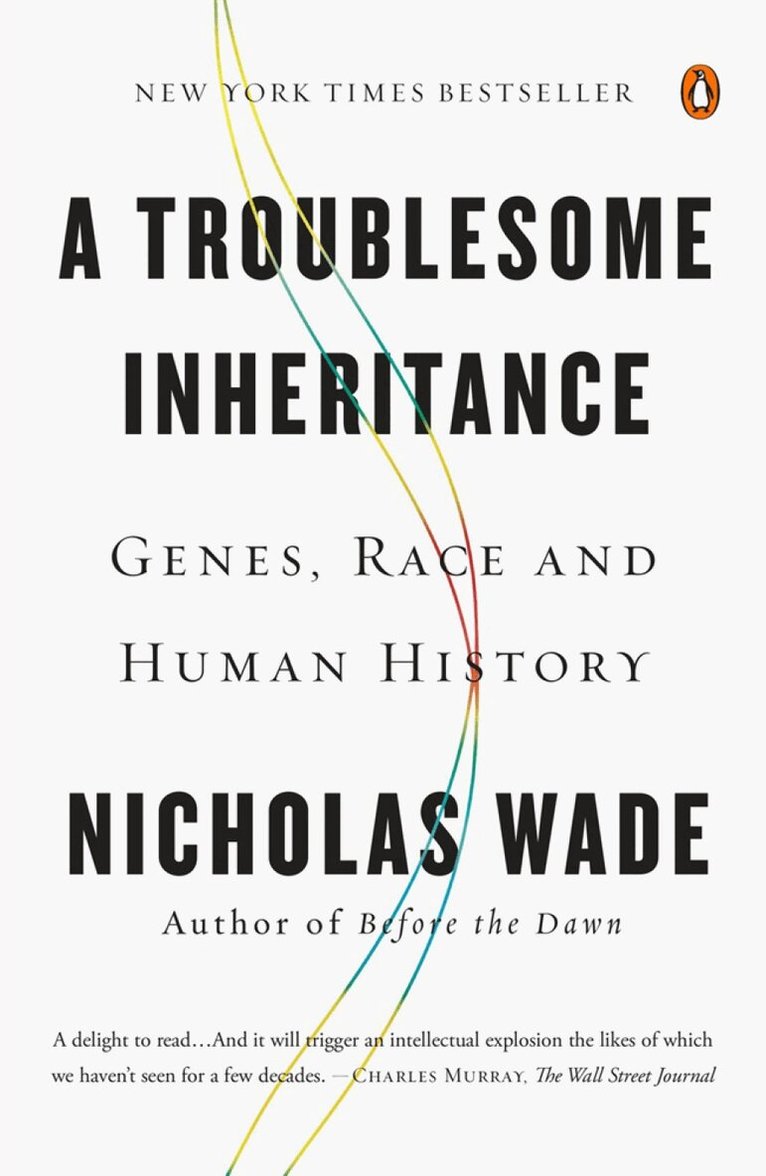
Fewer ideas have been more toxic or harmful than the idea of the biological reality of race, and with it the idea that humans of different races are biologically different from one another. For this understandable reason, the idea has been banished from polite academic conversation. Arguing that race is more than just a social construct can get a scholar run out of town, or at least off campus, on a rail. Human evolution, the consensus view insists, ended in prehistory.Inconveniently, as Nicholas Wade argues in A Troublesome Inheritance, the consensus view cannot be right. And in fact, we know that populations have changed in the past few thousand years—to be lactose tolerant, for example, and to survive at high altitudes. Race is not a bright-line distinction; by definition it means that the more human populations are kept apart, the more they evolve their own distinct traits under the selective pressure known as Darwinian evolution. For many thousands of years, most human populations stayed where they were and grew distinct, not just in outward appearance but in deeper senses as well.Wade, the longtime journalist covering genetic advances for The New York Times, draws widely on the work of scientists who have made crucial breakthroughs in establishing the reality of recent human evolution. The most provocative claims in this book involve the genetic basis of human social habits. What we might call middle-class social traits—thrift, docility, nonviolence—have been slowly but surely inculcated genetically within agrarian societies, Wade argues. These “values” obviously had a strong cultural component, but Wade points to evidence that agrarian societies evolved away from hunter-gatherer societies in some crucial respects. Also controversial are his findings regarding the genetic basis of traits we associate with intelligence, such as literacy and numeracy, in certain ethnic populations, including the Chinese and Ashkenazi Jews.Wade believes deeply in the fundamental equality of all human peoples. He also believes that science is best served by pursuing the truth without fear, and if his mission to arrive at a coherent summa of what the new genetic science does and does not tell us about race and human history leads straight into a minefield, then so be it. This will not be the last word on the subject, but it will begin a powerful and overdue conversation.
From the Trade Paperback edition.143 kr
Läs direkt efter köp
231 kr
Skickas inom 3-6 vardagar
236 kr
Läs direkt efter köp
222 kr
Läs direkt efter köp
841 kr
Läs direkt efter köp
Does the world appear the same to everyone? Does what we know determine what we see? Why do we see the world as we do?
Vision is our most dominant sense. From the light that enters our eyes to the complex cognitive processes that follow, we derive most of our information about what things are, where they are, and how they move from our vision.
Visual Perception takes a refreshingly different approach to this enigmatic sense. From the function that vision serves for an active observer, to the history of visual perception itself the third edition has been extensively revised, updated and expanded, while still preserving the essential features of historical context, neurophysiology and independent thought that made the earlier editions so engaging.
Covering the perception of location, motion, object recognition and with up-to-date information on the workings of the visual brain, the 3rd edition looks at how our ideas have been shaped, not just by psychology, but by art, optics, biology and philosophy. The emphasis on understanding vision as a basis for action in the real world has also been expanded to cover seeing representations of all sorts, whether they are pictures or computer-generated displays.
The 3rd Edition of Visual Perception is a readable, accessible and truly relevant introduction to the world of perception and will be welcomed by students of visual perception as well as anyone with a general interest in the mysteries and wonder of vision.
841 kr
Läs direkt efter köp
Does the world appear the same to everyone? Does what we know determine what we see? Why do we see the world as we do?
Vision is our most dominant sense. From the light that enters our eyes to the complex cognitive processes that follow, we derive most of our information about what things are, where they are, and how they move from our vision.
Visual Perception takes a refreshingly different approach to this enigmatic sense. From the function that vision serves for an active observer, to the history of visual perception itself the third edition has been extensively revised, updated and expanded, while still preserving the essential features of historical context, neurophysiology and independent thought that made the earlier editions so engaging.
Covering the perception of location, motion, object recognition and with up-to-date information on the workings of the visual brain, the 3rd edition looks at how our ideas have been shaped, not just by psychology, but by art, optics, biology and philosophy. The emphasis on understanding vision as a basis for action in the real world has also been expanded to cover seeing representations of all sorts, whether they are pictures or computer-generated displays.
The 3rd Edition of Visual Perception is a readable, accessible and truly relevant introduction to the world of perception and will be welcomed by students of visual perception as well as anyone with a general interest in the mysteries and wonder of vision.
2 273 kr
Skickas inom 10-15 vardagar
556 kr
Skickas inom 10-15 vardagar
654 kr
Läs direkt efter köp
In this book a leading researcher and artist explores how we see pictures and how they can communicate messages to us, both directly and indirectly by making allusions to objects in space or to stored images in our minds. Originally published in 1990, Dr Wade provides fascinating examples of pictures that communicate hidden messages, either by implying something else, or by a shape or portrait which is carried covertly within another design. He analyses image processing stages in vision, demonstrating that the various stages may be related to styles in representational art. He shows how the way we have been taught to look at and recognise objects, affects the way we see them. The book lavishly illustrates with original examples of visual allusions and includes detailed practical advice on how photographers and designers can create them. Essential reading for photographers, designers, artists, people in film and television, and anyone involved in visual science , visual communication and advertising.
654 kr
Läs direkt efter köp
In this book a leading researcher and artist explores how we see pictures and how they can communicate messages to us, both directly and indirectly by making allusions to objects in space or to stored images in our minds. Originally published in 1990, Dr Wade provides fascinating examples of pictures that communicate hidden messages, either by implying something else, or by a shape or portrait which is carried covertly within another design. He analyses image processing stages in vision, demonstrating that the various stages may be related to styles in representational art. He shows how the way we have been taught to look at and recognise objects, affects the way we see them. The book lavishly illustrates with original examples of visual allusions and includes detailed practical advice on how photographers and designers can create them. Essential reading for photographers, designers, artists, people in film and television, and anyone involved in visual science , visual communication and advertising.
134 kr
Skickas inom 5-8 vardagar
202 kr
Läs direkt efter köp
Did the Covid virus jump naturally from an animal species to humans, or did it escape from a laboratory experiment? In this essay, science writer Nicholas Wade explores the two scenarios and argues that, on present evidence, lab escape is the more likely explanation. His inference is based on specific research being conducted at the Wuhan Institute of Virology and the Institute’s lack of adequate safety precautions, together with the continuing absence of any direct evidence to support natural emergence.The essay discusses the failure of the mainstream media to penetrate the self-interested assurance of virologists that lab escape was a dismissible conspiracy theory. It also notes how the politicization of discussion impeded consideration of the scientific facts.
2 589 kr
Skickas inom 10-15 vardagar
721 kr
Skickas inom 10-15 vardagar
492 kr
Skickas inom 5-8 vardagar
633 kr
Läs direkt efter köp
This book celebrates binocular vision by presenting illustrations that require two eyes to see the effects of cooperation and competition between them. Pictures are flat but by printing them in different colours and viewing them through similarly coloured filters (included with the hardcover book) they are brought to life either in stereoscopic depth or in rivalry with one another. They are called anaglyphs and all those in the book display the ways in which the eyes interact. Thus, the reader is an integral element in the book and not all readers will see the same things. The history, science and art of binocular vision can be experienced in ways that are not usually available to us and with images made specifically for this book. The study of vision with two eyes was transformed by the invention of stereoscopes in the early 19th century. Anaglyphs are simple forms of stereoscopes that have three possible outcomes from viewing them – with each eye alone to see the monocular images, with both eyes to see them in stereoscopic depth or rivalry, or without the red/cyan glasses where they can have an appeal independent of the binocularity they encompass. Through the binocular pictures and the words that accompany them there will be an appreciation of just how remarkable the processes are that yield binocular singleness and depth. Moreover, the opportunities for expressing these processes are explored with many examples of truly binocular art.
648 kr
Skickas inom 5-8 vardagar
492 kr
Skickas inom 10-15 vardagar
550 kr
Skickas inom 10-15 vardagar
791 kr
Läs direkt efter köp
We delight in using our eyes, particularly when puzzling over pictures. Art and illusionists is a celebration of pictures and the multiple modes of manipulating them to produce illusory worlds on flat surfaces. This has proved fascinating to humankind since the dawning of depiction. Art and illusionists is also a celebration of the ways we see pictures, and of our ability to distil meaning from arrays of contours and colours. Pictures are not only a source of fascination for artists, who produce them, but also for scientists, who analyse the perceptual effects they induce. Illusions provide the glue to cement the art and science of vision. Painters plumb the art of observation itself whereas scientists peer into the processes of perception. Both visual artists and scientists have produced patterns that perplex our perceptions and present us with puzzles that we are pleased to peruse. Art and illusionists presents these two poles of pictorial representation as well as presenting novel ‘perceptual portraits’ of the artists and scientists who have augmented the art of illusion. The reader can experience the paradoxes of pictures as well as producing their own by using the stereoscopic glasses enclosed and the transparent overlay for making dynamic moiré patterns.