Nick Jelley – författare
Visar alla böcker från författaren Nick Jelley. Handla med fri frakt och snabb leverans.
5 produkter
5 produkter
E-bok
Engelska, 201746 kr
Läs direkt efter köp
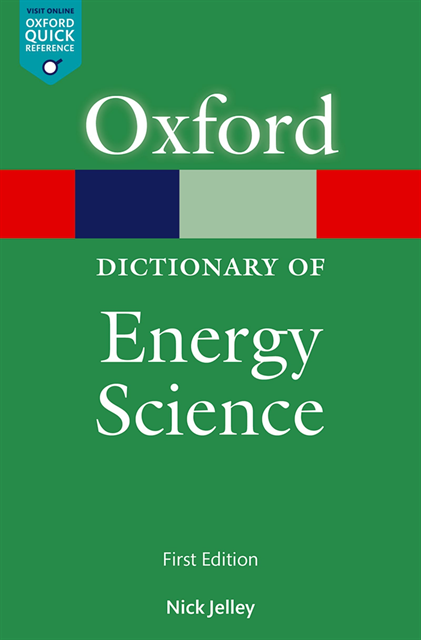
A Dictionary of Energy Science covers terms related to energy technologies and their impact on the world''s energy use. It sets out the principles behind each technology''s operation, as well as its economic, environmental, and social impacts. Coverage includes energy demand and conservation, electricity generation and distribution, energy storage, renewable energy and fossil fuel technologies, nuclear energy, environmental issues, energy and society, and biographies of eminent energy scientists. Including more than 600 entries, the text is complemented by illustrations, a chronology, and global statistics on energy use. This topical dictionary appears at a time when the development of alternative technologies to fossil fuel is particularly important in trying to limit global warming, and is significantly affected by energy policy and politics. It is an essential resource for students of engineering, geography, and economics, and for professionals in energy-related industries.
E-bok
PDF, Engelska, 202086 kr
Läs direkt efter köp
Energy is vital for a good standard of living, and much of the world''s population does not have enough. Affordable and adequate sources of power that do not cause climate change or pollution are crucial; and renewables provide the answer. Wind and solar farms can now provide the cheapest electricity in many parts of the world. Moreover, they could provide all of the world''s energy needs. But while market forces are fast helping the transition from fossil fuels to renewables, there are opposing pressures, such as the USA''s proposed withdrawal from the Paris Agreement, and the vested interests in fossil fuels. This Very Short Introduction describes the main renewable sources of energy- solar, wind, hydropower, and biomass- as well as the less well-developed ones- geothermal, tidal, and wave. Nick Jelley explains the challenges of integrating renewables into electricity grids, and the need for energy storage and for clean heat; and discusses the opportunities in developing countries for renewable energy to empower millions. He also considers international efforts and policies to support renewables and tackle climate change; and explains recent innovations in wind and solar energy production, battery storage, and in the emerging power-to-gas provision for clean heating. Throughout, he emphasises what renewable energy can deliver, and its importance in tackling climate change, and in improving health, welfare, and access to electricity. ABOUT THE SERIES: The Very Short Introductions series from Oxford University Press contains hundreds of titles in almost every subject area. These pocket-sized books are the perfect way to get ahead in a new subject quickly. Our expert authors combine facts, analysis, perspective, new ideas, and enthusiasm to make interesting and challenging topics highly readable.
E-bok
Engelska, 202087 kr
Läs direkt efter köp
Energy is vital for a good standard of living, and much of the world''s population does not have enough. Affordable and adequate sources of power that do not cause climate change or pollution are crucial; and renewables provide the answer. Wind and solar farms can now provide the cheapest electricity in many parts of the world. Moreover, they could provide all of the world''s energy needs. But while market forces are fast helping the transition from fossil fuels to renewables, there are opposing pressures, such as the USA''s proposed withdrawal from the Paris Agreement, and the vested interests in fossil fuels. This Very Short Introduction describes the main renewable sources of energy- solar, wind, hydropower, and biomass- as well as the less well-developed ones- geothermal, tidal, and wave. Nick Jelley explains the challenges of integrating renewables into electricity grids, and the need for energy storage and for clean heat; and discusses the opportunities in developing countries for renewable energy to empower millions. He also considers international efforts and policies to support renewables and tackle climate change; and explains recent innovations in wind and solar energy production, battery storage, and in the emerging power-to-gas provision for clean heating. Throughout, he emphasises what renewable energy can deliver, and its importance in tackling climate change, and in improving health, welfare, and access to electricity. ABOUT THE SERIES: The Very Short Introductions series from Oxford University Press contains hundreds of titles in almost every subject area. These pocket-sized books are the perfect way to get ahead in a new subject quickly. Our expert authors combine facts, analysis, perspective, new ideas, and enthusiasm to make interesting and challenging topics highly readable.
Häftad, Engelska, 2021
703 kr
Skickas inom 5-8 vardagar
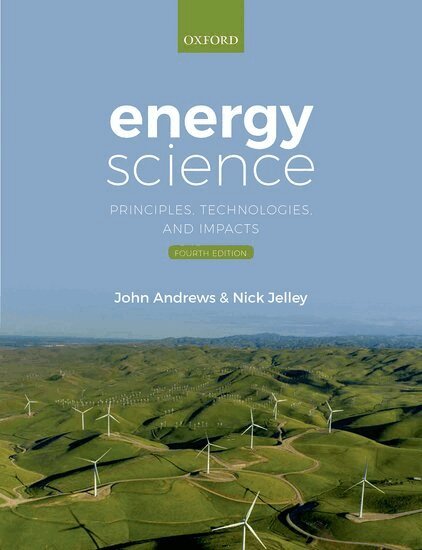
The only book to successfully integrate social, economic and environmental considerations with an accessible, quantitative approach to energy science.Energy Science introduces the latest energy technologies, explaining the physical principles underlying technology and discussing their environmental, economic, and social impacts. With a focus on the transition from fossil fuels to low-carbon sources of energy, the text enables students to evaluate the key sources of energy available, and introduces potential solutions to the energy problems facing us today.A core text in the field, Energy Science is full of topical case studies and examples using current data to highlight the practical application of relevant theory. Discussion questions throughout the text encourage the development of deep critical thinking skills, ensuring that students are properly equipped to approach the energy challenges that lie ahead.Digital formats and resources The book is available for students and institutions to purchase in a variety of formats, and is supported by online resources: · The e-book offers a mobile experience and convenient access along with functionality tools, navigation features, and links that offer extra learning support: www.oxfordtextbooks.co.uk/ebooks· Online resources include multiple choice questions and further reading links for students to enhance their understanding, and, for registered adopters, a solutions manual, PowerPoint slides, figures and tables from the book· Available now: comprehensive author updates for summer 2023 include discussion of the main developments in the subject since publication
Häftad, Engelska, 2025
106 kr
Skickas inom 5-8 vardagar
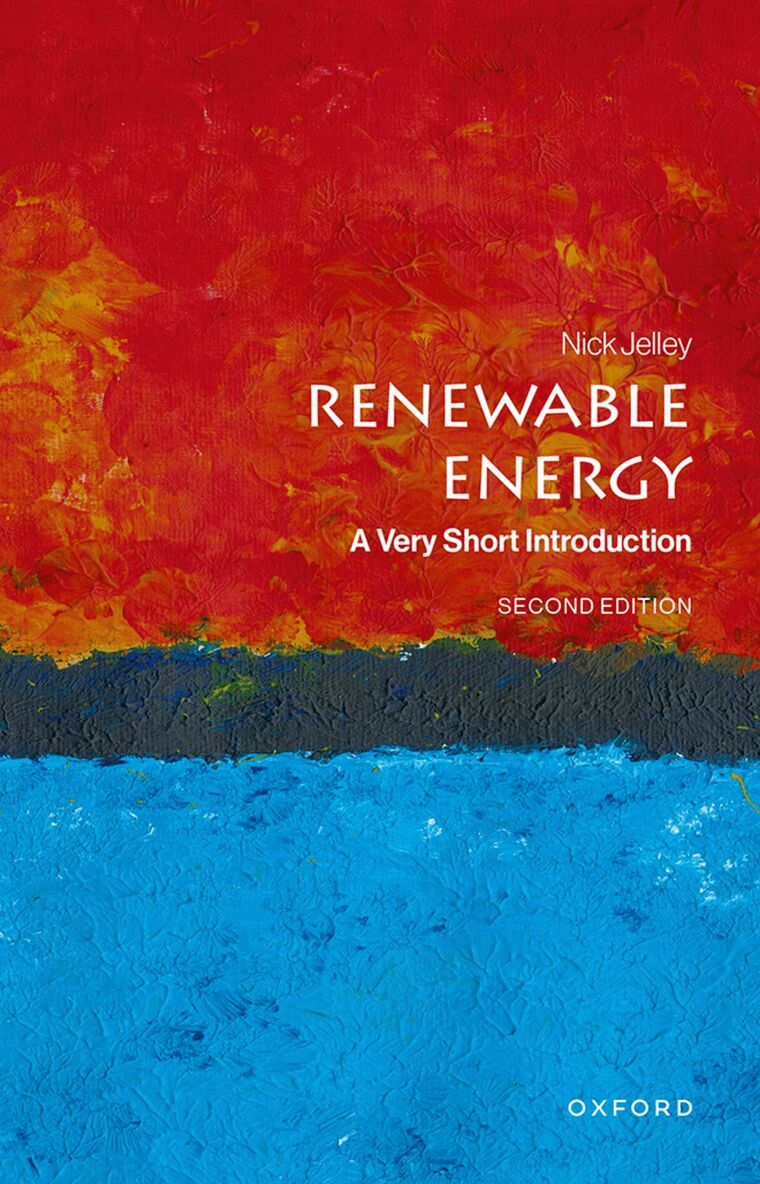
Very Short Introductions: Brilliant, Sharp, InspiringEnergy is vital for a good standard of living, and affordable sources of power that do not cause climate change or pollution are crucial. Renewable energy is recognised as providing the answer, with countries from around the world deciding at COP28 in 2023 to aim to triple the global renewable energy capacity by 2030, for the transition away from fossil fields to be on track for net-zero emissions by 2050. This Very Short Introduction describes the main sources of renewable energy- solar PV, wind, hydropower, and biomass - their innovative technologies, and what each could deliver. It also discusses the relatively small contributions expected from tidal, wave, geothermal, and nuclear power, and from carbon capture and storage. Nick Jelley presents how the variability of solar PV and wind power can be handled in an electricity grid predominantly powered by renewables, and discusses recent innovations in batteries and other energy storage technologies. Jelley goes on to explain the importance of decarbonising the huge global heat demand by using heat pumps, hydrogen from electrolysers, and electricity directly; and of changing to electric vehicles, which will decarbonise most of transport. Electrification of buildings, industry and transport for net-zero will roughly triple the supply of electricity, and this can be met predominantly by solar PV and wind power. The learning effect has resulted in a dramatic drop in the price of wind and solar PV power in the last decade, making them the cheapest generators of electricity in most parts of the world. This could make powering the world by renewables considerably cheaper than continuing to burn fossil fuels. Jelley explores the challenges in achieving this; notably, geopolitical tensions, lack of grid infrastructure, permitting (planning) issues, the availability of finance in the global South, and the vested interests in fossil fuels. The Very Short Introduction ends by discussing the actions needed that include strong consistent policies, financial initiatives to take advantage of the long-term benefits of renewables, and good community involvement. ABOUT THE SERIES: The Very Short Introductions series from Oxford University Press contains hundreds of titles in almost every subject area. These pocket-sized books are the perfect way to get ahead in a new subject quickly. Our expert authors combine facts, analysis, perspective, new ideas, and enthusiasm to make interesting and challenging topics highly readable.